



EURUSD Gains Capped on Hawkish Fed Expectations
The U.S. dollar’s steep drawdown briefly lifted EURUSD above the 1.20 mark, before a swift reversal driven by renewed hawkish Fed election concerns. The broader structural bias remains on hold, as the DXY continues to hold above the key 96 support level.
Share this:

Key Events
- Mean reversion across major markets is becoming evident following expectations of a hawkish Fed election outcome, as markets transition from the New Year January effect into February.
- The DXY’s sharp rebound above the 97 level capped gains across major currency pairs, keeping EURUSD below 1.20 and GBPUSD below 1.38.
- U.S. NFP data may alter the sustainability of the recent dollar rebound, alongside evolving geopolitical negotiations under the Trump administration, keeping high-time-frame levels in focus amid rapidly shifting headlines.
Following the sharp momentum seen between late 2025 and early 2026, markets appear to be entering a mean-reversion phase—a classic pattern often observed after the Christmas rally and New Year effect, typically unfolding into February and March. High-time-frame levels remain critical in defining longer-term structural shifts amid fast-moving headlines.
The latest headline to move markets was the nomination of Kevin Warsh, a hawkish-perceived Fed chair, which lifted the U.S. Dollar Index and major currency pairs from daily oversold and overbought conditions last seen in July -August 2025. This short-term contrarian forecast was highlighted on Wednesday, preceding the DXY’s sharp rebound above the 97 mark.
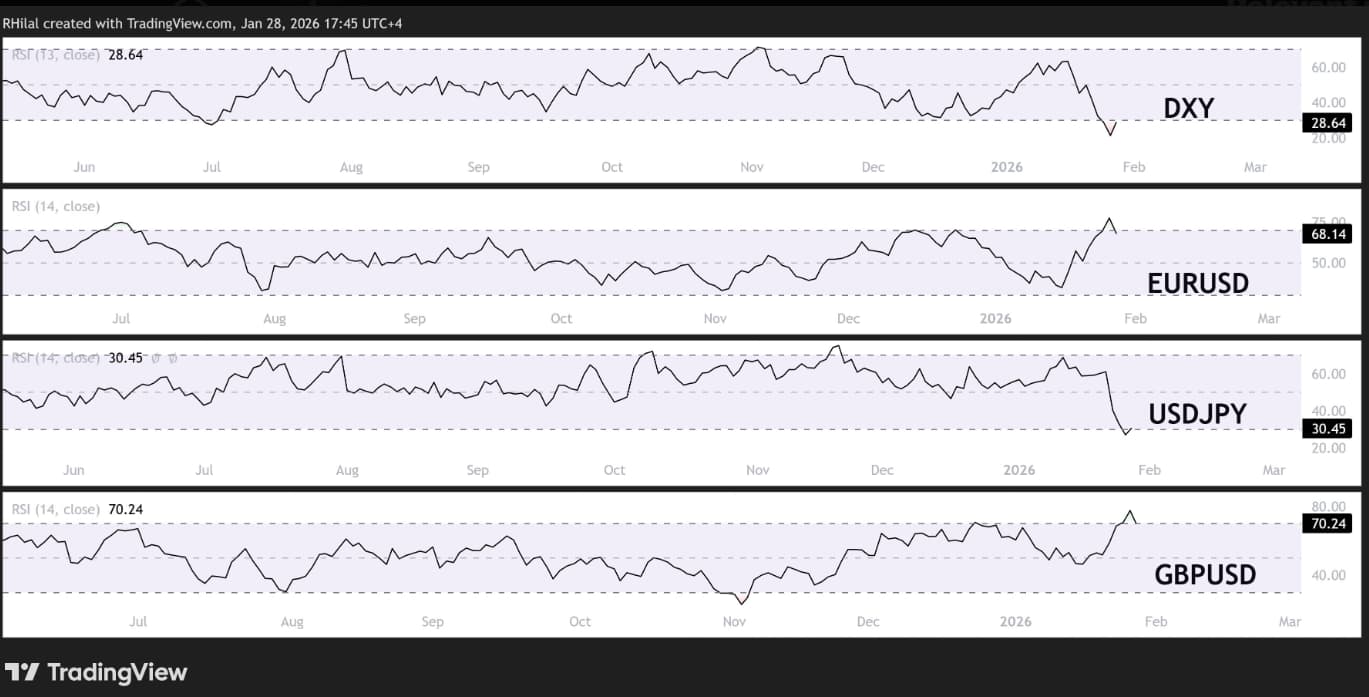
Source: Trading view
DXY Outlook: Monthly/ Weekly Time Frame – Log Scale

Source: Tradingview
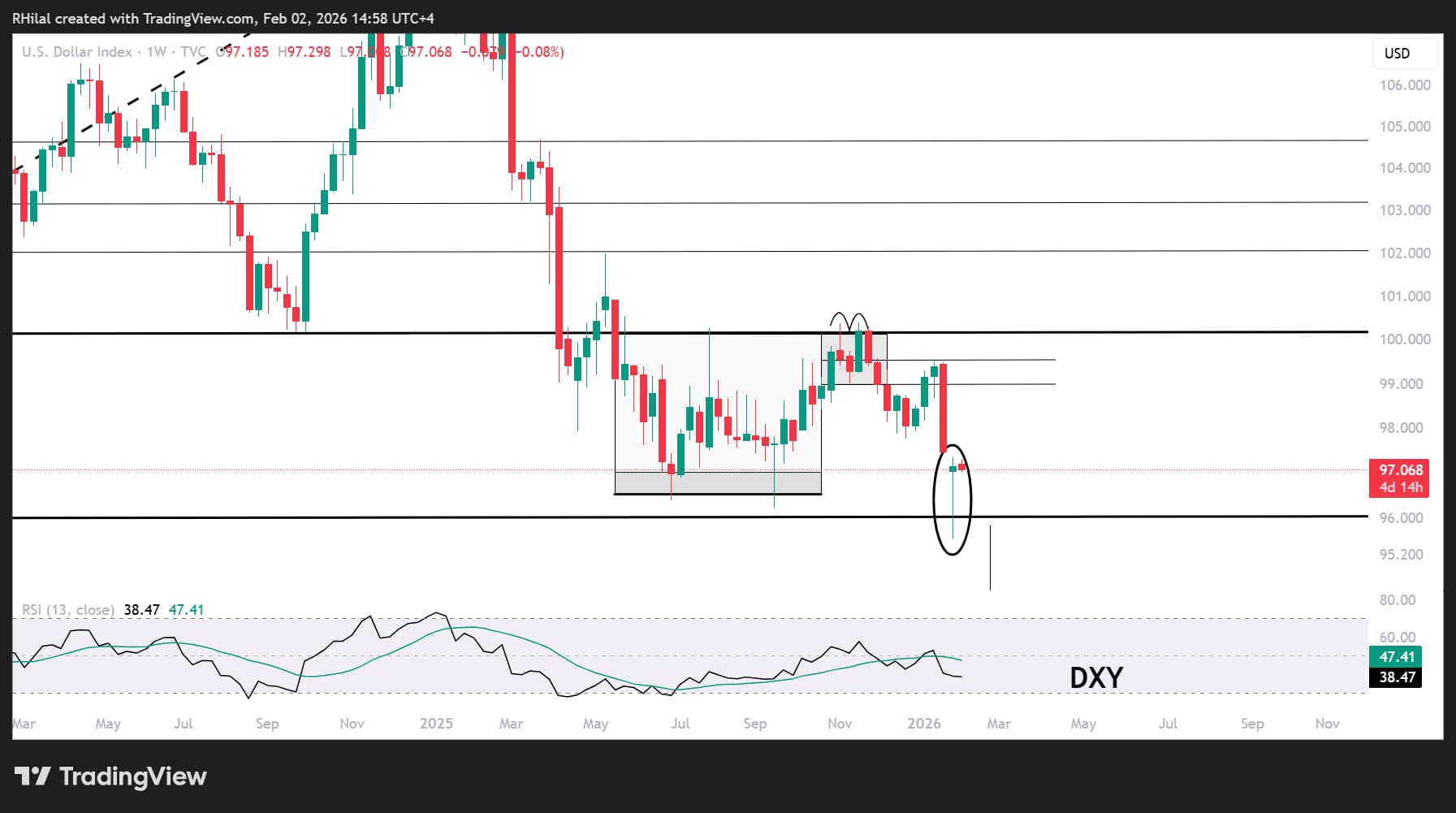
To put the latest rebound into perspective, the DXY printed a sharp downside wick on the weekly time frame, signaling an unsustained bearish hold. Bullish dominance remains intact, as this wick aligns with the lower boundary of a well-respected uptrending channel in place since 2008, effectively capping EURUSD gains below the 1.20 level.
This narrative would change should the DXY close below 96, shifting the 17-year bullish structural bias into a bearish one, increasing de-dollarization concerns.
EURUSD Outlook: Monthly Time Frame – Log Scale
Source: Trading view
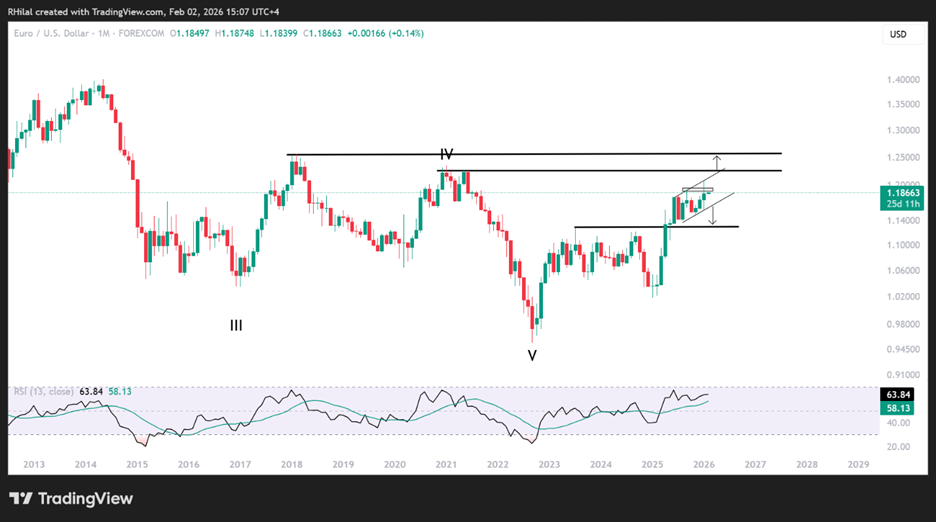
From a monthly perspective, EURUSD’s upper wick aligns with the series of higher highs formed between July and September 2025, with upside targets at 1.2250 and 1.25, levels last seen in 2020 and 2018, respectively. These levels could be reached with a sustained close above 1.20, although such a move may set up another strong resistance zone given monthly overbought conditions, similar to those seen in 2018 and 2020.
On the downside, a close back below 1.18 and 1.1580 would expose deeper drawdown risks toward the 1.12–1.11 zone.
Considering the extended state of the U.S. dollar index, longer-term directional forecasts will depend on whether the dollar realigns with its multi-year uptrend or confirms a bearish structural breakout below 96.
Written by Razan Hilal, CMT
Follow on X: :Rh_waves
Related tags:
Latest market news



The complete CFD trading experience
Award-winning platforms, competitive spreads, low commissions and dedicated support.
We live and breathe the markets and are dedicated to helping traders realise their ambitions as we continue to set the industry bar.
Economic calendar
Web Trader platform
Our sophisticated web-based platform is packed with features.
Related articles
EUR/USD weekly outlook: Oil, inflation and NFP in focus
After coming under significant pressure in recent weeks, the EUR/USD came off its lows to finish the week on a positive note on Friday, albeit with only a mild rebound. That was not enough to prevent the exchange rate falling for the third consecutive week, as the US dollar and bond yields rallied across the board.

EUR/USD Q4 2026 Outlook: Euro at a Crossroads as Fed, ECB Tighten 9 25 2026
EUR/USD enters Q4 at a pivotal inflection point as competing Fed-ECB policy paths and persistent inflation risks collide with major technical support.


USD/JPY Q4 2026 Outlook: Hawkish Fed Pricing Clashes With Intervention Risk
The year-end tug-of-war is clear: hawkish Fed pricing supports USD/JPY, while intervention risk limits the upside.

StoneX Europe Ltd may make third party material available on this website which may contain information included but not limited to the conditions of financial markets. The material is for information purposes only and does not contain, and should not be construed as containing, investment advice and/or investment recommendation and/or an investment research and/or an offer of or solicitation for any transactions in financial instruments; any decision to enter into a specific transaction shall be made by the client following an assessment by him/her of their situation.
StoneX Europe Ltd makes no representation or warranty and assumes no liability as to the accuracy or completeness of the information provided, nor any loss arising from any investment based on a recommendation, forecast or other information supplied. You should always seek independent advice as to your suitability to speculate in any related markets and your ability to assume the associated risks, if you are at all unsure. We are not under any obligation to update any such material. Any opinion made may be personal to the author and may not reflect the opinion of StoneX Europe Ltd.