



GBP/USD Analysis: The Pound Continues to Decline After UK Inflation Data
GBP/USD has now recorded three consecutive bearish sessions in the short term, resulting in a decline of more than 1%, reflecting a renewed and consistent selling bias in recent price action.
Share this:

GBP/USD has now recorded three consecutive bearish sessions in the short term, resulting in a decline of more than 1%, reflecting a renewed and consistent selling bias in recent price action.
Selling pressure intensified following the release of UK inflation (CPI) data, which point toward a potentially more flexible stance from the Bank of England in the coming months. This scenario has weakened the pound in the short term and, if sustained, could continue to fuel further downside pressure in GBP/USD in upcoming sessions.


First Inflation Data of the Year
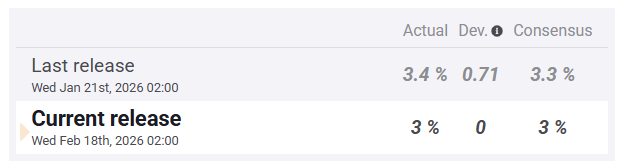
Earlier today, the UK’s year-over-year (YoY) CPI data were released. The official figure came in at 3.00%, in line with market expectations for January and below the previous reading of 3.4% recorded in December 2025.
Source: FxStreet
The key takeaway from this release is that it confirms a sustained deceleration in UK inflation. The current 3.00% reading remains well below the highs near 3.8% seen in mid-2025 and is gradually moving closer to the Bank of England’s 2.00% target.
This suggests that the inflationary pressures that previously concerned policymakers have begun to moderate meaningfully, maintaining a downward trend in recent months.

Source: TradingEconomics
In this context, the probability of a rate cut by the Bank of England at its upcoming March meeting has become more relevant. Markets are currently assigning a probability above 50% to a potential rate reduction, which would imply a move from the current 3.75% level toward 3.50%.
In the past, the Bank of England had followed a rate-cutting trajectory that was paused due to inflation uncertainty. However, with the recent moderation in consumer prices, inflationary risks have eased, potentially opening the door for a more accommodative monetary policy stance in upcoming decisions.
This scenario is particularly relevant for the pound, as a rate cut would imply lower yields on UK bonds. That could reduce the attractiveness of pound-denominated assets, limit foreign capital inflows, and weaken demand for the currency in the short term, thereby reinforcing selling pressure in GBP/USD.
How Is the U.S. Federal Reserve Positioned?
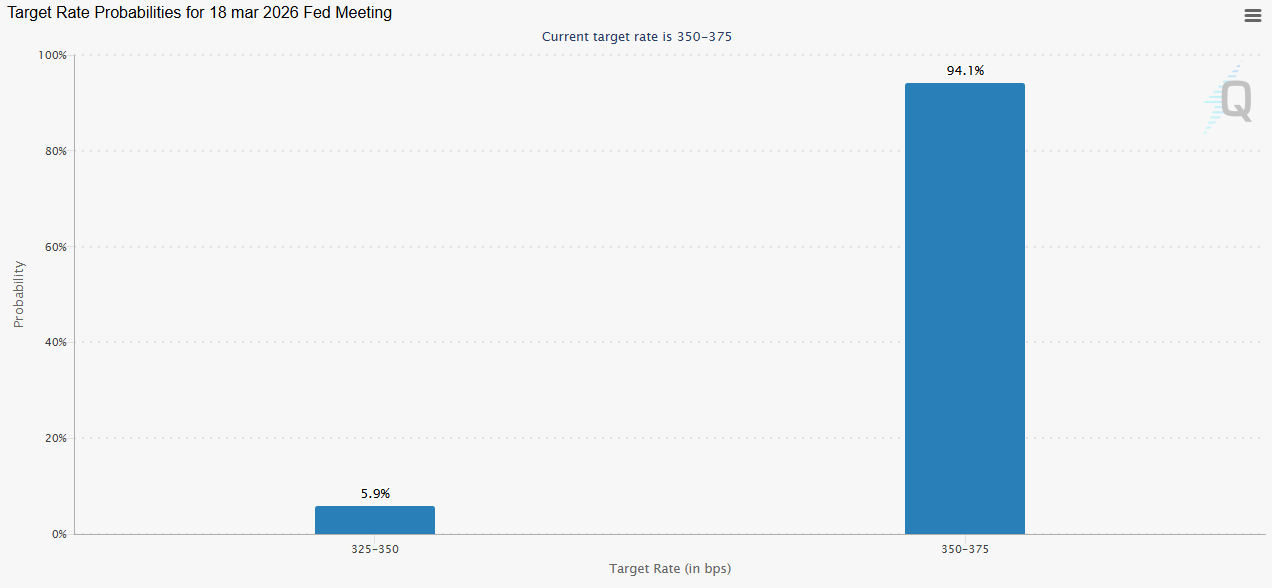
It is important to note that, similar to the UK, the benchmark interest rate in the United States remains at 3.75%. However, unlike the Bank of England, the outlook for the Federal Reserve at its March 18 meeting shows a 94.1% probability of rates remaining unchanged, according to CME Group data.
Source: CMEGROUP
This divergence is significant. If the Bank of England proceeds with a rate cut while the Federal Reserve keeps rates steady, the interest rate differential could widen in favor of the U.S. dollar. That would increase the relative attractiveness of dollar-denominated assets compared to those in pounds, potentially supporting further dollar demand and maintaining selling pressure on GBP/USD in the coming sessions.
GBP/USD Technical Outlook
Source: StoneX, Tradingview
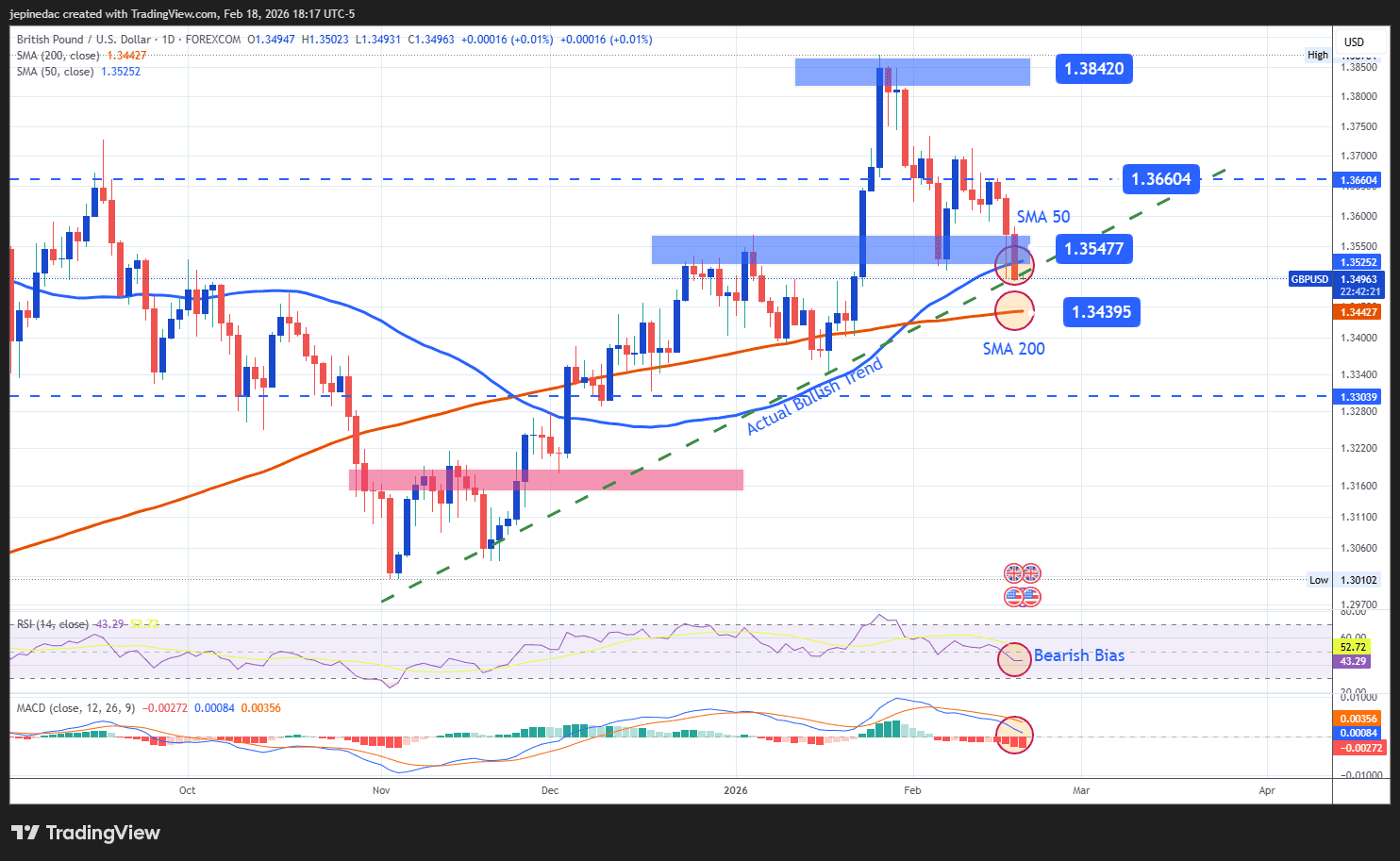
- Uptrend at Risk: Recent bearish movements are increasingly approaching the upward trendline that has been in place since November 2025. If selling pressure consolidates and breaks below this structure, it could trigger a more consistent directional move to the downside in the short term and diminish the relevance of the uptrend that dominated in previous months.
- RSI: The RSI remains below the neutral 50 level, indicating that selling momentum has begun to dominate over the past 14 sessions. This behavior supports the possibility that bearish pressure may continue to be relevant in the near term.
- MACD: The MACD histogram remains below the zero line, suggesting that short-term moving average momentum continues to favor sellers. If the histogram continues to decline, it could reinforce downside pressure in the coming sessions.
Key Levels:
- 1.36604 – Key resistance: A level aligned with recent highs and representing the primary upside barrier. A sustained move back toward this zone could reactivate buying interest and allow for an extension of the prevailing uptrend.
- 1.35477 – Near-term barrier: A recent neutrality zone aligned with the 50-period moving average. Price action within this region could maintain a short-term consolidation scenario.
- 1.34395 – Major support: A key level aligned with the 200-period moving average and representing the most relevant downside barrier. A sustained break below this zone would imply a structural shift and could solidify a more consistent bearish bias.
Written by Julian Pineda, CFA, CMT – Market Analyst
Follow him on: @julianpineda25
Latest market news




The complete CFD trading experience
Award-winning platforms, competitive spreads, low commissions and dedicated support.
We live and breathe the markets and are dedicated to helping traders realise their ambitions as we continue to set the industry bar.
Economic calendar
Web Trader platform
Our sophisticated web-based platform is packed with features.
Related articles
Australian Dollar Forecast: AUD/USD Four-Week Slide Nears Critical Uptrend Support 9 29 2026
Aussie momentum has deteriorated sharply into quarter-end, with inflation, Core PCE and NFP on tap as AUD/USD closes in on a pivotal technical threshold.

Euro Forecast: EUR/USD Tumbles Towards Yearly Low as Daily RSI Goes Oversold
EUR/USD has been hit hard in the final month of the quarter as USD strength has shown up in a big way. With the pair set to challenge its yearly low as RSI has pushed into oversold territory, is there a chance for a pullback with some big headline risk hitting in the US over the next few days?
AUD/USD outlook: Aussie slips despite hawkish RBA ahead of key data
The AUD/USD was unable to benefit from the Reserve Bank of Australia’s 25-basis-point rate hike overnight. The RBA lifted the cash rate to 4.60%, in line with expectations. However, the Australian dollar weakened following the decision, with much of the Bank’s hawkish stance seemingly priced in ahead of the announcement. The US dollar has also remained largely supported following the recent turmoil in the bond markets.

StoneX Europe Ltd may make third party material available on this website which may contain information included but not limited to the conditions of financial markets. The material is for information purposes only and does not contain, and should not be construed as containing, investment advice and/or investment recommendation and/or an investment research and/or an offer of or solicitation for any transactions in financial instruments; any decision to enter into a specific transaction shall be made by the client following an assessment by him/her of their situation.
StoneX Europe Ltd makes no representation or warranty and assumes no liability as to the accuracy or completeness of the information provided, nor any loss arising from any investment based on a recommendation, forecast or other information supplied. You should always seek independent advice as to your suitability to speculate in any related markets and your ability to assume the associated risks, if you are at all unsure. We are not under any obligation to update any such material. Any opinion made may be personal to the author and may not reflect the opinion of StoneX Europe Ltd.