





Is Operation Twist in the Feds future
Markets will be monitoring Powell's speech very closely for any hints as to what the Fed may do next.
Share this:

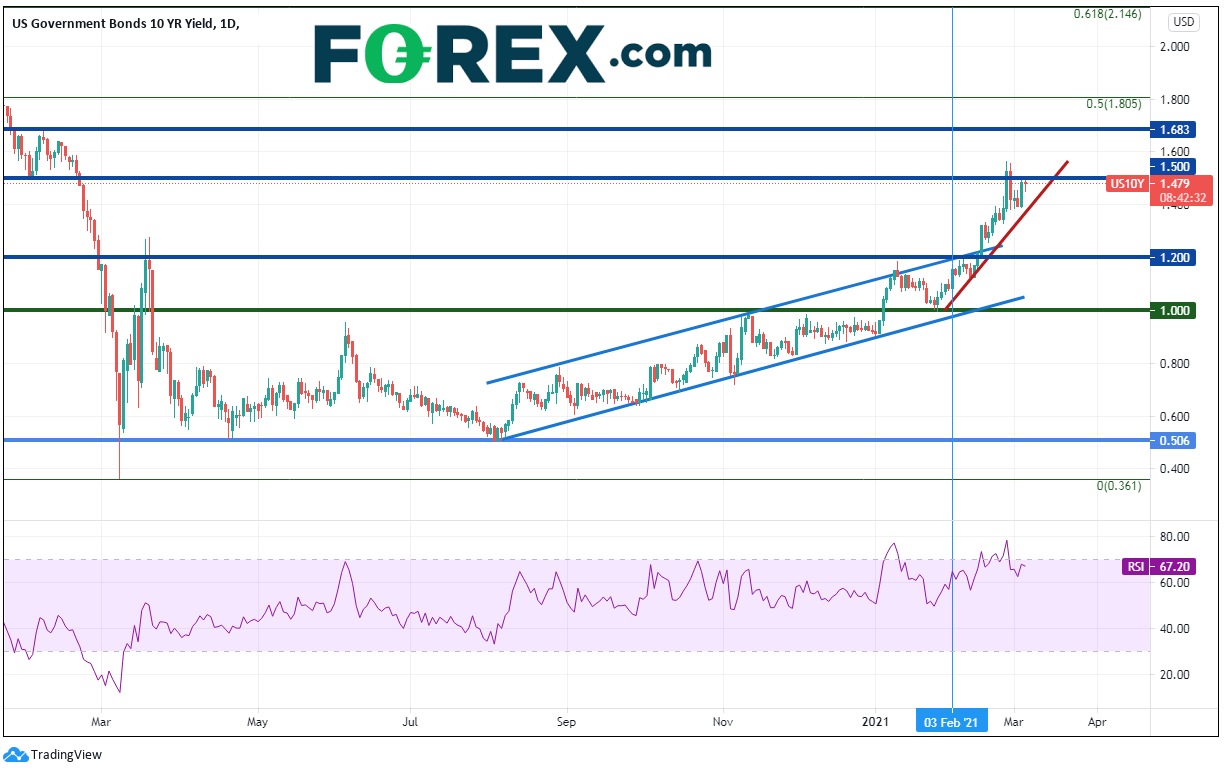
Fed Chairman Jerome Powell is speaking today on the US economy at 12:00pm EST at the WSJ Jobs Summit. The Fed has a dual mandate to keep inflation between its target of 2% to 3% and to maximize employment. Inflation expectations have been rising over the last month given expectations of a strong post-pandemic recovery, while job growth is low. The rise in inflation expectations has been giving a boost to longer-term bond yields, so the markets say. However, Jerome Powell, many on the Federal Reserve Open Market Committee, and other central bank leaders and speakers around the globe have attributed the rise in yields to increased confidence in the recovery process, but there is still a long way to go. The US Fed has said that the increase in yields is a good thing and that they will let inflation run “hot” for a period of time. The Fed has also said that they are committed to buying $120 billion of bonds a month: $80 billion worth of Treasury bonds and $40 billion of mortgage backed securities. They also believe this will keep rates low for some time while employment recovers. However, given the current yields in bonds, the market seems to believe that the Fed will need to taper sooner. The chart below shows the pickup in the pace of rising 10-year Treasury yields since February 1st.
Source: Tradingview, City Index
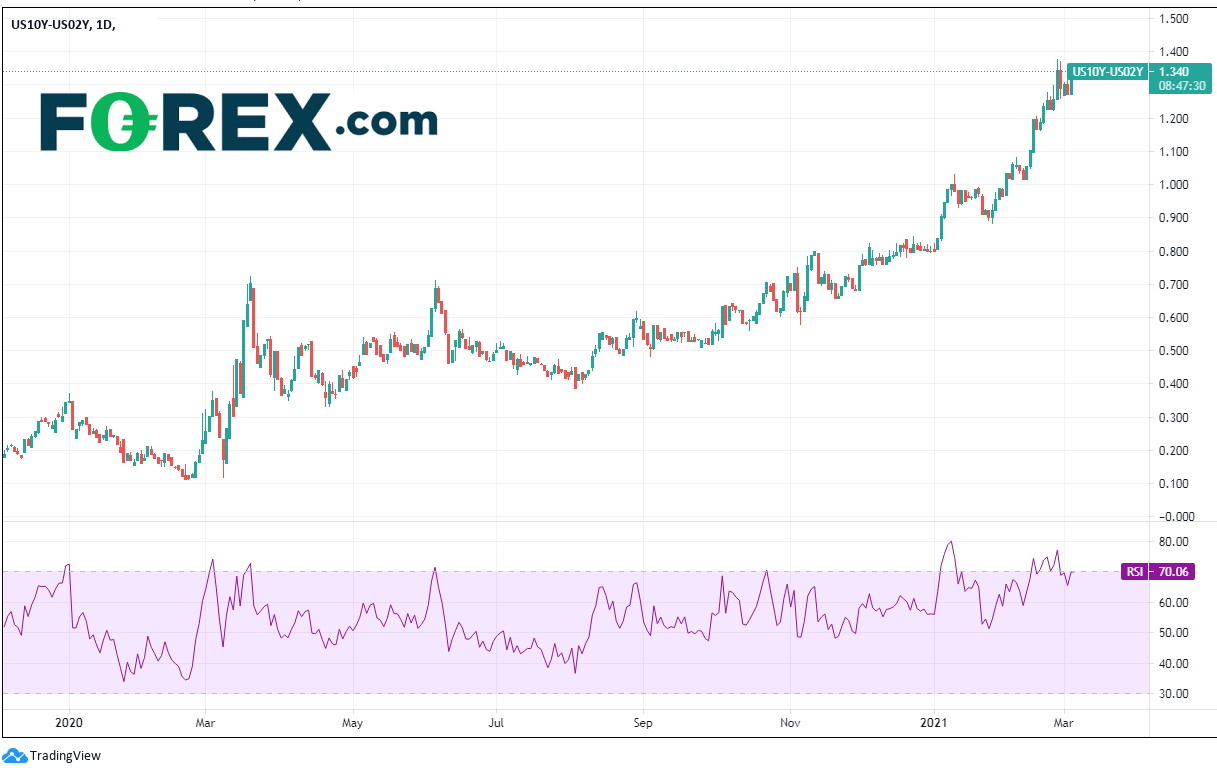
The Fed is now faced with a conundrum. To keep rates low, they can increase the amount of bond purchases. The markets would therefore call out the Fed and force them to adjust. How can the Fed do this and save face? Enter Operation Twist! Operation Twist (as it has been called) is when the Fed sells (or stops buying) short-dated maturity bonds and buys long-dated bonds. In theory, this would lower yields on long-term bonds while maintaining the ultra-low rates on the short-term bonds. The Fed used this technique in 2011 to bring the economy out of a recession. The chart below shows the current rate of change between the 10-year Treasury yields and the 2-year Treasury yields. The Fed wants to bring this rate of change lower.
Source: Tradingview, City Index
This is the last time Powell is set to speak before the FOMC meeting on March 15-16. During that meeting, Fed members are also expected to give their outlook to growth and inflation. As that meeting is only 2 weeks away, Powell is unlikely to adopt Operation Twist during today’s speech. However, markets will be monitoring his speech very closely for any hints as to what the Fed may do next. If the markets get a sense of changes by the Fed (i.e. Operation Twist), watch for yields and the US Dollar to move lower, while stocks resume their move higher.
Learn more about forex trading opportunities.
Fed Chairman Jerome Powell is speaking today on the US economy at 12:00pm EST at the WSJ Jobs Summit. The Fed has a dual mandate to keep inflation between its target of 2% to 3% and to maximize employment. Inflation expectations have been rising over the last month given expectations of a strong post-pandemic recovery, while job growth is low. The rise in inflation expectations has been giving a boost to longer-term bond yields, so the markets say. However, Jerome Powell, many on the Federal Reserve Open Market Committee, and other central bank leaders and speakers around the globe have attributed the rise in yields to increased confidence in the recovery process, but there is still a long way to go. The US Fed has said that the increase in yields is a good thing and that they will let inflation run “hot” for a period of time. The Fed has also said that they are committed to buying $120 billion of bonds a month: $80 billion worth of Treasury bonds and $40 billion of mortgage backed securities. They also believe this will keep rates low for some time while employment recovers. However, given the current yields in bonds, the market seems to believe that the Fed will need to taper sooner. The chart below shows the pickup in the pace of rising 10-year Treasury yields since February 1st.
Source: Tradingview, FOREX.com
The Fed is now faced with a conundrum. To keep rates low, they can increase the amount of bond purchases. The markets would therefore call out the Fed and force them to adjust. How can the Fed do this and save face? Enter Operation Twist! Operation Twist (as it has been called) is when the Fed sells (or stops buying) short-dated maturity bonds and buys long-dated bonds. In theory, this would lower yields on long-term bonds while maintaining the ultra-low rates on the short-term bonds. The Fed used this technique in 2011 to bring the economy out of a recession. The chart below shows the current rate of change between the 10-year Treasury yields and the 2-year Treasury yields. The Fed wants to bring this rate of change lower.
Source: Tradingview, FOREX.com
This is the last time Powell is set to speak before the FOMC meeting on March 15-16. During that meeting, Fed members are also expected to give their outlook to growth and inflation. As that meeting is only 2 weeks away, Powell is unlikely to adopt Operation Twist during today’s speech. However, markets will be monitoring his speech very closely for any hints as to what the Fed may do next. If the markets get a sense of changes by the Fed (i.e. Operation Twist), watch for yields and the US Dollar to move lower, while stocks resume their move higher.
Learn more about forex trading opportunities.
Latest market news




The complete CFD trading experience
Award-winning platforms, competitive spreads, low commissions and dedicated support.
We live and breathe the markets and are dedicated to helping traders realise their ambitions as we continue to set the industry bar.
Economic calendar
Web Trader platform
Our sophisticated web-based platform is packed with features.
Related articles
AUD/USD Analysis: What's Next for the Australian Dollar After the RBA Decision?
Recent trading sessions have reflected a more neutral tone around the Australian dollar. This can be seen in AUD/USD price action, which has posted moves of roughly 0.2% over the last two sessions without establishing a clear direction. Much of this lack of momentum is linked to expectations surrounding the next policy moves from both the Reserve Bank of Australia (RBA) and the Federal Reserve.
USD into a Massive Week as Yields Fly and Gold Breaks
It’s a huge week with PCE and NFP, but it’s what’s happening off of the calendar that demands attention with US yields flying to fresh multi-decade highs.

USDJPY Forecast Intervention Fears Clash with Dollar Strength
Recent trading sessions have produced mixed results for the Japanese yen. By the end of last week, USD/JPY had fallen by more than 1.00%, reflecting a modest recovery in the yen. However, the start of this week has seen the pair move slightly back in favor of the U.S. dollar, posting gains of around 0.04%.
StoneX Europe Ltd may make third party material available on this website which may contain information included but not limited to the conditions of financial markets. The material is for information purposes only and does not contain, and should not be construed as containing, investment advice and/or investment recommendation and/or an investment research and/or an offer of or solicitation for any transactions in financial instruments; any decision to enter into a specific transaction shall be made by the client following an assessment by him/her of their situation.
StoneX Europe Ltd makes no representation or warranty and assumes no liability as to the accuracy or completeness of the information provided, nor any loss arising from any investment based on a recommendation, forecast or other information supplied. You should always seek independent advice as to your suitability to speculate in any related markets and your ability to assume the associated risks, if you are at all unsure. We are not under any obligation to update any such material. Any opinion made may be personal to the author and may not reflect the opinion of StoneX Europe Ltd.