





RBA Leaves Rates Unchanged Aussie bid
With the RBA on hold, and continued risk-on, Aussie pairs could remain bid!
Share this:

The RBA left rates unchanged yesterday at 0.75%, as expected. The labor market and strong housing market allowed the RBA to maintain rates (HIA New Home Sales (MoM) for DEC was 2% vs -2.5% expected before the RBA Meeting). Good economic data has given the RBA a luxury that most other Central Banks don’t have, time. As we discussed yesterday in the RBA Preview, the economic data was going to be the easy part of their decision. However, with new events since the last RBA meeting, the RBA needed to address how they would deal with them, if they needed to at all. Since the RBA meeting on December 3rd, 2019, the US-China trade deal was agreed to and signed, there were wildfires throughout Australia, and there was the development and spread of the Coronavirus. By leaving rates unchanged, the RBA can now see how these events will begin to unfold. Will the Coronavirus be contained? Will China have to cut demand? Will the wildfire stimulus economic growth? The Central Bank now has the luxury of time to see how these develop. In the accompanying statement, the RBA said they see a move perhaps in Q2.
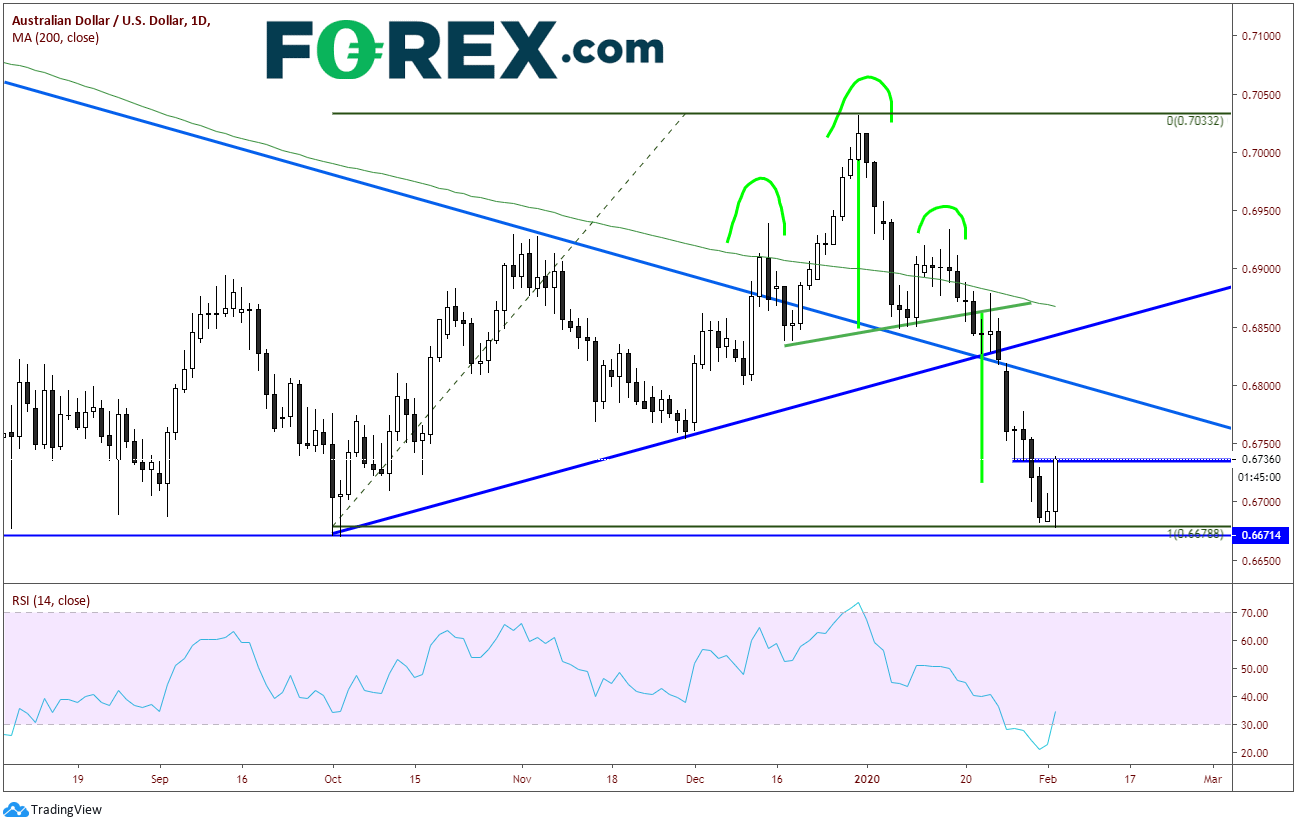
The markets viewed China’s measures to provide support and disaster relief for the Coronavirus as enough to begin putting risk back on. Combine that with the RBA’s decision to leave rates unchanged, and the Australian Dollar went bid as well. As we have been discussing, the AUD/USD has been sitting on support at .6670, which if broken, would have been lows not seen since 2009. The pair rallied off support and is currently trading at horizontal resistance near .6740. If the pair breaks through there, it can run up to .6800, which is the top trendline of the downward sloping channel from mid-2018.
Source: Tradingview, City Index
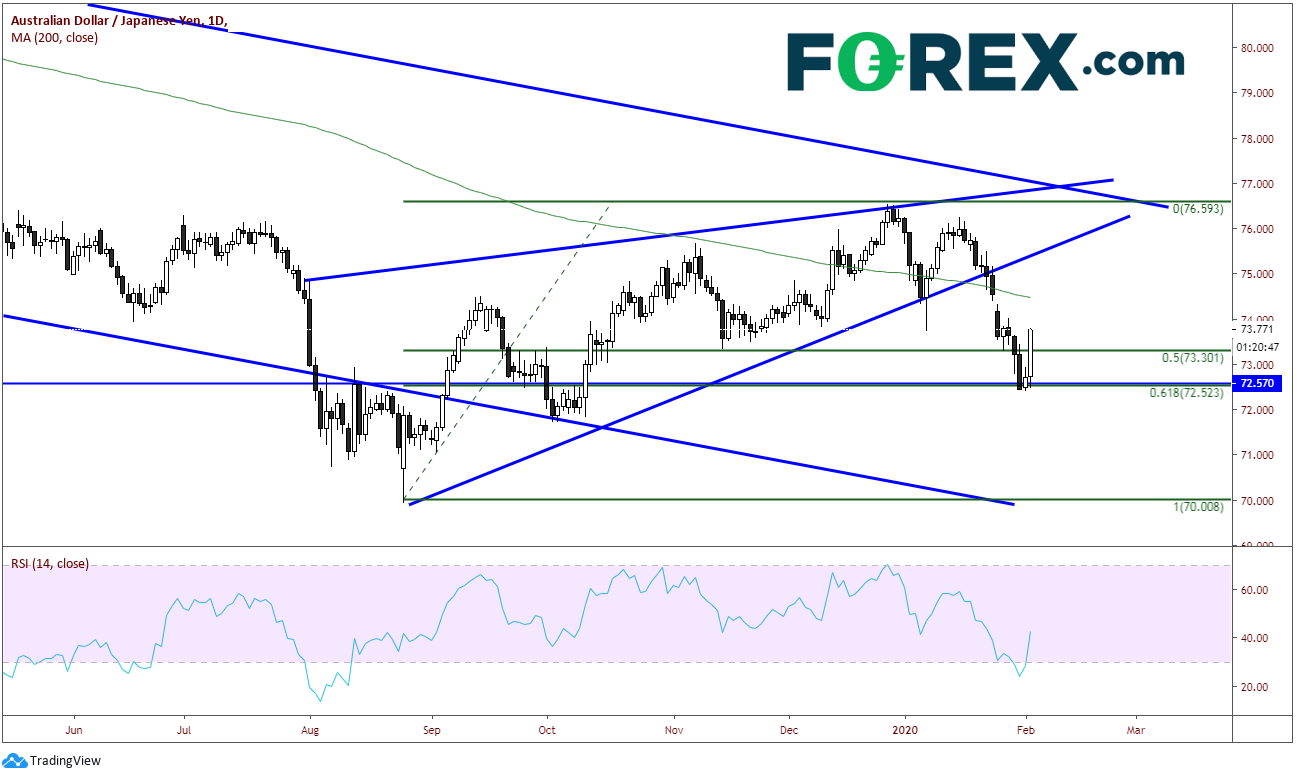
AUD/JPY is another pair which is rallying hard with the risk on move after bouncing from support. The pair had been in a rising wedge since mid-August 2019, before breaking lower on January 23rd, breaking the 200 Day Moving Average at 74.68. On January 27th, AUD/JPY gapped lower from 74.54 down to 74.18 on Coronavirus fears and traded down as low as 72.45. This level is the 61.8% Fibonacci retracement level from the lows on August 26th, 2019 to the highs on December 27th. Today, the pair bounced almost 1.5% to 73.75. Resistance is above at the gap and the 200 Day Moving average near 74.20/74.45. Support seems a mile below near the 72.45 level.
Source: Tradingview, City Index
It will be important to determine if there is follow through tomorrow from these moves higher in the Aussie pairs, or if this is going to just be another opportunity to sell the bounce. But with the RBA on hold, and if there is continued risk-on, Aussie pairs could remain bid!
The RBA left rates unchanged yesterday at 0.75%, as expected. The labor market and strong housing market allowed the RBA to maintain rates (HIA New Home Sales (MoM) for DEC was 2% vs -2.5% expected before the RBA Meeting). Good economic data has given the RBA a luxury that most other Central Banks don’t have, time. As we discussed yesterday in the RBA Preview, the economic data was going to be the easy part of their decision. However, with new events since the last RBA meeting, the RBA needed to address how they would deal with them, if they needed to at all. Since the RBA meeting on December 3rd, 2019, the US-China trade deal was agreed to and signed, there were wildfires throughout Australia, and there was the development and spread of the Coronavirus. By leaving rates unchanged, the RBA can now see how these events will begin to unfold. Will the Coronavirus be contained? Will China have to cut demand? Will the wildfire stimulus economic growth? The Central Bank now has the luxury of time to see how these develop. In the accompanying statement, the RBA said they see a move perhaps in Q2.
The markets viewed China’s measures to provide support and disaster relief for the Coronavirus as enough to begin putting risk back on. Combine that with the RBA’s decision to leave rates unchanged, and the Australian Dollar went bid as well. As we have been discussing, the AUD/USD has been sitting on support at .6670, which if broken, would have been lows not seen since 2009. The pair rallied off support and is currently trading at horizontal resistance near .6740. If the pair breaks through there, it can run up to .6800, which is the top trendline of the downward sloping channel from mid-2018.
Source: Tradingview, FOREX.com
AUD/JPY is another pair which is rallying hard with the risk on move after bouncing from support. The pair had been in a rising wedge since mid-August 2019, before breaking lower on January 23rd, breaking the 200 Day Moving Average at 74.68. On January 27th, AUD/JPY gapped lower from 74.54 down to 74.18 on Coronavirus fears and traded down as low as 72.45. This level is the 61.8% Fibonacci retracement level from the lows on August 26th, 2019 to the highs on December 27th. Today, the pair bounced almost 1.5% to 73.75. Resistance is above at the gap and the 200 Day Moving average near 74.20/74.45. Support seems a mile below near the 72.45 level.
Source: Tradingview, FOREX.com
It will be important to determine if there is follow through tomorrow from these moves higher in the Aussie pairs, or if this is going to just be another opportunity to sell the bounce. But with the RBA on hold, and if there is continued risk-on, Aussie pairs could remain bid!
Latest market news




The complete CFD trading experience
Award-winning platforms, competitive spreads, low commissions and dedicated support.
We live and breathe the markets and are dedicated to helping traders realise their ambitions as we continue to set the industry bar.
Economic calendar
Web Trader platform
Our sophisticated web-based platform is packed with features.
Related articles
EUR/USD Q4 2026 Outlook: Euro at a Crossroads as Fed, ECB Tighten 9 25 2026
EUR/USD enters Q4 at a pivotal inflection point as competing Fed-ECB policy paths and persistent inflation risks collide with major technical support.

USD/JPY Q4 2026 Outlook: Hawkish Fed Pricing Clashes With Intervention Risk
The year-end tug-of-war is clear: hawkish Fed pricing supports USD/JPY, while intervention risk limits the upside.


Japanese Yen Forecast: USD/JPY 4% Rally Challenges Post-Intervention Downtrend 9 24 2026
USD/JPY momentum has shifted sharply higher, putting a major resistance confluence in focus as U.S. and Japanese event risk builds.
StoneX Europe Ltd may make third party material available on this website which may contain information included but not limited to the conditions of financial markets. The material is for information purposes only and does not contain, and should not be construed as containing, investment advice and/or investment recommendation and/or an investment research and/or an offer of or solicitation for any transactions in financial instruments; any decision to enter into a specific transaction shall be made by the client following an assessment by him/her of their situation.
StoneX Europe Ltd makes no representation or warranty and assumes no liability as to the accuracy or completeness of the information provided, nor any loss arising from any investment based on a recommendation, forecast or other information supplied. You should always seek independent advice as to your suitability to speculate in any related markets and your ability to assume the associated risks, if you are at all unsure. We are not under any obligation to update any such material. Any opinion made may be personal to the author and may not reflect the opinion of StoneX Europe Ltd.