



S&P 500 Analysis: Earnings Uncertainty Continues to Weigh on the SPX
The trading week is coming to an end, and a phase of weakness remains evident across the S&P 500 in the short term. Recent price action reflects this dynamic, with SPX losing more than 2.00% over the last two trading sessions, bringing selling pressure back into focus.
Share this:

The trading week is coming to an end, and a phase of weakness remains evident across the S&P 500 in the short term. Recent price action reflects this dynamic, with SPX losing more than 2.00% over the last two trading sessions, bringing selling pressure back into focus.
Part of this weakness stems from recent earnings releases from some of the index's largest constituents, which have failed to generate a sustained sense of confidence among investors. At the same time, expectations that interest rates could remain elevated into year-end continue to weigh on sentiment. Together, these factors have limited risk appetite and could keep a cautious tone in place over the coming sessions.

Are Earnings Disappointing the Market?
This week was marked by earnings releases from several key companies within the S&P 500. Although some reports managed to beat expectations in certain areas, the broader market reaction has been driven more by concerns surrounding capital expenditures and the ability of these investments to translate into sustainable growth over the coming years.
At the beginning of the week, Microsoft reported revenue above $92 billion, exceeding expectations, while adjusted earnings per share came in near $4.90, above the expected $4.70. However, the market remains concerned about the pace of capital spending growth, and the stock has fallen close to 2.00% since the earnings release.
Later, Alphabet (Google) delivered a more visible slowdown. Earnings per share came in near $2.70, below the expected $3.00, while revenue reached approximately $127 billion, slightly below the $128 billion forecast by the market. In addition, continued growth in capital expenditures has raised concerns about the company's growth prospects for 2027. As a result, Alphabet shares have declined roughly 13.00% since reporting earnings.
Another relevant event was Amazon's earnings release, which also failed to meet expectations. The company reported earnings per share of $1.89 compared with forecasts of $1.96, while investors once again focused on the elevated pace of investment during the latest quarter, a dynamic that continues to pressure free cash flow. Since reporting earnings, Amazon shares have declined close to 2.00%.
The common theme across these reports is growing concern around capital expenditures within the technology sector. Investors are increasingly questioning when these large investments, particularly those linked to artificial intelligence and technological expansion, will begin translating into stronger revenue growth and profitability.
This concern is no longer limited to the companies that reported results. Looking at the recent performance of the Top 10 companies in the S&P 500, only Eli Lilly managed to post a gain of more than 3.1%, while the rest of the group recorded negative performance. This suggests that uncertainty is beginning to affect a broader portion of the technology sector and the index as a whole.
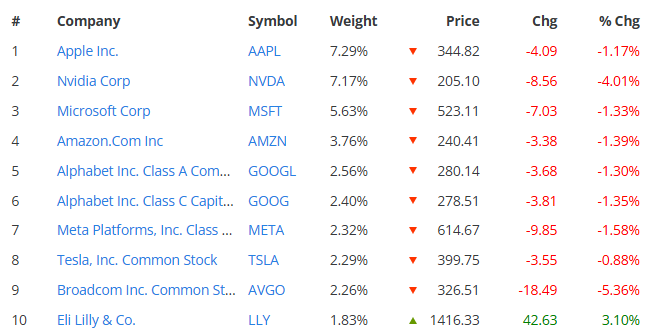
Source: Slickcharts
With all of this in mind, uncertainty has begun to play a more important role within the S&P 500. Concerns surrounding future corporate growth, particularly in light of rising investment spending, have reduced part of the confidence that supported markets in previous months and have limited the ability of major index components to attract consistent demand. As long as these concerns remain present throughout earnings season, selling pressure could continue to be relevant in the sessions ahead.
Is the Federal Reserve Still a Problem?
This week also featured the latest Federal Reserve policy decision. While the central bank left interest rates unchanged, officials reiterated that inflation remains an important concern and that there is still room to maintain a relatively restrictive monetary policy stance.
According to current market probabilities, there remains more than a 70% chance that the Fed could deliver an additional rate increase during the December 9 meeting, taking the benchmark rate toward 4.25%. This suggests that, despite the Fed's relatively cautious tone, the possibility of higher rates before the end of 2026 has not disappeared.
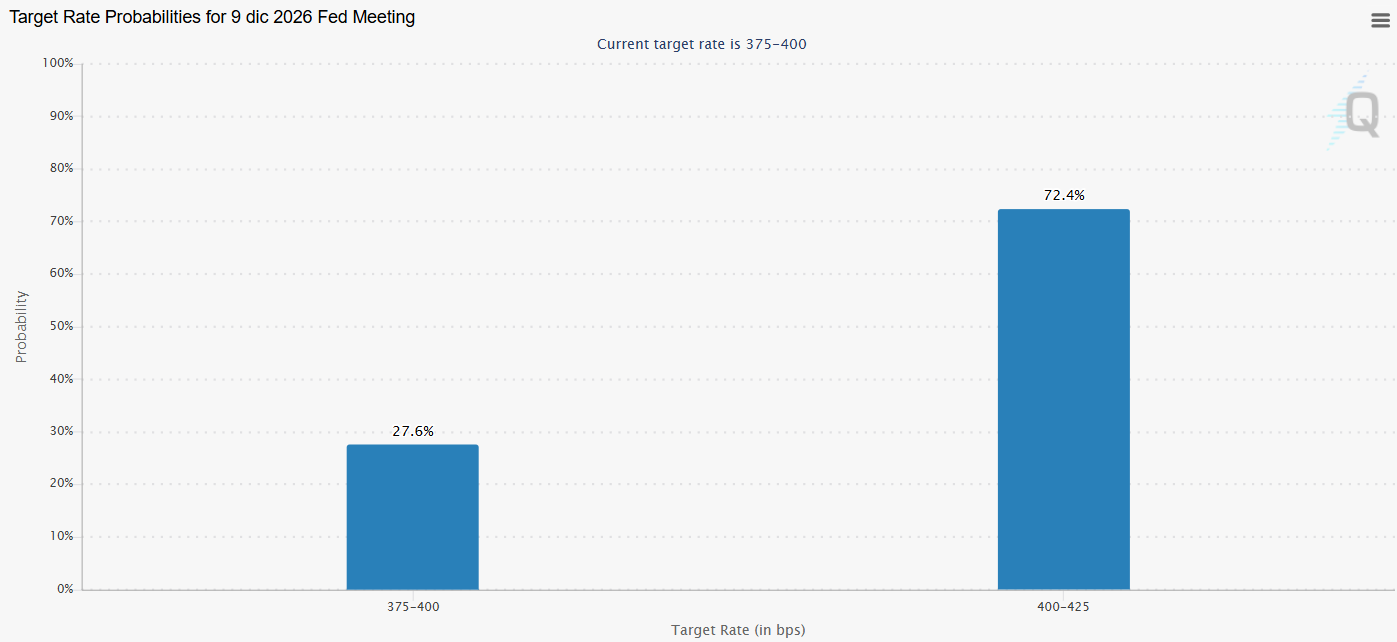
Source: CMEGROUP
This remains important because expectations of higher interest rates continue to represent a challenge for equity markets. A higher-rate environment can reduce liquidity, increase financing costs, and limit both consumer spending and corporate investment activity. It can also weigh on future growth expectations for companies within the index.
For this reason, as long as the market continues to price in the possibility of additional rate increases toward year-end, a cautious tone around risk assets could remain in place. Under this scenario, a Federal Reserve that keeps the door open to a more restrictive policy stance could continue limiting confidence and support a relatively weak environment for the S&P 500 over the longer term.
S&P 500 Technical Forecast
Source: StoneX, Tradingview
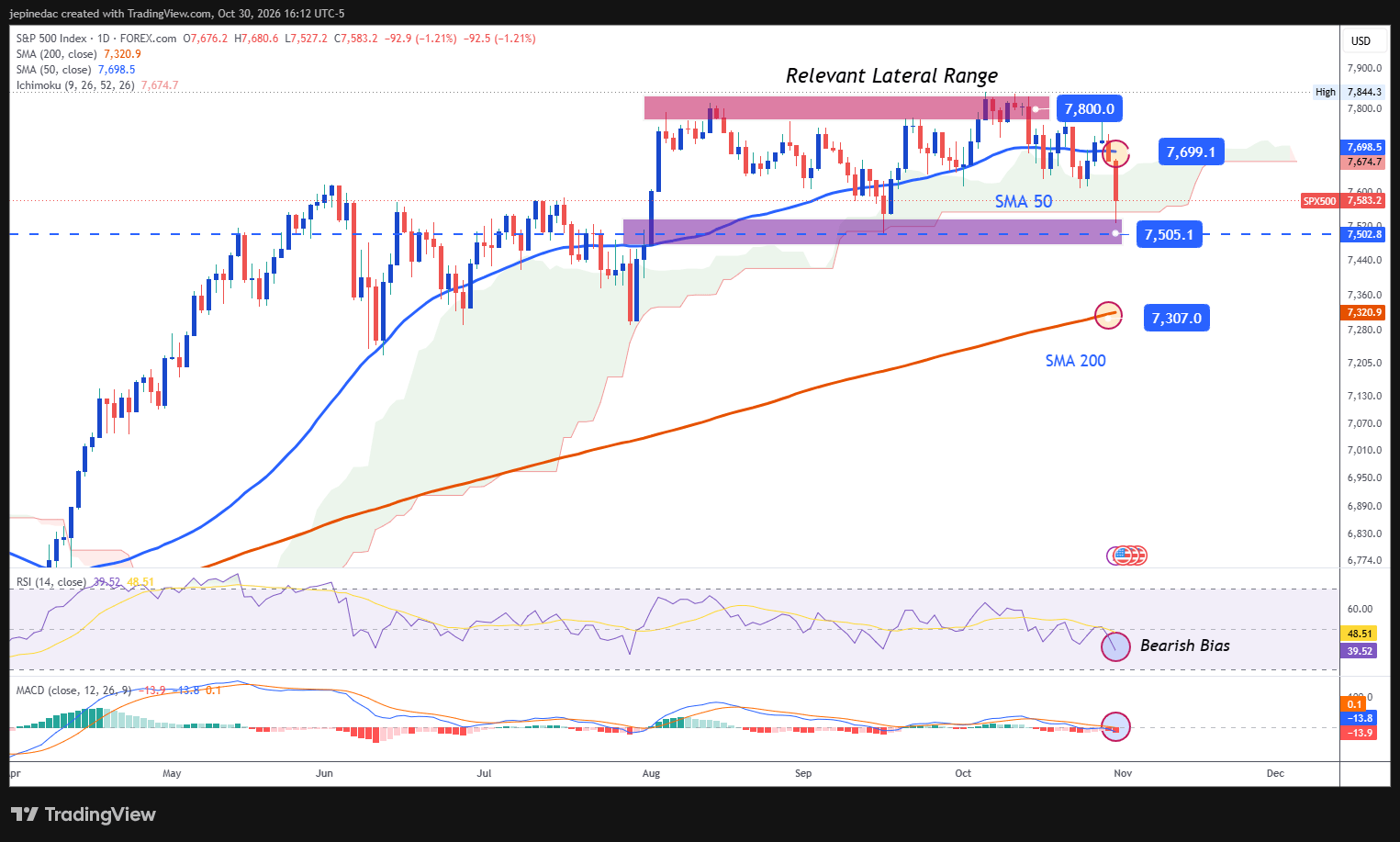
- Weakness begins to gain traction: Although the S&P 500 had been developing within a relatively stable trading range over recent weeks, the latest selling pressure has pushed the index closer to the lower boundary of that structure. If price action begins to break through key support levels, this could create room for a more established bearish phase in the weeks ahead.
- MACD: The MACD histogram continues to trade below the 0 neutral line, suggesting that selling pressure has begun to dominate short-term moving averages. As long as this behavior remains in place, the bearish bias could continue gaining relevance.
- RSI: The RSI also reflects weakness, as the indicator remains below the 50 neutral level. This suggests that selling momentum has once again become dominant and supports the possibility that downside pressure could remain relevant in the near term.
Key Levels:
- 7,800 points – Key Resistance: An all-time high area that represents the most important upside barrier on the chart. A return toward this level could reduce the relevance of the recent bearish move and restore confidence in the longer-term bullish structure observed in previous months.
- 7,700 points – Near-Term Barrier: A key equilibrium zone that aligns with the 50-period moving average. Price action returning toward this level could once again highlight a lack of direction and reinforce the trading range that currently dominates the chart.
- 7,500 points – Key Support: An important inflection zone that also develops below the Ichimoku Cloud, making it the most relevant downside barrier on the chart. Sustained price action below this level could confirm a more meaningful structural shift and open the door to a more consistent bearish trend in the weeks ahead.
Written by Julian Pineda, CFA, CMT – Market Analyst
Follow him on: @julianpineda25
Latest market news




Open an account in minutes
Experience award-winning platforms with fast and secure execution.
Economic calendar
Web Trader platform
Our sophisticated web-based platform is packed with features.
Related articles
Nasdaq 100 Forecast: Anthropic Weighs on NDX Sentiment
As November approaches its end, weakening confidence around major equity benchmarks such as the Nasdaq 100 remains an important theme in financial markets. The index continues to face significant short-term weakness and, over the last two trading sessions alone, has fallen nearly 6.0%, highlighting a bearish bias that has not been this evident for several months.

S&P500 Forecast: SPX falls as Anthropic drops post IPO
U.S. stocks are trading mixed with tech leading the losses as the mood sours despite Anthropic’s record-breaking IPO yesterday, which failed to calm AI jitters and revive the AI trade.


ASX 200 On Track for Worst Week in Four Years, Raising Bear Market Fears
The ASX 200 faces its worst week in four years as falling commodities, China's economic weakness and broad-based selling threaten a deeper correction.

StoneX Financial Ltd (trading as "FOREX.com") is an execution-only service provider. This material, whether or not it states any opinions, is for general information purposes only and it does not take into account your personal circumstances or objectives. This material has been prepared using the thoughts and opinions of the author and these may change. However, FOREX.com does not plan to provide further updates to any material once published and it is not under any obligation to keep this material up to date.
This material is short term in nature and may only relate to facts and circumstances existing at a specific time or day. Nothing in this material is (or should be considered to be) financial, investment, legal, tax or other advice and no reliance should be placed on it. No opinion given in this material constitutes a recommendation by FOREX.com or the author that any particular investment, security, transaction or investment strategy is suitable for any specific person.
The material has not been prepared in accordance with legal requirements designed to promote the independence of investment research. Although FOREX.com is not specifically prevented from dealing before providing this material, FOREX.com does not seek to take advantage of the material prior to its dissemination. This material is not intended for distribution to, or use by, any person in any country or jurisdiction where such distribution or use would be contrary to local law or regulation. For further details see our full non-independent research disclaimer and quarterly summary.