



Average Hourly Earnings steals thunder in NFP jobs data
Markets are focusing on the Average Hourly Earnings data for December, which was lower than expected. But will the Fed see it as dovish as the markets?
Share this:

The headline Non-Farm Payrolls print for December showed that 223,000 jobs were added to the economy vs an expectation of +200,000 and a higher revised November print of +256,000. In addition, the Unemployment Rate dropped to 3.5% vs an expectation of 3.7% and a November print of 3.6%. By themselves, the Fed should be concerned about these two pieces of data as the Fed is looking for the Unemployment Rate to climb, which would help cool the economy and slow inflation. However, it was the Average Hourly earnings print that stole the show in the jobs data release. The MoM print was 0.3% vs an expectation of 0.4% and a revised November print from 0.6% to 0.4%. This brought the YoY print down to 4.6% vs an expectation of 5%! The Fed will be happy to see that the inflation component of jobs data was lower than expected and much lower with the November revisions. As this is the last NFP print before the next FOMC meeting on February 1st, one has to question whether the Average Hourly Earnings component will be enough to allow the Fed to lower the pace of interest rate increases to 25bps. If not, the focus will be on the headline print and the Unemployment Rate, which the Fed will consider to still be hot and therefore may keep the current pace of interest rate increases unchanged.
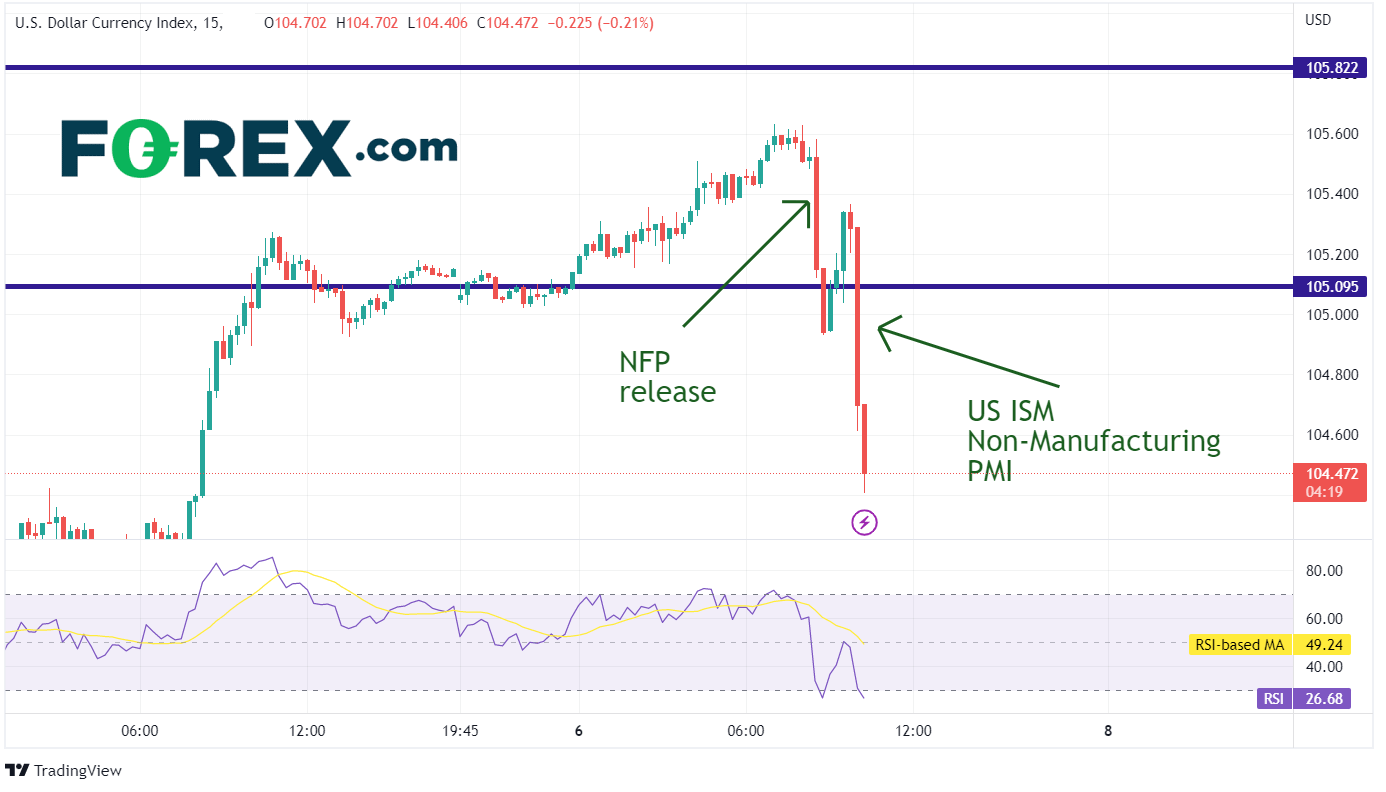
The markets view the jobs data as dovish, focusing on the Average Hourly Earnings component. In addition, shortly after the jobs report, the US released ISM Non-Manufacturing PMI data, which contracted for the first time since May 2020. The price components of both the Manufacturing and Non-Manufacturing PMI were also lower than expected. As a result of today’s data, the US Dollar is falling. The US Dollar Index initially fell from 105.53 down to 104.93 on the jobs data release. It then bounced momentarily but continued lower after the US ISM Non-Manufacturing PMI print, falling from 105.29 down to 104.41.
Source: Tradingview, Stone X
On a 240-minute timeframe, GBP/USD has been moving lower since making a local high at 1.2447 on December 14th, 2022. The pair fell below the bottom trendline of an ascending wedge on December 15th, as the FOMC meeting resulted in a hawkish tone. GBP/USD continued to fall, making a near-term low today at 1.1858 before rallying after the data to 1.2017. If the pair is to continue to move higher, it must first pass-through horizontal resistance at 1.2126 and 1.2299. Above there, price can move to the December 14th, 2022, highs at 1.2447. However, it the US Dollar strengthens, and GBP/USD moves lower, first support is at today’s low of 1.1858. Below there, the pair can fall to the 38.2% Fibonacci retracement level from the low of September 26th, 2022, to the highs of December 14th, 2022, at 1.1644, then the 50% retracement from the same timeframe at 1.1396.
Markets are focusing on the Average Hourly Earnings data for December, which was lower than expected. But will the Fed see it as dovish as the markets? The Unemployment Rate fell to 3.5% and the headline NFP print was strong. The Fed expects to see the U/R near 4.5%. Will Average Hourly Earnings be enough for the Fed to slow the pace of interest rate hikes at the February 1st meeting? Or will the Fed continue to focus on the U/R. There is a lot of data out between now and the FOMC meeting, including CPI next week. Things can change quickly before then!
The headline Non-Farm Payrolls print for December showed that 223,000 jobs were added to the economy vs an expectation of +200,000 and a higher revised November print of +256,000. In addition, the Unemployment Rate dropped to 3.5% vs an expectation of 3.7% and a November print of 3.6%. By themselves, the Fed should be concerned about these two pieces of data as the Fed is looking for the Unemployment Rate to climb, which would help cool the economy and slow inflation. However, it was the Average Hourly earnings print that stole the show in the jobs data release. The MoM print was 0.3% vs an expectation of 0.4% and a revised November print from 0.6% to 0.4%. This brought the YoY print down to 4.6% vs an expectation of 5%! The Fed will be happy to see that the inflation component of jobs data was lower than expected and much lower with the November revisions. As this is the last NFP print before the next FOMC meeting on February 1st, one has to question whether the Average Hourly Earnings component will be enough to allow the Fed to lower the pace of interest rate increases to 25bps. If not, the focus will be on the headline print and the Unemployment Rate, which the Fed will consider to still be hot and therefore may keep the current pace of interest rate increases unchanged.
The markets view the jobs data as dovish, focusing on the Average Hourly Earnings component. In addition, shortly after the jobs report, the US released ISM Non-Manufacturing PMI data, which contracted for the first time since May 2020. The price components of both the Manufacturing and Non-Manufacturing PMI were also lower than expected. As a result of today’s data, the US Dollar is falling. The US Dollar Index initially fell from 105.53 down to 104.93 on the jobs data release. It then bounced momentarily but continued lower after the US ISM Non-Manufacturing PMI print, falling from 105.29 down to 104.41.

Source: Tradingview, Stone X
Trade the DXY now: Login or Open a new account!
• Open an account in the UK
• Open an account in Australia
• Open an account in Singapore
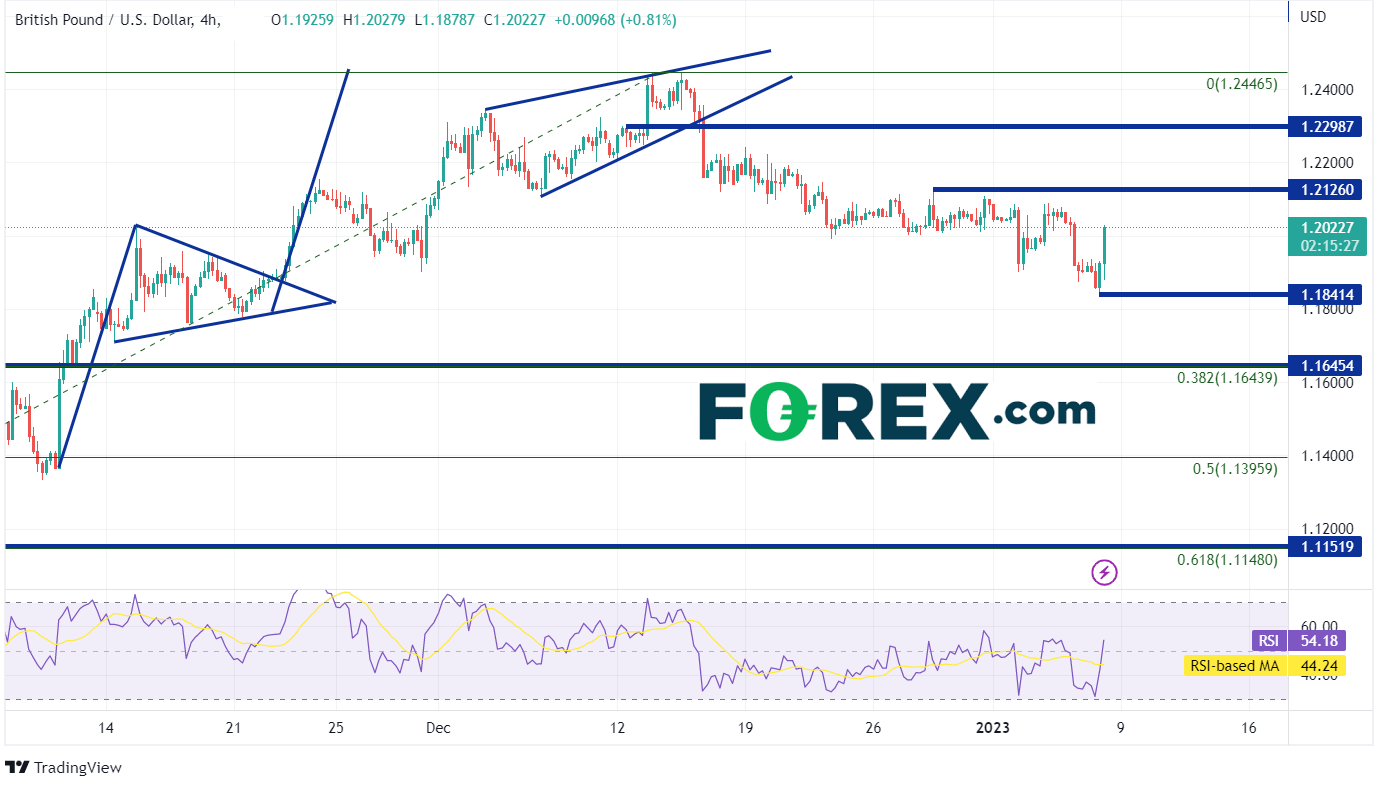
On a 240-minute timeframe, GBP/USD has been moving lower since making a local high at 1.2447 on December 14th, 2022. The pair fell below the bottom trendline of an ascending wedge on December 15th, as the FOMC meeting resulted in a hawkish tone. GBP/USD continued to fall, making a near-term low today at 1.1858 before rallying after the data to 1.2017. If the pair is to continue to move higher, it must first pass-through horizontal resistance at 1.2126 and 1.2299. Above there, price can move to the December 14th, 2022, highs at 1.2447. However, it the US Dollar strengthens, and GBP/USD moves lower, first support is at today’s low of 1.1858. Below there, the pair can fall to the 38.2% Fibonacci retracement level from the low of September 26th, 2022, to the highs of December 14th, 2022, at 1.1644, then the 50% retracement from the same timeframe at 1.1396.
Source: Tradingview, Stone X
Trade GBP/USD now: Login or Open a new account!
• Open an account in the UK
• Open an account in Australia
• Open an account in Singapore
Markets are focusing on the Average Hourly Earnings data for December, which was lower than expected. But will the Fed see it as dovish as the markets? The Unemployment Rate fell to 3.5% and the headline NFP print was strong. The Fed expects to see the U/R near 4.5%. Will Average Hourly Earnings be enough for the Fed to slow the pace of interest rate hikes at the February 1st meeting? Or will the Fed continue to focus on the U/R. There is a lot of data out between now and the FOMC meeting, including CPI next week. Things can change quickly before then!
Learn more about forex trading opportunities.
Related tags:
Latest market news




The complete CFD trading experience
Award-winning platforms, competitive spreads, low commissions and dedicated support.
We live and breathe the markets and are dedicated to helping traders realise their ambitions as we continue to set the industry bar.
Economic calendar
Web Trader platform
Our sophisticated web-based platform is packed with features.
Related articles
RBA delivers 25bp hike, Bullock now the main event
The RBA delivered the expected 25bp hike, but Bullock’s press conference now looms as the bigger volatility risk for AUD/USD and the ASX 200.
Gold outlook: XAU/USD hammered, stretched and vulnerable to a sharp rebound
Gold is getting hammered for solid fundamental reasons, but history suggests extreme four-hourly oversold conditions can produce violent countertrend rallies.
EUR/USD, USD/JPY Outlook: Oil, yields and an FX identity crisis
Crude oil is setting the tone across rates and FX, leaving EUR/USD vulnerable and USD/JPY caught between higher Treasury yields and the growing threat of intervention
StoneX Europe Ltd may make third party material available on this website which may contain information included but not limited to the conditions of financial markets. The material is for information purposes only and does not contain, and should not be construed as containing, investment advice and/or investment recommendation and/or an investment research and/or an offer of or solicitation for any transactions in financial instruments; any decision to enter into a specific transaction shall be made by the client following an assessment by him/her of their situation.
StoneX Europe Ltd makes no representation or warranty and assumes no liability as to the accuracy or completeness of the information provided, nor any loss arising from any investment based on a recommendation, forecast or other information supplied. You should always seek independent advice as to your suitability to speculate in any related markets and your ability to assume the associated risks, if you are at all unsure. We are not under any obligation to update any such material. Any opinion made may be personal to the author and may not reflect the opinion of StoneX Europe Ltd.