



Crude Oil Update: WTI Trades Back Below the $60 Level
During the current trading session, WTI crude oil has posted a short-term decline of more than 3.0%. The selling pressure that has begun to gain traction is mainly driven by the de-escalation of risks surrounding a potential military intervention in Iran, which has reduced the market’s perception of a possible disruption to global crude supply.
Share this:

During the current trading session, WTI crude oil has posted a short-term decline of more than 3.0%. The selling pressure that has begun to gain traction is mainly driven by the de-escalation of risks surrounding a potential military intervention in Iran, which has reduced the market’s perception of a possible disruption to global crude supply. Against this backdrop, the steady demand seen in previous sessions has started to weaken, and as long as a renewed sense of risk does not emerge, selling pressure may continue to dominate short-term price action in crude oil.


Geopolitical tensions de-escalate
At the beginning of January, internal protests in Iran were met with heavy repression, increasing concerns over domestic instability. In that environment, the tone of official statements—particularly from the United States—intensified, fueling speculation about a potential military intervention. Iran responded by warning of possible retaliation, which markets interpreted as a risk to the security of the Strait of Hormuz, a key passage through which nearly 20% of the world’s oil supply is transported. Any disruption to this strategic route could have led to a short-term interruption in crude supply.
However, the current environment largely explains the renewed weakness in WTI, as geopolitical tensions have eased. Statements from the White House have ruled out a near-term military intervention, emphasizing diplomatic pressure instead. At the same time, Iran has reopened its airspace around the capital, suggesting that no immediate intervention threats from other countries are expected.
At this stage, markets are no longer assigning a high probability to a meaningful disruption in crude production in the short term. This shift has triggered a new wave of selling and a more consistent bearish bias. This scenario may persist as long as geopolitical risk linked to Iran does not re-emerge in a way that directly impacts Middle Eastern crude production.
Is risk perception fading?
Currently, the oil implied volatility index (OVX), which measures expected volatility in WTI over the next 30 days, has started to retreat from levels not seen since June 2025, and is now hovering around the 42-point area. This move reflects a decline in expected market volatility, suggesting a lower probability of sharp price swings in the near term.
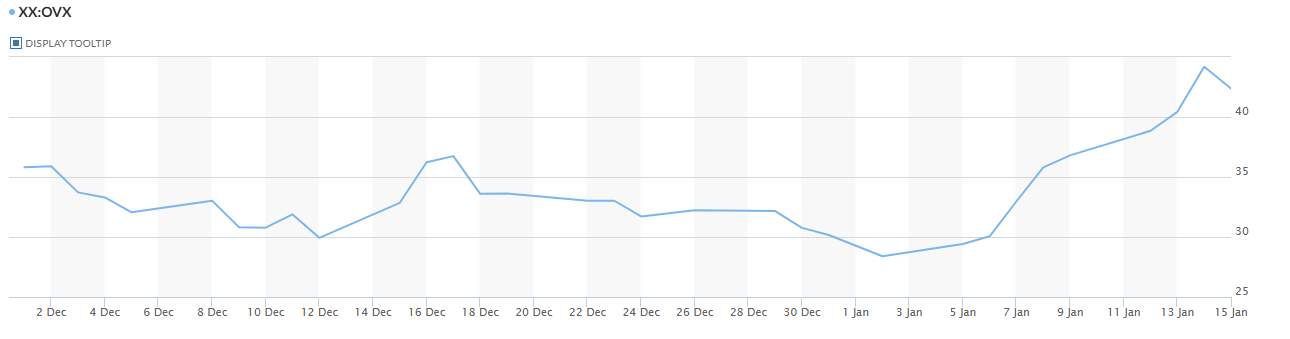
Source: Marketwatch
As OVX continues to post lower readings, market expectations may tilt back toward a more stable price environment for crude oil. This would reduce the likelihood of rapid upside spikes and could reinforce a sense of indecision, potentially supporting continued selling pressure in WTI over the short term.
WTI Technical Outlook
Source: StoneX, Tradingview
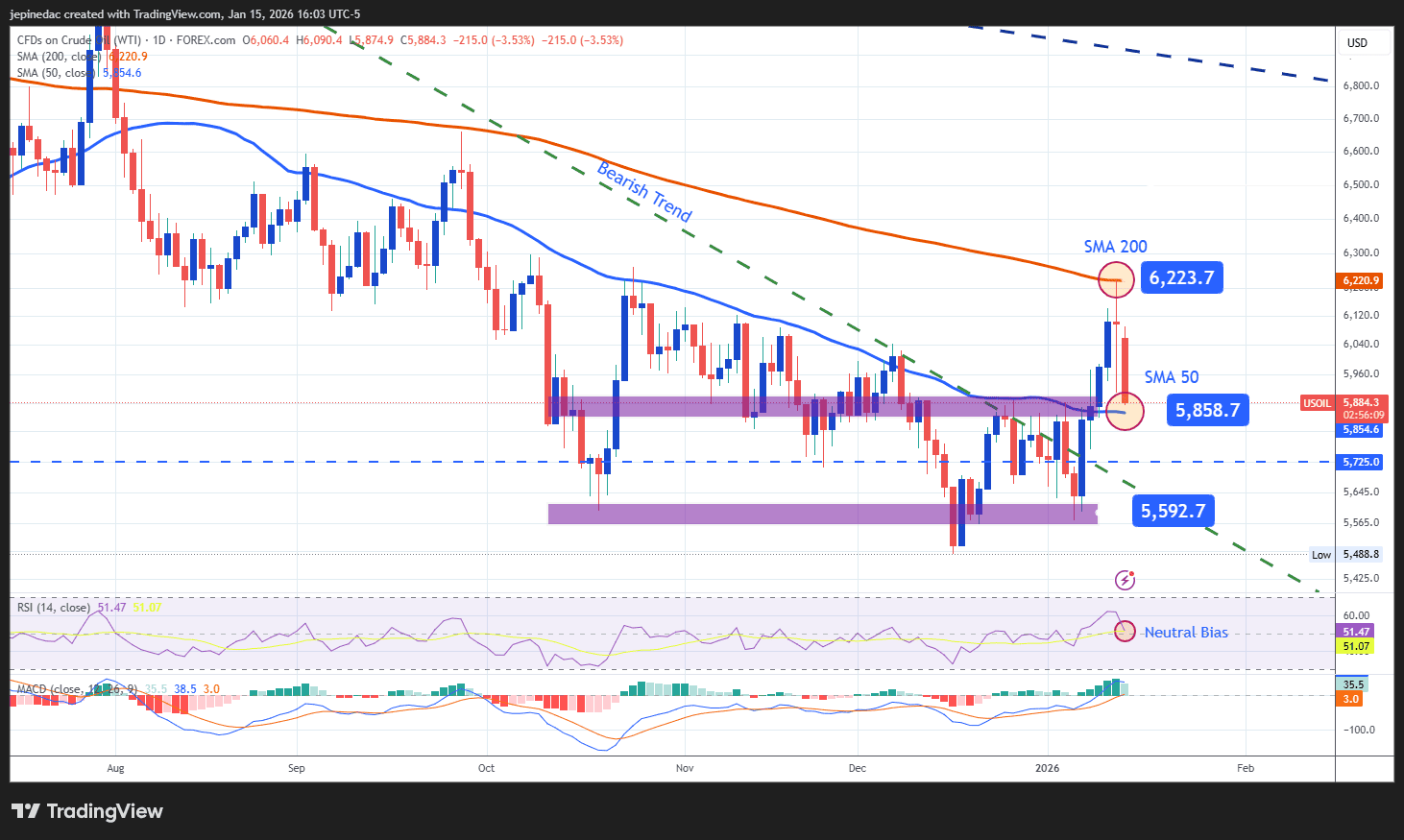
- An indecision phase is developing: In just a few sessions, WTI prices have moved from trading near $62 to once again oscillating below the $60 level. Recent volatility spikes, rather than confirming a clear directional move, have given way to a phase of indecision on the chart. Although oil attempted to form a new bullish trendline in earlier sessions, the latest selloff has pushed prices back into a neutral environment, increasing the likelihood of a short-term sideways range.
- RSI: The RSI is once again approaching the neutral 50 level, suggesting a balance between buying and selling momentum over the past 14 sessions. As long as the indicator remains in this zone, WTI is likely to continue showing short-term neutrality.
- MACD: The MACD has begun to show a consistent pullback in its histogram from recent highs, indicating that buying momentum in the moving averages has lost strength. This behavior reinforces the view that the market is entering a short-term indecision phase.
Key Levels:
- $62 – Key resistance: This level aligns with the 200-period simple moving average and represents the most important upside barrier in the short term. A sustained break above this area could signal a structural shift and open the door to a new bullish trend.
- $58 – Nearby barrier: A neutrality level aligned with the 50-period simple moving average. Price action around this zone could consolidate a short-term sideways phase.
- $55 – Key support: This level marks the 2025 lows and stands out as the most relevant downside barrier. Sustained moves below this area would reinforce a dominant bearish bias, extending the downside pressure seen in recent months.
Written by Julian Pineda, CFA, CMT – Market Analyst
Follow him on: @julianpineda25
Latest market news




The complete CFD trading experience
Award-winning platforms, competitive spreads, low commissions and dedicated support.
We live and breathe the markets and are dedicated to helping traders realise their ambitions as we continue to set the industry bar.
Economic calendar
Web Trader platform
Our sophisticated web-based platform is packed with features.
Related articles
DAX Weakens as Tech and Defence Stocks Come Under Pressure
European equities are under pressure as the global technology selloff extends into a second session. Concerns about AI-related capital expenditure, semiconductor demand and regulatory risks are weighing heavily on technology stocks, while rising oil prices add another layer of uncertainty. With the US jobs report due later today, investors are reassessing valuations, growth expectations and the outlook for interest rates.

Crude Oil, DXY Outlook: Geopolitical Risks Halt Sell-Offs in the Dollar and Oil
The U.S. Dollar Index, Brent and WTI are rebounding from key support levels and oversold conditions after steep sell-offs. U.S.–Iran tensions, inflation risks and rate expectations remain in focus.

dax-record-high-banks-cyclicals-election-relief-rally-european-stocks
The DAX has surged to fresh record highs as investors continue to rotate into banks, industrials and cyclical stocks following the US midterm elections. Falling bond yields, lower oil prices and improving sentiment have supported risk appetite across Europe, helping the index move decisively above 26,000. The focus now shifts from political relief to whether earnings and macroeconomic data can justify the rally's next leg higher.
StoneX Europe Ltd may make third party material available on this website which may contain information included but not limited to the conditions of financial markets. The material is for information purposes only and does not contain, and should not be construed as containing, investment advice and/or investment recommendation and/or an investment research and/or an offer of or solicitation for any transactions in financial instruments; any decision to enter into a specific transaction shall be made by the client following an assessment by him/her of their situation.
StoneX Europe Ltd makes no representation or warranty and assumes no liability as to the accuracy or completeness of the information provided, nor any loss arising from any investment based on a recommendation, forecast or other information supplied. You should always seek independent advice as to your suitability to speculate in any related markets and your ability to assume the associated risks, if you are at all unsure. We are not under any obligation to update any such material. Any opinion made may be personal to the author and may not reflect the opinion of StoneX Europe Ltd.