


USD/JPY Forecast: Can BOJ Expectations Continue to Support the Yen?
A significant shift has begun to emerge around the strength of the Japanese yen in the short term. Over the last two trading sessions, USD/JPY has declined by nearly 1.00%, reflecting a notable recovery in the Japanese currency.
Share this:

A significant shift has begun to emerge around the strength of the Japanese yen in the short term. Over the last two trading sessions, USD/JPY has declined by nearly 1.00%, reflecting a notable recovery in the Japanese currency. For now, this selling pressure is primarily being driven by growing expectations that the Bank of Japan could accelerate the pace of interest rate hikes. As long as these expectations continue gaining traction in the market, it is possible that downside pressure on USD/JPY remains relevant during the coming sessions.

Is the Bank of Japan Turning More Aggressive?
Expectations surrounding the Bank of Japan have changed considerably in recent weeks. This shift has been largely driven by increasing expectations of a rate hike at the September meeting following recent comments from Kazuo Ueda, who emphasized that inflation is once again moving closer to the bank's 2.00% target.
In addition, several policymakers have suggested that not only could a rate hike be justified in September, but that further adjustments may also be necessary in the months ahead. As a result, markets are currently assigning more than an 80% probability to at least a 0.25% rate increase at the next meeting.
This development comes as a relative surprise because Japan still maintains one of the lowest interest rates among major central banks, currently around 1.00%. Until recently, the dominant view was that the Bank of Japan would remain focused on maintaining monetary stability. However, the latest narrative suggests the institution could become one of the more aggressive central banks over the coming months.
Over the longer term, this shift could also improve the relative attractiveness of yen-denominated assets compared with international alternatives, a dynamic that has been largely absent during the years of ultra-low interest rates in Japan.
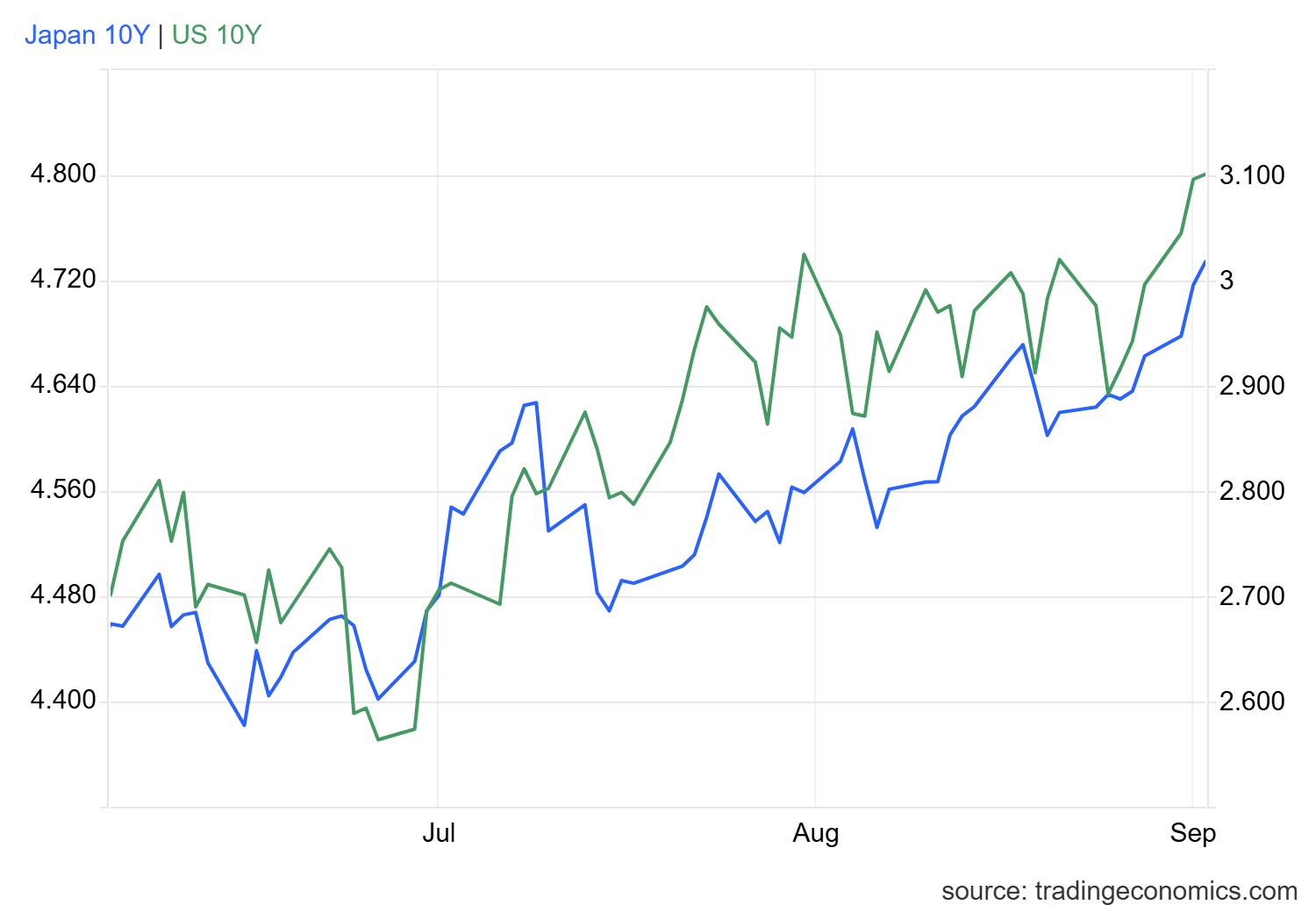
This change is already being reflected in the Japanese bond market. 10-year government bond yields have shown a consistent recovery following recent comments and now trade above the 3.00% level, helping strengthen the appeal of yen-denominated investments.
However, it is important to note that this is occurring alongside rising U.S. Treasury yields, which have already climbed above 4.8%. As a result, while Japanese bonds are becoming more attractive, U.S. yields continue to provide a favorable differential for the dollar that could limit part of the yen's recent advance.
Source: TradingEconomics
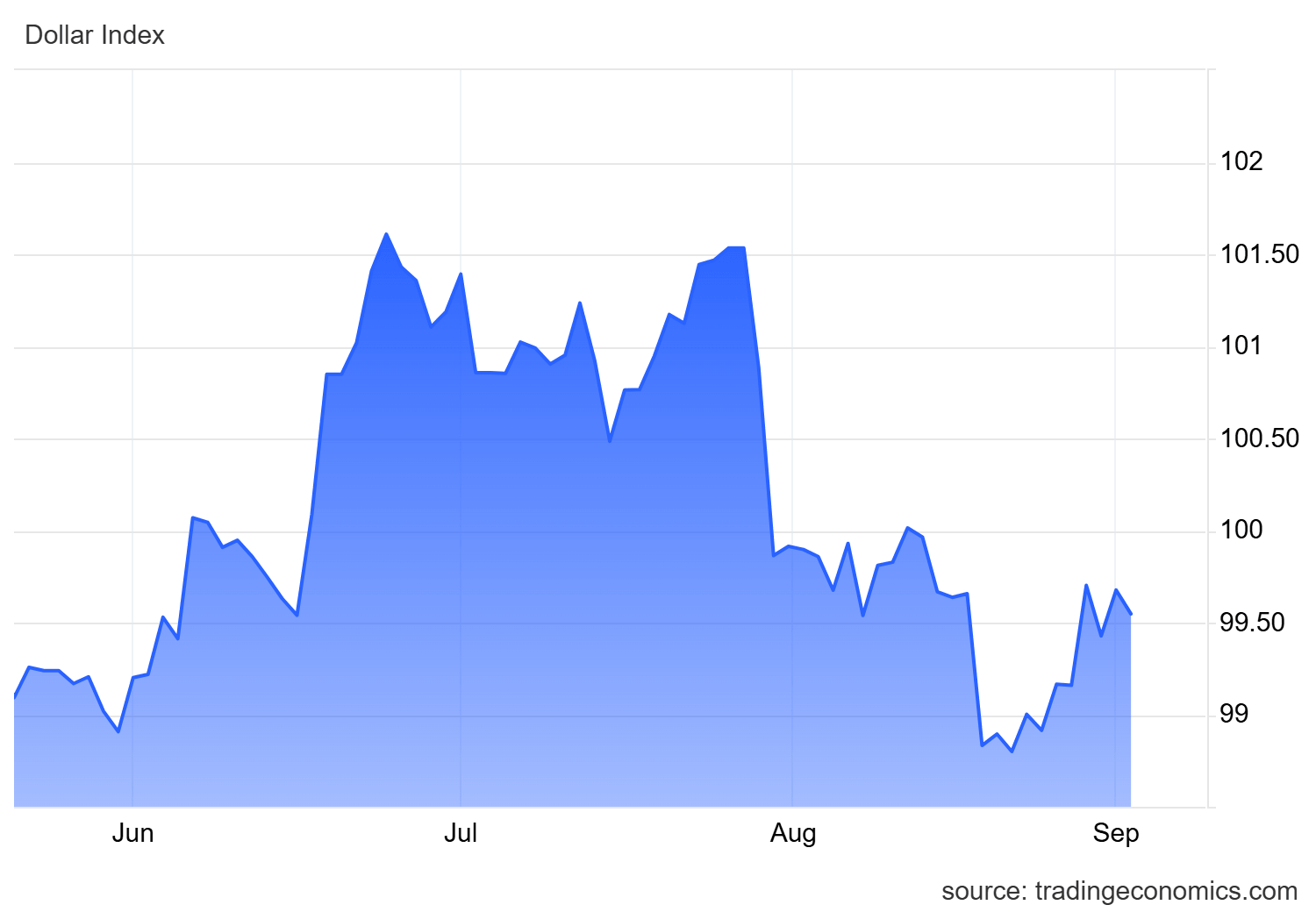
It is also noteworthy that the yen's recovery is taking place despite the relative stability of the U.S. dollar. The DXY Index, which measures the dollar's performance against its major peers, continues to trade near the 100-point area without showing any meaningful loss of momentum.
This suggests that markets are placing significant importance on recent comments from the Bank of Japan and that, for now, expectations of a more restrictive monetary policy in Japan are having a greater impact than the stability currently observed in the dollar. Nevertheless, it remains important to consider that a stronger recovery in the U.S. currency could continue to limit part of the yen's recent gains.
Source: TradingEconomics
Taking all of this into account, it appears that the Bank of Japan's shift in tone has been enough to support a recovery in the Japanese currency over the short term. This dynamic could continue to favor downside pressure on USD/JPY as long as the dollar and U.S. bond yields do not accelerate their recovery more aggressively.
At the same time, it is important to recognize that a more hawkish stance from the Federal Reserve could once again increase the appeal of dollar-denominated assets. Under that scenario, part of the yen's recent strength could begin to moderate and the market could return to a more balanced phase around USD/JPY.
USD/JPY Technical Outlook
Source: StoneX, Tradingview
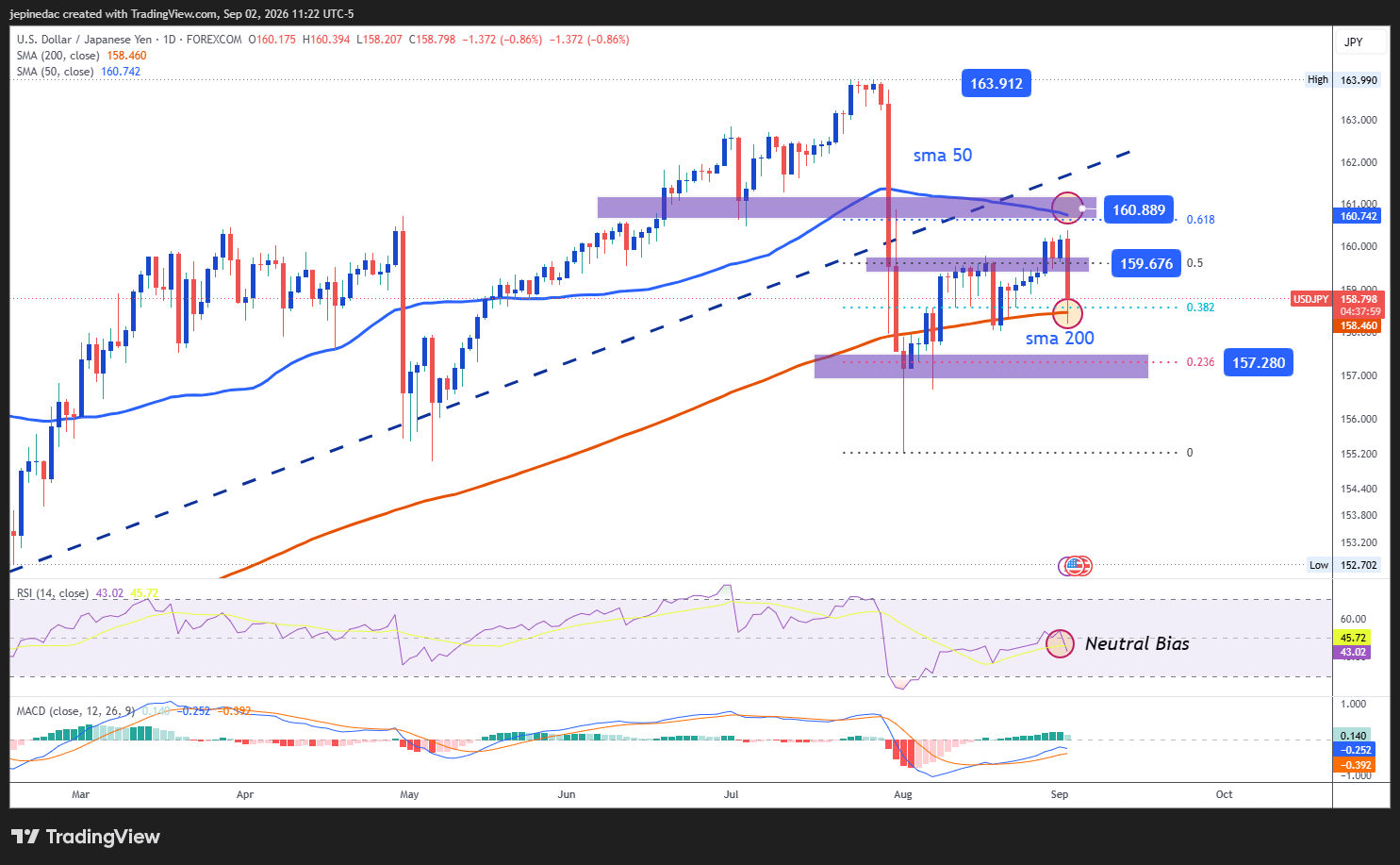
- Lack of Direction Remains Relevant: After USD/JPY moved away from the major bullish trendline that dominated much of the price action over recent months, the market entered a more balanced phase. Despite the recent strengthening of the yen, a sufficiently strong directional structure has yet to emerge on the chart. Unless price manages to break through important technical levels, this lack of direction may continue to dominate and could even open the door to a more defined period of range-bound trading.
- RSI: The RSI remains slightly below the neutral 50 level. However, this behavior does not yet indicate aggressive selling pressure. Instead, it continues to reflect a relatively balanced environment between buyers and sellers over the last fourteen sessions. This reading supports the possibility that a period of indecision remains relevant for price action.
- MACD: A similar picture can be observed in the MACD, where the histogram continues to fluctuate around the neutral 0 line. This behavior reflects balance in the average strength of short-term moving averages and reinforces the possibility that a neutral market environment remains an important feature of the chart in the coming sessions.
Key Levels to Watch:
- 160.889 – Key Resistance: This level coincides with the most relevant 61.8% Fibonacci retracement on the chart as well as the 50-period moving average. Price action that manages to establish itself above this area could favor the emergence of a stronger bullish bias and restore the relevance of the previous bullish structure that dominated months ago.
- 159.676 – Nearby Barrier: This level represents one of the main equilibrium zones on the chart and aligns with several important retracement areas from previous sessions. It could become the key reference to monitor should bullish corrective moves begin to emerge in the short term.
- 157.280 – Key Support: This area corresponds to recent lows and also aligns with the 200-period Simple Moving Average and the 23.6% Fibonacci retracement of the most relevant move on the chart. A sustained break below this level could reinforce a more dominant bearish bias and potentially pave the way for a broader downtrend over the coming weeks.
Written by Julian Pineda, CFA, CMT – Market Analyst
Follow him on: @julianpineda25
Latest market news




The complete CFD trading experience
Award-winning platforms, competitive spreads, low commissions and dedicated support.
We live and breathe the markets and are dedicated to helping traders realise their ambitions as we continue to set the industry bar.
Economic calendar
Web Trader platform
Our sophisticated web-based platform is packed with features.
Related articles
EUR/USD weekly outlook: Oil, inflation and NFP in focus
After coming under significant pressure in recent weeks, the EUR/USD came off its lows to finish the week on a positive note on Friday, albeit with only a mild rebound. That was not enough to prevent the exchange rate falling for the third consecutive week, as the US dollar and bond yields rallied across the board.


EUR/USD Q4 2026 Outlook: Euro at a Crossroads as Fed, ECB Tighten 9 25 2026
EUR/USD enters Q4 at a pivotal inflection point as competing Fed-ECB policy paths and persistent inflation risks collide with major technical support.


USD/JPY Q4 2026 Outlook: Hawkish Fed Pricing Clashes With Intervention Risk
The year-end tug-of-war is clear: hawkish Fed pricing supports USD/JPY, while intervention risk limits the upside.

StoneX Europe Ltd may make third party material available on this website which may contain information included but not limited to the conditions of financial markets. The material is for information purposes only and does not contain, and should not be construed as containing, investment advice and/or investment recommendation and/or an investment research and/or an offer of or solicitation for any transactions in financial instruments; any decision to enter into a specific transaction shall be made by the client following an assessment by him/her of their situation.
StoneX Europe Ltd makes no representation or warranty and assumes no liability as to the accuracy or completeness of the information provided, nor any loss arising from any investment based on a recommendation, forecast or other information supplied. You should always seek independent advice as to your suitability to speculate in any related markets and your ability to assume the associated risks, if you are at all unsure. We are not under any obligation to update any such material. Any opinion made may be personal to the author and may not reflect the opinion of StoneX Europe Ltd.