




Why US Economic Data for December may not Matter
Will the December data matter to the markets when it is released?
Share this:

Last Friday, we received the ISM Manufacturing PMI data for December which came out lower than expected: 47.2 actual vs and expectation of 49.0. This Friday we will get Non-Farm Payroll data from December. Expectations are that 164,000 jobs have been created in the US in December vs 266,000 in November, which was a huge beat. Throughout the month of January, monthly data for December will be released, just as it normally would any other month. This data includes more manufacturing data, more employment data, inflation data, and our first look at GDP for Q4. The month concludes with an unenthusiastic Fed Interest Rate Decision on January 29th. According to the CME FedWatch Tool, the market is pricing in a 91% chance of a “no change” decision on interest rates.
But will the December data matter to the markets when it is released? You may recall something agreed to in mid-December call “Phase One” of a Trade Deal that has been agreed to between the United States and China. As a matter of fact, there is talk that the deal will be signed next week in Washington. In addition, around the same time, a trade agreement was reached among the counties of North America, known as the USMCA (the United States-Mexico-Canada Agreement). Mexico has already ratified the agreement, the US may have the final Senate vote on the bill on Friday, and Canada is expected to vote later this month. However, with an “agreement” in place for both trade deals, one would expect the wheels to be put in motion sooner than later.
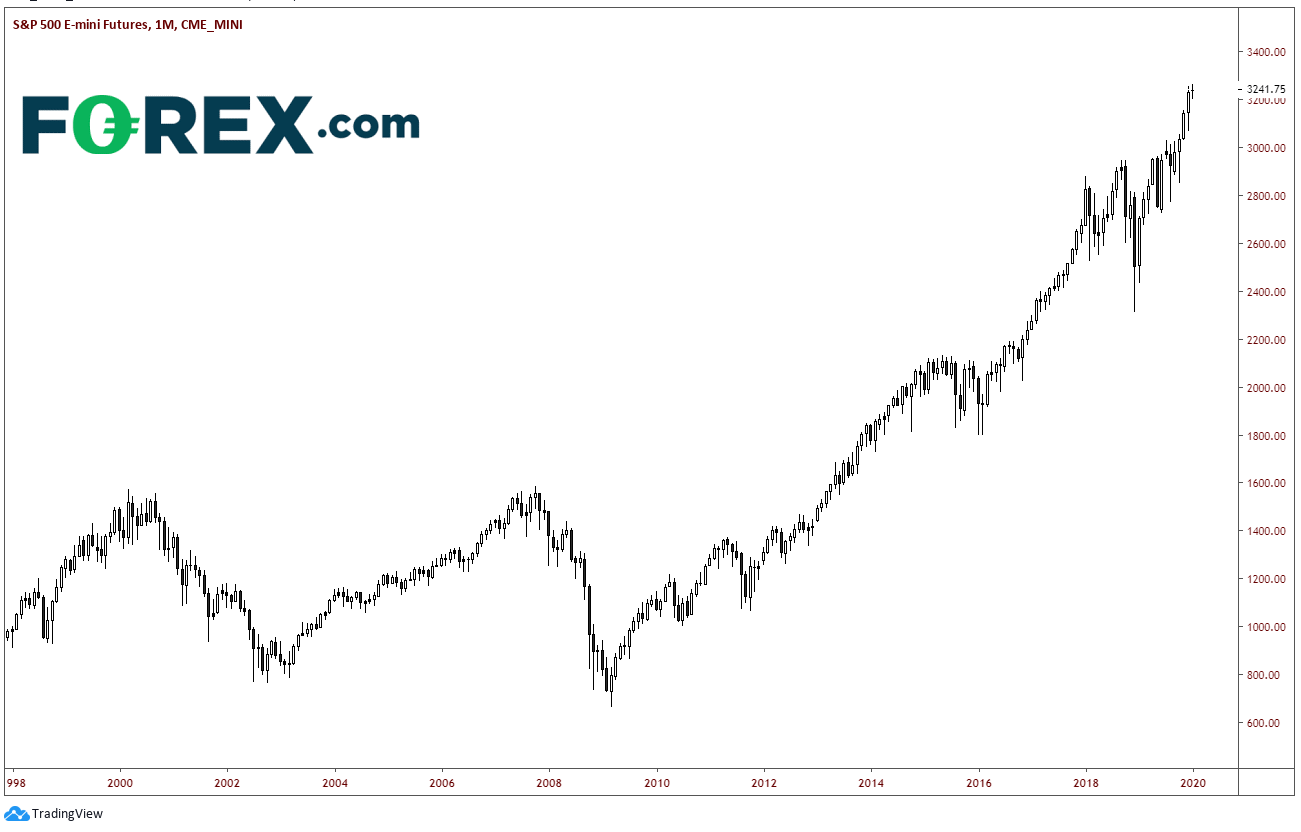
The “markets” tends to be forward looking. Traders will be very interested to see what the effects will be on the economic data once these trade deals are all signed and done. Supposedly, these deals are better than previous deals. This may be one reason the S&P 500 is near all-time highs.
Source: Tradingview, City Index
So, if the market is forward looking and the trade deals were agreed in mid-December, why would traders care about the economic data from December, before any of the trade deal effects would be reflected in the data? We may see a pickup in volatility in the “markets” in January, however just don’t expect too much of it to come from the US economic data until later in Q1.
Last Friday, we received the ISM Manufacturing PMI data for December which came out lower than expected: 47.2 actual vs and expectation of 49.0. This Friday we will get Non-Farm Payroll data from December. Expectations are that 164,000 jobs have been created in the US in December vs 266,000 in November, which was a huge beat. Throughout the month of January, monthly data for December will be released, just as it normally would any other month. This data includes more manufacturing data, more employment data, inflation data, and our first look at GDP for Q4. The month concludes with an unenthusiastic Fed Interest Rate Decision on January 29th. According to the CME FedWatch Tool, the market is pricing in a 91% chance of a “no change” decision on interest rates.
But will the December data matter to the markets when it is released? You may recall something agreed to in mid-December call “Phase One” of a Trade Deal that has been agreed to between the United States and China. As a matter of fact, there is talk that the deal will be signed next week in Washington. In addition, around the same time, a trade agreement was reached among the counties of North America, known as the USMCA (the United States-Mexico-Canada Agreement). Mexico has already ratified the agreement, the US may have the final Senate vote on the bill on Friday, and Canada is expected to vote later this month. However, with an “agreement” in place for both trade deals, one would expect the wheels to be put in motion sooner than later.
The “markets” tends to be forward looking. Traders will be very interested to see what the effects will be on the economic data once these trade deals are all signed and done. Supposedly, these deals are better than previous deals. This may be one reason the S&P 500 is near all-time highs.
Source: Tradingview, FOREX.com
So, if the market is forward looking and the trade deals were agreed in mid-December, why would traders care about the economic data from December, before any of the trade deal effects would be reflected in the data? We may see a pickup in volatility in the “markets” in January, however just don’t expect too much of it to come from the US economic data until later in Q1.
Latest market news




The complete CFD trading experience
Award-winning platforms, competitive spreads, low commissions and dedicated support.
We live and breathe the markets and are dedicated to helping traders realise their ambitions as we continue to set the industry bar.
Economic calendar
Web Trader platform
Our sophisticated web-based platform is packed with features.
Related articles
EUR/USD weekly outlook: Oil, inflation and NFP in focus
After coming under significant pressure in recent weeks, the EUR/USD came off its lows to finish the week on a positive note on Friday, albeit with only a mild rebound. That was not enough to prevent the exchange rate falling for the third consecutive week, as the US dollar and bond yields rallied across the board.


EUR/USD Q4 2026 Outlook: Euro at a Crossroads as Fed, ECB Tighten 9 25 2026
EUR/USD enters Q4 at a pivotal inflection point as competing Fed-ECB policy paths and persistent inflation risks collide with major technical support.


USD/JPY Q4 2026 Outlook: Hawkish Fed Pricing Clashes With Intervention Risk
The year-end tug-of-war is clear: hawkish Fed pricing supports USD/JPY, while intervention risk limits the upside.

StoneX Europe Ltd may make third party material available on this website which may contain information included but not limited to the conditions of financial markets. The material is for information purposes only and does not contain, and should not be construed as containing, investment advice and/or investment recommendation and/or an investment research and/or an offer of or solicitation for any transactions in financial instruments; any decision to enter into a specific transaction shall be made by the client following an assessment by him/her of their situation.
StoneX Europe Ltd makes no representation or warranty and assumes no liability as to the accuracy or completeness of the information provided, nor any loss arising from any investment based on a recommendation, forecast or other information supplied. You should always seek independent advice as to your suitability to speculate in any related markets and your ability to assume the associated risks, if you are at all unsure. We are not under any obligation to update any such material. Any opinion made may be personal to the author and may not reflect the opinion of StoneX Europe Ltd.