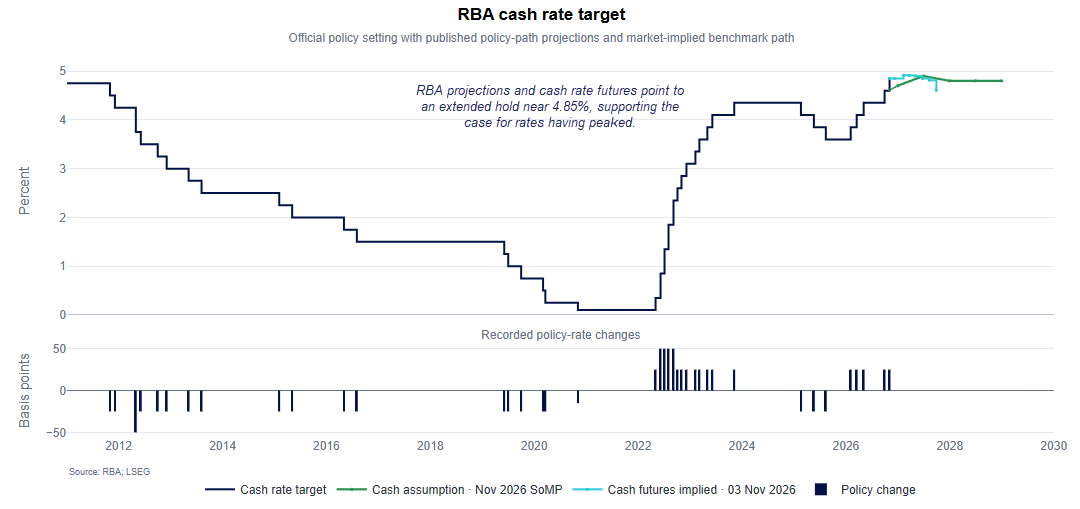
Australian consumer confidence fell to a four-year low in November, while NAB's business survey revealed a sharp decline in forward orders. With households and businesses increasingly pessimistic, the latest surveys strengthen the case for the RBA to hold rates until February, even as inflation pressures persist.
View related analysis:
- RBA Hikes to 4.85%, but Split Vote and Softer Guidance Hit AUD/USD
- AUD/USD Remains Vulnerable Despite US Dollar Weakness Amid Midterms
- Japanese Yen Outlook: EUR/JPY and GBP/JPY Outbid USD/JPY
- Extreme Euro Shorts Meet Renewed US Dollar Strength | COT Report
- Australian Dollar Outlook: AUD/USD Bears Eye March Low as US CPI Looms
Westpac and NAB Surveys Strengthen the Case for an RBA Rate Pause
Australian consumer confidence fell 2.7% in November, its third consecutive monthly decline, according to the latest Westpac survey. Although the decline was less severe than the previous two months, the headline index fell to 78.2, its lowest level in four years.
Expectations of economic conditions over the next 12 months plunged 10.2%, marking the largest monthly decline since April. House price expectations also slumped 13.5%, pointing to growing pessimism towards the housing market.
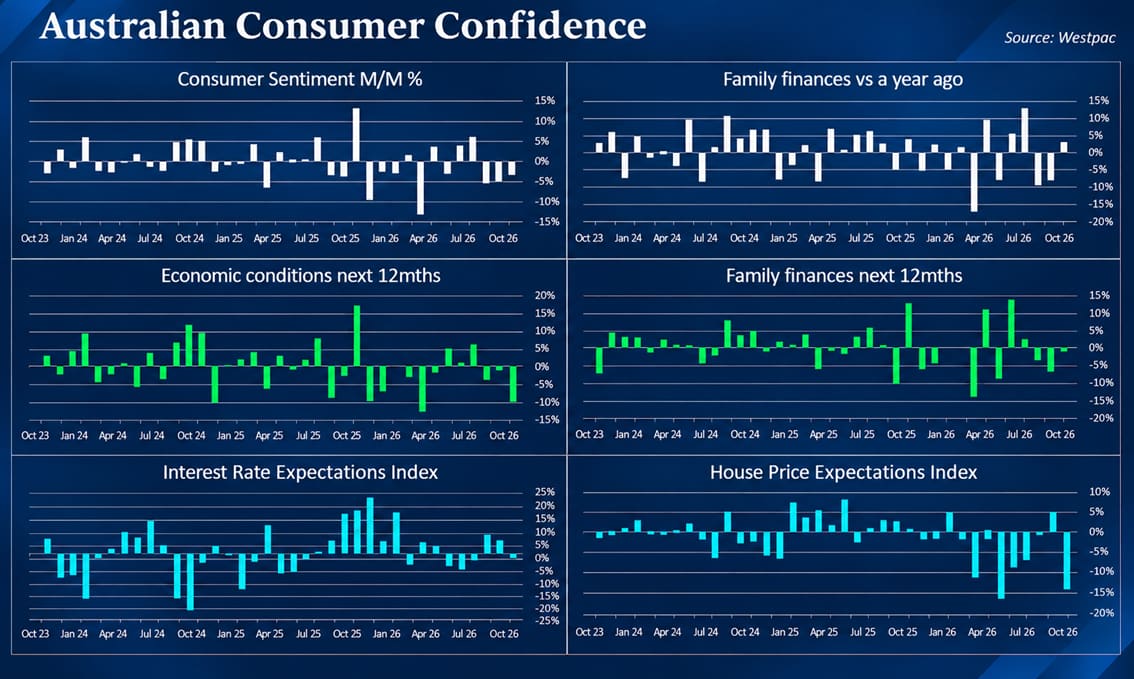
And that second point could be particularly significant, given how closely the Australian economy is tied to house prices, one way or another. This is where the wealth effect can rear its ugly head: if consumers expect house prices to fall, they may feel less wealthy and rein in spending. That could create a vicious circle for consumption at a time when cracks are already emerging in the economy.
On the upside, the index of family finances compared with a year ago rose a modest 2.8%, while interest rate expectations edged 1.1% lower. This suggests consumers are marginally less concerned about further rate hikes, although expectations remain elevated.
NAB Business Confidence Falls as Forward Orders Plunge
NAB's latest business survey paints an equally gloomy picture, with business confidence falling to -15 in October, while business conditions slipped to -2, their lowest level since August 2020. More concerning was the 11-point plunge in forward orders to -12, led by construction and manufacturing, suggesting trading conditions could deteriorate further. Profitability also weakened to -8, while retail recorded the weakest confidence, conditions and forward orders of any industry.
On the upside, employment rebounded five points to +4, suggesting businesses are not yet aggressively cutting jobs. But with purchase cost growth still elevated at 2.4% quarterly, businesses face an uncomfortable combination of weakening demand, squeezed profit margins and persistent inflationary pressures.
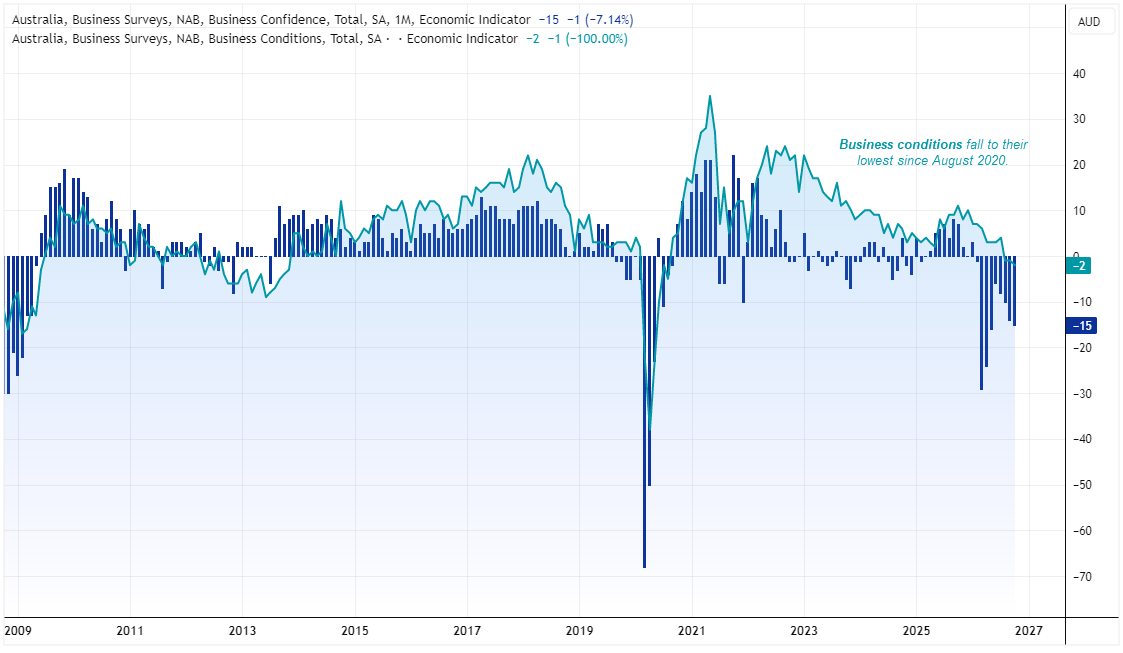
Source: National Australia Bank (NAB), LSEG
This content was created by an affiliate of FOREX.com and represents the views and opinions of the author/speakers, not the views and opinions of FOREX.com, StoneX Group Inc., or its subsidiaries. The content has not been independently reviewed by FOREX.com.
RBA Could Hold Until February as Confidence Deteriorates
Ultimately, both surveys suggest Australia's economy could be heading for a more pronounced slowdown. Consumers are increasingly pessimistic, while businesses face deteriorating profitability and a sharp decline in forward orders.
Weak confidence is starting to translate into weaker demand, but persistent inflation and capacity pressures complicate the RBA's next move.
With crude oil prices markedly lower this past week, my base case is that the RBA's cash rate has peaked for now – and policymakers will be content to hold until February, when they can reassess the latest economic data.
Unless confidence picks up materially, I struggle to see a case for another hike. That said, the RBA may retain a tightening bias as insurance against persistent inflation and to keep inflation expectations in check.