







AUD/USD Weekly Outlook: Australian Dollar Faces Jobs Data and US CPI
The Australian dollar (AUD/USD) faces key domestic data, with sentiment, wages, and jobs in focus, while US inflation and retail sales could drive broader USD direction.
Share this:

View related analysis:
- Japanese Yen Sinks, US Dollar Surges Ahead of US-China Talks
- AUD/USD, USD/CAD, NZD/USD: An Engulfing Day for Commodity FX
- AUD/USD Weekly Outlook: Yuan Correlation Supports Aussie Strength
- Japanese Yen Bulls Still Pushing Their Luck: COT Report
View related analysis:
- Japanese Yen Sinks, US Dollar Surges Ahead of US-China Talks
- AUD/USD, USD/CAD, NZD/USD: An Engulfing Day for Commodity FX
- AUD/USD Weekly Outlook: Yuan Correlation Supports Aussie Strength
- Japanese Yen Bulls Still Pushing Their Luck: COT Report
Australian Data in Focus: Jobs, Wages, and Sentiment Ahead of RBA Decision
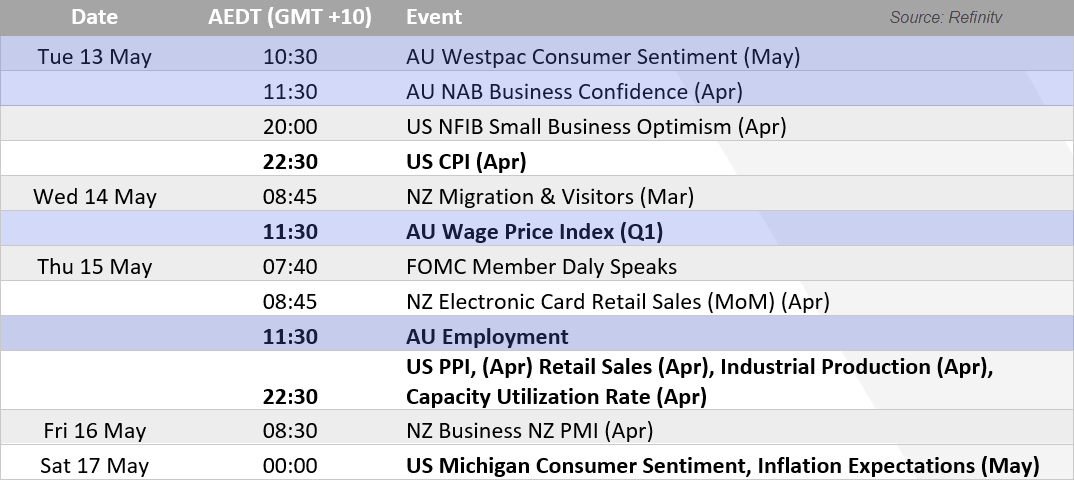
The four main economic data points next week include sentiment for consumer and business, wage price index and employment. I don’t see any of these derailing an RBA cut on May 20, but they do of course help us keep a pulse on the economy.
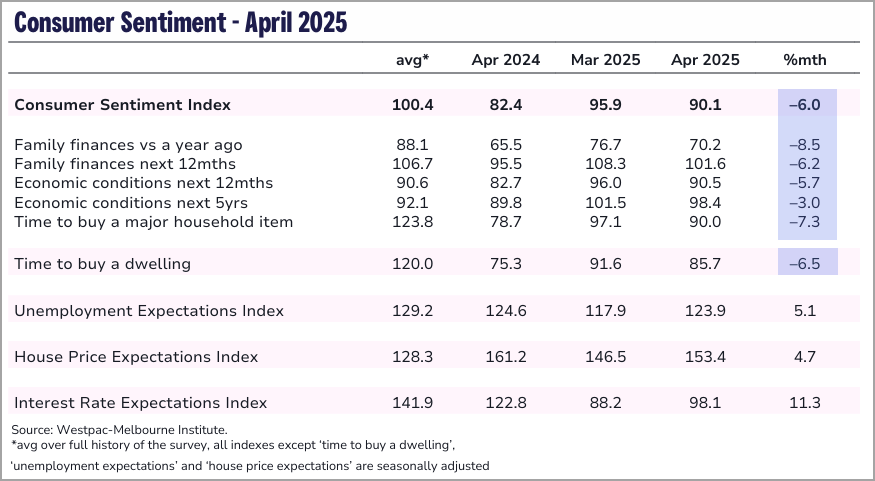
“Tariff turmoil” saw Australian consumer confidence fall by -6% in April—its steepest monthly decline in nearly two years, according to the Westpac survey. All sub-indices declined over the month, with the ‘family finances compared to a year ago’ gauge plunging -8.5%. I doubt we’ll see a strong print for consumer confidence this week, though the rebound in risk sentiment might help soften the blow. The ASX 200 has rallied around 15% since the April low (which formed the day ahead of the Westpac sentiment report) and AUD/USD is up around 10%.
The wage price index is likely to show wages rising at a slower pace, though it’s rarely a market mover for AUD/USD traders.
Thursday’s employment report, however, warrants attention—although it seems more likely than not to deliver another set of robust figures. I’m personally struggling to find a tradie available for work, and one I spoke to didn’t even have time to provide a quote. But with trimmed-mean inflation now within the Reserve Bank of Australia’s (RBA) 2–3% target band and consumer sentiment shifting, a rate cut on May 20 appears increasingly likely.
US CPI and Retail Sales in Focus for AUD/USD Traders
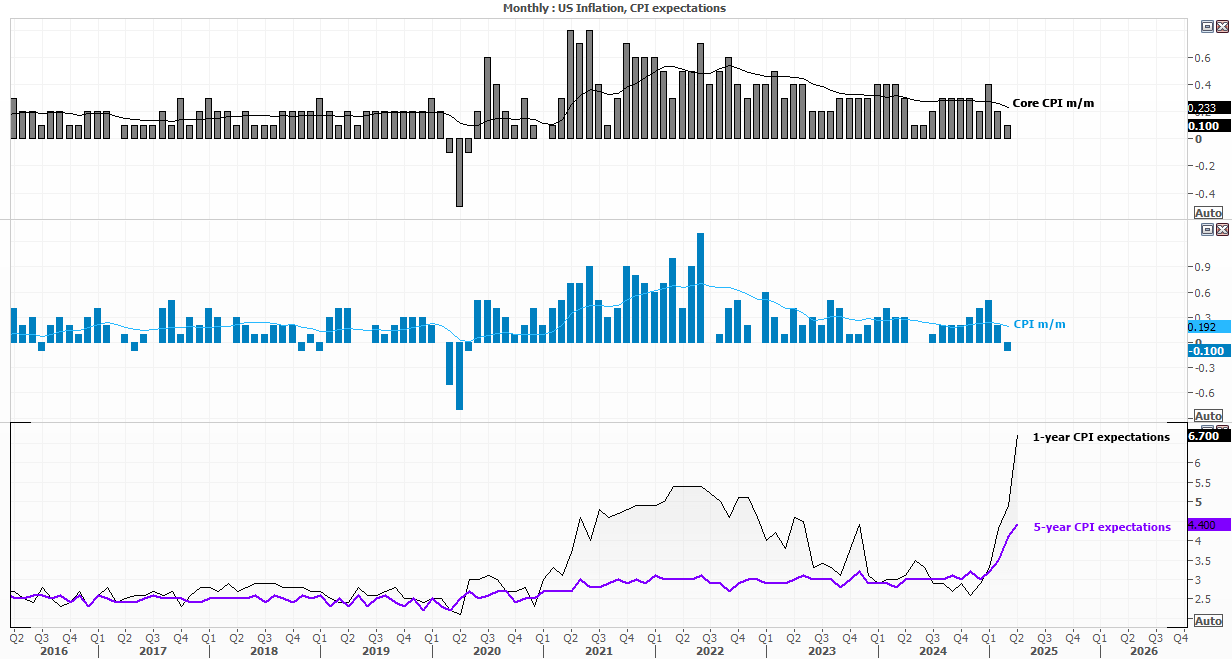
Consumer prices are the main event from the US this week. Contrary to tariff-induced fears, April’s CPI data was softer than expected. Core CPI rose just 0.1%—a nine-month low—while the annual rate of core inflation slowed to 2.8% year-on-year, its lowest level since March 2021. CPI also contracted by -0.1%, its first sub-zero print in nearly four years.
While another soft CPI print could bolster expectations of a Federal Reserve (Fed) rate cut, the Fed is unlikely to signal any moves until there is clarity on a potential US–China trade deal. Fed fund futures currently imply a 50.4% chance of a cut in July, or 44.1% of one in September.
Retail sales might produce another solid set of figures as shoppers bring forward purchases due to the threat of tariffs. Inflation expectations are also expected to remain high in Friday’s consumer sentiment report from the University of Michigan.
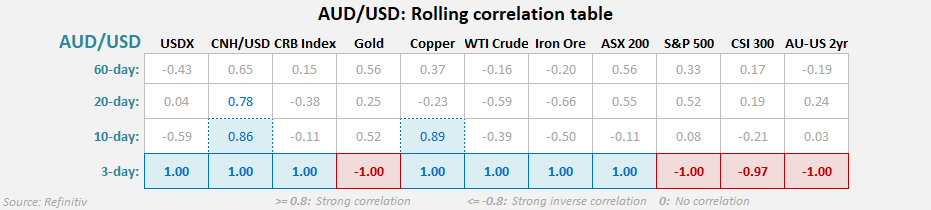
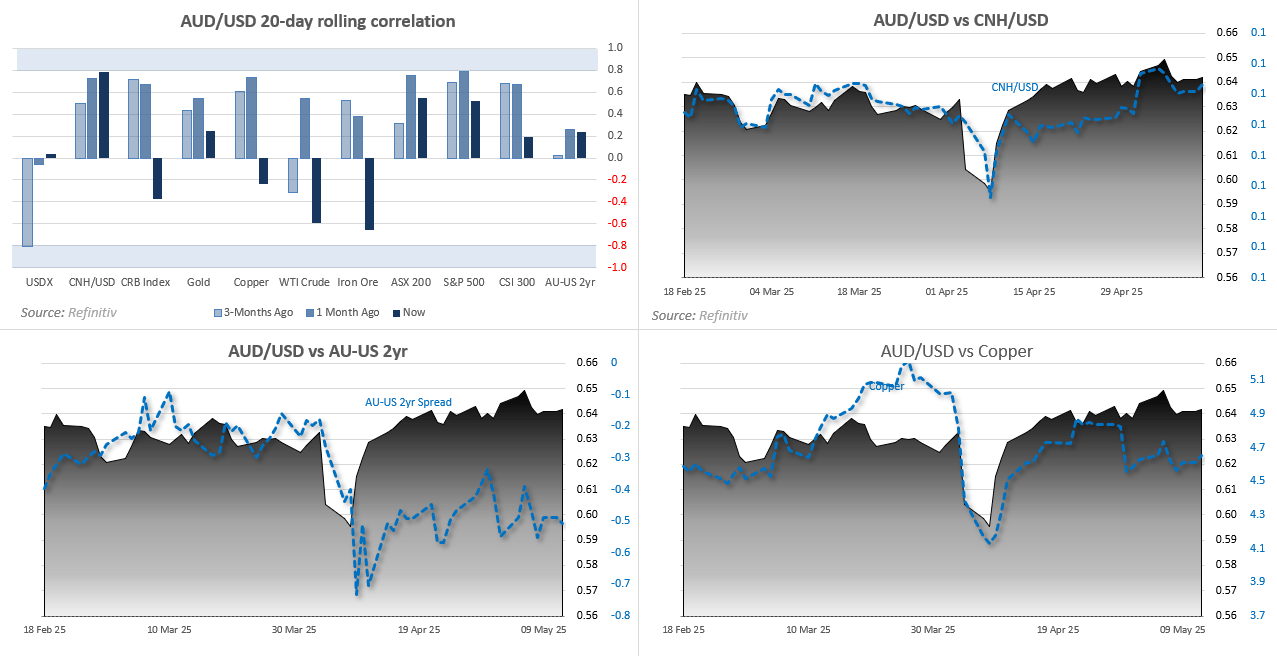
AUD/USD Correlations
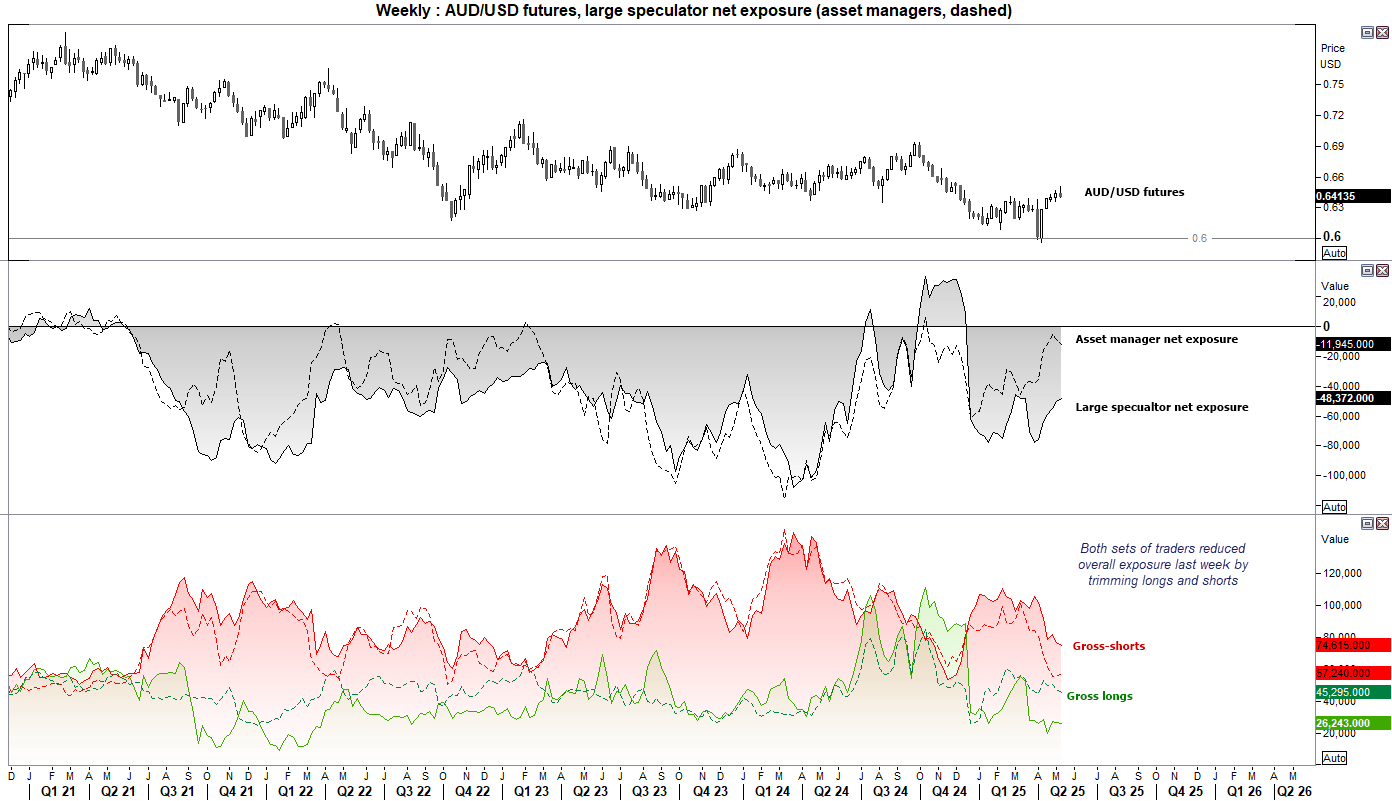
- Asset managers increased their net-short exposure to AUD/USD by 3.5k contracts last week.
- However, they reduced overall exposure—trimming longs by 4% (-1.8k contracts) and shorts by 3% (-1.8k contracts).
- Large speculators also trimmed gross longs by 1.3% (-359 contracts) and shorts by 2.5% (-1.9k contracts), resulting in a 1.5k contract reduction in net-short exposure.
AUD/USD Futures: COT Report Shows Reduction in Market Positioning
- Asset managers increased their net-short exposure to AUD/USD by 3.5k contracts last week
- Though they actually reduced their overall exposure, trimming longs by -4% (-1.8k contracts) and shorts by -3% (-1.8k contracts)
- Large speculators also trimmed gross longs by -1.3% (-359 contracts) and shorts by -2.5% (-1.9k contracts), sending net-short exposure lower by -1.5k contracts
AUD/USD Technical Analysis
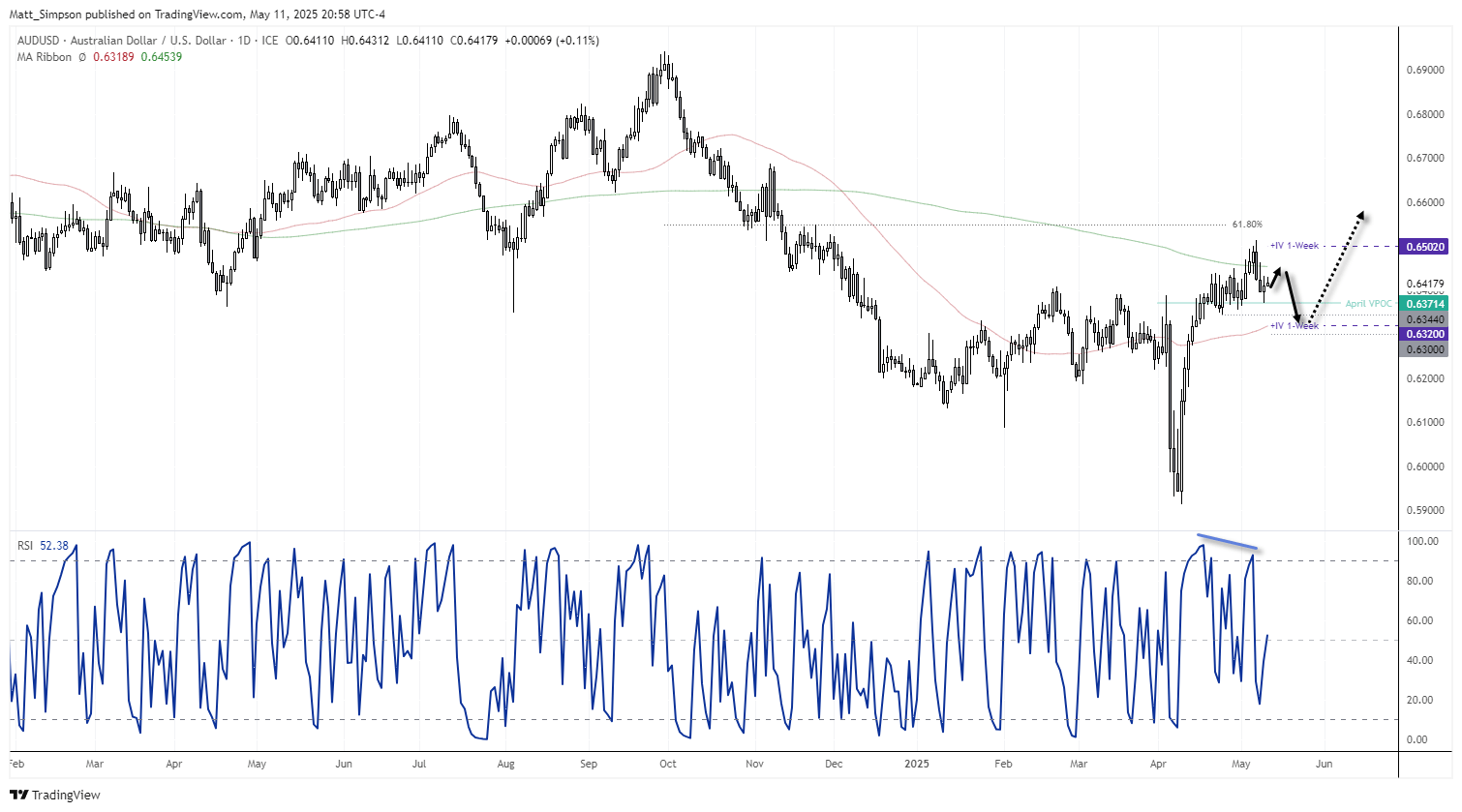
AUD/USD reached my initial downside target at the April VPOC (volume point of control) of 0.6371, which provided support on Friday. The pair opened bid on Monday, supported by positive headlines surrounding US–China trade talks—though concrete details have yet to emerge. Still, should AUD/USD break above Friday’s high, a retest of the 200-day SMA (simple moving average) at 0.6454 could be on the cards.
However, I suspect the retracement in AUD/USD is not yet complete, leaving the pair vulnerable to another leg lower. The daily RSI (2) has yet to reach oversold, after a bearish divergence preceded the recent selloff.
A break beneath the 0.6344 low opens the door for a move towards 0.6300, near the 50-day SMA and lower implied volatility band. Conversely, a sustained break above the 200-day SMA would suggest another attempt at the 0.65 handle.
How to trade with City Index
You can trade with City Index by following these four easy steps:
- Open an account, or log in if you’re already a customer
• Open an account in the UK
• Open an account in Australia
• Open an account in Singapore
- Search for the market you want to trade in our award-winning platform
- Choose your position and size, and your stop and limit levels
- Place the trade
Latest market news




Open an account in minutes
Experience award-winning platforms with fast and secure execution.
Economic calendar
Web Trader platform
Our sophisticated web-based platform is packed with features.
Related articles
NZD/USD Outlook: Reversal Signals Emerge as AI Trade Falters
Kiwi prints a reversal signal comes as cracks appear in the US economic exceptionalism story. An orderly rotation away from AI could provide favourable conditions for a rebound, but another brutal risk-off episode may have the opposite effect.
AUD/USD: Bullish Signals Emerge Ahead of Inflation Showdown
AUD/USD is showing early signs of a bullish reversal near key support as Australian CPI, US GDP and PCE inflation threaten to shake up interest-rate expectations.
Canadian Dollar Forecast: USD/CAD Rally Stalls at Yearly High—Correction Risk Builds 11 24 2026
USD/CAD’s November rebound faces its first meaningful setback, with buyers defending trend support as momentum divergence warns of fatigue.

StoneX Financial Ltd (trading as "FOREX.com") is an execution-only service provider. This material, whether or not it states any opinions, is for general information purposes only and it does not take into account your personal circumstances or objectives. This material has been prepared using the thoughts and opinions of the author and these may change. However, FOREX.com does not plan to provide further updates to any material once published and it is not under any obligation to keep this material up to date.
This material is short term in nature and may only relate to facts and circumstances existing at a specific time or day. Nothing in this material is (or should be considered to be) financial, investment, legal, tax or other advice and no reliance should be placed on it. No opinion given in this material constitutes a recommendation by FOREX.com or the author that any particular investment, security, transaction or investment strategy is suitable for any specific person.
The material has not been prepared in accordance with legal requirements designed to promote the independence of investment research. Although FOREX.com is not specifically prevented from dealing before providing this material, FOREX.com does not seek to take advantage of the material prior to its dissemination. This material is not intended for distribution to, or use by, any person in any country or jurisdiction where such distribution or use would be contrary to local law or regulation. For further details see our full non-independent research disclaimer and quarterly summary.