
The latest trading sessions have not been particularly favorable for BTC’s short-term price action. Following the sharp declines observed last week, a persistent weakness remains in place, leading to a drop of more than 4% over the last two sessions. Part of this selling pressure can be explained by the lack of activity within the Bitcoin network, which has prevented a sustained recovery in confidence amid the absence of meaningful catalysts. If this lack of momentum continues, a more dominant bearish bias could consolidate in the coming sessions.

Weak network activity becomes more evident
Although the week has brought relevant economic data — such as the U.S. NFP report, which surprised with 130K jobs versus 70K expected — this has not been enough to restore appetite for risk assets in the short term. Markets remain focused on upcoming inflation data due on Friday, contributing to a growing sense of indecision in assets like Bitcoin.
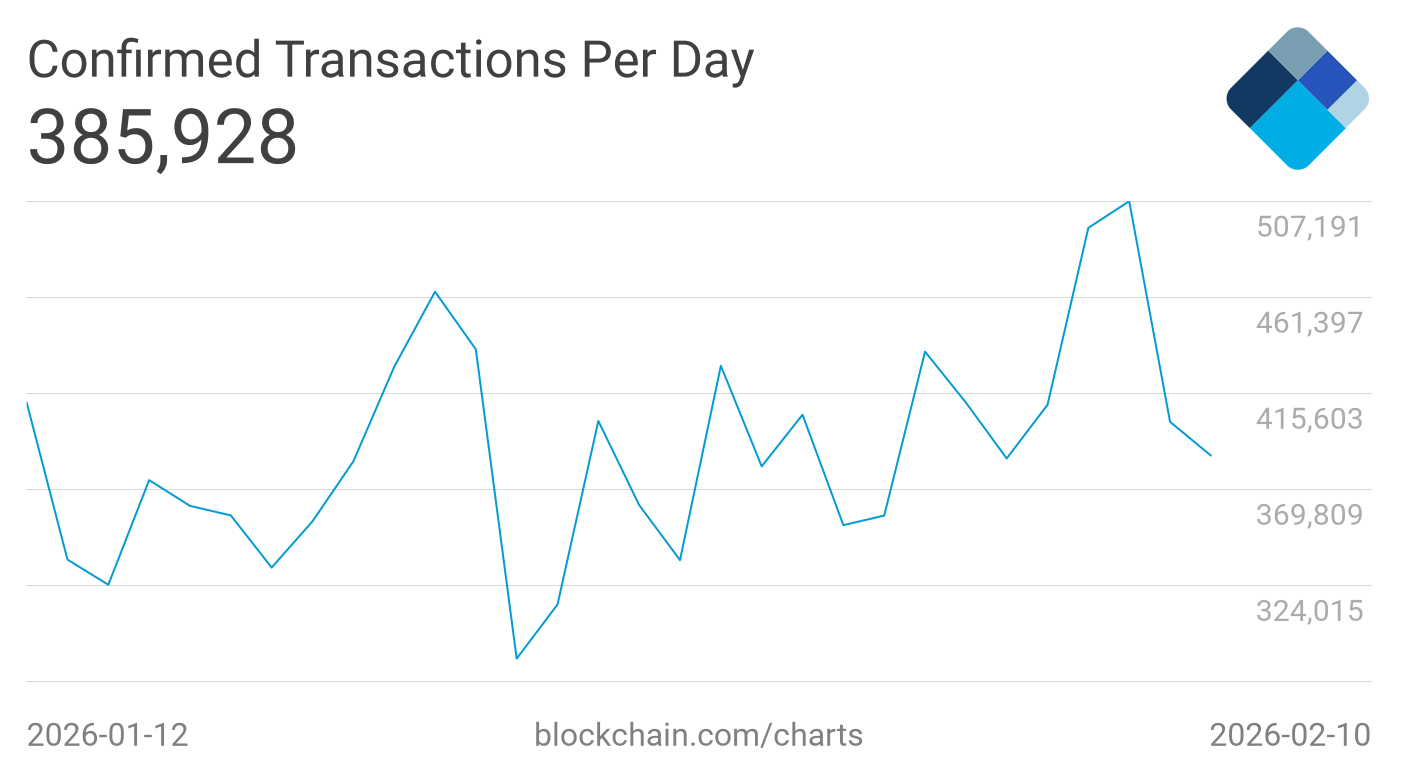
The lack of activity is also reflected in on-chain indicators. The number of daily transactions declined again on February 10, falling below 400,000, maintaining the weakening trend observed in recent sessions. This behavior signals reduced network dynamism and suggests that the market lacks a clear short-term demand catalyst.
Source: Bockchain
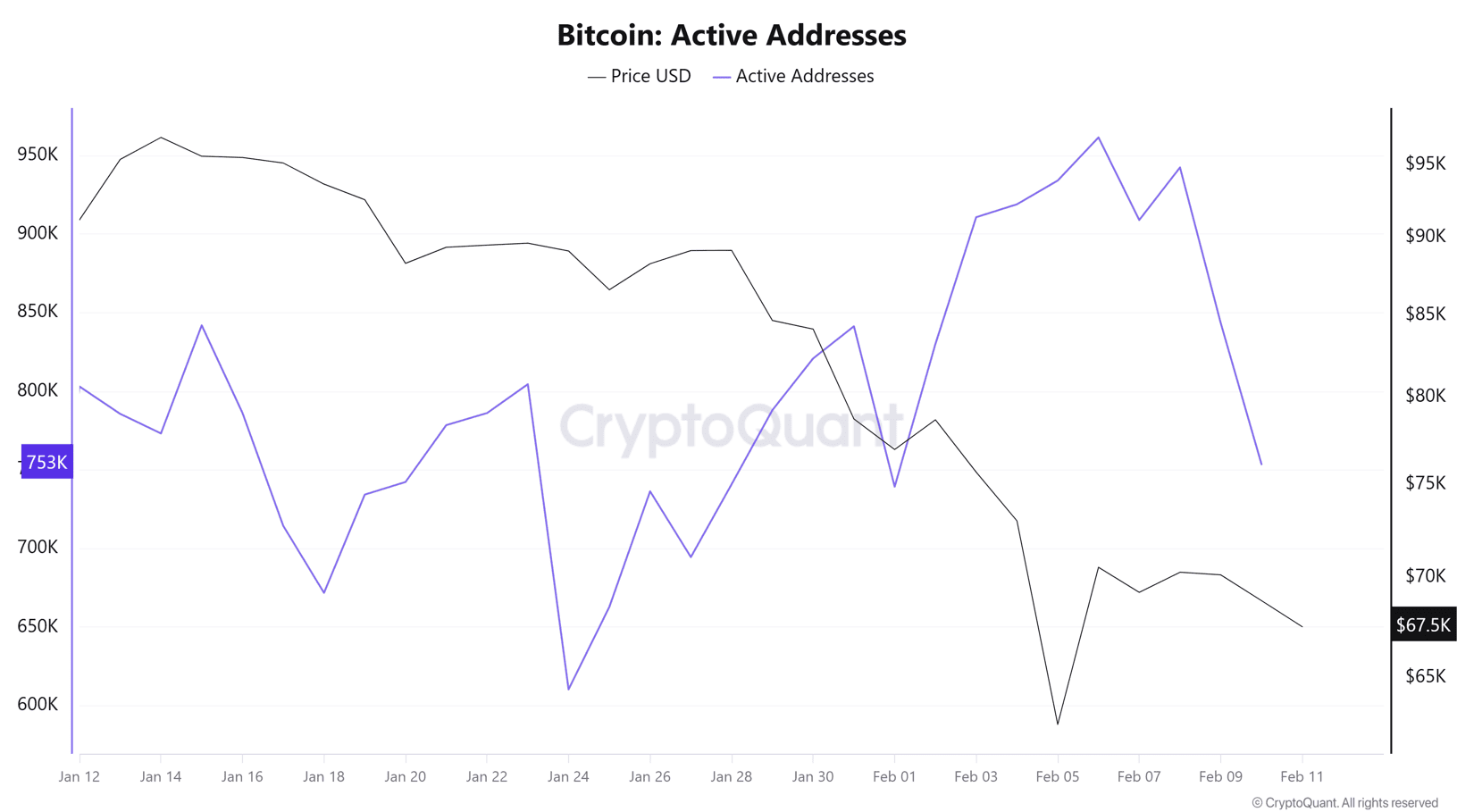
The deterioration is also visible in the number of active addresses on the BTC network, an indicator that typically reflects retail participation. As of February 10, active addresses dropped toward 750K, down from levels above 900K, reinforcing the perception of declining interest and weaker capital inflows into the ecosystem in recent sessions.
Source: Cryptoquant
Taken together, these factors confirm a structural weakness in capital flows surrounding the Bitcoin market. For now, demand remains limited in the short term, and this ongoing inactivity may continue to foster a wait-and-see attitude among investors. If the lack of engagement persists, indecision could dominate upcoming sessions and potentially lead to deeper weakness.
Confidence remains in critical territory
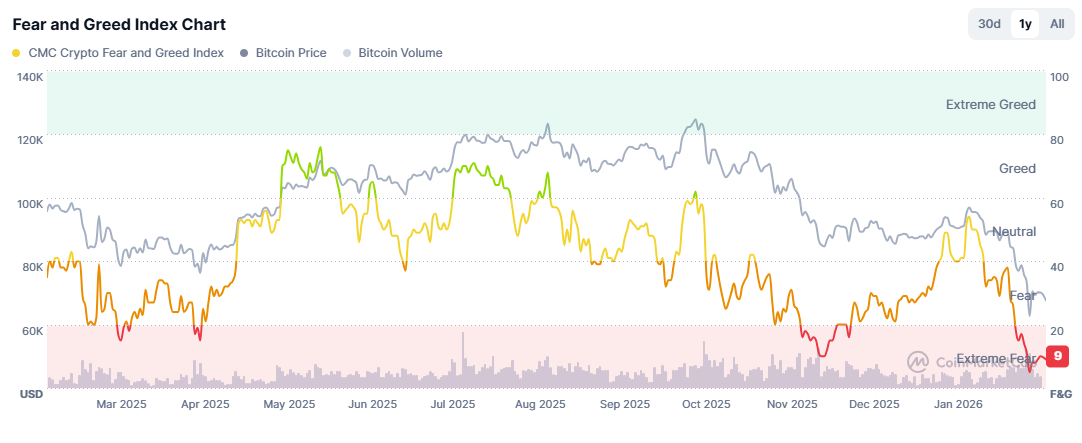
Crypto market sentiment indicators continue to deteriorate. The Fear and Greed Index currently stands around 9 points, remaining firmly in the “extreme fear” zone. This reflects severely weakened short-term confidence and the absence of a clear catalyst capable of restoring demand for Bitcoin.
Source: Coinmarketcap
As long as sentiment remains in extreme fear territory, sustaining a consistent recovery scenario will be challenging. This environment not only delays potential rebounds but also reinforces a structural bearish bias, which may continue to dominate BTC’s short-term price action.
Bitcoin technical Outlook
Source: StoneX, Tradingview
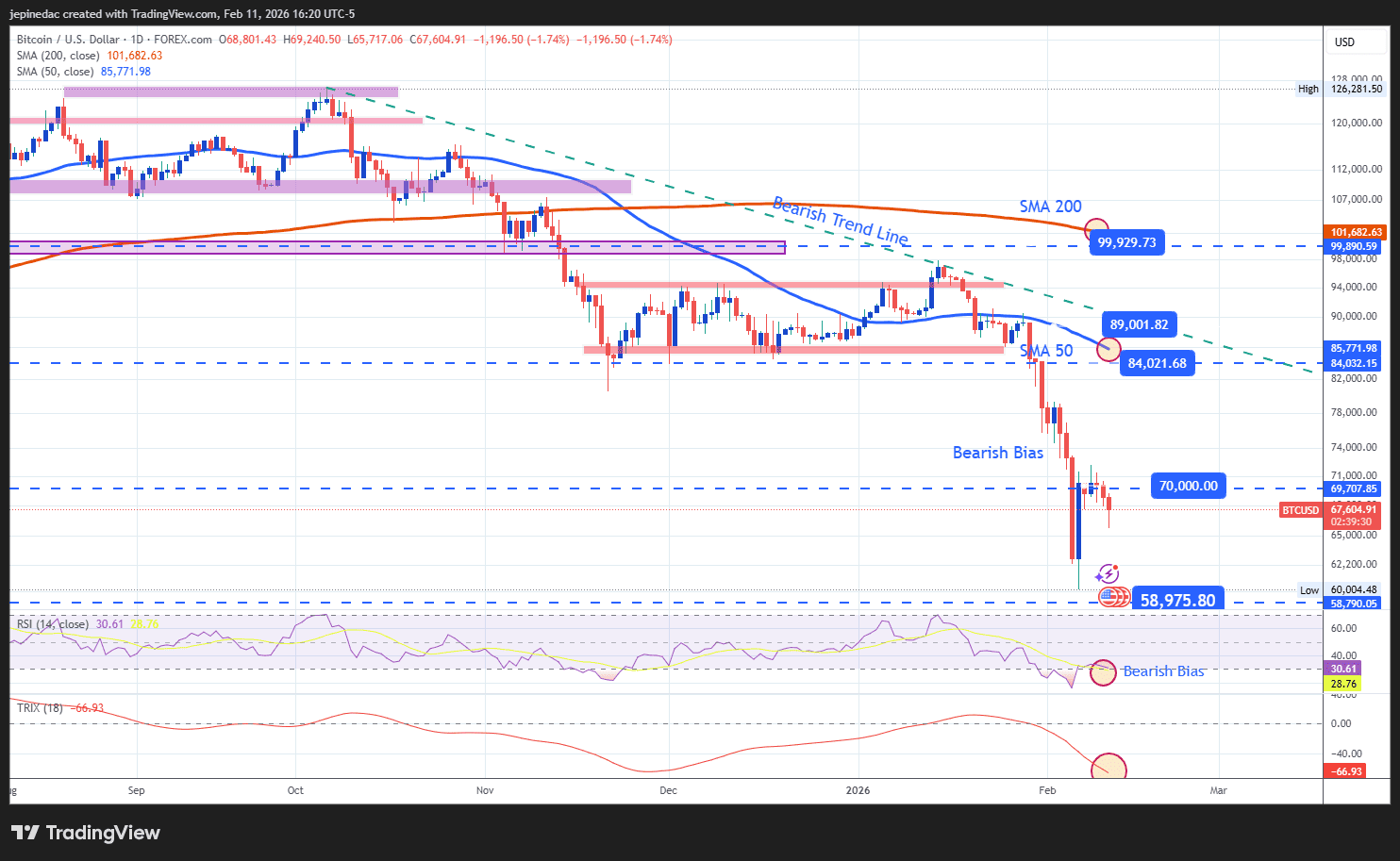
- The bearish trend remains dominant: Bitcoin continues to maintain a clearly defined downtrend from its recent all-time highs. So far, no meaningful bullish correction has emerged to challenge this technical structure, making it the prevailing pattern. However, the recent increase in neutrality within average price oscillations may lead to a more pronounced consolidation phase if selling pressure begins to fade.
- RSI: The RSI remains below the neutral 50 level, suggesting that the average momentum over the past 14 sessions continues to favor sellers. As long as this dynamic persists, the weakness seen since last week is likely to remain relevant in the short term.
- TRIX: The TRIX line remains consistently below the zero level, indicating that the average strength of exponential moving averages continues to reflect a meaningful bearish bias. If this behavior persists, weakness could remain a central feature of Bitcoin’s near-term price action.
Key levels:
- 84,000 – Key resistance: A level aligned with the 50-period simple moving average and the prevailing downtrend line. A sustained move toward this zone could challenge the current bearish structure and enable a more meaningful bullish bias in the coming weeks.
- 70,000 – Near-term barrier: A key psychological level. Price action hovering around this area may prolong indecision and encourage the formation of a short-term consolidation range.
- 58,000 – Major support: The October 2024 lows, representing the most relevant downside barrier at the moment. A sustained break below this level could trigger a more aggressive extension of the current downtrend.
Written by Julian Pineda, CFA, CMT – Market Analyst
Follow him on: @julianpineda25