
Recent trading sessions continue to highlight a strong bullish bias across the oil market. As reflected in the performance of WTI crude, prices have maintained a solid recovery since the beginning of October and are now up more than 12% since October 8, a development that continues to underline the strength of demand in the short term.
For now, this buying pressure is being driven by a combination of factors that continue to raise concerns about global oil supply. On one hand, the geopolitical risk premium remains an important component of market pricing, while on the other, the recent decline in crude inventories highlights a market facing increasingly tight supply conditions. As long as these factors remain in place, bullish pressure on oil prices could continue to be a relevant theme in the sessions ahead.

Are Supply Dynamics Becoming a Growing Concern?
One of the most important factors for the oil market continues to be developments in the Middle East. Although Iran has reiterated that its proposal to reopen the Strait of Hormuz remains on the table, the region continues to operate within a highly unstable environment. Transportation costs remain elevated, logistical disruptions persist, and there have been no meaningful diplomatic breakthroughs suggesting that a resolution to the conflict is approaching.
As a result, the geopolitical risk premium continues to play an important role in oil price formation. Looking at activity around the Strait of Hormuz, trade flows remain severely constrained. As of today, shipping activity represents only about 8% of the levels observed before the conflict began. This highlights the lack of a meaningful recovery in regional logistics and supports the view that supply risks remain elevated.
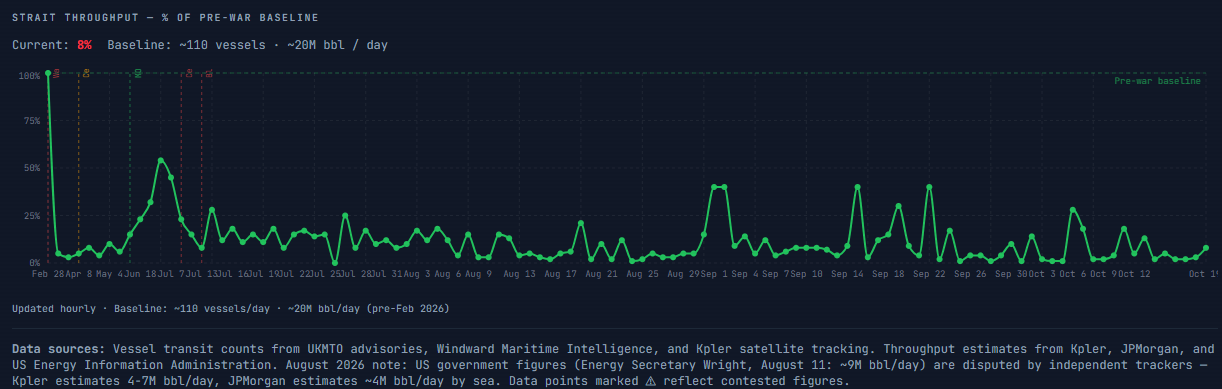
Source: hormuzstraitmonitor.com
Recent developments in U.S. crude inventories have also added to these concerns. The latest report showed a decline of approximately 8.6 million barrels, a figure that not only surprised the market but also reflects demand strong enough to accelerate the drawdown of existing reserves.
This remains especially important because it increases concerns about the market's ability to respond if supply disruptions persist in the coming months. At the same time, the latest OPEC+ meeting did not deliver any indications of higher production for November, meaning additional sources of supply have yet to emerge to alleviate current market uncertainty.
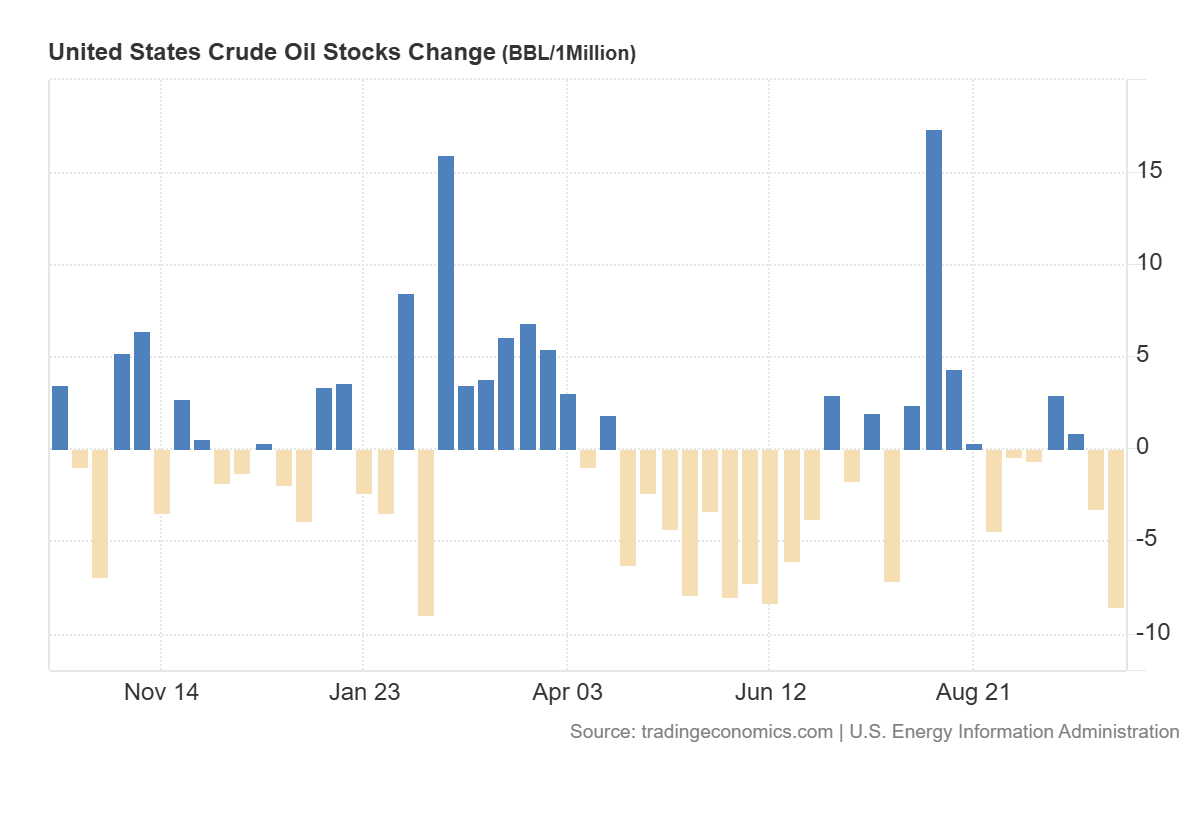
Fuente: TradingEconomics
Taken together, these developments continue to point toward a market where supply-side risks remain an important factor. Activity around Hormuz remains limited, inventories continue to decline, and global production has yet to show meaningful increases. This combination has reinforced the perception of a relatively tight supply environment against a backdrop of demand that remains broadly stable.
As long as these conditions remain in place, the market is likely to continue pricing in an additional risk premium. As a consequence, the buying pressure currently observed around WTI crude could remain relevant during the coming trading sessions.
WTI Technical Forecast
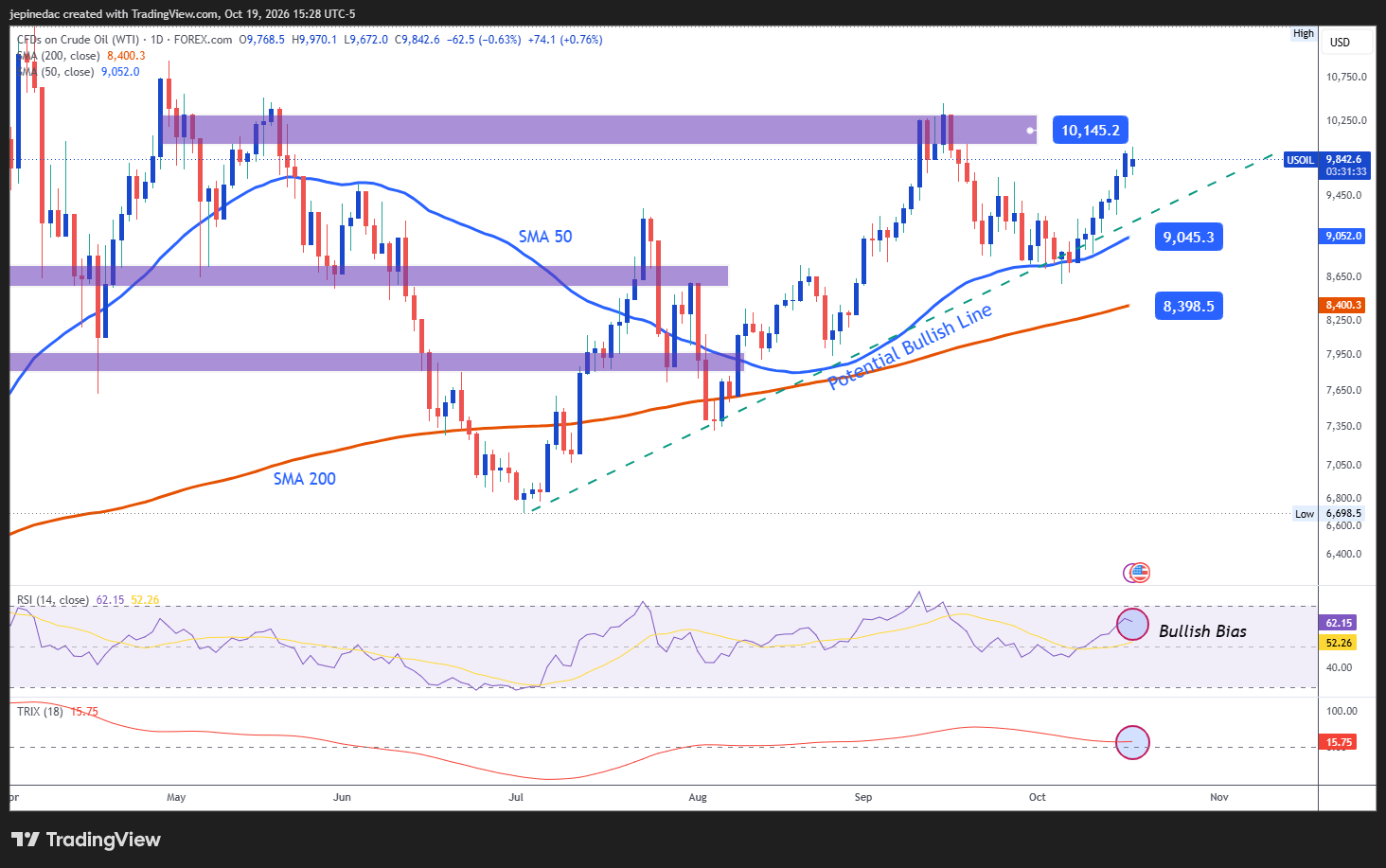
Source: StoneX, Tradingview
- The bullish trendline continues to gain relevance: Since the beginning of July, oil prices have been developing a sequence of higher highs and higher lows that has allowed a significant medium-term bullish trendline to form. This structure remains the dominant technical pattern on the daily chart and, as long as buying pressure continues pushing prices toward key levels such as the $100 area, the bullish bias could remain relevant in the weeks ahead.
- RSI: The RSI continues to hold above the 50 neutral level, a reading that suggests bullish momentum remains dominant within recent price action. As long as this dynamic remains intact, the bullish bias could continue to be supported on the chart.
- TRIX: The TRIX indicator presents a slightly different picture, remaining close to the 0 neutral line. This reading suggests that a degree of balance still exists within longer-term exponential moving average momentum and may be warning of a broader phase of indecision within the overall market structure.
Key Levels:
- $100 – Major Resistance: An important psychological barrier that coincides with significant highs observed over recent months. Price action that manages to consolidate above this level could further confirm the dominant bullish trend and support an extension of the current rally in the weeks ahead. However, given its importance, this area could also generate short-term corrective pullbacks.
- 90 USD – Barrera crítica: A key support zone that aligns with the base of the bullish trendline and the 50-period simple moving average. A move back toward this level could begin to reflect fading momentum and support a period of greater neutrality within the market.
- $83 – Key Support: A level that coincides with significant lows recorded in previous weeks and with the 200-period simple moving average. Sustained moves toward this area could begin to alter the current market structure and open the door to a more meaningful bearish trend over the coming weeks.
Written by Julian Pineda, CFA, CMT – Market Analyst
Follow him on: @julianpineda25