


EUR/USD Analysis: The Euro Continues to Lose Ground After U.S. Employment Data Release
The EUR/USD has now posted six consecutive sessions of declines, marking one of the longest and strongest bearish streaks in recent months. In the short term, the pair has fallen by more than 1.6%, driven primarily by the steady strengthening of the U.S. dollar following the release of employment data in the United States.
Share this:

The EUR/USD has now posted six consecutive sessions of declines, marking one of the longest and strongest bearish streaks in recent months. In the short term, the pair has fallen by more than 1.6%, driven primarily by the steady strengthening of the U.S. dollar following the release of employment data in the United States.
Selling pressure has remained firm as confidence in the dollar increased after preliminary labor data came in much stronger than expected. This has reinforced expectations that the Federal Reserve could take a more cautious stance on future rate cuts, supporting persistent demand for the dollar and limiting any attempts by the euro to recover in the short term. As long as this scenario persists, downward pressure is likely to dominate the pair in the coming trading sessions.


How Do Employment Data Affect the Market?
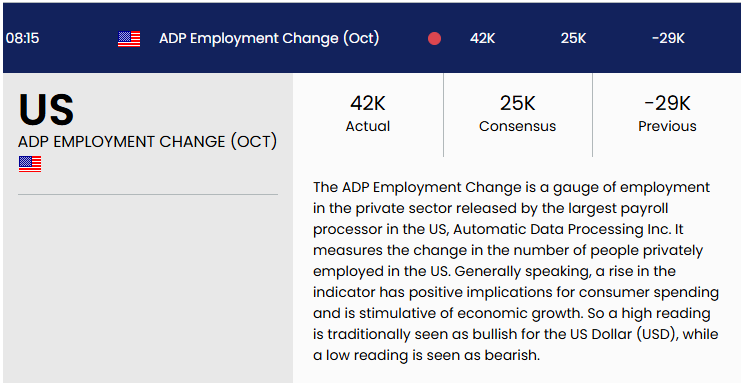
Today, the ADP Employment Change report for October was released in the United States. Market expectations were for 25,000 new jobs, but the actual figure surprised to the upside with 42,000 new positions created — almost double the forecast and well above the previous reading of -29,000.
Source: Data - FXStreet
This result is particularly significant because the partial U.S. government shutdown continues to delay the publication of Non-Farm Payroll (NFP) data. As a result, the ADP report has become a key reference point for the Federal Reserve, which may use it to guide short-term monetary policy decisions.
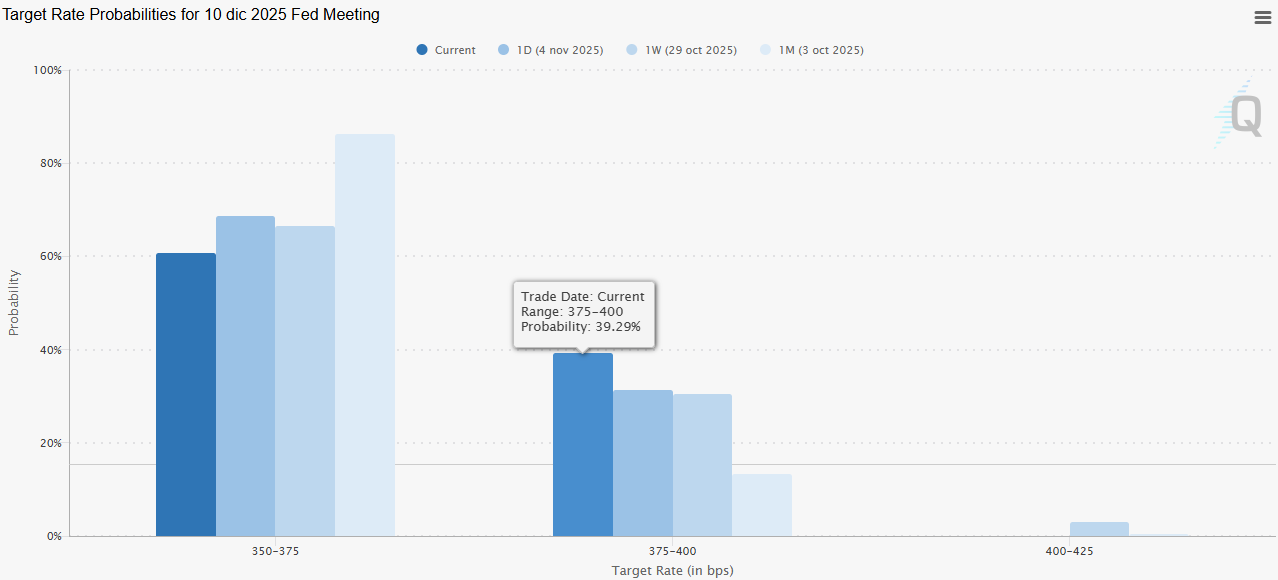
Consequently, market expectations for the upcoming December 10th Fed meeting have shifted noticeably. Until yesterday, the probability of a 0.25% rate cut stood around 68%, but after the release of the strong employment data, it dropped to 60%, while the odds of the Fed keeping rates unchanged rose to nearly 40%. This adjustment reflects a more neutral outlook toward the end of the year, as the Fed may opt to pause its rate-cutting cycle.
Source: CMEGroup
The possibility that the Federal Reserve will maintain rates at 4% has renewed demand for U.S. Treasury bonds, which now yield close to 4% and remain an attractive option for investors. This shift has strengthened demand for dollar-denominated assets, resulting in sustained buying pressure on the greenback.
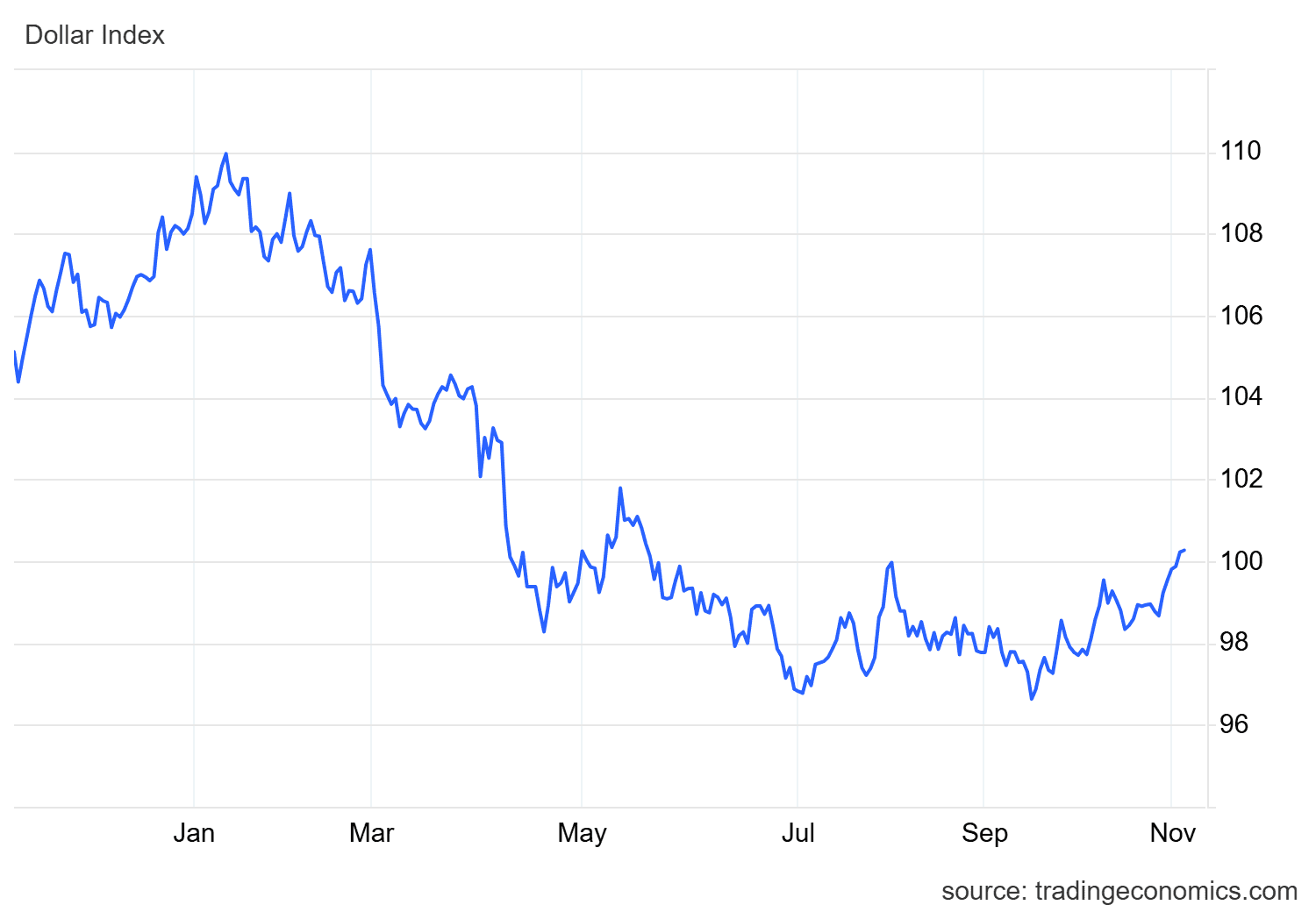
At the same time, the DXY index, which measures the dollar’s strength against other major currencies, has shown a notable advance, climbing above the 100-point mark. This key psychological level reflects strong confidence in the dollar, supported by robust employment data and expectations of a more conservative Federal Reserve.
Source: Tradingeconomics
In this environment, the positive labor data have acted as a catalyst for a more aggressive market stance in favor of the dollar, leading to persistent pressure on the euro, which continues to lose ground. As long as this trend persists, selling pressure is expected to remain dominant in the EUR/USD in the short term.
EUR/USD Technical Outlook
Source: StoneX, Tradingview
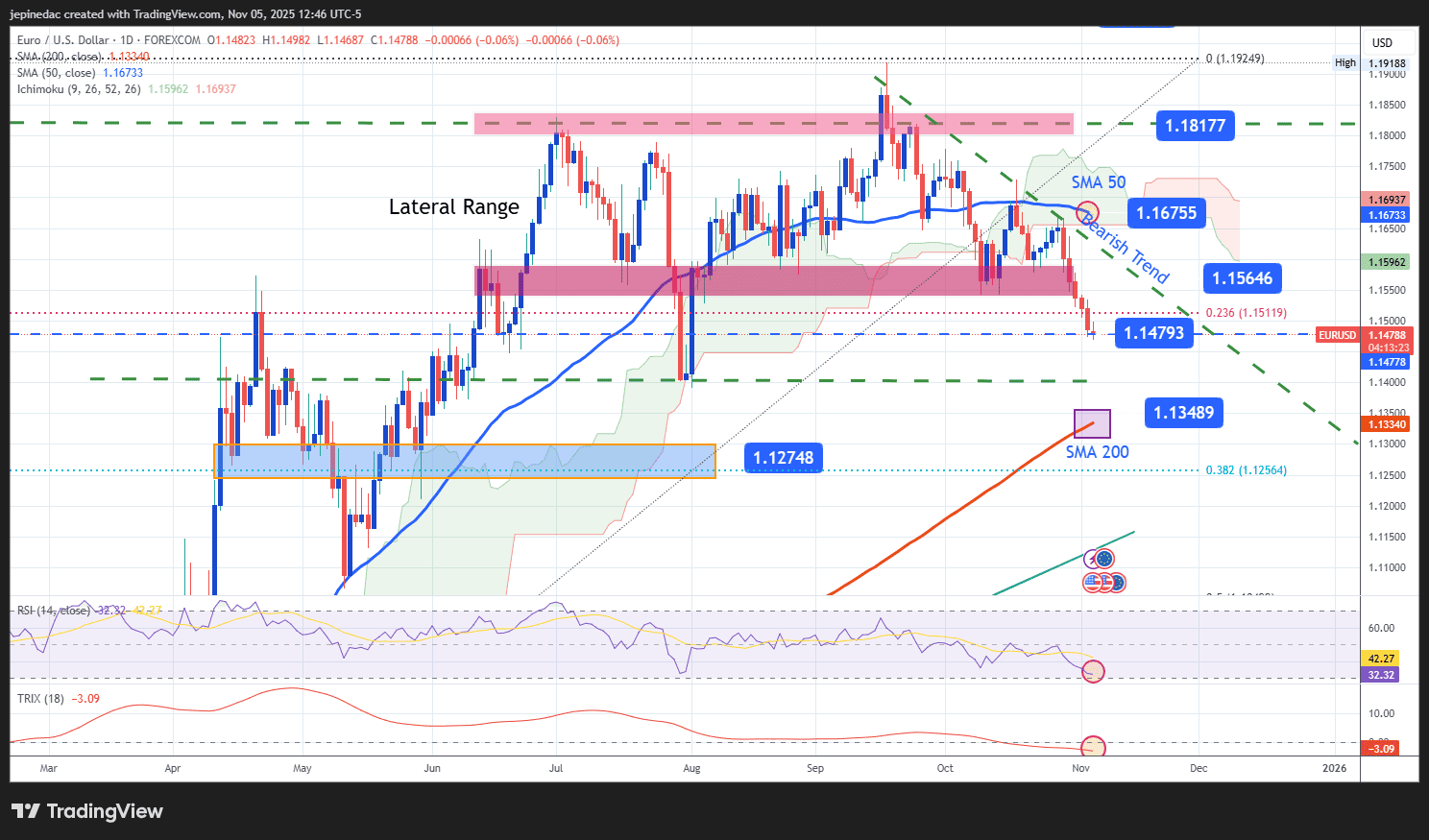
- A New Downtrend Emerges: Since reaching its yearly highs around September 17, the EUR/USD has developed a steady downward pattern, breaking out of a sideways range that had held for several weeks. The price is now forming a series of lower highs, suggesting the emergence of a new bearish trendline that could become the most relevant technical structure if selling pressure persists.
- RSI: The RSI line remains below the 50 level, indicating that bearish momentum has dominated over the past 14 sessions, reinforcing the current selling bias. However, the indicator is approaching the 30 level (oversold zone), which could signal a temporary imbalance in market forces and open the door to short-term technical rebounds.
- TRIX: The TRIX indicator continues to oscillate below the zero line, confirming a prevailing bearish bias in the average of exponential moving averages. This behavior supports the likelihood that downward momentum will continue to dominate in the medium term.
Key Levels:
- 1.15646 – Major Resistance: This level corresponds to the lower boundary of the previous lateral range and represents the most important short-term bullish barrier. A sustained break above this level could challenge the emerging downtrend.
- 1.14793 – Current Barrier: An indecision zone not seen since June, which could act as a technical rebound point for potential short-term corrections.
- 1.13489 – Key Support: This level aligns with the 200-period moving average and represents the most critical support zone. A break below this level would confirm a more aggressive bearish bias, solidifying a downtrend that could extend over the coming weeks.
Written by Julian Pineda, CFA – Market Analyst
Follow him on: @julianpineda25


Open an account in minutes
Experience award-winning platforms with fast and secure execution.
Economic calendar
Web Trader platform
Our sophisticated web-based platform is packed with features.
Related articles
Gold Outlook: Can XAU/USD Sustain Its Recent Rebound?
The trading week is coming to an end, and gold continues to exhibit a lack of clear direction in the short term. Although the precious metal spent most of the week under pressure, it managed to recover more than 2.3% heading into the close, reclaiming part of its recent losses. Even so, the rebound remains insufficient to sustain consistent moves above the $3,700 per ounce level.

US dollar outlook: Fed hike priced | FOREX Friday
A December Fed rate hike looks fully priced in, as the dollar stays below this week's highs despite strong US data, while gold, silver and the EUR/USD rebound. Fawad Razaqzada explains why next week's jobs report is the main event, and the Dollar Index levels to watch.


EUR/USD Recovers as Markets Fully Price in Fed Hike
EUR/USD outlook turns on Fed pricing, as the euro recovers while strong U.S. data fails to lift a dollar that has already priced in Fed tightening.
StoneX Financial Ltd (trading as "FOREX.com") is an execution-only service provider. This material, whether or not it states any opinions, is for general information purposes only and it does not take into account your personal circumstances or objectives. This material has been prepared using the thoughts and opinions of the author and these may change. However, FOREX.com does not plan to provide further updates to any material once published and it is not under any obligation to keep this material up to date.
This material is short term in nature and may only relate to facts and circumstances existing at a specific time or day. Nothing in this material is (or should be considered to be) financial, investment, legal, tax or other advice and no reliance should be placed on it. No opinion given in this material constitutes a recommendation by FOREX.com or the author that any particular investment, security, transaction or investment strategy is suitable for any specific person.
The material has not been prepared in accordance with legal requirements designed to promote the independence of investment research. Although FOREX.com is not specifically prevented from dealing before providing this material, FOREX.com does not seek to take advantage of the material prior to its dissemination. This material is not intended for distribution to, or use by, any person in any country or jurisdiction where such distribution or use would be contrary to local law or regulation. For further details see our full non-independent research disclaimer and quarterly summary.