
- GBP/AUD falling wedge raises potential bullish breakout risk
- UK–Australia yield spread correlations have weakened since August
- RBA minutes and Australian jobs could challenge hawkish RBA pricing
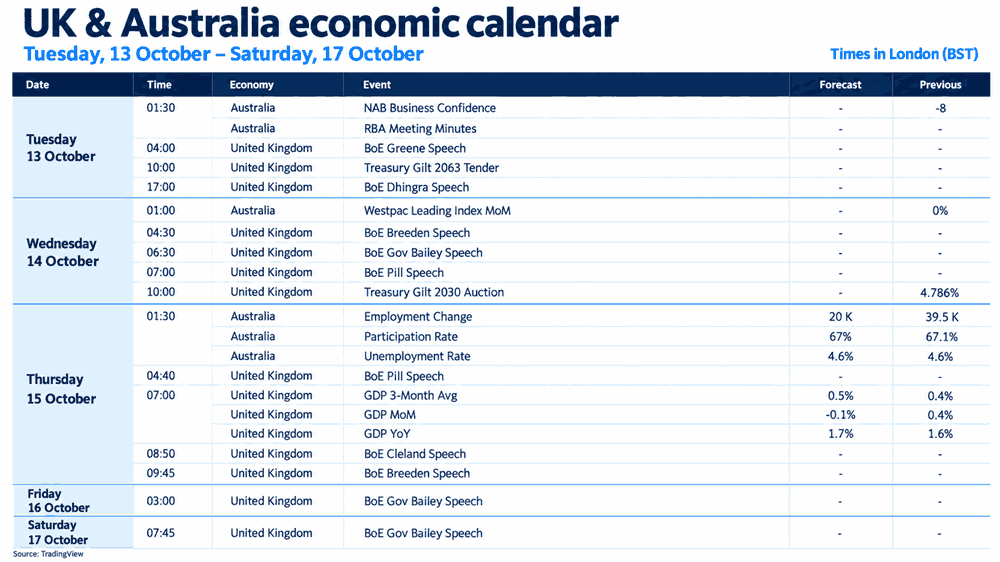
- Bailey's BoE commentary and US inflation data add to event risk
Summary
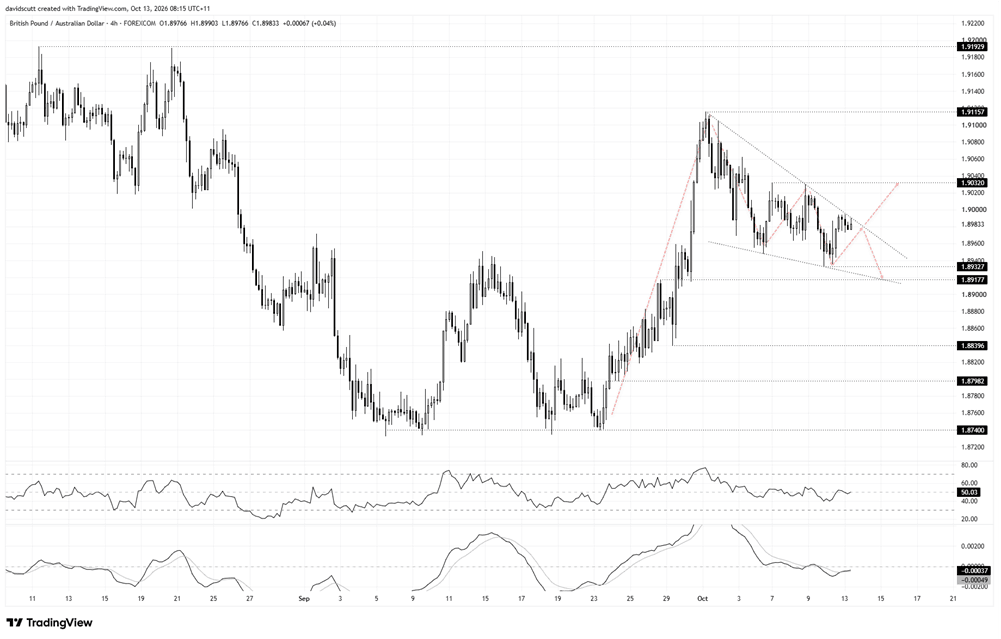
GBP/AUD is forming a potential bullish continuation pattern, pointing to the risk of an eventual breakout following its sharp rally over recent weeks. With a busy economic calendar in Australia and the UK over the coming days, there are several potential catalysts that could trigger a breakout, including the release of the RBA September meeting minutes, Australian unemployment data on Thursday, along with a string of Bank of England speeches, including from Governor Andrew Bailey.
Source: TradingView
GBP/AUD correlations: What could drive a breakout?
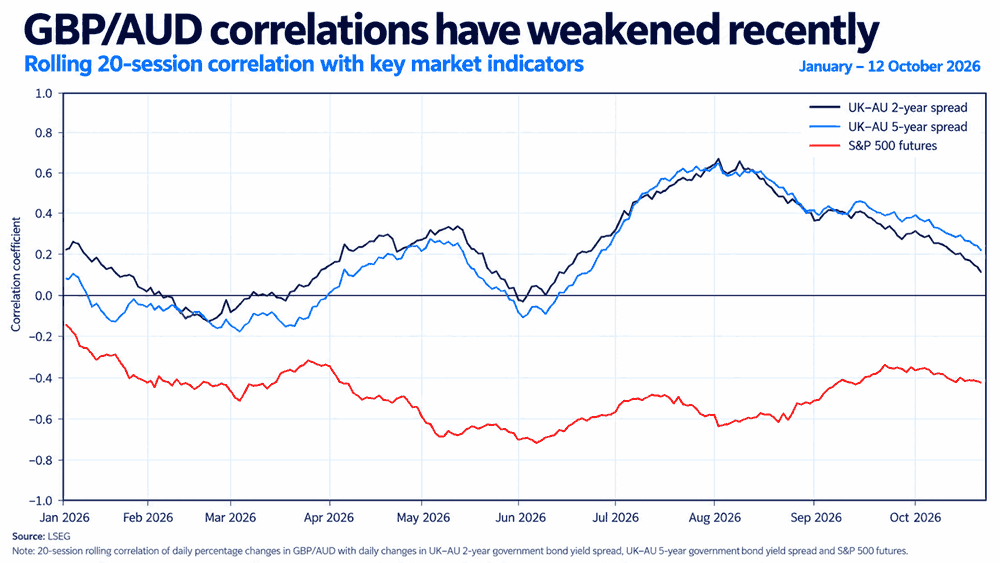
When assessing what could provide a fundamental catalyst to spark GBP/AUD volatility, the rolling 20-day correlation coefficient scores in the graphic below provide some clues.
Source: LSEG
You can see a strengthening positive correlation between GBP/AUD and UK–Australia front-end yield spreads during the September quarter, although it's noticeable that the relationship has deteriorated entering early October.
At the same time, there has been a modest, persistent inverse correlation between the pair and broader risk appetite, proxied in this analysis using S&P 500 futures.
While there's no guarantee either will spark a breakout, the relationships suggest that anything capable of changing the relative interest rate outlooks in Australia and the United Kingdom, or broader risk appetite, could provide the catalyst this week.
RBA minutes: Could hawkish expectations be disappointed?
The RBA's September policy statement was unsurprisingly hawkish, lifting the cash rate by 25 basis points to 4.60%. However, Governor Michele Bullock's subsequent press conference struck a less hawkish tone, revealing that the Board had only discussed holding rates or hiking by 25 basis points, with a larger 50-basis-point increase not even considered.
Bullock also acknowledged weakness in Australia's housing market, which to me represented something of a change in tone from preceding months, where the RBA seemed dismissive of downside risks created by the housing downturn following years of strong price growth.
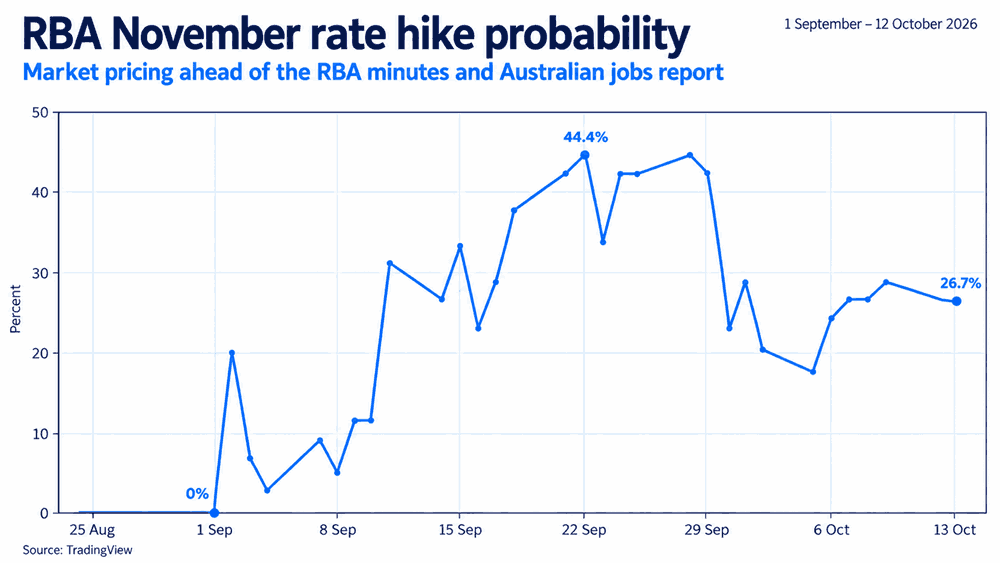
With markets pricing a relatively punchy amount of additional tightening, there's a risk the minutes today may struggle to come across as hawkish as markets expect. As the graphic below shows, the implied probability of a November hike has eased in recent weeks, falling from 44% late last month to just 27% today.
Source: TradingView
And while inflation has dominated the RBA's thinking recently, increasing evidence of labour market softness could soon see it begin to focus on both sides of its dual mandate.
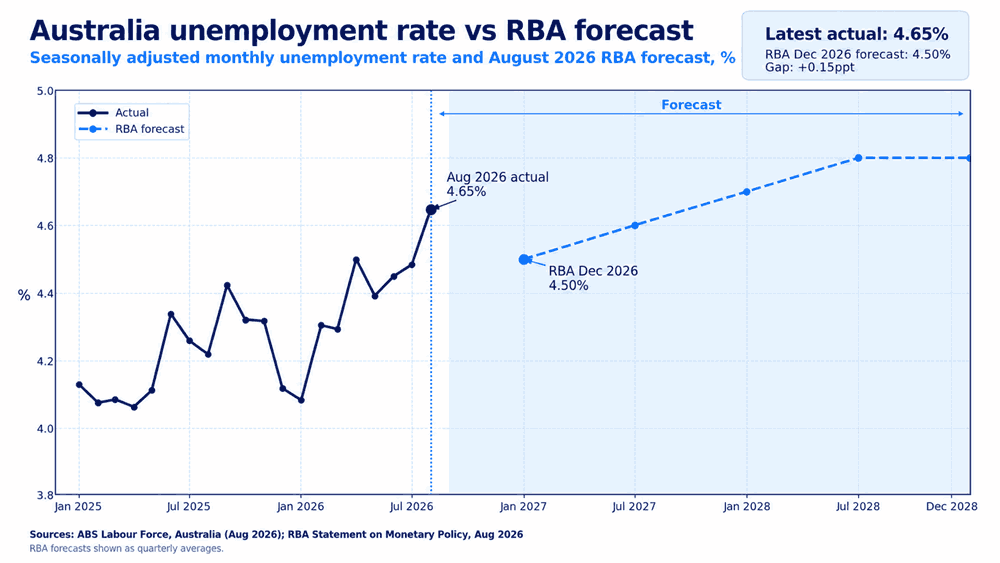
As the unemployment graphic below shows, Australia's jobless rate has risen significantly faster than the RBA anticipated, already sitting at 4.65%, well above the 4.5% average the Bank forecast for the December quarter in its August Statement on Monetary Policy.
Source: RBA, ABS
As such, another increase in unemployment in Thursday's September report carries the potential to see the RBA signal a prolonged pause, especially as the Governor has recently stated that an unemployment rate somewhere between 4.5% and 5% would probably remove enough pressure from the labour market to help ease inflationary pressures.
If such a scenario were to take place, and it is an if, it would likely weigh on Australian front-end yields, potentially providing upside support for GBP/AUD.
Will Bailey back BoE November rate hike expectations?
On the other side of the relative interest rate equation, markets are pricing around a 90% probability of a 25-basis-point Bank of England rate hike in November, putting Governor Andrew Bailey's various appearances this week in focus.
Having voted to leave rates unchanged in September, the key question is whether Bailey gives any indication he's prepared to support a hike next month. If he does, it would likely keep market pricing in place. However, if he were to signal doubts about the need for renewed tightening, it could take some of the heat out of UK front-end yields, potentially weighing on GBP/AUD.
Broader risk appetite could also influence the cross this week, with US CPI and PPI figures scheduled for Wednesday and Thursday respectively, alongside the start of the US corporate earnings season. Given GBP/AUD's persistent inverse relationship with S&P 500 futures, any deterioration in risk appetite could provide another catalyst for a breakout.
Falling wedge in focus
Source: TradingView
A clear coiling pattern has emerged in GBP/AUD since the start of October, following the sharp rally seen in late September. The subsequent structure resembles a falling wedge, a bullish continuation pattern, with the price now testing the upper end of the structure early in Tuesday's Asian session, ahead of the RBA minutes.
If we were to see a sustained bullish breakout that sticks, traders could consider initiating longs with a tight stop beneath former wedge resistance, targeting a return to where the structure initially formed at 1.91157. Before that, 1.90320 is a level of note, marking a double top formed earlier this month.
Of course, if a breakout fails to materialise and the price retreats towards the lower end of the wedge, levels of note include 1.89327, where the pair bounced on October 9, along with 1.89177, which has acted as both support and resistance over recent times.
The message from the oscillators is entirely neutral, putting greater emphasis on price action when assessing potential trade setups.