



EUR/USD Analysis: The euro remains on hold ahead of the US CPI release
The week begins slowly for the euro, as EUR/USD price action in the first sessions shows moves of only around 0.2%, lower than those seen at the end of last week, reflecting a lack of clear short-term direction.
Share this:

The week begins slowly for the euro, as EUR/USD price action in the first sessions shows moves of only around 0.2%, lower than those seen at the end of last week, reflecting a lack of clear short-term direction.
This neutral environment may be linked to market expectations following the release of NFP employment data at the end of last week, as well as the upcoming US inflation (CPI) data, which will be released in tomorrow’s session. The combination of these data points could begin to shift the Federal Reserve’s outlook, and in a scenario where the central bank adopts a more aggressive stance, this could limit the euro’s ability to continue gaining strength in a consistent way in the short term. In this context, it is possible that indecision will continue to dominate EUR/USD price action in the coming sessions.


Economic data could change the Outlook
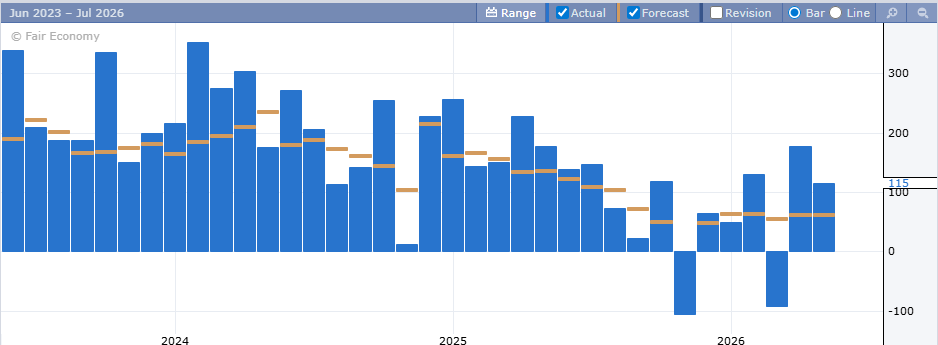
At the end of last week, NFP data in the United States showed job creation of 115k for April versus 65k expected. Additionally, the March figure was revised higher to 185k new jobs.
Although these levels are not as high as those seen at the beginning of 2025, they still reflect a resilient labor market, which remains in positive territory and has shown stability over recent months.
Source: ForexFactory
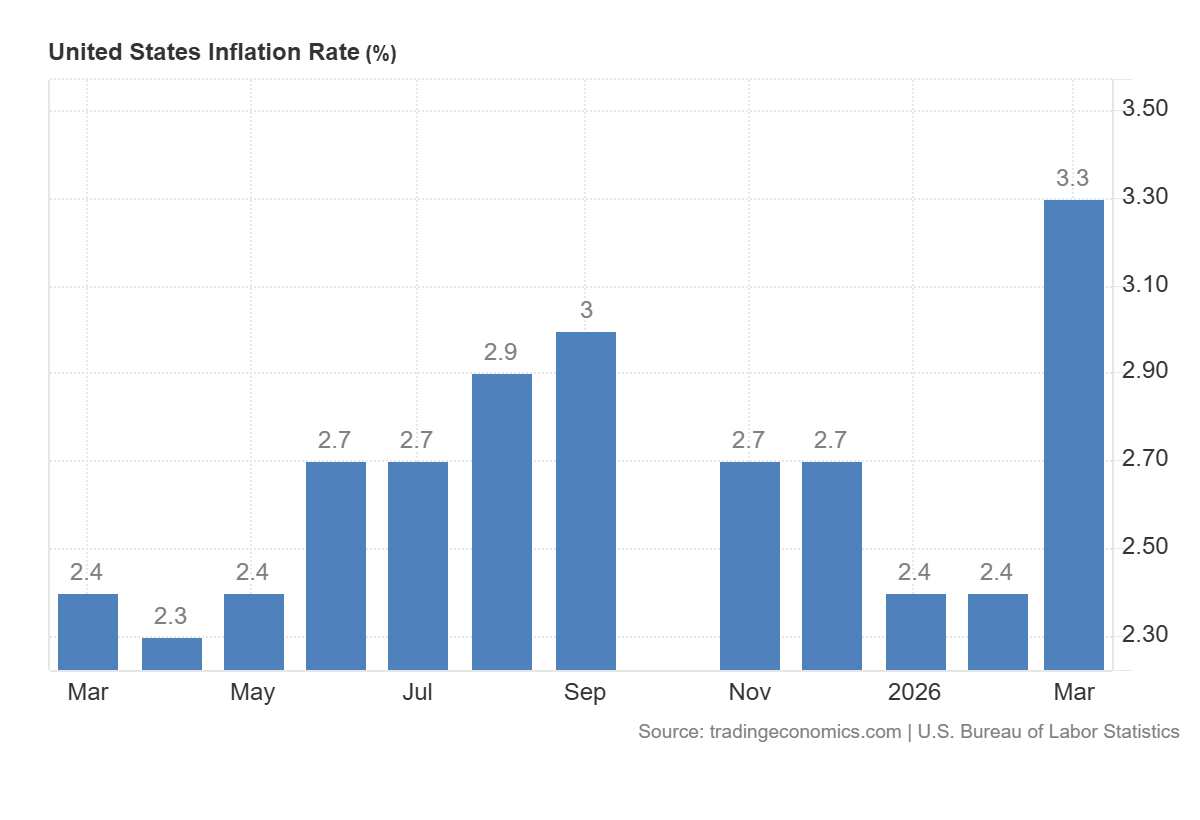
The market is now focused on the upcoming CPI inflation data, where a reading of 3.7% is expected, above the previous 3.3%. This event is particularly important, as the combination of a solid labor market and rising inflation could begin to play a more relevant role in shaping the Federal Reserve’s future decisions.
Inflation data has been trending higher from the yearly lows around 2.4%, and if the upcoming release comes above expectations, this could signal more persistent inflationary pressures, moving further away from the 2.00% target and potentially increasing the likelihood of a more aggressive central bank stance.
Source: TradingEconomics
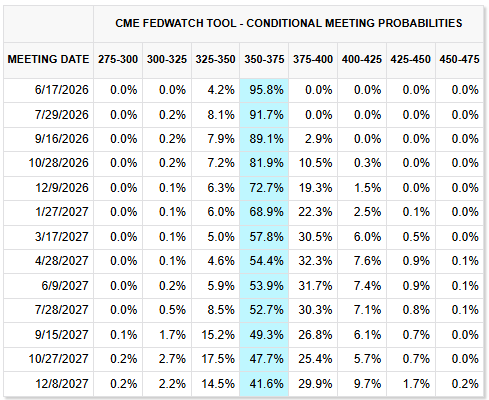
In fact, when looking at the Federal Reserve probability outlook, it stands out that there is more than an 80% probability that the current 3.75% rate will remain unchanged until at least October 2026. However, there are also probabilities above 30% suggesting that a rate hike toward 4.00% could be considered starting in March 2027.
In this context, the inflation data becomes even more relevant, as a stronger-than-expected reading could accelerate expectations of future rate hikes sooner than the market is currently pricing in.
Source: CMEGROUP
Taking all of this into account, any shift in US interest rate dynamics becomes critical for EUR/USD, mainly due to the rate differential between both economies. While the United States maintains a rate of 3.75%, Europe remains around 2.15%, which continues to favor USD-denominated assets.
If economic data continues to support a more aggressive Federal Reserve stance, this differential could widen further, increasing the relative attractiveness of the dollar and making it more difficult for the euro to regain ground in a sustained manner. In this scenario, beyond a phase of indecision, a more consistent selling pressure could begin to develop in EUR/USD in the short term, depending on the outcome of the CPI release.
Technical outlook for EUR/USD
Source: StoneX, Tradingview
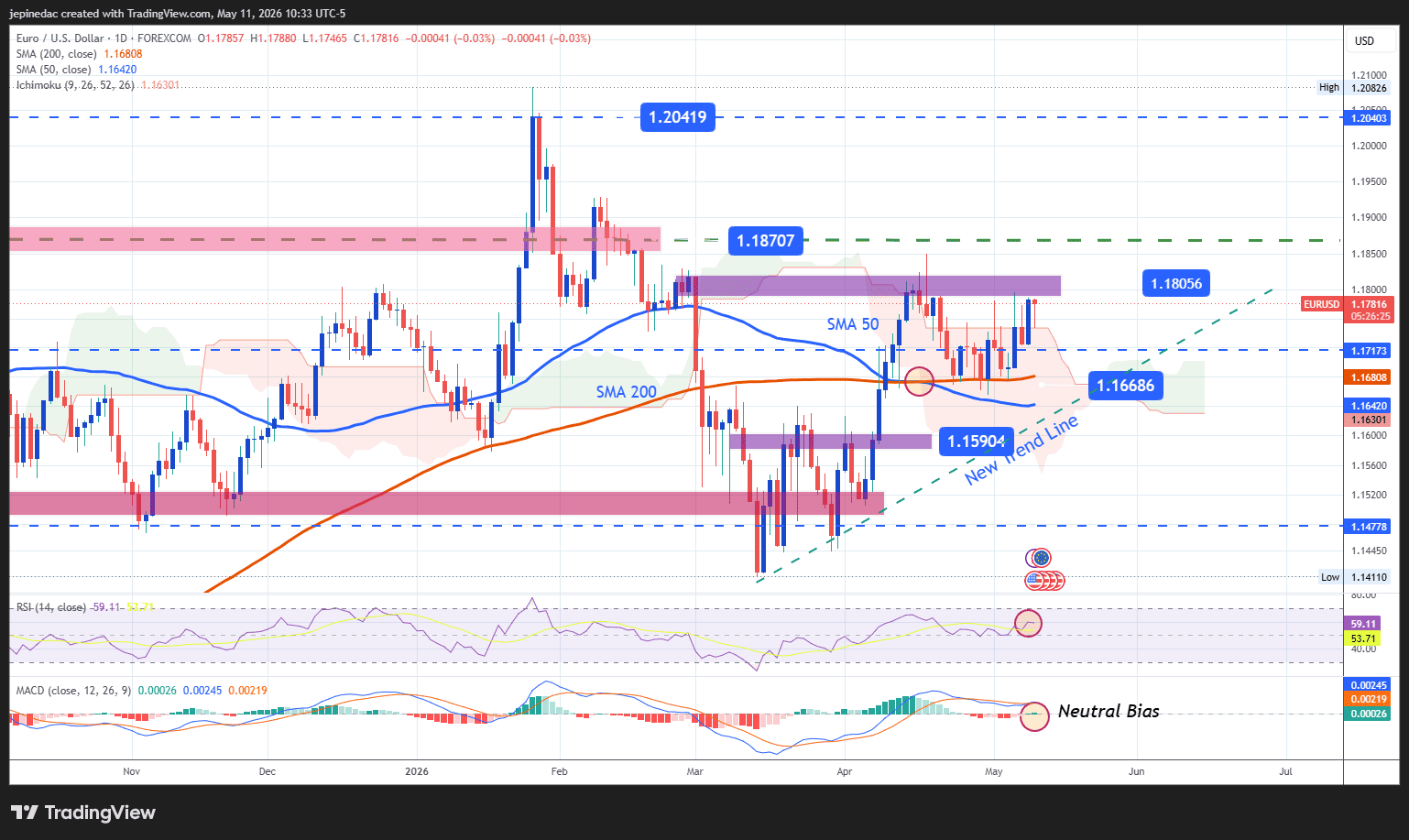
- A new bullish trendline remains relevant: Since mid-March, EUR/USD has been forming a sequence of higher lows, which has led to the potential formation of a short-term bullish trendline. So far, this structure has managed to hold price action, and as long as no significant bearish correction appears, it could continue to be the dominant pattern in the coming sessions. However, if the trendline fails to be supported by new higher highs, this could open the door to a phase of indecision in the short term.
- RSI: At the moment, the RSI remains above the 50 neutral level, although it is beginning to show a consistent flattening, suggesting a possible loss of strength in short-term bullish momentum. If this behavior continues, it could lead to a more consistent indecision phase in price action during the coming sessions.
- MACD: The MACD shows a more neutral structure, with the histogram oscillating around the zero level, indicating a balance in short-term moving average strength. This behavior also points to a loss of bullish momentum and reinforces the idea that a phase of indecision is beginning to form in EUR/USD in the short term.
Key levels:
- 1.18056 – Key resistance: A level corresponding to current highs that stands as the most relevant upside barrier. Price action above this level would lead to new highs and reinforce short-term buying strength, potentially extending the current bullish trend line.
- 1.16686 – Near-term barrier: A neutral zone aligned with the 50- and 200-period moving averages, making it one of the most relevant areas to monitor. Price movements around this level could reinforce a sideways phase and increase market indecision in the coming sessions.
- 1.15904 – Key support: A level located below the moving averages that acts as a relevant retracement zone. Moves toward this level could put the current bullish structure at risk and trigger a more consistent selling bias in the coming weeks.
Written by Julian Pineda, CFA, CMT – Market Analyst
Follow him on: @julianpineda25


The complete CFD trading experience
Award-winning platforms, competitive spreads, low commissions and dedicated support.
We live and breathe the markets and are dedicated to helping traders realise their ambitions as we continue to set the industry bar.
Economic calendar
Web Trader platform
Our sophisticated web-based platform is packed with features.
Related articles
USD/JPY forecast: US dollar strengths amid hawkish Fed despite recent oil weakness
The US dollar has extended its gains this morning, even if oil prices finished lower for the fifth consecutive day yesterday. Oil prices have bounced back in this first half of today’s session, causing a bit of pressure on currencies that rely on energy imports such as the euro, pound, Swiss franc, and Japanese yen. But it was the dollar that was exerting the most pressure, amid hawkish FedSpeak. Meanwhile, European indices and precious metals were also under a bit of pressure amid the strength of the dollar.

EUR/USD, Gold Forecast: Two trades to watch
EUR/USD falls to a 2-month low despite Eurozone growth picking up. Gold under pressure as a stronger USD offsets falling oil prices.


EUR/AUD, GBP/AUD Outlook: Rates, risk and metals reinforce bearish technical case
EUR/AUD and GBP/AUD are coiling near support, with recent correlations suggesting the Aussie’s strength is being driven more by rates, risk and metals than energy.

StoneX Europe Ltd may make third party material available on this website which may contain information included but not limited to the conditions of financial markets. The material is for information purposes only and does not contain, and should not be construed as containing, investment advice and/or investment recommendation and/or an investment research and/or an offer of or solicitation for any transactions in financial instruments; any decision to enter into a specific transaction shall be made by the client following an assessment by him/her of their situation.
StoneX Europe Ltd makes no representation or warranty and assumes no liability as to the accuracy or completeness of the information provided, nor any loss arising from any investment based on a recommendation, forecast or other information supplied. You should always seek independent advice as to your suitability to speculate in any related markets and your ability to assume the associated risks, if you are at all unsure. We are not under any obligation to update any such material. Any opinion made may be personal to the author and may not reflect the opinion of StoneX Europe Ltd.