


EUR/USD Forecast: Euro Maintains Strong Momentum Following the Release of the Fed Minutes
During today's trading session, the EUR/USD pair has posted a gain of more than 0.8% in favor of the euro, marking one of its strongest bullish moves in recent weeks and once again reinforcing a notable bullish bias in the short term.
Share this:

During today's trading session, the EUR/USD pair has posted a gain of more than 0.8% in favor of the euro, marking one of its strongest bullish moves in recent weeks and once again reinforcing a notable bullish bias in the short term. Buying pressure has remained firm following the release of the Federal Reserve's minutes, which continue to highlight persistent weakness in the U.S. dollar. If this dynamic remains in place, the bullish outlook could continue to play an important role in EUR/USD price action over the coming sessions.


Fed Minutes Take Center Stage
The minutes from the Federal Reserve's July interest rate meeting were released during today's session. The main takeaway was that several policymakers believe further rate hikes could eventually become necessary if inflationary pressures stop moderating. According to the minutes, there were 9 votes in favor of keeping rates unchanged and 3 votes against, and while inflation remains the key risk factor, most members continue to favor a wait-and-see approach before considering additional policy adjustments.
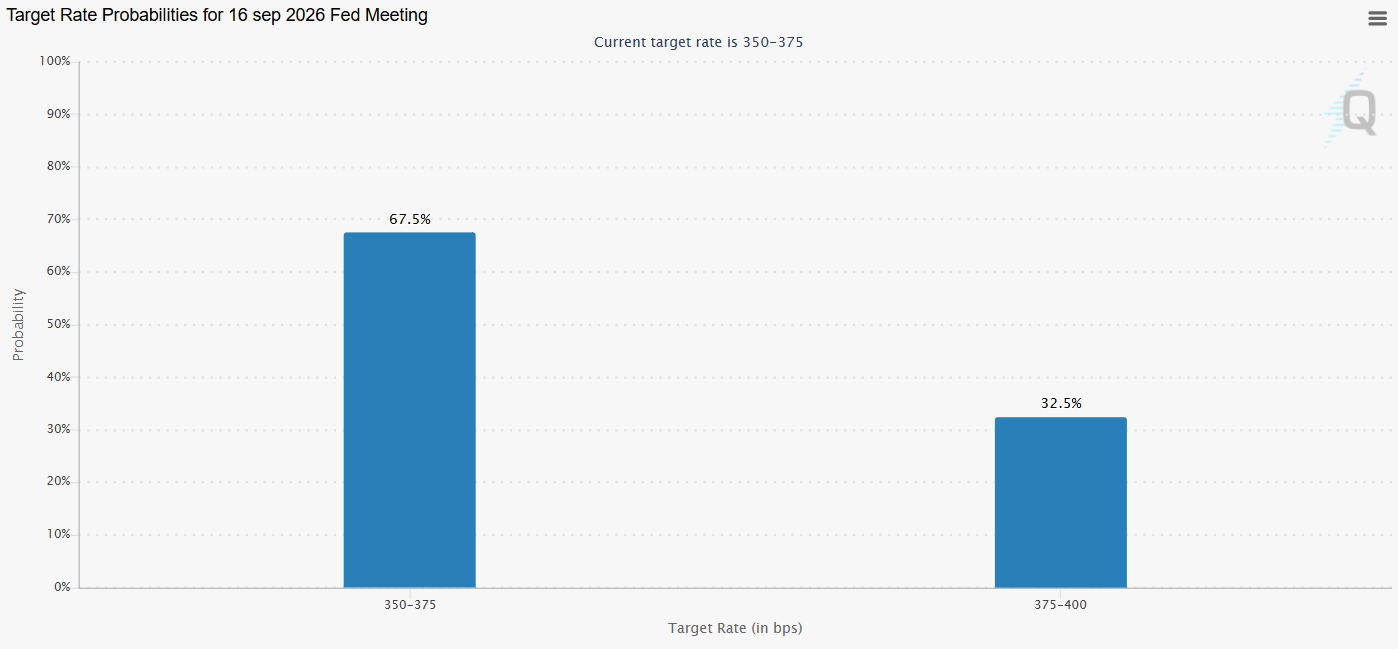
With that in mind, and despite the inflation-related concerns expressed by some officials, policymakers' willingness to consider future rate increases remains conditional on a meaningful rebound in inflation. Markets have not interpreted this as a sufficiently hawkish signal to revive expectations of an immediate rate hike in September. Instead, the minutes reinforce the view that the Fed remains in observation mode before making any significant changes to its monetary policy path. In fact, CME Group probabilities for the September 16 meeting remain largely unchanged, showing a greater than 67% probability that interest rates will remain steady around 3.75%. As a result, the minutes have not been enough to fuel expectations of a significantly more aggressive Federal Reserve in the months ahead.
Source: CMEGROUP
Adding to this backdrop, the U.S. Treasury announced an increase in the size of its long-term bond buyback operations, helping push the yield on the 10-year Treasury below 4.7%, while the 30-year Treasury yield has moved back toward the 5.00% area. Both developments have limited the U.S. dollar's ability to stage a meaningful recovery, as a relatively neutral Fed combined with lower bond yields tends to reduce some of the greenback's appeal.
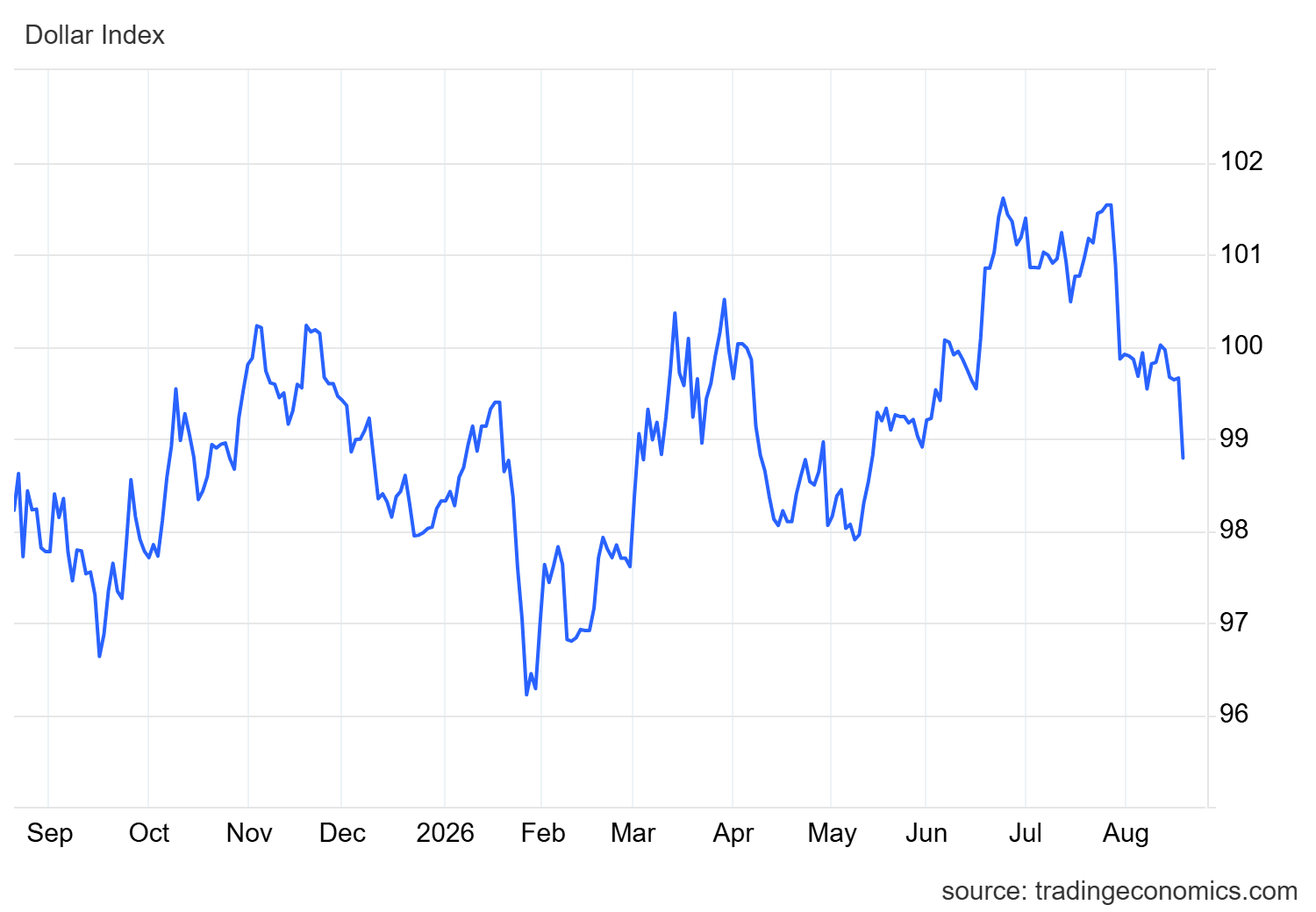
This trend continues to be reflected in the DXY Index, which measures the dollar's strength against a basket of major currencies. Even after the release of the Fed minutes, the index remains under significant pressure and has fallen below the 99-point mark during the session, registering one of its sharpest declines in recent weeks and highlighting a notable decline in demand for the U.S. dollar in the near term.
Source: TradingEconomics
Against this backdrop, conditions appear favorable for the euro. A combination of lower bond yields and a Federal Reserve that continues to maintain a relatively neutral stance could keep weighing on the attractiveness of the U.S. dollar. As a result, the euro may continue gaining ground against its U.S. counterpart, a scenario that could support further buying pressure in EUR/USD over the coming sessions.
EUR/USD Technical Forecast
Source: StoneX, Tradingview
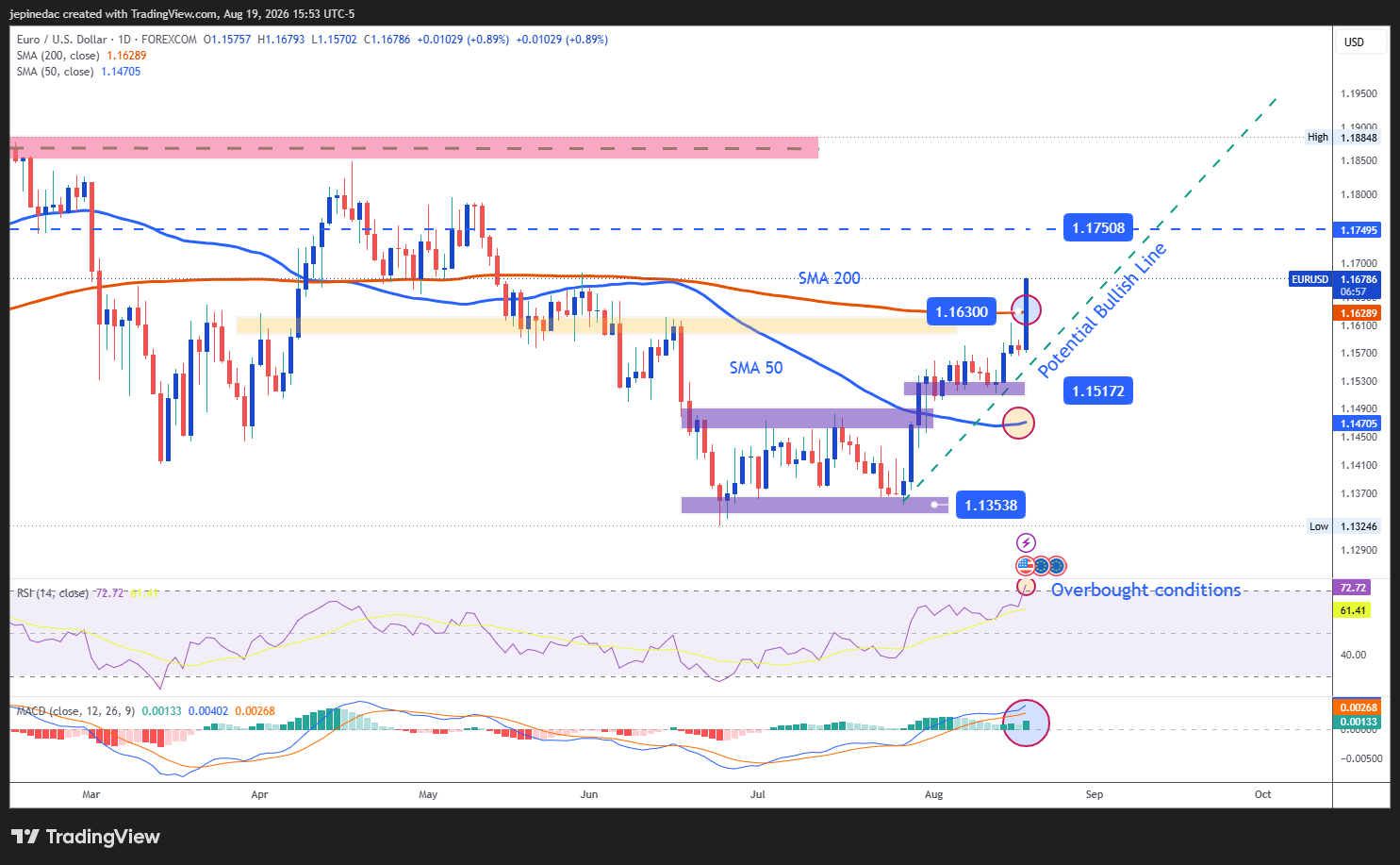
- A potential bullish trendline begins to emerge: Since the final days of July, a new ascending trendline has started to take shape as the euro's recovery has gathered momentum. This development could become a key feature of the chart, as sustained buying pressure in the coming sessions may help establish this structure as the dominant technical pattern over the weeks ahead.
- RSI: The RSI remains above the 50 level, indicating that bullish momentum continues to dominate over the past 14 trading sessions. However, it is also important to note that the indicator remains above the 70 threshold, which signals overbought conditions. This may suggest that buying pressure has become somewhat stretched and could leave room for short-term corrective pullbacks within the broader trend.
- MACD: Meanwhile, the MACD histogram remains above the zero line, suggesting that the average strength of the moving averages continues to favor the upside. As long as this configuration remains intact, bullish momentum could continue to be the dominant force in the market over the coming weeks.
Key Levels to Watch:
- 1.17508 – Key Resistance: A high not seen since May of this year and currently the most important upside barrier on the chart. Price action reaching this area could reinforce the prevailing bullish bias and further establish the emerging uptrend line as the dominant technical pattern in the weeks ahead.
- 1.16300 – Near-Term Barrier: A level that coincides with the 200-period simple moving average and represents the most important reference point in the event of short-term bearish corrections.
- 1.15172 – Major Support: This level corresponds to one of the most important lows recorded in recent weeks and also represents the base of the emerging uptrend line. A move below this area could invalidate the bullish structure and open the door to a more dominant bearish bias in the sessions ahead.
Written by Julian Pineda, CFA, CMT – Market Analyst
Follow him on: @julianpineda25
Latest market news




The complete CFD trading experience
Award-winning platforms, competitive spreads, low commissions and dedicated support.
We live and breathe the markets and are dedicated to helping traders realise their ambitions as we continue to set the industry bar.
Economic calendar
Web Trader platform
Our sophisticated web-based platform is packed with features.
Related articles
US Dollar Short-term Outlook: USD Rally on the Line as Midterms, NFP Loom 11 3 2026
DXY is testing pivotal support, with the weekly range breakout likely to determine the next major leg of the trend as key event risk unfolds.

USD/JPY Analysis: Rising U.S. Yields Leave the Yen on the Defensive
As the first week of November progresses, renewed weakness in the Japanese yen is once again becoming evident in the short term. This dynamic can be seen in the recent performance of USD/JPY, which has posted two consecutive bullish sessions and gained more than 0.7%, reflecting a return of buying interest in the dollar while the yen continues to lose momentum.
Australian Dollar Technical Outlook: AUD/USD October Breakout Reverses Toward Critical Support 11 3 2026
Aussie bulls face a critical test of rising trend support, with the October recovery under threat as selling pressure builds into November.
StoneX Europe Ltd may make third party material available on this website which may contain information included but not limited to the conditions of financial markets. The material is for information purposes only and does not contain, and should not be construed as containing, investment advice and/or investment recommendation and/or an investment research and/or an offer of or solicitation for any transactions in financial instruments; any decision to enter into a specific transaction shall be made by the client following an assessment by him/her of their situation.
StoneX Europe Ltd makes no representation or warranty and assumes no liability as to the accuracy or completeness of the information provided, nor any loss arising from any investment based on a recommendation, forecast or other information supplied. You should always seek independent advice as to your suitability to speculate in any related markets and your ability to assume the associated risks, if you are at all unsure. We are not under any obligation to update any such material. Any opinion made may be personal to the author and may not reflect the opinion of StoneX Europe Ltd.