





NZD/USD, AUD/USD Catch Sympathy Bid as RBNZ Play Safe with 25bp Cut
The RBNZ refrained from any knee-jerk reaction to trump’s tariffs and cut by the expected 25bp to 3.5%. But further easing seems likely, prompting a sympathy bid for NZD/USD and AUD/USD. Though larger forces are likely to keep any upside capped for now.
Share this:

View related analysis:
- AUD/USD Analysis: Eyes on China and the yuan Amid Trump’s 104% Tariff
- AUD/USD weekly outlook: Bears Eye Sustainable Move to the 50s Amid Tariff Turmoil
- The RBNZ deliver another 50bp cut, AUD/NZD eyes breakout
View related analysis:
- AUD/USD Analysis: Eyes on China and the yuan Amid Trump’s 104% Tariff
- AUD/USD weekly outlook: Bears Eye Sustainable Move to the 50s Amid Tariff Turmoil
- The RBNZ deliver another 50bp cut, AUD/NZD eyes breakout
The RBNZ cut its Official Cash Rate (OCR) by 25bp as expected to 3.5%, marking the fifth cut of the cycle and bringing the total reduction to 200bp. This also sees the central bank slow its pace of easing, following three prior cuts of 50bp each. There was some speculation that they could opt for a full 50bp cut today, but that may have caused more panic than necessary—especially as Trump’s tariffs are not technically in place yet, and world leaders are reportedly “queuing up” to strike a deal (according to the Trump officials…)
- RBNZ cut their cash rate by 25bp to 2.5%
- Firms’ inflation expectations and core inflation are consistent with CPI remaining at target over the medium term.
- Economic activity in New Zealand has evolved largely as expected since the February MPS
- Tariffs weaken the outlook for the global economy and create downside risks for NZ economy and inflation
- Having consumer price inflation close to the middle of its target band puts the Committee in the best position to respond to developments
- The Committee has scope to lower the OCR further as appropriate
Implications of Trump’s tariffs remain unclear
This also marks the first meeting with interim Governor Christian Hawkesby. If he felt any pressure to go ‘all in’ with a 50bp cut, he clearly played it safe. The statement and minutes highlight the uncertainty surrounding the severity of the incoming levies, though expectations are clearly for them to weigh on growth and inflation. That should keep the RBNZ on an easing path, even if the speed and timing of future cuts remain unclear.
As the RBNZ hinted at 25bp cuts in April and May, they are on track for the cash rate to fall to a minimum of 3.25% next month. However, as we've seen, trade headlines move fast and tensions are escalating—so we should not rule out the potential for a 50bp cut next month.
Tariffs over rate differentials
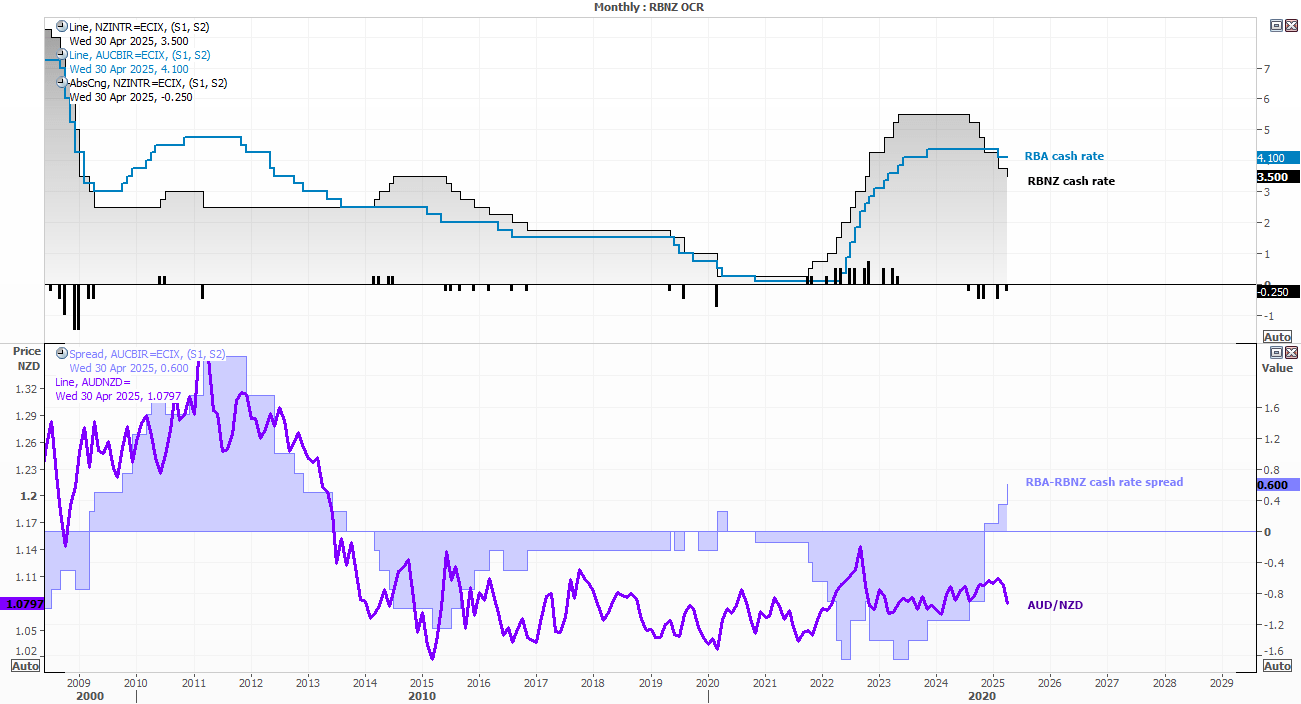
Today’s RBNZ cut sees the RBA–RBNZ interest rate differential rise to 60bp. Bloomberg pricing estimates both central banks will cut rates a further 3.5 times. In theory, this should support a rise in AUD/NZD, but as I’ve discussed in other articles, the close relationship between the Chinese yuan and Australian dollar has seen AUD/USD lead the bearish stampede—ahead of the New Zealand and Canadian dollars.
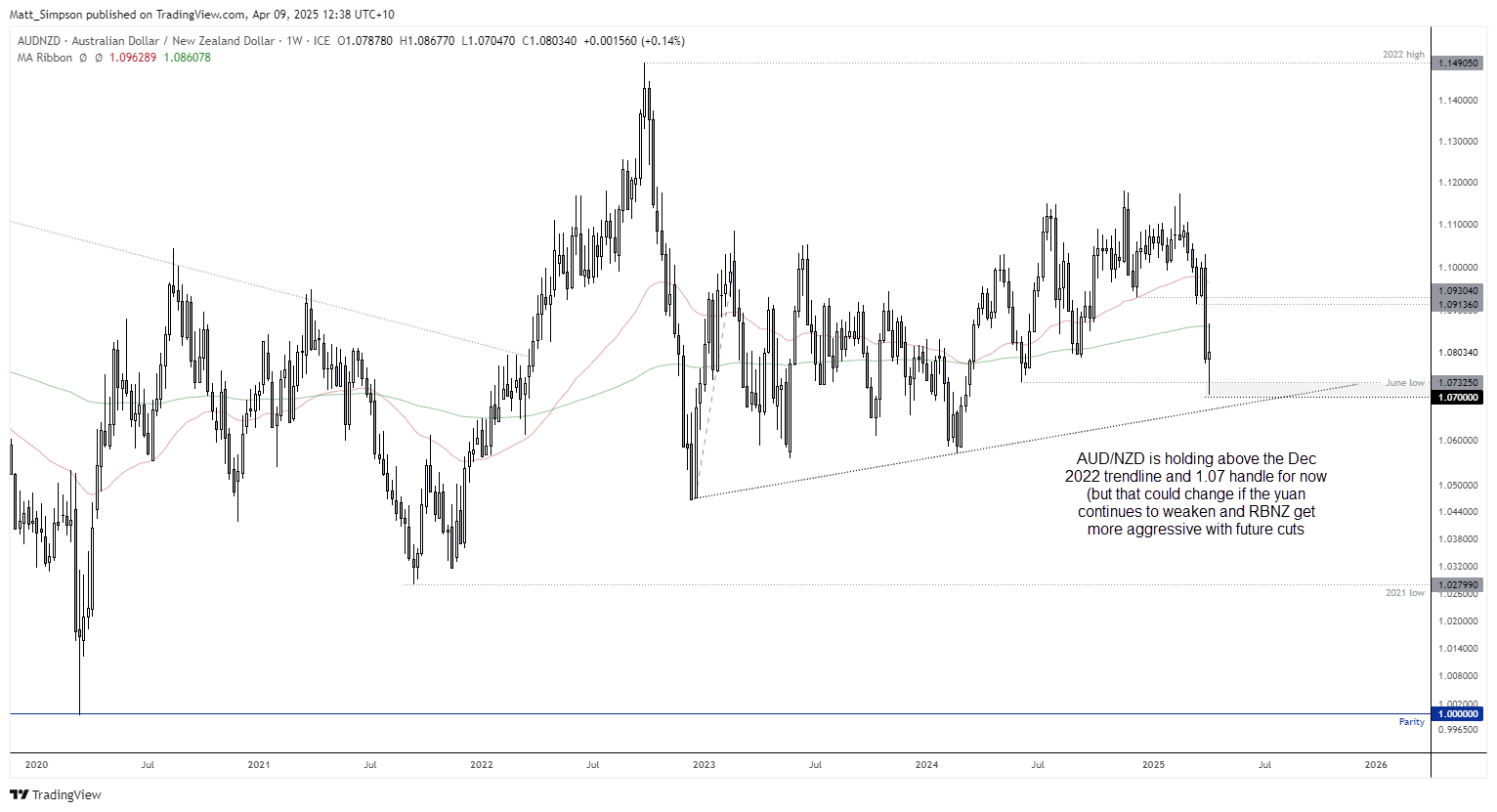
Still, AUD/NZD has been falling since the RBNZ’s February meeting. With the pair having found support just above the December 2022 trendline and demand around 1.07, perhaps we’re nearing the end of the move lower. Time will tell, but if the Chinese yuan continues to depreciate, AUD/USD could fall alongside AUD/NZD—regardless of interest rate expectations between the RBA and RBNZ.
AUD/USD, NZD/USD technical analysis
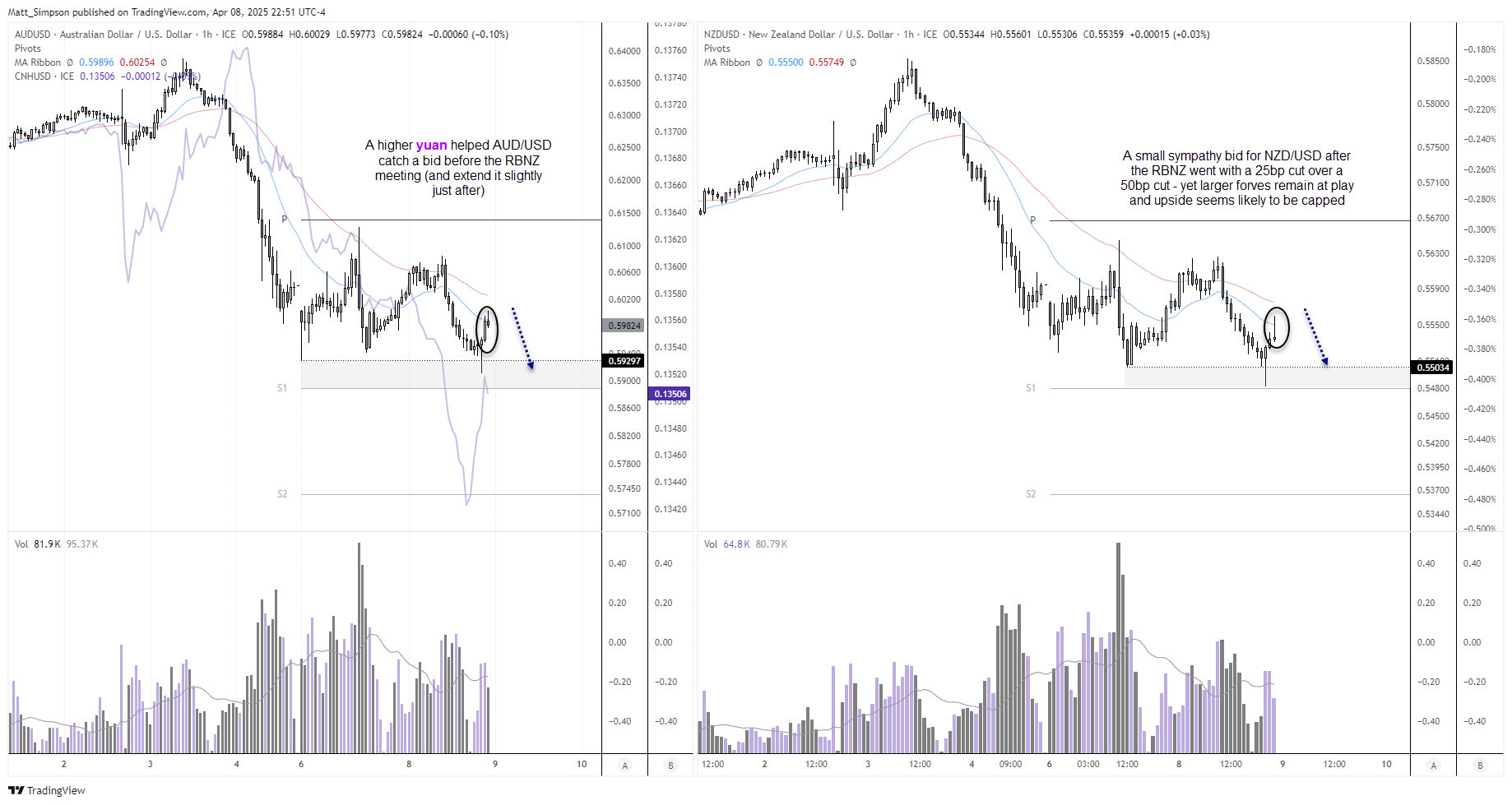
We saw a slight sympathy bid for the Australian and New Zealand dollars after the rate decision, yet their upside potential seems likely to be capped with larger forces at play.
Both AUD/USD and NZD/USD printed bullish hammers on the 1-hour chart, signalling a false break of Monday’s low ahead of the meeting. Both caught a sympathy bid after the rate decision. Yet in both cases, upside potential appears limited by broader market dynamics.
The 1-hour 20-bar EMA is currently acting as resistance, and both AUD/USD and NZD/USD already appear to be forming swing highs. Should bears regain control—potentially triggered by further yuan weakness—they could target the weekly S1 pivots near today’s lows. A break beneath those levels would suggest bearish continuation.
-- Written by Matt Simpson
Follow Matt on Twitter @cLeverEdge
How to trade with City Index
You can trade with City Index by following these four easy steps:
- Open an account, or log in if you’re already a customer
• Open an account in the UK
• Open an account in Australia
• Open an account in Singapore
- Search for the market you want to trade in our award-winning platform
- Choose your position and size, and your stop and limit levels
- Place the trade
Related tags:
Latest market news




The complete CFD trading experience
Award-winning platforms, competitive spreads, low commissions and dedicated support.
We live and breathe the markets and are dedicated to helping traders realise their ambitions as we continue to set the industry bar.
Economic calendar
Web Trader platform
Our sophisticated web-based platform is packed with features.
Related articles
USD/CAD reversal risk builds as central bank showdown looms
USD/CAD has delivered a bullish reversal signal from established support, just as traders prepare for Fed and BoC decisions. Aggressive Canadian rate hike expectations and conflicting momentum signals make the coming session important.
EUR/USD weekly outlook: FOMC and ECB to set the tone
The current backdrop is modestly bearish. On Friday, the EUR/USD closed modestly lower, down for the third consecutive day. The pair also posted a weekly decline after staging a modest recovery attempt in the previous week. Out of the past 8 weeks, the EUR/USD has fallen on 6 occasions. There is not much supporting factors for the single currency right now. So, the upside remains capped.


USD/JPY Forecast: Is Rising Japanese Inflation Supporting the Yen?
As the trading week comes to an end, one of the most relevant developments in the FX market has been the renewed strength of the Japanese yen. This can be seen in the recent performance of USD/JPY, which has fallen nearly 1.0% over the last two trading sessions, highlighting a meaningful recovery in the Japanese currency against the U.S. dollar.

StoneX Europe Ltd may make third party material available on this website which may contain information included but not limited to the conditions of financial markets. The material is for information purposes only and does not contain, and should not be construed as containing, investment advice and/or investment recommendation and/or an investment research and/or an offer of or solicitation for any transactions in financial instruments; any decision to enter into a specific transaction shall be made by the client following an assessment by him/her of their situation.
StoneX Europe Ltd makes no representation or warranty and assumes no liability as to the accuracy or completeness of the information provided, nor any loss arising from any investment based on a recommendation, forecast or other information supplied. You should always seek independent advice as to your suitability to speculate in any related markets and your ability to assume the associated risks, if you are at all unsure. We are not under any obligation to update any such material. Any opinion made may be personal to the author and may not reflect the opinion of StoneX Europe Ltd.