



Brexit How to trade GBP with meaningful vote just a week away
A week from today we will finally have the “meaningful vote,” when UK’s parliament will decide whether to approve the Brexit deal which Prime Minister Theresa May negotiated with the European Union at the back end of last year.
Share this:

A week from today we will finally have the “meaningful vote,” when UK’s parliament will decide whether to approve the Brexit deal which Prime Minister Theresa May negotiated with the European Union at the back end of last year. The deal covers the terms of Britain’s departure from the EU and the framework of future relations with the bloc. As it stands, the UK is scheduled to leave the EU on 29th March, with or without a deal. But things could change dramatically next week, depending on the outcome of the vote. It is possible, for example, that Mrs May might resign if the parliament rejects her deal, which could pave the way for a whole host of possibilities and uncertainties. We will cross that bridge when we come to it, but the key question right now is how to handle and trade the pound in the week leading up to the vote?
As we approach next Tuesday’s eagerly-awaited vote, the pound is likely to turn even more headline-driven and volatile as some speculators try to pre-empt the outcome of the vote, while those who have existing positions on sterling may decide to take profit. The potential for increased volatility is not necessarily a bad thing for scalping and other short-term term trading strategies – the GBP/USD’s chart below shows examples of several simple support-turned-resistance and resistance-turned-support trades. Such setups are likely to increase in number this week. But speculators who like to take longer-term directional views on the pound may be better off waiting for the outcome of the vote before deciding on a trade. On the other end of scale, aggressive traders may wish to buy as close to support or sell as close to resistance if they want to be in the market in the leading up to the vote, although we don’t recommend this strategy as it can be very risky.
To take the full advantage of the pound’s short-term volatility, traders need to select the best pair to trade the GBP against. For example, if you think the pound is going to go down, then sell it against the strongest-performing currency, while if you think it will go up, then go long the pound against the weakest-performing currency. Knowing which pair and when to trade it could make a big difference in your P&L. It is also important to be aware of the volatility of each pound cross. For example, the EUR/GBP is among the least volatile pound pairs, while the GBP/JPY and GBP/NZD are among the most volatile pairs. If you thrive in highly volatile market environment then choosing the GBP/NZD over EUR/GBP would make sense (everything else being equal), while if trading fast-moving markets is not your forte then the EUR/GBP, for example, might be a safer option.
In any case, don’t be surprised if the pound starts to push higher, despite all the doom and gloom out there. It is likely that a lot of speculators who hold bearish bets on the pound may decide to take profit and buy back their short positions. This could help to provide upward pressure on sterling. Even so, we don’t think the pound will go up meaningfully just on the back of short-covering. The point I am making here is that if you are trading the pound, don’t take anything for granted. Traders need to be extra vigilant to the prospects of price spikes, flash crashes and other risks and take appropriate measures to minimise these risks. Good traders are, above all, good risk managers.
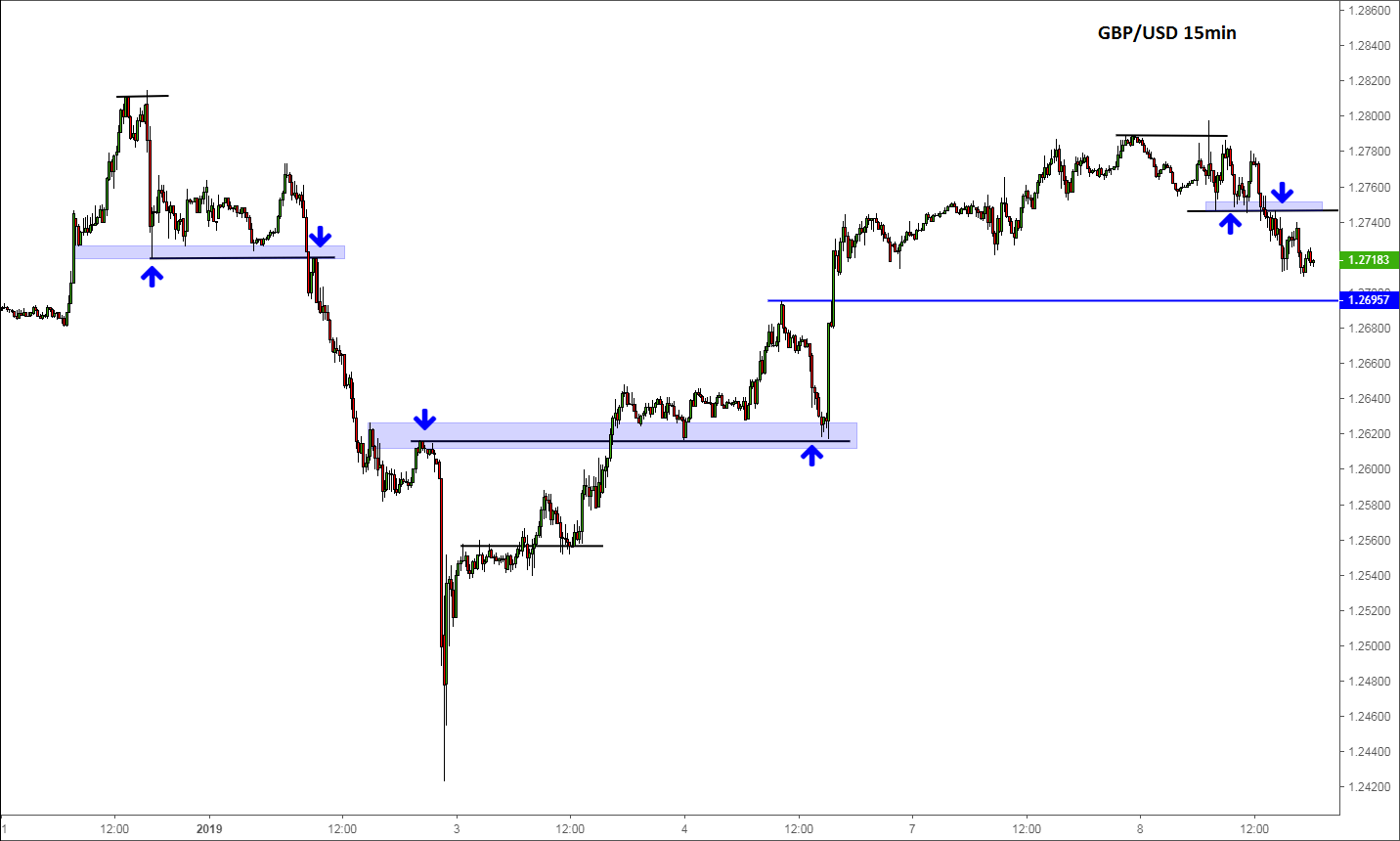
Source: TradingView and FOREX.com.

Open an account in minutes
Experience award-winning platforms with fast and secure execution.
Economic calendar
Web Trader platform
Our sophisticated web-based platform is packed with features.
Related articles

NZD/USD Forecast: Kiwi faces historic breakdown as RBNZ survey looms
NZD/USD is teetering above support that held through the pandemic and Liberation Day turmoil. With RBNZ hawks repeatedly disappointed, today's inflation expectations survey could open the door to a slide towards the GFC lows.

USD/JPY, AUD/JPY: Central Bank Divergence Creates Two-Way Risk
USD/JPY eyes a breakout above 160, while AUD/JPY faces further losses as Fed, RBA and BoJ interest rate expectations diverge.


DXY, GBP/USD, AUD/USD, USD/CAD, USD/JPY, Gold Weekly Technical Outlook 11 16 2026
Sr. Technical Strategist Michael Boutros highlights the levels that matter on the USD Majors, commodities, and equity indices charts this week.

StoneX Financial Ltd (trading as "FOREX.com") is an execution-only service provider. This material, whether or not it states any opinions, is for general information purposes only and it does not take into account your personal circumstances or objectives. This material has been prepared using the thoughts and opinions of the author and these may change. However, FOREX.com does not plan to provide further updates to any material once published and it is not under any obligation to keep this material up to date.
This material is short term in nature and may only relate to facts and circumstances existing at a specific time or day. Nothing in this material is (or should be considered to be) financial, investment, legal, tax or other advice and no reliance should be placed on it. No opinion given in this material constitutes a recommendation by FOREX.com or the author that any particular investment, security, transaction or investment strategy is suitable for any specific person.
The material has not been prepared in accordance with legal requirements designed to promote the independence of investment research. Although FOREX.com is not specifically prevented from dealing before providing this material, FOREX.com does not seek to take advantage of the material prior to its dissemination. This material is not intended for distribution to, or use by, any person in any country or jurisdiction where such distribution or use would be contrary to local law or regulation. For further details see our full non-independent research disclaimer and quarterly summary.