








European Open Delta Weighs on Asian Equities STOXX 50 Eyes New High
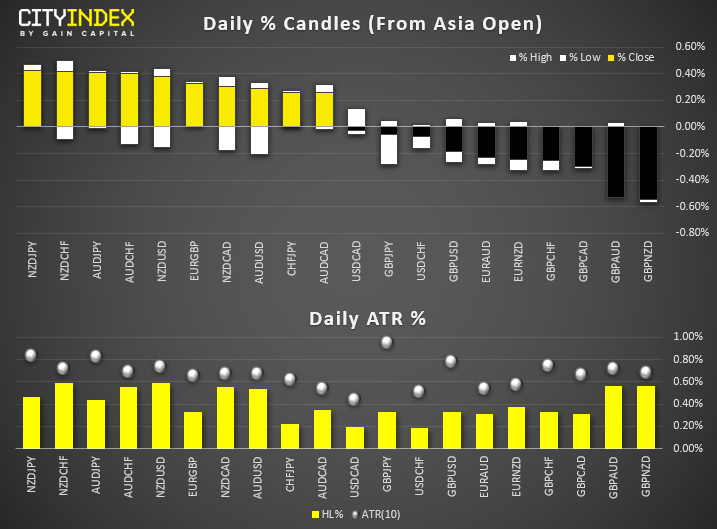
Sentiment in China took a knock overnight at Covid cases continued to rise. Yet European bourses are on track for a solid week thanks to strong earnings on Wall Street.
Share this:

Read our guide on how to interpret the weekly COT report
As of Tuesday 7th January:
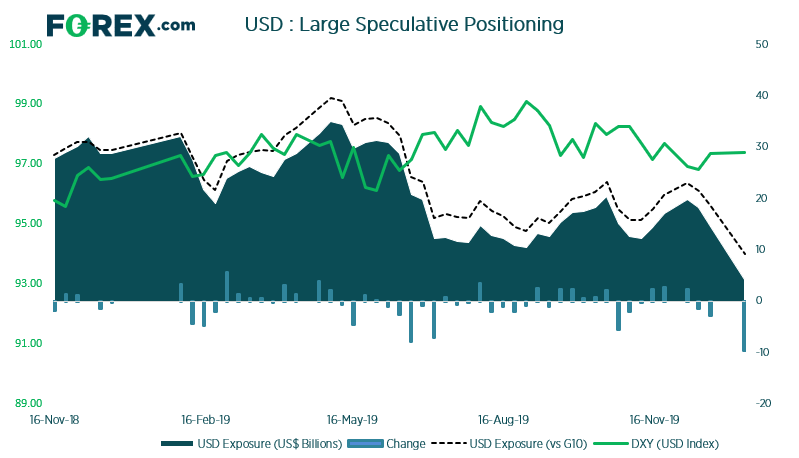
- Net-long exposure to USD fell to $4.3 billion. At -$10.2 billion from the prior week, it’s the least bullish investors have been to the dollar since June 2018.
- Traders were the most bullish on GBP since May 2018.
- Large speculators were on the cusp of flipping net-long on NZD.
- Traders were their least bearish on JPY in nearly 3-months.
USD: With traders shedding -$10.2 billion in net-long exposure, it’s the largest weekly change since June 2018 and the largest negative decline since June 2015. It’s also the least bullish traders have been on the dollar in 19-months, since traders flipped to net-long. (Not) QE is certainly having an impact on the dollar, or at least traders perception of it, so perhaps this theme will persist until the Fed fix the issues in the repo market.
AUD: Net-short exposure has fallen to its lowest level in 2-months, and near similar levels seen in January 2019. And the timing is curious, given the RBA could very well cut rates early February. Still, perhaps this will provide bears with better price to consider short traders, particularly if inflation and / or employment data misses the mark ahead of RBA’s first meeting of the year.
NZD: Traders are on the cusp of flipping to net-long exposure. Moreover, we’ve seen a healthy rise of gross long exposure after shorts were culled between September and December. We continue to expect RBNZ to hold rate through Q1 so core view on NZD remains bullish.
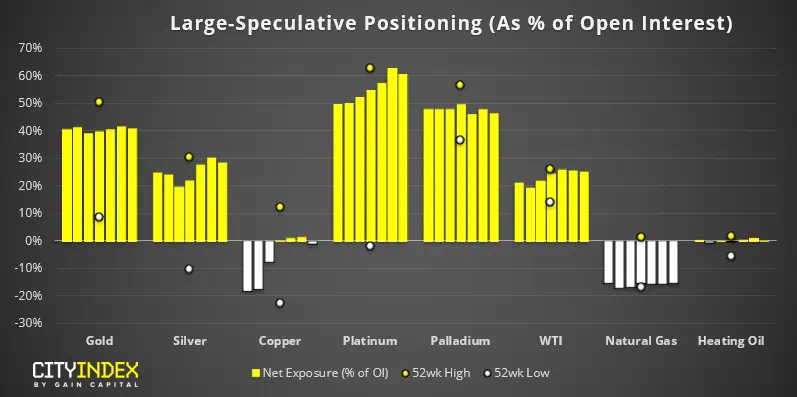
As of Tuesday 7th January:
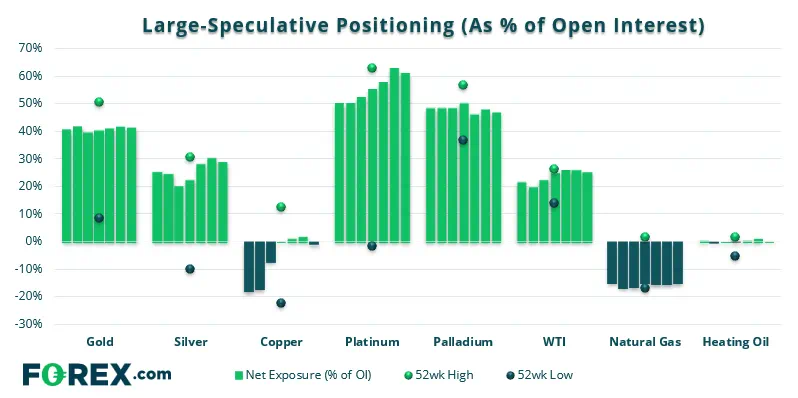
- Copper traders flipped to net-short exposure after just 3-week net long.
- Bullish exposure to platinum hit yet another record high.
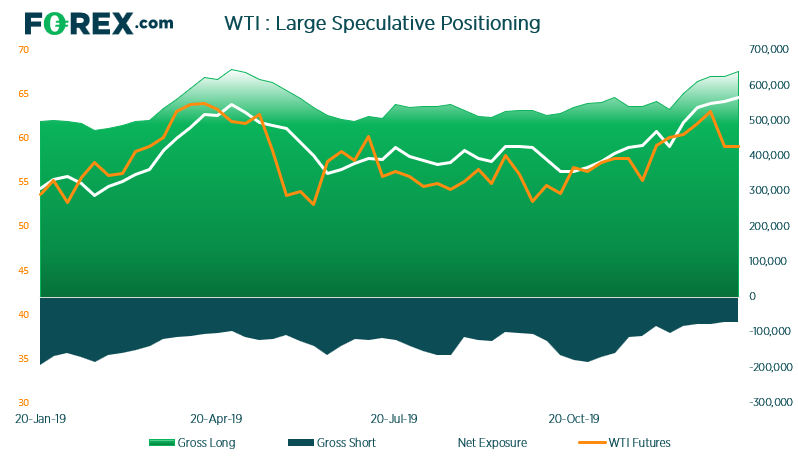
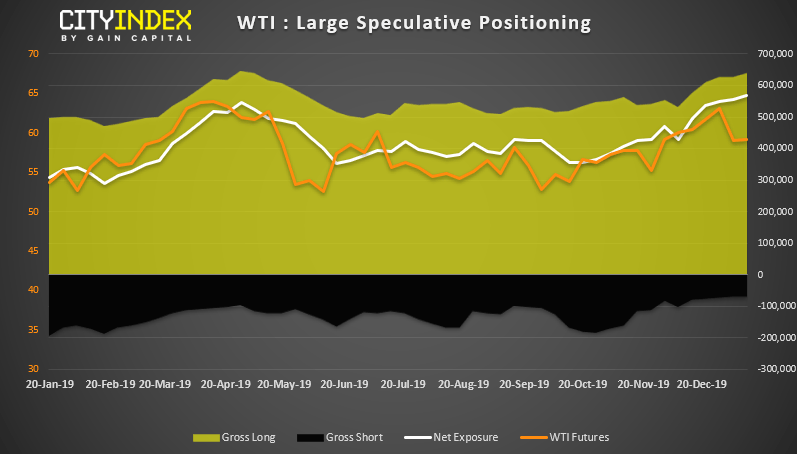
- WTI traders were their most bullish since August 2018.
WTI: Whilst traders increased their bullish exposure to a 17-month high, it should be noted that tensions were high in the Middle East which supported oil prices. Yet with WTI’s failure to close above $64 and roll over, it trades back within range and we’d expect positioning to reflect this in the next report. This means range-trading strategies are preferred whilst prices remain below $64 - $65.
Related tags:
Latest market news




Open an account in minutes
Experience award-winning platforms with fast and secure execution.
Economic calendar
Web Trader platform
Our sophisticated web-based platform is packed with features.
Related articles
EUR/USD outlook: euro back above 1.1000 as dollar rally loses steam
EUR/USD has recovered back above 1.1000 after a brief break lower, a sign the dollar's inflation-driven rally may be losing momentum. With a December Fed hike largely priced in and oil a potential tailwind for the euro, the risks are starting to tilt to the upside.

Gold Price Short-term Outlook: XAU/USD Bears Face Critical Test at Yearly Lows 11 17 2026
Gold's decline is showing signs of exhaustion at major support, with a pivotal range break in focus ahead of the FOMC minutes.

USD/CAD Forecast: Canadian Dollar Remains Under Pressure After Inflation Data
As the end of 2026 draws closer, one of the most notable themes in the currency market remains the weakness of the Canadian dollar against its U.S. counterpart. Over the past five trading sessions alone, USD/CAD has gained nearly 0.8%, highlighting the consistent strength that the U.S. dollar has continued to display.

StoneX Financial Ltd (trading as "FOREX.com") is an execution-only service provider. This material, whether or not it states any opinions, is for general information purposes only and it does not take into account your personal circumstances or objectives. This material has been prepared using the thoughts and opinions of the author and these may change. However, FOREX.com does not plan to provide further updates to any material once published and it is not under any obligation to keep this material up to date.
This material is short term in nature and may only relate to facts and circumstances existing at a specific time or day. Nothing in this material is (or should be considered to be) financial, investment, legal, tax or other advice and no reliance should be placed on it. No opinion given in this material constitutes a recommendation by FOREX.com or the author that any particular investment, security, transaction or investment strategy is suitable for any specific person.
The material has not been prepared in accordance with legal requirements designed to promote the independence of investment research. Although FOREX.com is not specifically prevented from dealing before providing this material, FOREX.com does not seek to take advantage of the material prior to its dissemination. This material is not intended for distribution to, or use by, any person in any country or jurisdiction where such distribution or use would be contrary to local law or regulation. For further details see our full non-independent research disclaimer and quarterly summary.