

February Forex Seasonality Key Points
- The US dollar fell across the board in January, bucking its historical tendency for strength.
- USD/JPY has, on average, seen weak performance in February, but seasonal averages may be less significant given expected political developments on both sides of the Pacific.
- Tonight’s RBA meeting may determine whether AUD/USD reverses from 3-year highs and follows its weak seasonal trend this month.
The beginning of a new month marks a good opportunity to review the seasonal patterns that have influenced the forex market over the 50+ years since the Bretton Woods system was dismantled in 1971, ushering in the modern foreign exchange market.
As always, these seasonal tendencies are just historical averages, and any individual month or year may vary from the historic average, so it’s important to complement these seasonal leans with alternative forms of analysis to create a long-term successful trading strategy. In other words, past performance is not necessarily indicative of future results.

Euro Forex Seasonality – EUR/USD Chart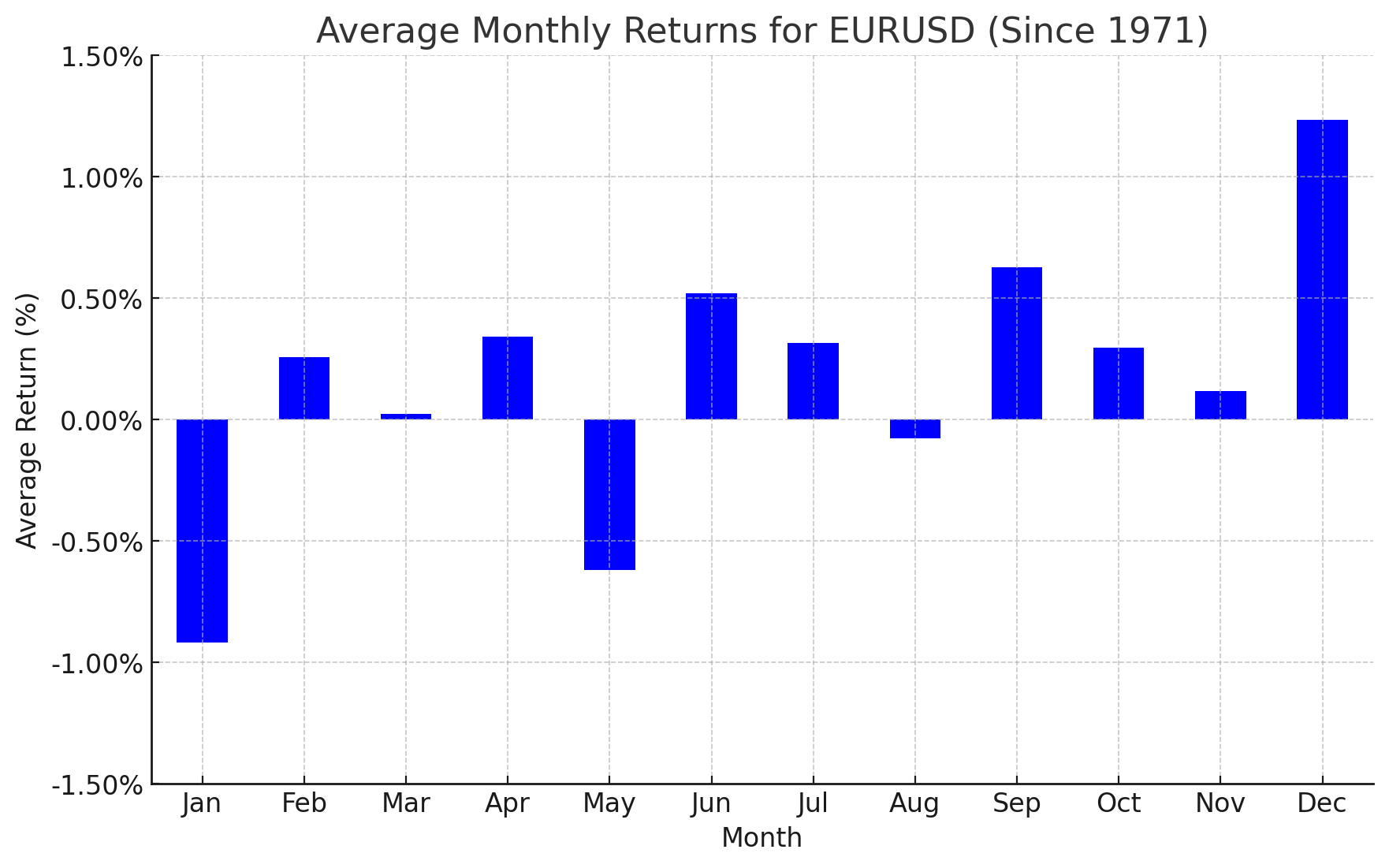
Source: TradingView, StoneX. Please note that past performance is not necessarily indicative of future results.
Historically, February has been a modestly bullish month for EUR/USD, with the world’s most widely-traded currency pair sporting an average return of +0.3% over the last 50+ years. In January, EUR/USD bucked its seasonal trend to edge higher, briefly hitting a 4.5-year high near 1.21 before pulling back to close the month. For a US dollar that has historically fallen against the euro, another government shutdown that delays economic data including the NFP report is an auspicious start.
British Pound Forex Seasonality – GBP/USD Chart
Source: TradingView, StoneX. Please note that past performance is not necessarily indicative of future results.
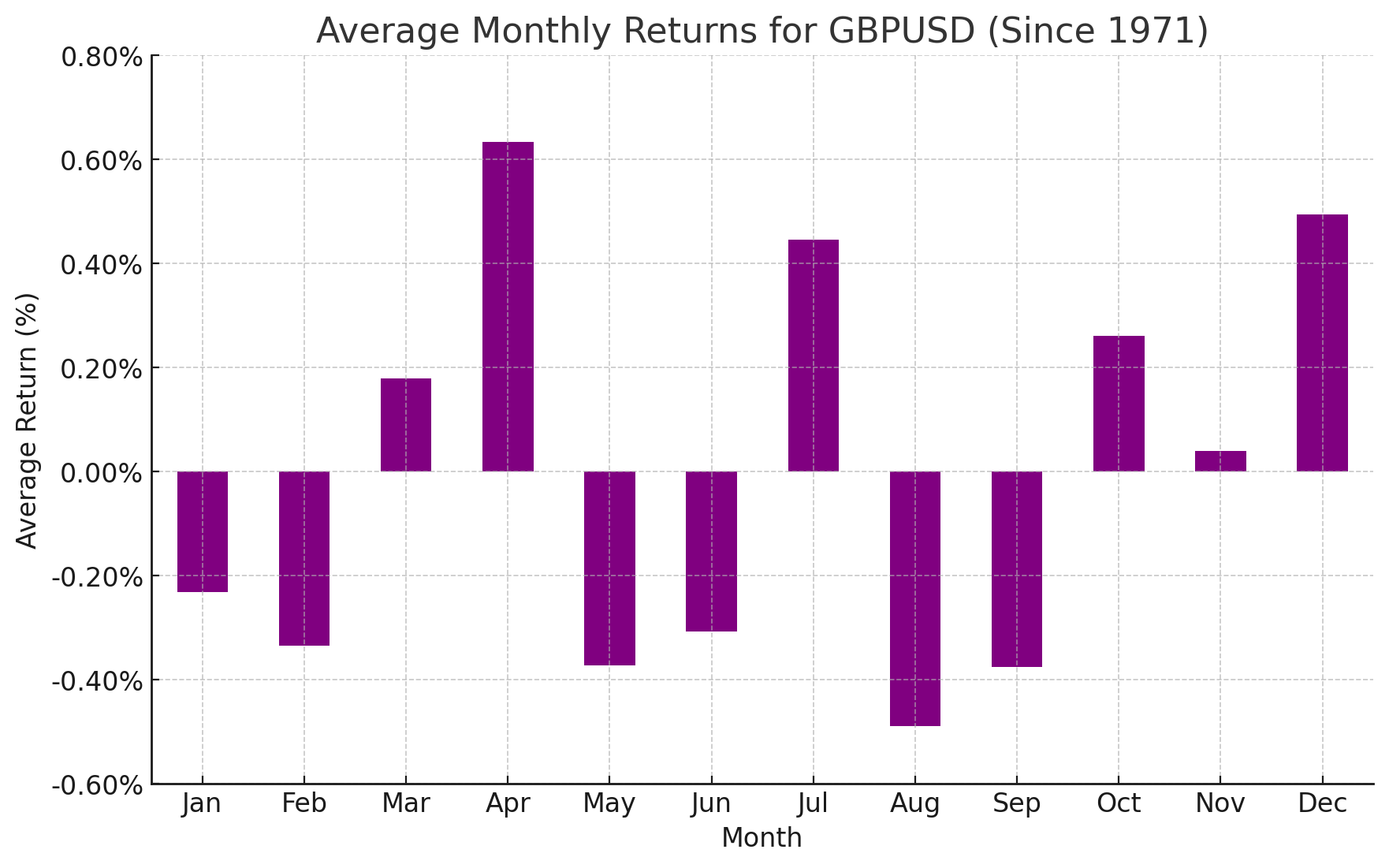
Looking at the above chart, GBP/USD has, on average, traded lower in February, with average returns of around -0.3% since 1971. Like the euro, the British pound has traded higher for three straight months and briefly rallied to multi-year highs in January before pulling back to close back within last year’s range. While no interest rate changes are expected, this week’s BOE and ECB meetings represent key event risks for the European currencies.
Japanese Yen Forex Seasonality – USD/JPY Chart
Source: TradingView, StoneX. Please note that past performance is not necessarily indicative of future results.
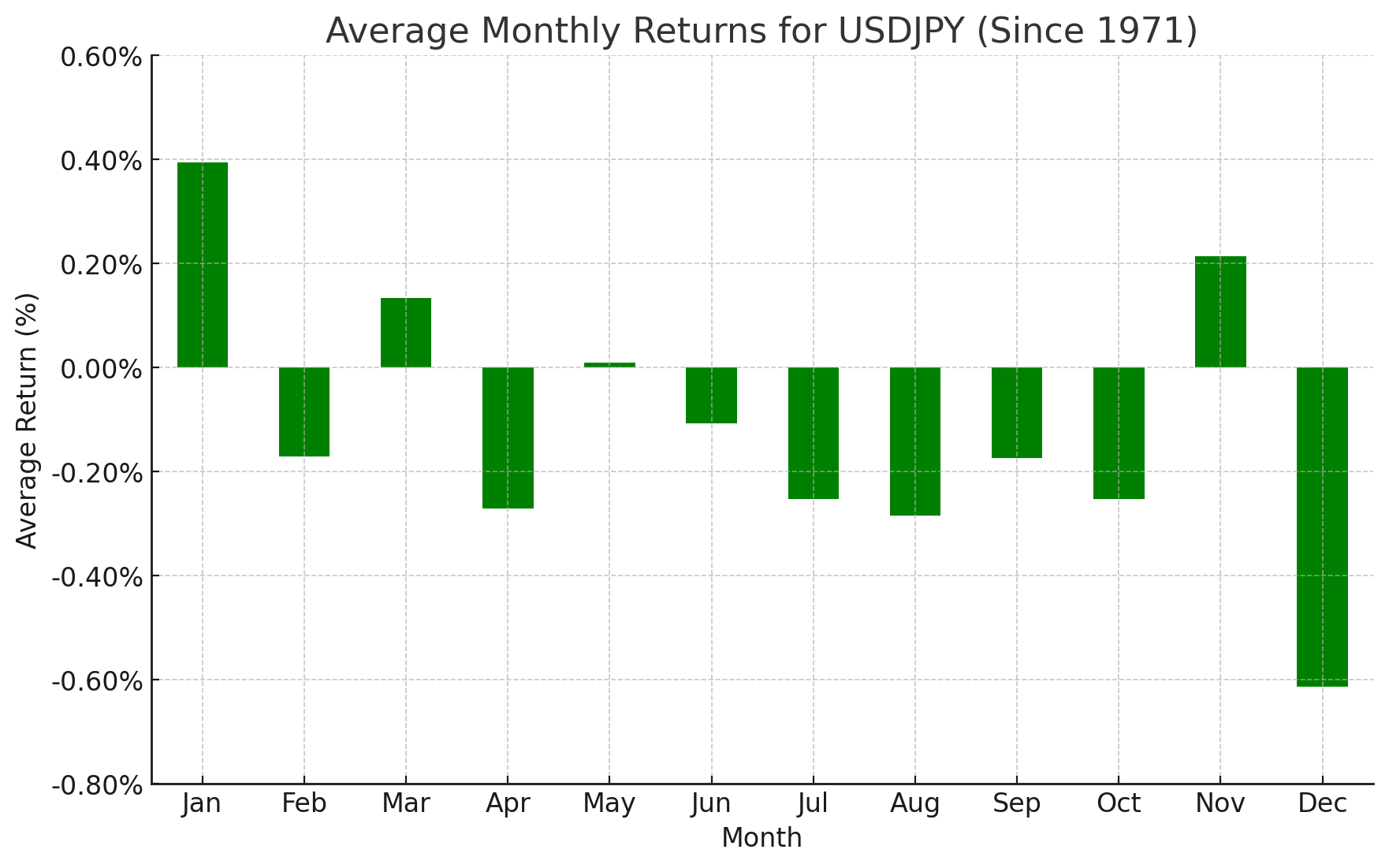
February has historically been a slightly bearish month for USD/JPY, with the pair falling by an average of -0.2% since the Bretton Woods agreement. USD/JPY started the year with a volatile, but ultimately bearish month, contrary to the historical seasonal tendency, amidst broad-based weakness in the US dollar. Idiosyncratic political factors are driving markets more than usual on both sides of the Pacific, so traders may want to be cautious about reading too much into USD/JPY’s seasonal track record for now.
Australian Dollar Forex Seasonality – AUD/USD Chart
Source: TradingView, StoneX. Please note that past performance is not necessarily indicative of future results.
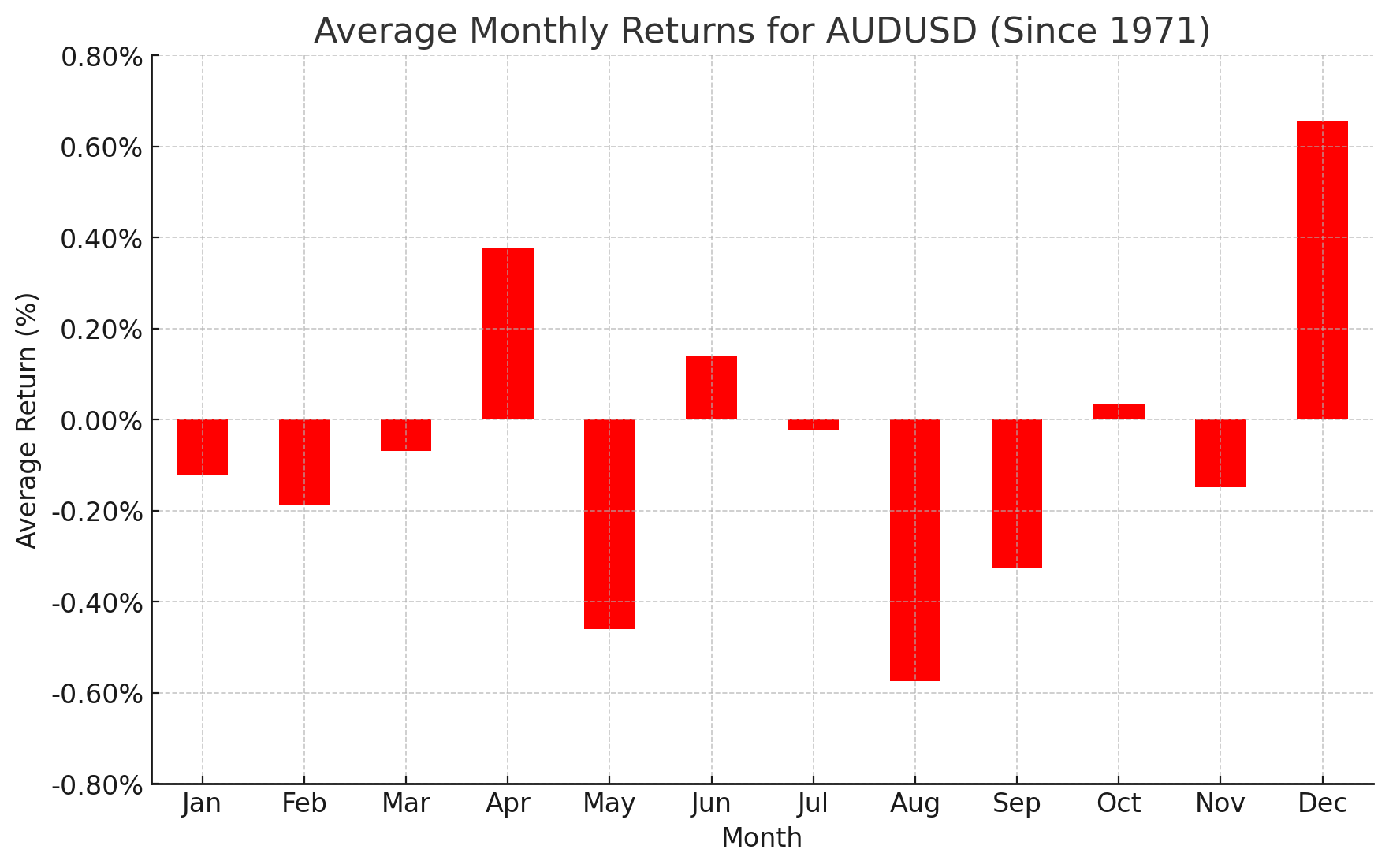
Turning our attention Down Under, AUD/USD has historically traded moderately lower in February, with an average drop of -0.2% going back to 1971. Last month, the Aussie surged higher to break out of its 3-year range, boosted by strong employment and inflation data in Australia. The RBA is expected to raise interest rates shortly after we go to press, but the central bank’s outlook for the rest of the year may be a bigger driver for the currency than the interest rate decision itself.
Canadian Dollar Forex Seasonality – USD/CAD Chart
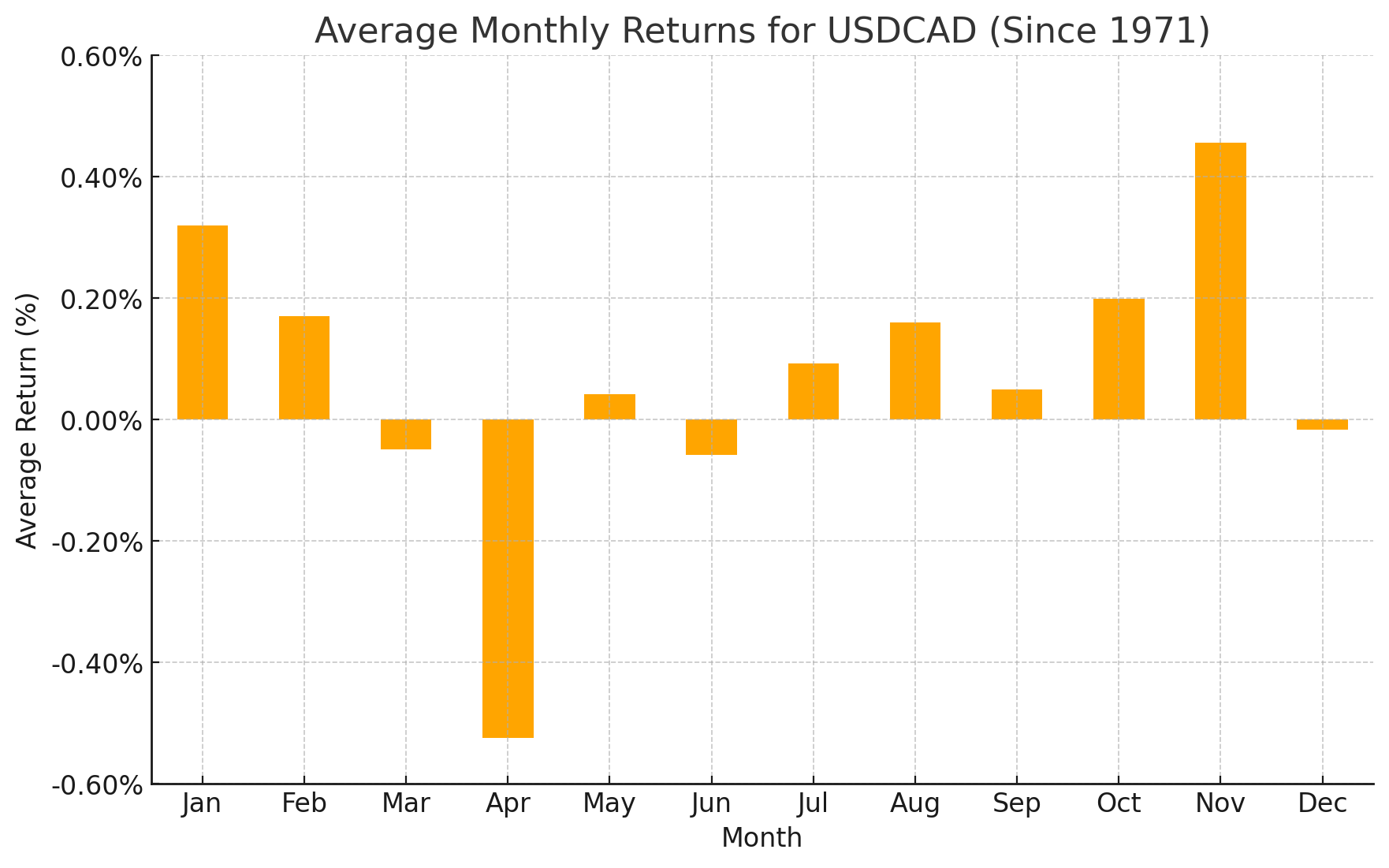
Source: TradingView, StoneX. Please note that past performance is not necessarily indicative of future results.
Last but not least, February has been a modestly positive month for USD/CAD, with an average historical return of +0.2%. As we go to press, USD/CAD is holding above support at its 15-month low in the mid-1.3500s after probing below that area last month. The pair is trading below all of its major medium- and longer-term moving averages in the 1.3800 zone, suggesting that will be a critical zone to watch if bulls want to seize back the upper hand following a rough last three weeks.
As always, we want to close this article by reminding readers that seasonal tendencies are not gospel – even if they’ve tracked relatively closely so far this year – so it’s important to complement this analysis with an examination of the current fundamental and technical backdrops for the major currency pairs.
-- Written by Matt Weller, Global Head of Research
Check out Matt’s Daily Market Update videos on YouTube and be sure to follow Matt on Twitter: @MWellerFX