The GBP/USD pair managed to recover more than 0.3% today in favor of the British pound, maintaining an intact bullish bias, even though the Bank of England announced a new rate cut in its latest decision. Part of this resilience may be due to the fact that the decision was not unanimous, which softens the interpretation of a fully dovish shift, and also because of the ongoing weakness of the U.S. dollar, which has allowed the pound to remain firm. As long as these factors persist in the market, a more relevant bullish pressure could continue to shape short-term movements in the pair.

BOE Decision Day Arrives
During today’s session, December 18, the Bank of England announced its interest rate decision, cutting the rate by 0.25%, from 4.00% to 3.75%, marking a new dovish stance toward the end of the year.
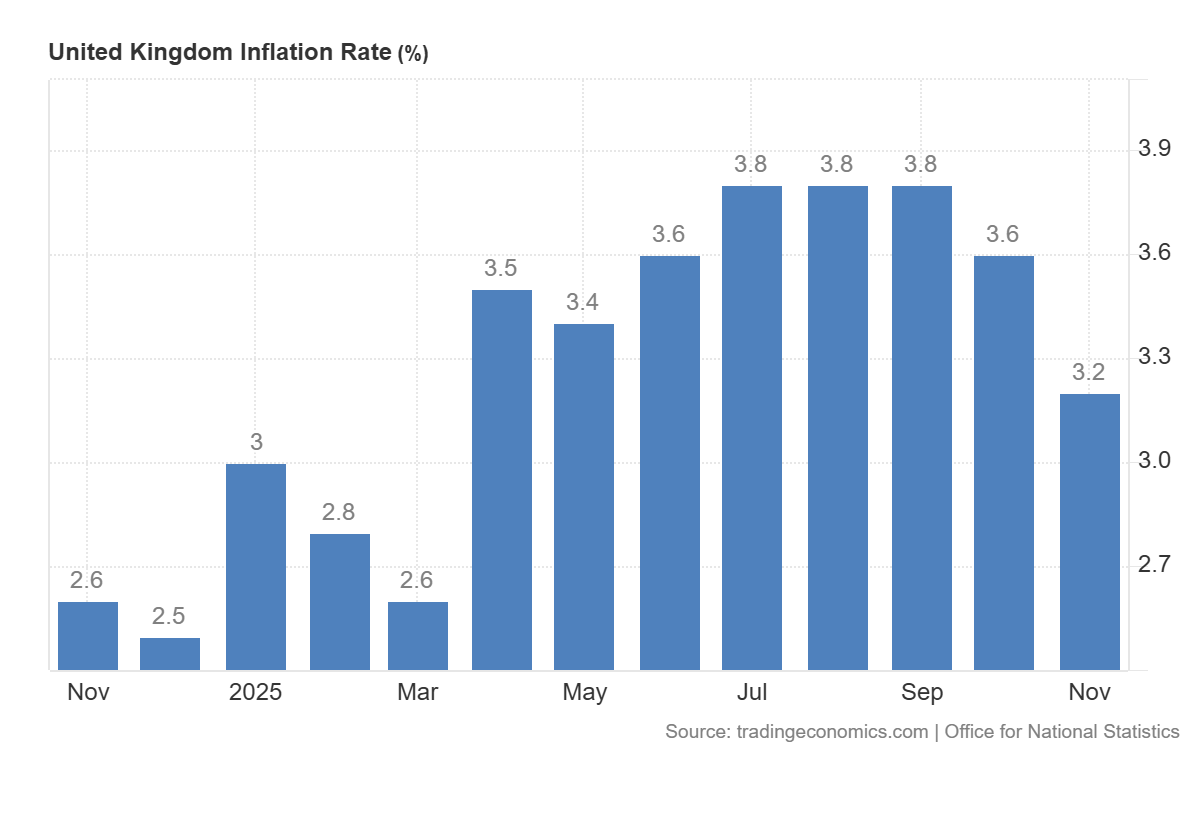
The recent decision was driven by essential factors in the behavior of the labor market, which has begun to show a consistent slowdown over the past few months, as well as the behavior of inflation data in the UK, which now shows a decline from the year’s peak observed in September—when the annual rate stood near 3.8%—to the data published for November, which revealed a decrease toward 3.2%. This has led the central bank to believe there is more room for lower rates and has, in part, influenced the decision to cut the interest rate at the end of the year.
Source: TradingEconomics
With this in mind, under normal circumstances, a decline in interest rates would be expected to reduce the attractiveness of pound-denominated investments, weakening demand for the currency. However, this was not the case, as the vote was not unanimous: 5 votes in favor and 4 against, highlighting growing internal indecision within the Bank of England. Over time, this does not guarantee that the lower-rate outlook will be sustained through the early months of 2026, especially if this disagreement among committee members persists. It is also important to note that post-decision comments emphasized acting with caution, since inflation remains well above the 2.00% target, raising doubts about the possibility of maintaining a consistently dovish stance.
Thus, despite today’s rate cut, the weakness in the British pound was not significant, as the market interprets that this stance may not persist in upcoming decisions. As long as there is no clear confirmation of lower interest rates for 2026, bullish pressure may continue to dominate GBP/USD in the near term.
What Is Happening with the U.S. Dollar?
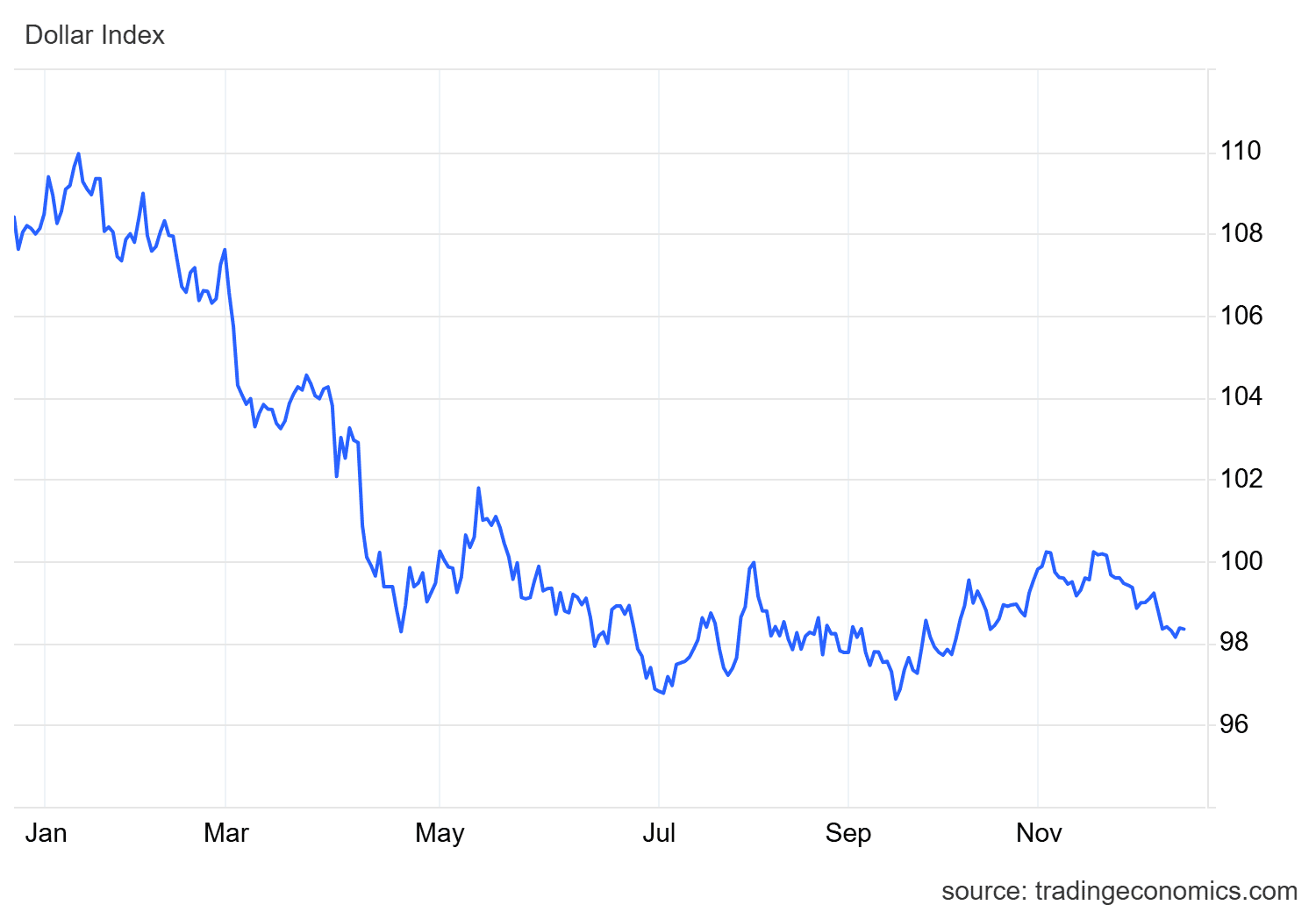
Another key factor favoring the pound is the structural weakness that the U.S. dollar continues to show in the short term. The DXY index, which measures the strength of the dollar against other major currencies, maintains a bearish outlook and has fallen consistently below the 100-point zone, even reaching the 98-point area—levels not seen since October. This reflects a persistent decline in demand for U.S. dollars in the final weeks of 2025.
Source: TradingEconomics
Given this weakness, as the DXY continues to show lower oscillations, the British pound may continue to gain ground in the short term. This persistent decline in the dollar has also prevented the pound from weakening following the BOE’s rate cut. If DXY levels continue to fall, a steady bullish pressure on GBP/USD could remain in the coming sessions.
GBP/USD Technical Outlook
Source: StoneX, Tradingview
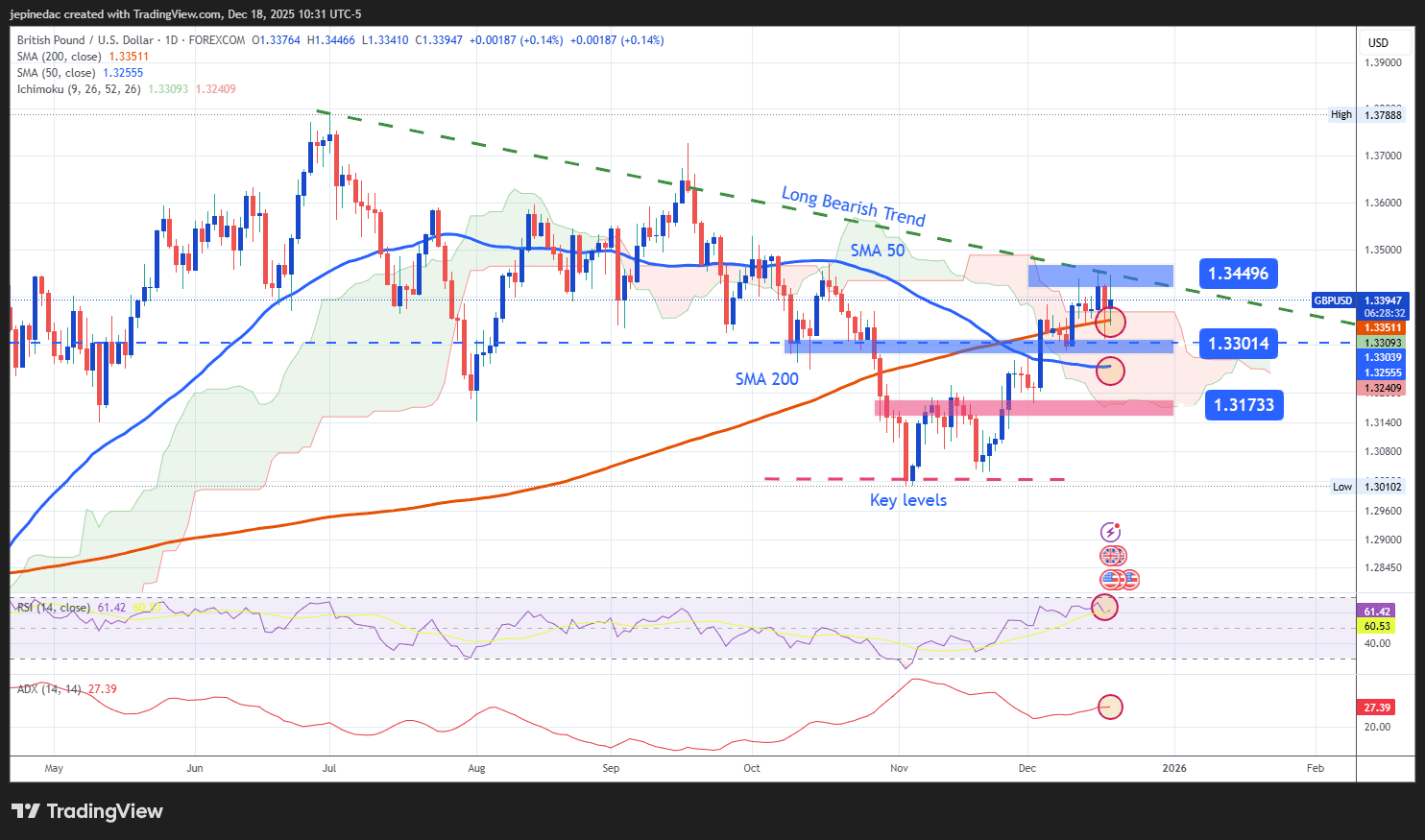
- The downtrend is at risk: The downtrend is at risk: since June 30, movement in GBP/USD has been predominantly bearish, following a descending trendline that has guided the price up to now. However, the recent bullish momentum is once again approaching this line, and if buying pressure manages to remain strong in the upcoming sessions, a break of the downtrend could occur, opening room for a more consistent bullish bias toward year-end.
- RSI: The RSI shows rising oscillations above the neutral 50 level, suggesting that buying momentum has begun to dominate the average of the last 14 sessions. If the RSI continues rising without reaching the overbought zone (70), this could signal notable bullish strength in the coming days.
- ADX: The ADX maintains an upward slope with oscillations above 20, indicating that the average volatility of the price is increasing. If this expansion continues, it could further strengthen bullish momentum and undermine the downtrend that dominated recent months.
Key Levels:
- 1.34496 – Main resistance: A level aligned with the barrier marked by the long descending trendline. Sustained price action above this level could confirm a trend reversal and activate a dominant bullish bias.
- 1.33014 – Nearby barrier: A neutrality zone located between the 50- and 200-period moving averages. Movements within this range may reinforce market indecision, giving way to a potential short-term sideways pattern.
- 1.31733 – Final support: A key floor located below both moving averages. Bearish oscillations returning to this area may reactivate selling pressure and extend the prevailing downtrend.
Written by Julian Pineda, CFA, CMT – Market Analyst
Follow him at: @julianpineda25