







AUD/USD Weekly Outlook: Australian Dollar Faces Jobs Data and US CPI
The Australian dollar (AUD/USD) faces key domestic data, with sentiment, wages, and jobs in focus, while US inflation and retail sales could drive broader USD direction.
Share this:

View related analysis:
- Japanese Yen Sinks, US Dollar Surges Ahead of US-China Talks
- AUD/USD, USD/CAD, NZD/USD: An Engulfing Day for Commodity FX
- AUD/USD Weekly Outlook: Yuan Correlation Supports Aussie Strength
- Japanese Yen Bulls Still Pushing Their Luck: COT Report
View related analysis:
- Japanese Yen Sinks, US Dollar Surges Ahead of US-China Talks
- AUD/USD, USD/CAD, NZD/USD: An Engulfing Day for Commodity FX
- AUD/USD Weekly Outlook: Yuan Correlation Supports Aussie Strength
- Japanese Yen Bulls Still Pushing Their Luck: COT Report
Australian Data in Focus: Jobs, Wages, and Sentiment Ahead of RBA Decision
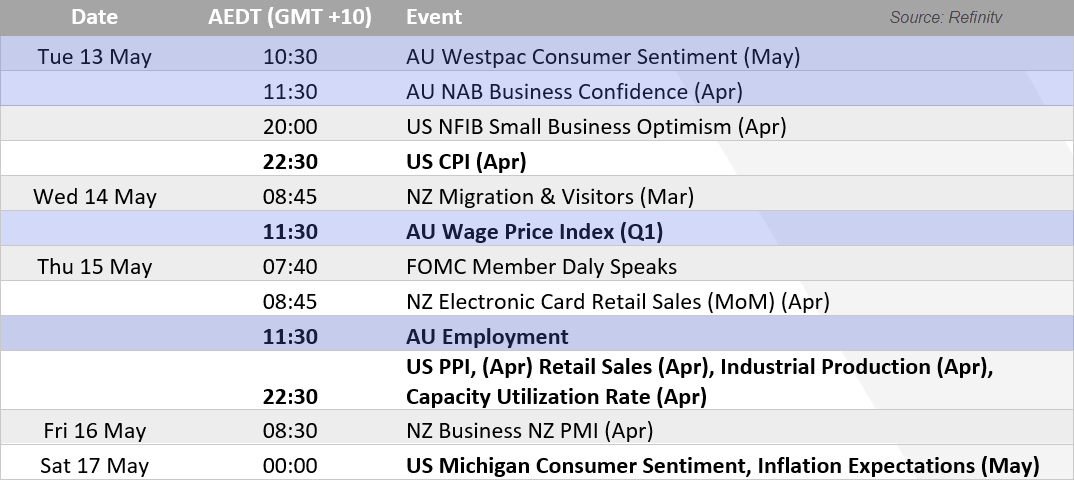
The four main economic data points next week include sentiment for consumer and business, wage price index and employment. I don’t see any of these derailing an RBA cut on May 20, but they do of course help us keep a pulse on the economy.
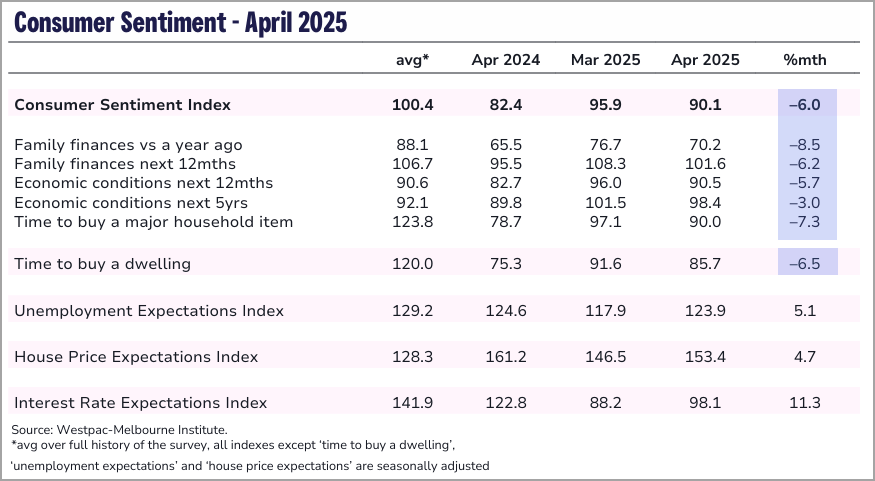
“Tariff turmoil” saw Australian consumer confidence fall by -6% in April—its steepest monthly decline in nearly two years, according to the Westpac survey. All sub-indices declined over the month, with the ‘family finances compared to a year ago’ gauge plunging -8.5%. I doubt we’ll see a strong print for consumer confidence this week, though the rebound in risk sentiment might help soften the blow. The ASX 200 has rallied around 15% since the April low (which formed the day ahead of the Westpac sentiment report) and AUD/USD is up around 10%.
The wage price index is likely to show wages rising at a slower pace, though it’s rarely a market mover for AUD/USD traders.
Thursday’s employment report, however, warrants attention—although it seems more likely than not to deliver another set of robust figures. I’m personally struggling to find a tradie available for work, and one I spoke to didn’t even have time to provide a quote. But with trimmed-mean inflation now within the Reserve Bank of Australia’s (RBA) 2–3% target band and consumer sentiment shifting, a rate cut on May 20 appears increasingly likely.
US CPI and Retail Sales in Focus for AUD/USD Traders
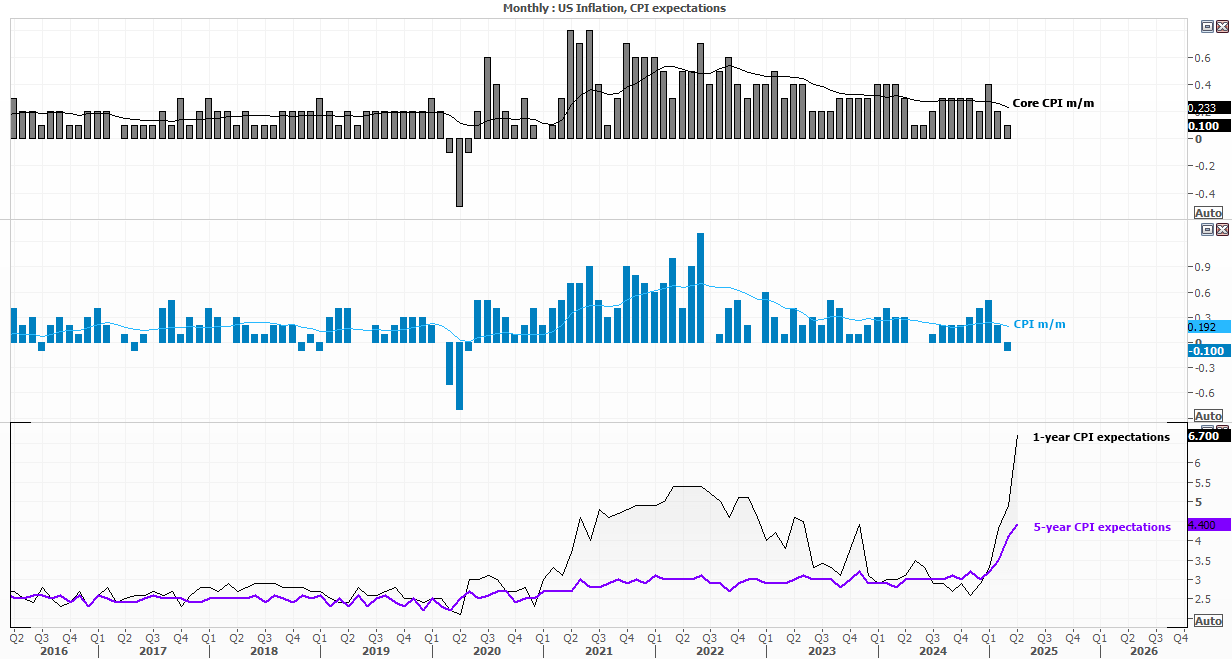
Consumer prices are the main event from the US this week. Contrary to tariff-induced fears, April’s CPI data was softer than expected. Core CPI rose just 0.1%—a nine-month low—while the annual rate of core inflation slowed to 2.8% year-on-year, its lowest level since March 2021. CPI also contracted by -0.1%, its first sub-zero print in nearly four years.
While another soft CPI print could bolster expectations of a Federal Reserve (Fed) rate cut, the Fed is unlikely to signal any moves until there is clarity on a potential US–China trade deal. Fed fund futures currently imply a 50.4% chance of a cut in July, or 44.1% of one in September.
Retail sales might produce another solid set of figures as shoppers bring forward purchases due to the threat of tariffs. Inflation expectations are also expected to remain high in Friday’s consumer sentiment report from the University of Michigan.
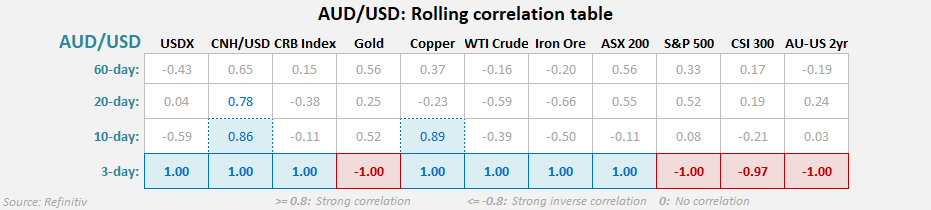
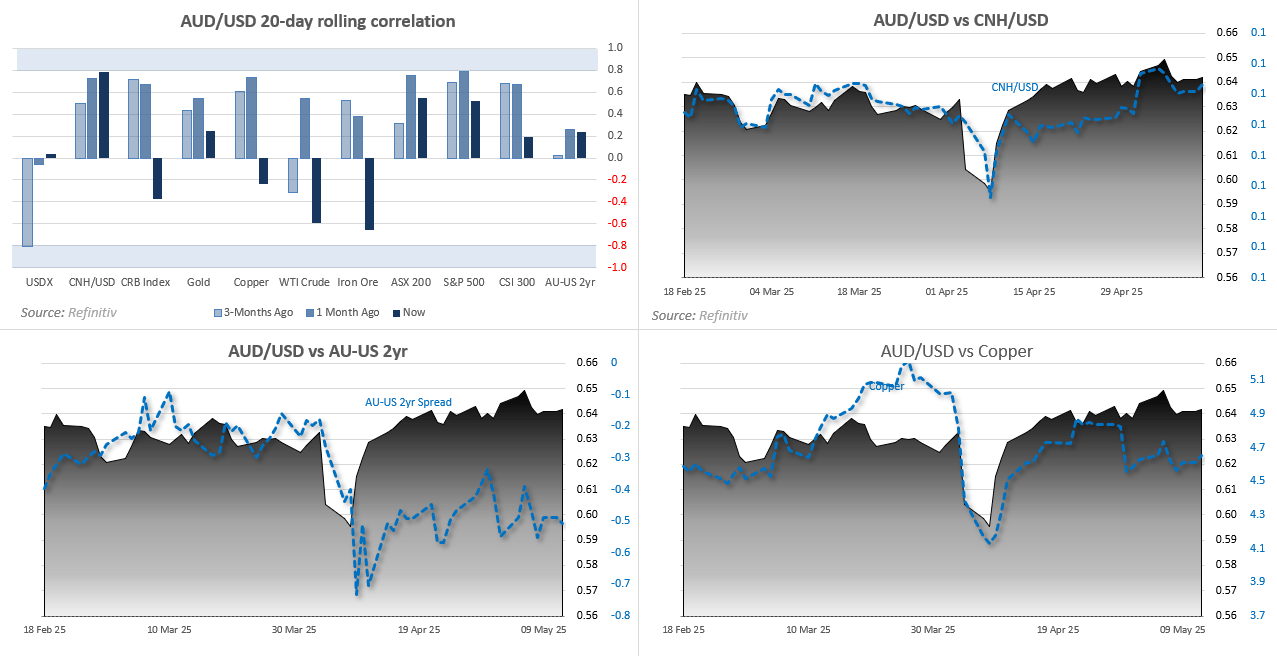
AUD/USD Correlations
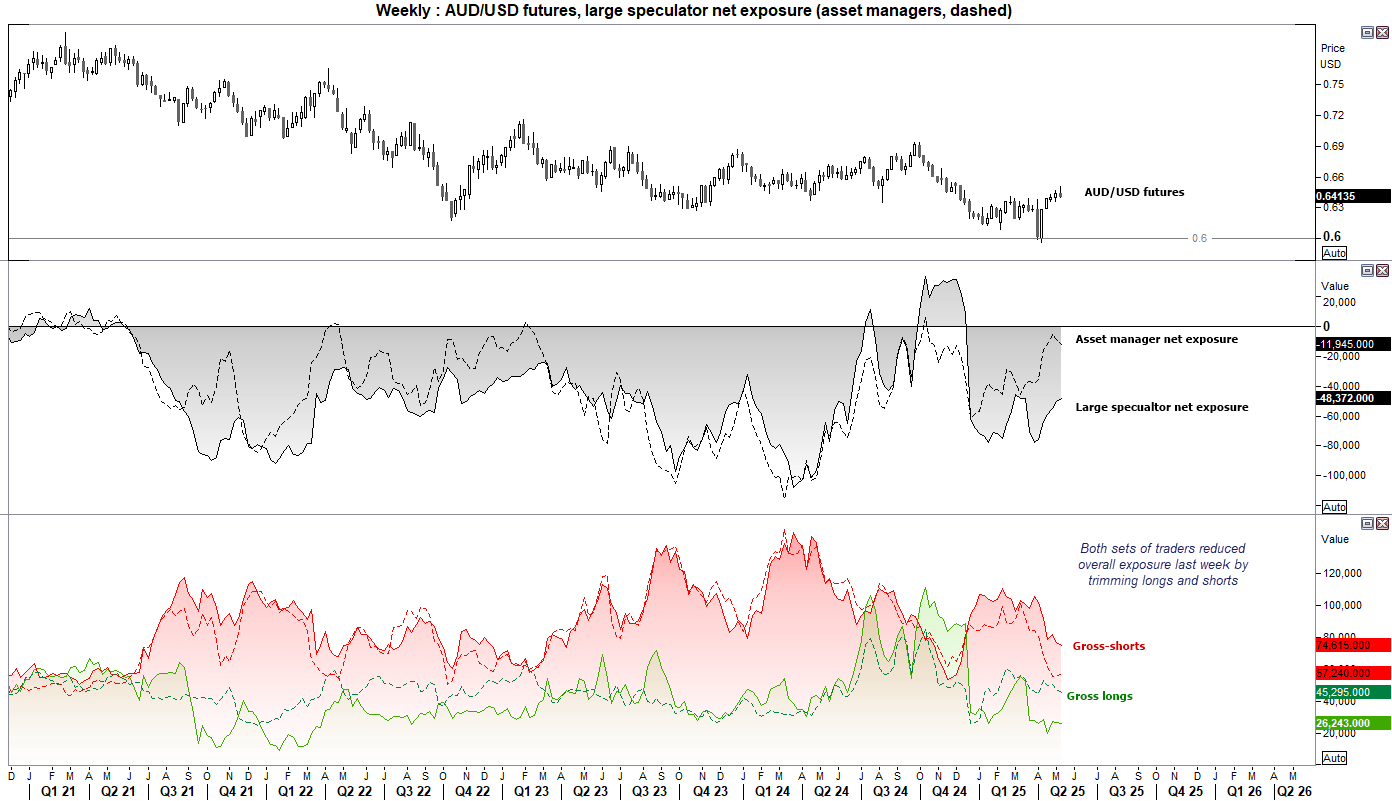
- Asset managers increased their net-short exposure to AUD/USD by 3.5k contracts last week.
- However, they reduced overall exposure—trimming longs by 4% (-1.8k contracts) and shorts by 3% (-1.8k contracts).
- Large speculators also trimmed gross longs by 1.3% (-359 contracts) and shorts by 2.5% (-1.9k contracts), resulting in a 1.5k contract reduction in net-short exposure.
AUD/USD Futures: COT Report Shows Reduction in Market Positioning
- Asset managers increased their net-short exposure to AUD/USD by 3.5k contracts last week
- Though they actually reduced their overall exposure, trimming longs by -4% (-1.8k contracts) and shorts by -3% (-1.8k contracts)
- Large speculators also trimmed gross longs by -1.3% (-359 contracts) and shorts by -2.5% (-1.9k contracts), sending net-short exposure lower by -1.5k contracts
AUD/USD Technical Analysis
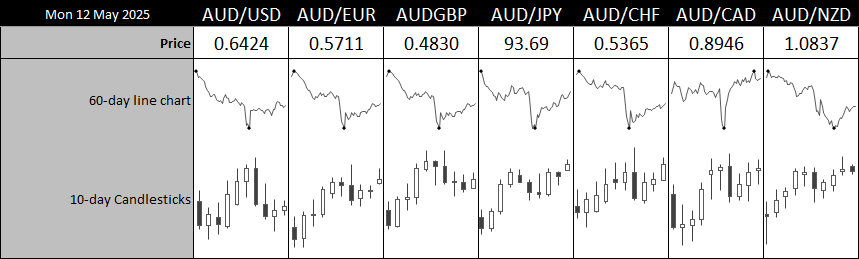
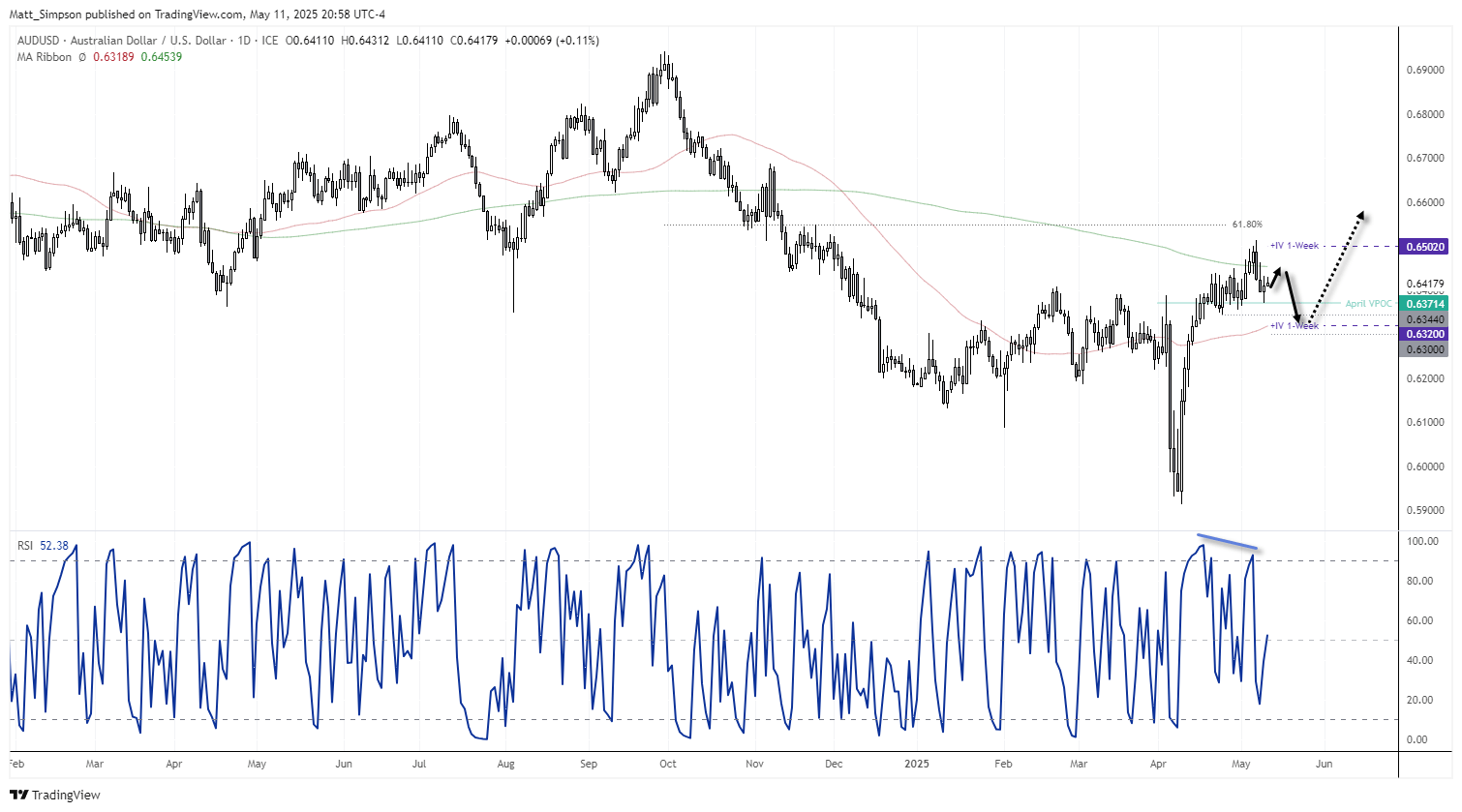
AUD/USD reached my initial downside target at the April VPOC (volume point of control) of 0.6371, which provided support on Friday. The pair opened bid on Monday, supported by positive headlines surrounding US–China trade talks—though concrete details have yet to emerge. Still, should AUD/USD break above Friday’s high, a retest of the 200-day SMA (simple moving average) at 0.6454 could be on the cards.
However, I suspect the retracement in AUD/USD is not yet complete, leaving the pair vulnerable to another leg lower. The daily RSI (2) has yet to reach oversold, after a bearish divergence preceded the recent selloff.
A break beneath the 0.6344 low opens the door for a move towards 0.6300, near the 50-day SMA and lower implied volatility band. Conversely, a sustained break above the 200-day SMA would suggest another attempt at the 0.65 handle.
How to trade with City Index
You can trade with City Index by following these four easy steps:
- Open an account, or log in if you’re already a customer
• Open an account in the UK
• Open an account in Australia
• Open an account in Singapore
- Search for the market you want to trade in our award-winning platform
- Choose your position and size, and your stop and limit levels
- Place the trade
Latest market news




The complete CFD trading experience
Award-winning platforms, competitive spreads, low commissions and dedicated support.
We live and breathe the markets and are dedicated to helping traders realise their ambitions as we continue to set the industry bar.
Economic calendar
Web Trader platform
Our sophisticated web-based platform is packed with features.
Related articles
USD/CAD reversal risk builds as central bank showdown looms
USD/CAD has delivered a bullish reversal signal from established support, just as traders prepare for Fed and BoC decisions. Aggressive Canadian rate hike expectations and conflicting momentum signals make the coming session important.
EUR/USD weekly outlook: FOMC and ECB to set the tone
The current backdrop is modestly bearish. On Friday, the EUR/USD closed modestly lower, down for the third consecutive day. The pair also posted a weekly decline after staging a modest recovery attempt in the previous week. Out of the past 8 weeks, the EUR/USD has fallen on 6 occasions. There is not much supporting factors for the single currency right now. So, the upside remains capped.


USD/JPY Forecast: Is Rising Japanese Inflation Supporting the Yen?
As the trading week comes to an end, one of the most relevant developments in the FX market has been the renewed strength of the Japanese yen. This can be seen in the recent performance of USD/JPY, which has fallen nearly 1.0% over the last two trading sessions, highlighting a meaningful recovery in the Japanese currency against the U.S. dollar.

StoneX Europe Ltd may make third party material available on this website which may contain information included but not limited to the conditions of financial markets. The material is for information purposes only and does not contain, and should not be construed as containing, investment advice and/or investment recommendation and/or an investment research and/or an offer of or solicitation for any transactions in financial instruments; any decision to enter into a specific transaction shall be made by the client following an assessment by him/her of their situation.
StoneX Europe Ltd makes no representation or warranty and assumes no liability as to the accuracy or completeness of the information provided, nor any loss arising from any investment based on a recommendation, forecast or other information supplied. You should always seek independent advice as to your suitability to speculate in any related markets and your ability to assume the associated risks, if you are at all unsure. We are not under any obligation to update any such material. Any opinion made may be personal to the author and may not reflect the opinion of StoneX Europe Ltd.