



Porsche AG exits DAX: Causes & Consequences
Porsche AG will leave the German DAX and move to the MDAX after just three years. The reasons: shrinking market cap, structural challenges, and a free float of only 12%. ETFs will be forced to sell, adding short-term pressure on the share price. Beyond Porsche, the exit highlights the shrinking role of Germany’s auto industry in the DAX, once dominant but now overshadowed by tech, finance, and defense.
Share this:
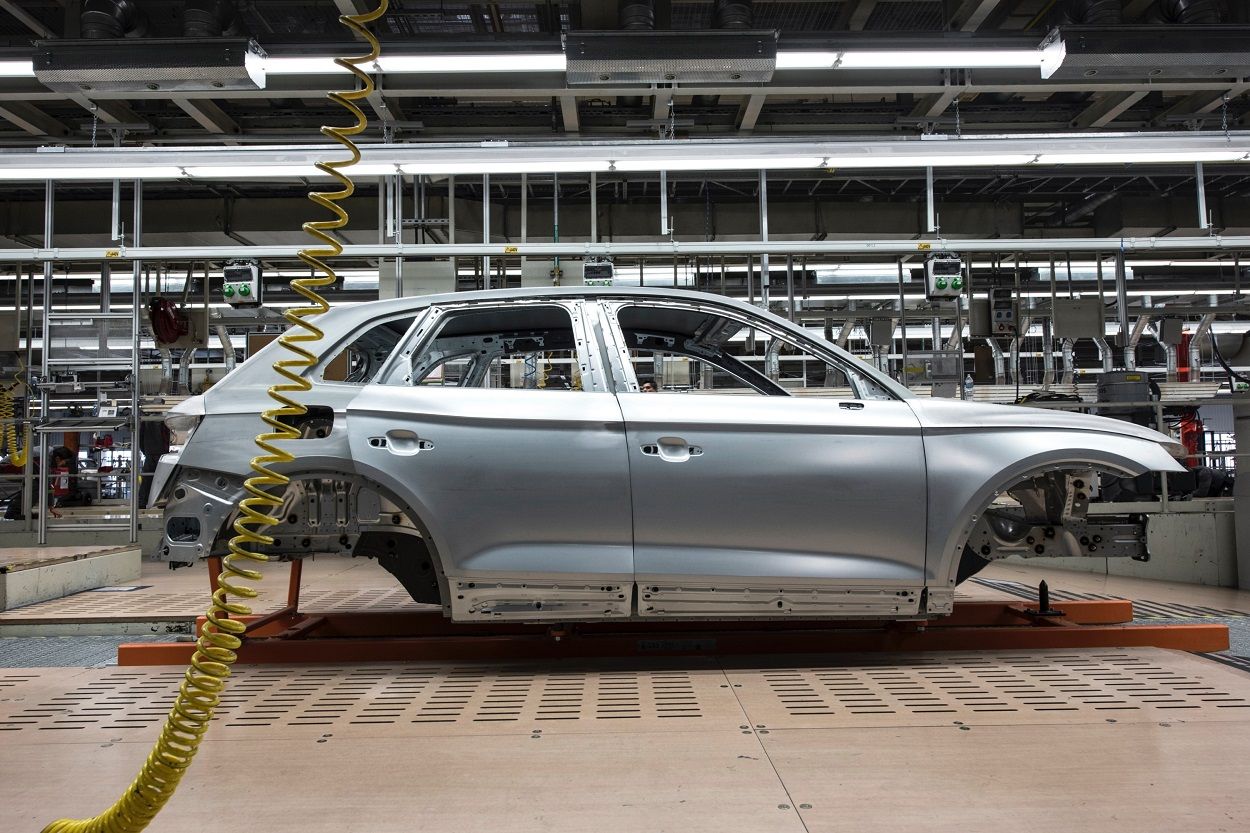
Porsche AG Leaves the DAX – Background and Consequences
After nearly three years in Germany’s leading stock index, the Porsche AG must now exit the DAX and move to the MDAX, the index for mid-sized companies. This decision by Deutsche Börse comes amid declining market capitalization and structural challenges for the car manufacturer.
Company Reactions
Porsche CEO Oliver Blume expressed disappointment over the removal, stating: “The DAX is losing one of its most valuable companies.” He emphasized the strength of the Porsche brand and announced intentions to return to the DAX as soon as possible. According to Blume, the exit is not due to fundamental weaknesses but rather technical criteria, such as the low free float: only around 12% of shares are publicly traded – a disadvantage compared to other DAX-listed firms.
Despite these explanations, Porsche is currently in crisis: profits are falling, cost-cutting programs have been announced, and Blume is under growing criticism for his dual role as CEO of both Porsche and Volkswagen.
Reasons for the DAX Exit
The DAX composition is reviewed quarterly, primarily based on market capitalization. Porsche’s market value has dropped significantly – particularly since the beginning of 2025, following a profit decline of about -22%. As a result, the company no longer ranks among the top 40.
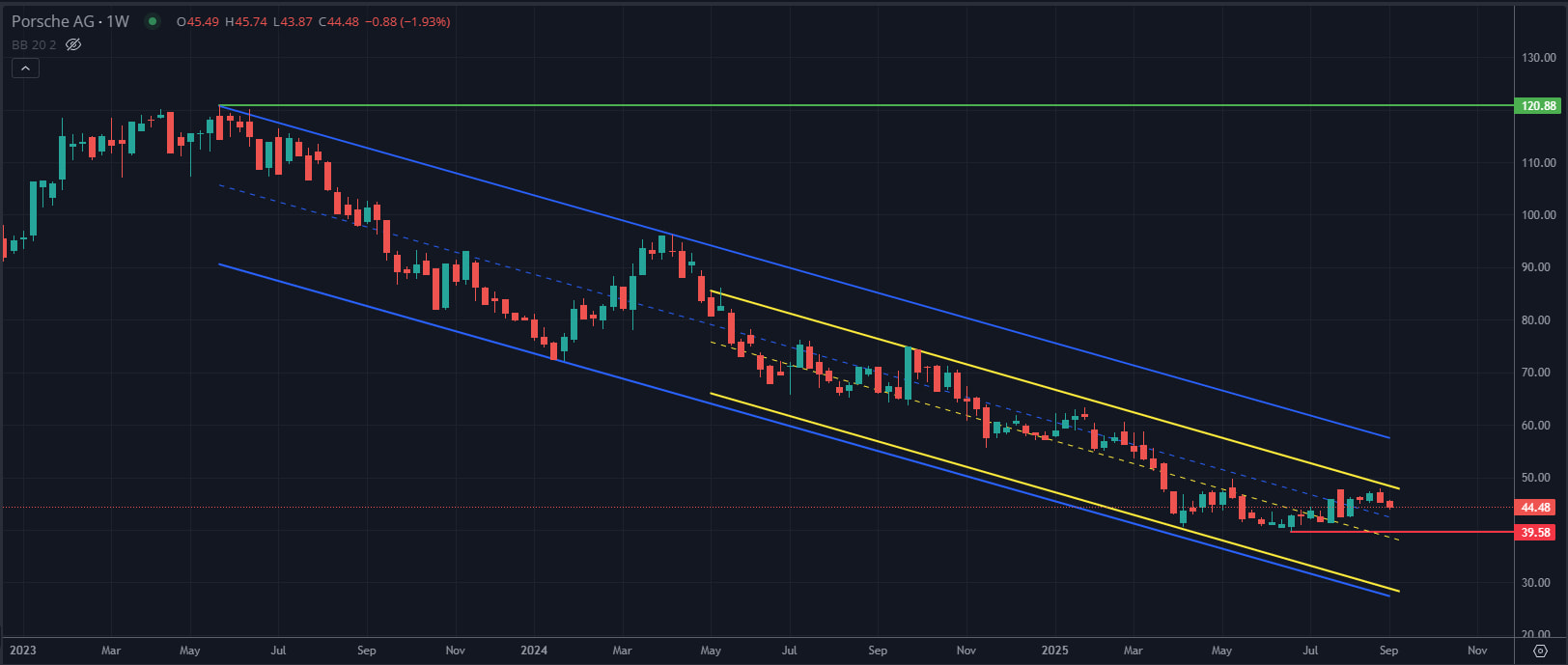
From a technical analysis standpoint, Porsche AG shows a clear and sustained downtrend that began around mid-2023 and continues through the end of 2025. The price movement follows two downward trend channels: a broader blue channel representing the long-term structure, and a narrower yellow channel indicating a steeper recent decline. Every attempt to recover was rejected near the upper boundaries of these channels, reflecting persistent selling pressure and a lack of bullish momentum.
The current price is around €44.48, just below the median line of the yellow channel and far below the upper limits of both – a clear sign of structural weakness in the market.
Despite some brief consolidations and recoveries (especially in March and July 2024), the stock failed to break out of the falling pattern. Present support lies around €39.58, which has held for several weeks and may indicate a short-term bottom. However, unless the stock breaks decisively above the yellow channel and past highs around €48–50, the downtrend remains intact. A distant green line at €120.88, the previous high, marks a psychologically important long-term resistance, highlighting how far the stock has fallen.
Despite this, the descent may not be permanent. Other firms like Beiersdorf have been removed from and returned to the DAX multiple times. Currently, however, Porsche lacks the positive signals needed for a near-term comeback.
Impact on Shareholders and Stock
The changes take effect on September 22. In the short term, Porsche’s share price is expected to remain under pressure, as index funds (ETFs) must sell their holdings. This results in oversupply and falling prices.
Still, a long-term collapse is unlikely. Porsche remains fundamentally a profitable company, with €2.163 billion in earnings and a market capitalization of €40.57 billion. The future share price will depend largely on the company’s operational performance.
Symbolism for the DAX and German Economy
According to experts at DekaBank, the DAX's profile won’t change significantly due to this adjustment, as Porsche’s weighting was too small. Nonetheless, the removal is symbolic of the broader transformation in the German economy. Whereas the automotive sector once accounted for more than 15% of the DAX, it now contributes less than 5%. Increasingly, the index is dominated by IT, finance, infrastructure, and defense companies.
What It Means for Porsche
Being part of the DAX brings prestige and visibility, especially among international investors. Leaving the index therefore results in a loss of image. However, Porsche SE – the holding company of the Porsche and Piëch families – remains in the DAX.
Current Challenges Facing the Company
Porsche is battling global sales issues: the important Chinese market has weakened, tariffs in the U.S. make exports less attractive, and EVs are not selling well in Germany. The company plans to cut around 1,900 jobs by 2029, with additional austerity measures already announced.
A leadership change is also on the horizon: Blume is expected to step down as Porsche CEO, and a successor is being sought.
Criticism and Outlook
Auto expert Ferdinand Dudenhöffer criticizes Blume’s dual role and points to strategic missteps in Porsche’s electric vehicle strategy. The Taycan, for instance, is considered too expensive in China. He also views the investment in proprietary battery cell production (Cellforce) as highly risky.
Dudenhöffer argues that Porsche must open up to strategic partnerships with leading technology firms and internationalize its production structures. Only through such reorientation and collaboration can Porsche hope to recover and potentially rejoin the DAX in the future.
--By Philip Papageorgiou – EU Market Analyst
-Follow me on X ex Twitter: PhilipForexCom
Latest market news




The complete CFD trading experience
Award-winning platforms, competitive spreads, low commissions and dedicated support.
We live and breathe the markets and are dedicated to helping traders realise their ambitions as we continue to set the industry bar.
Economic calendar
Web Trader platform
Our sophisticated web-based platform is packed with features.
Related articles

S&P 500 forecast: AI linked stocks remain under pressure
And just like that, it is Friday again and the end of a volatile week. Today offers little on the macro calendar to change the prevailing narrative, leaving markets largely at the mercy of risk appetite, oil prices and the growing unease around the AI trade.


DAX Faces Fresh Pressure from Tech Rout and Middle East Risks
The DAX has come under renewed pressure as another technology-led sell-off on Wall Street undermines global risk sentiment. While the index remains above key October lows, the recent recovery is losing momentum as investors reassess AI valuations, rising energy prices and escalating geopolitical risks. With oil climbing and major technology stocks facing renewed selling pressure, the focus has shifted back to support levels rather than fresh highs.

USD/JPY, Nikkei Break Lower as AI Meltdown Spreads
Thursday’s tech tantrum has become Friday’s fire sale. With Nikkei support giving way and the yen strengthening, could the selling start feeding on itself?

StoneX Europe Ltd may make third party material available on this website which may contain information included but not limited to the conditions of financial markets. The material is for information purposes only and does not contain, and should not be construed as containing, investment advice and/or investment recommendation and/or an investment research and/or an offer of or solicitation for any transactions in financial instruments; any decision to enter into a specific transaction shall be made by the client following an assessment by him/her of their situation.
StoneX Europe Ltd makes no representation or warranty and assumes no liability as to the accuracy or completeness of the information provided, nor any loss arising from any investment based on a recommendation, forecast or other information supplied. You should always seek independent advice as to your suitability to speculate in any related markets and your ability to assume the associated risks, if you are at all unsure. We are not under any obligation to update any such material. Any opinion made may be personal to the author and may not reflect the opinion of StoneX Europe Ltd.