



USD/CAD Analysis: Canadian Dollar Holds Its Ground Post-CPI
Over the last 3 trading sessions, the Canadian dollar has shown signs of strength, reflected in a USD/CAD decline of nearly -0.43%, marking a short-term bearish bias. This pressure has held steady following the release of Canada's inflation data and amid expectations of progress in tariff negotiations, keeping the Canadian currency from losing ground.
Share this:

Over the last 3 trading sessions, the Canadian dollar has shown signs of strength, reflected in a USD/CAD decline of nearly -0.43%, marking a short-term bearish bias. This pressure has held steady following the release of Canada's inflation data and amid expectations of progress in tariff negotiations, keeping the Canadian currency from losing ground. If these catalysts continue to influence the market, sell pressure on the USD/CAD could remain intact in the upcoming sessions.


How Are Inflation Data Shaping the Outlook?
Yesterday saw the release of Canada's CPI, which tracks consumer price changes. While the market was looking for a reading around 2.9%, the July figure came in at 3.00%, beating estimates. Beyond the upside surprise, this reading marks a rebound from the previous 2.8%, indicating that the anticipated downward trajectory for Canadian inflation has stalled. The index reveals that inflationary pressures remain sticky and that a sustained drop in price levels has yet to materialize.
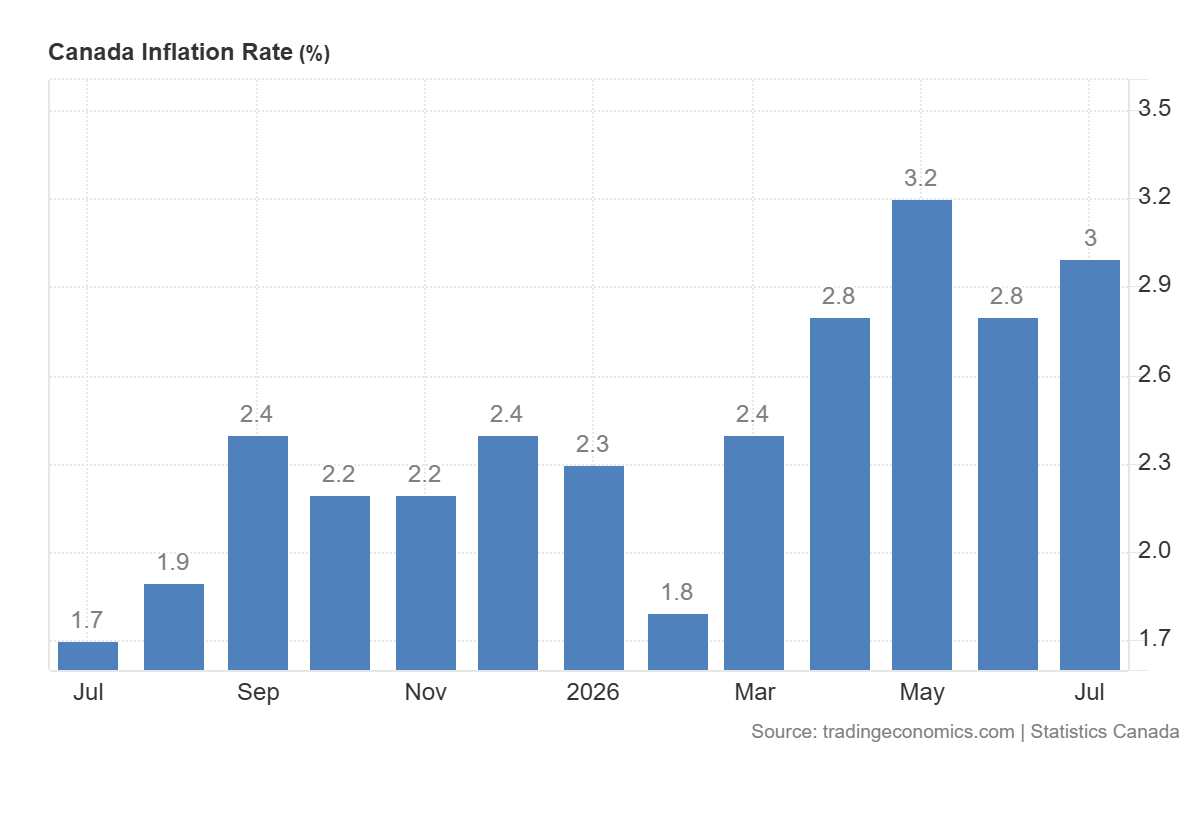
Source: TradingEconomics
This dynamic poses a challenge for the Bank of Canada. The central bank has kept its interest rate steady at 2.25%, but this strategy appears insufficient to contain the price rebound. Currently, the market is pricing in nearly a 70% probability that the rate will remain unchanged at the October meeting. However, if inflation fails to cool in the coming months, the central bank could be forced to adopt a more hawkish tone.
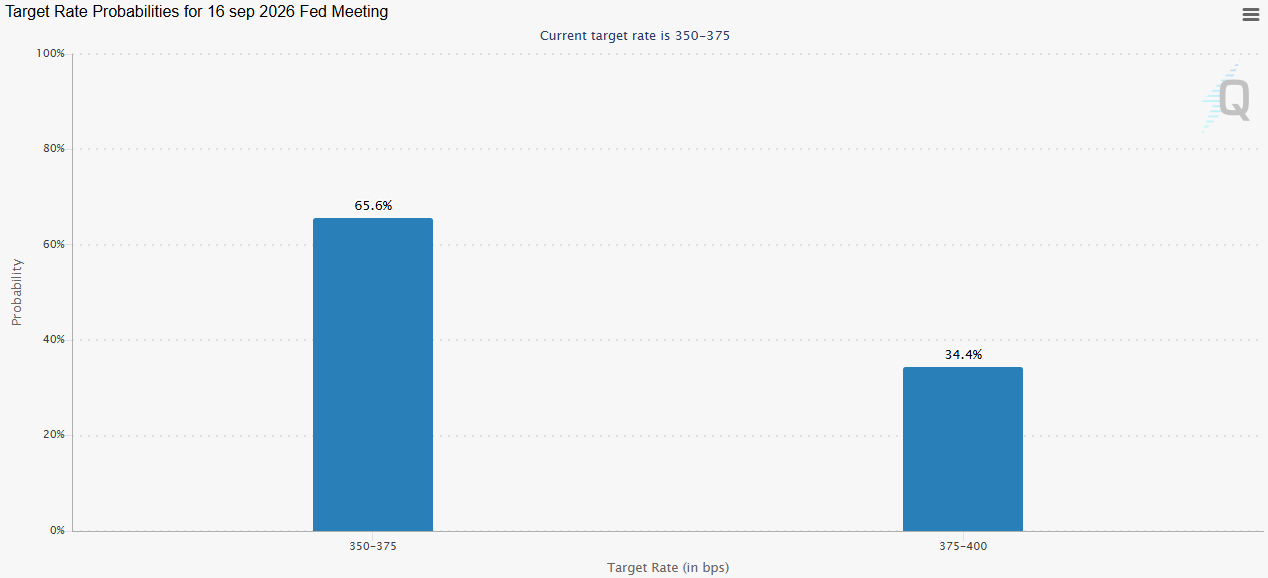
Adding to this is the Federal Reserve's neutral stance. For the September 16 meeting, there is a 65% probability that the US rate will hold steady at 3.75%. Weeks ago, the market expected the Fed to be the more aggressive central bank, but the narrative has now flipped: while the Fed stays neutral, the Bank of Canada might need to tighten its rhetoric amid persistent inflation. This shift in narrative, unseen so far in 2026, could boost the appeal of Canadian dollar-denominated assets and keep the currency from losing ground.
Source: CMEGROUP
In short, the data suggests that Canada's inflation problem is far from solved, opening the door to a more restrictive Bank of Canada if price dynamics persist. This has altered expectations of Canadian dollar weakness and could sustain sell pressure on the USD/CAD in the coming weeks, especially if Canadian officials strike a more hawkish tone.
What's Next on the Tariff Front?
The deadline for the United States to impose tariffs on Canada expires tomorrow, August 19. If enacted, a 50% levy would take effect on roughly $20 billion worth of Canadian goods. However, the Canadian government has ramped up diplomatic outreach to the US to avert this measure, maintaining high-level negotiations over the past few hours.
While no deal has been signed yet, Ottawa is working against the clock to secure a deadline extension. If successful, this development would clear up much of the uncertainty and help maintain the Canadian dollar's recent stability. On the flip side, if talks break down and the tariffs go into effect, the trade shock could severely dent confidence in CAD-denominated assets, causing the currency to lose ground. In that scenario, significant buying pressure could return to the USD/CAD in the coming sessions.
USD/CAD Technical Outlook
Source: StoneX, Tradingview
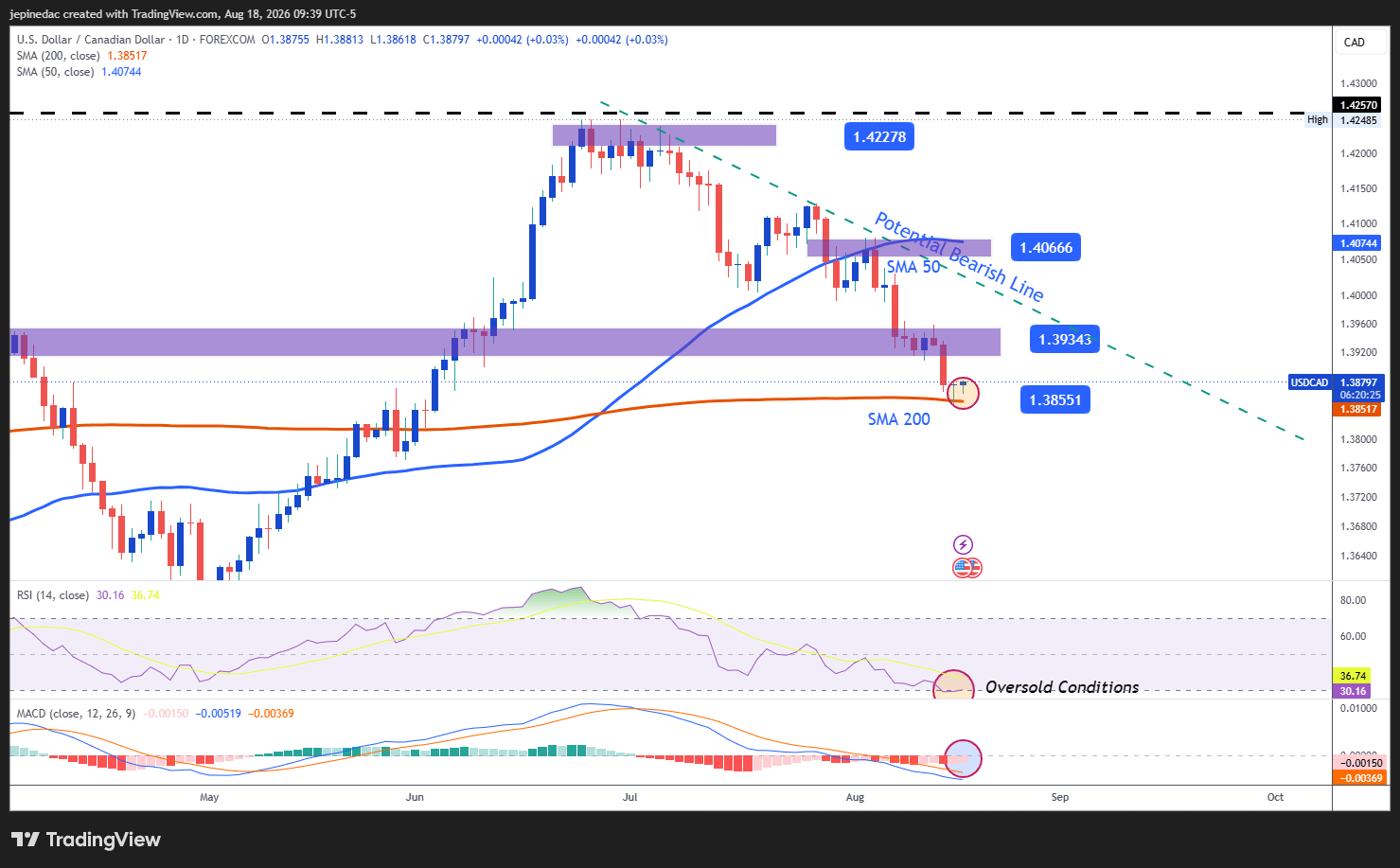
- Potential downtrend: Recent USD/CAD price action has formed a short-term bearish trendline, establishing itself as the most relevant technical structure on the daily chart. Until buying pressure manages to stabilize, this pattern could dominate price action in the coming weeks. For now, the price shows no signs of challenging this structure.
- RSI: The indicator remains below the neutral 50 level, confirming the dominance of short-term selling momentum. However, its approach to the oversold zone near the 30 level warns of a potential excess in bearish force, which could leave room for short-term technical bounces.
- MACD: The histogram sits below the neutral 0 line, indicating that short-term moving average momentum remains in negative territory. This confirms that sell pressure continues to be the dominant factor for the USD/CAD.
Key Levels:
- 1.40666 (Key Resistance): A zone of previous weekly highs that aligns with the 50-period moving average and sits above the bearish trendline. A sustained close above this level could invalidate the bearish pattern and reignite a bullish bias in the coming weeks.
- 1.39343 (Nearby Barrier): Acts as the most immediate neutral zone. It could serve as a tentative ceiling for any short-term bullish corrections.
- 1.38551 (Crucial Support): Matches current lows and aligns with the 200-period simple moving average. A breakdown below this level could confirm a structural shift and pave the way for a significant extension of the downtrend as the dominant pattern for the USD/CAD in the coming weeks.
Written by Julian Pineda, CFA, CMT – Market Analyst
Follow him on: @julianpineda25


The complete CFD trading experience
Award-winning platforms, competitive spreads, low commissions and dedicated support.
We live and breathe the markets and are dedicated to helping traders realise their ambitions as we continue to set the industry bar.
Economic calendar
Web Trader platform
Our sophisticated web-based platform is packed with features.
Related articles

AUD/USD, NZD/USD Outlook: Corrective Recoveries Face Growing Headwinds
A weaker US dollar, falling Treasury yields and renewed demand for cyclical assets have supported the Aussie and Kiwi. But with some of those moves reversing on Monday, both currencies face an early test of whether their recent strength can continue.

US Dollar, GBP/USD, USD/CAD, USD/CHF, Gold Weekly Technical Outlook 10 19 2026
Sr. Technical Strategist Michael Boutros highlights the levels that matter on the USD Majors, commodities, and equity indices charts this week.


USD/CAD Analysis: Canadian Dollar Extends Gains Despite Soft Inflation Data
The trading week is just getting underway, and one of the most notable developments in the currency market has been the renewed strength of the Canadian dollar. This can be seen in the recent performance of USD/CAD, which has now declined for three consecutive sessions and is down approximately 1.0% over the period, highlighting the CAD's growing strength against the U.S. dollar.
StoneX Europe Ltd may make third party material available on this website which may contain information included but not limited to the conditions of financial markets. The material is for information purposes only and does not contain, and should not be construed as containing, investment advice and/or investment recommendation and/or an investment research and/or an offer of or solicitation for any transactions in financial instruments; any decision to enter into a specific transaction shall be made by the client following an assessment by him/her of their situation.
StoneX Europe Ltd makes no representation or warranty and assumes no liability as to the accuracy or completeness of the information provided, nor any loss arising from any investment based on a recommendation, forecast or other information supplied. You should always seek independent advice as to your suitability to speculate in any related markets and your ability to assume the associated risks, if you are at all unsure. We are not under any obligation to update any such material. Any opinion made may be personal to the author and may not reflect the opinion of StoneX Europe Ltd.