
Recent trading sessions have not been particularly eventful for EUR/USD price action in the short term. In fact, recent moves have been limited to roughly 0.2%, highlighting a clear lack of direction within the market. For now, neither the euro nor the U.S. dollar has managed to develop a consistent strength advantage, allowing neutrality to remain the dominant theme behind the pair's behavior.
This phase of indecision is largely being driven by expectations surrounding next week's monetary policy decisions from both central banks. The wait for these events has contributed to a moderation in the attractiveness of bond markets, a situation that has also limited momentum for both the euro and the dollar. As long as uncertainty around central bank decisions remains in place, this lack of direction could continue to be a dominant feature of EUR/USD trading in the coming sessions.

What Could Happen with the Central Banks?
With only a few days remaining before monetary policy decisions in both the United States and Europe, markets continue to operate under a scenario of relative stability, with limited expectations for immediate changes in interest rates.
In Europe, current probabilities for the October 29 meeting continue to indicate more than a 90% chance that the deposit rate will remain unchanged at 2.50%. This suggests that expectations for a cautious monetary policy stance continue to be an important part of the outlook for the European Central Bank in the short term.
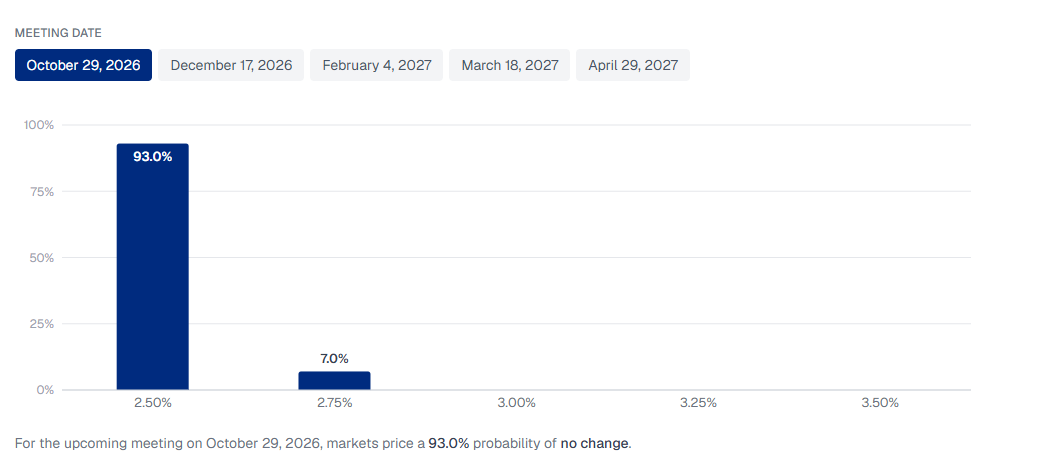
Source: ECBWATCH
A similar situation can be observed around the Federal Reserve. According to current market pricing for the October 28 decision, there is roughly a 93% probability that the benchmark interest rate will remain unchanged at 4.00%. This reflects a relatively clear alignment between both institutions, with policymakers maintaining a prudent and cautious approach toward monetary policy in the near term.
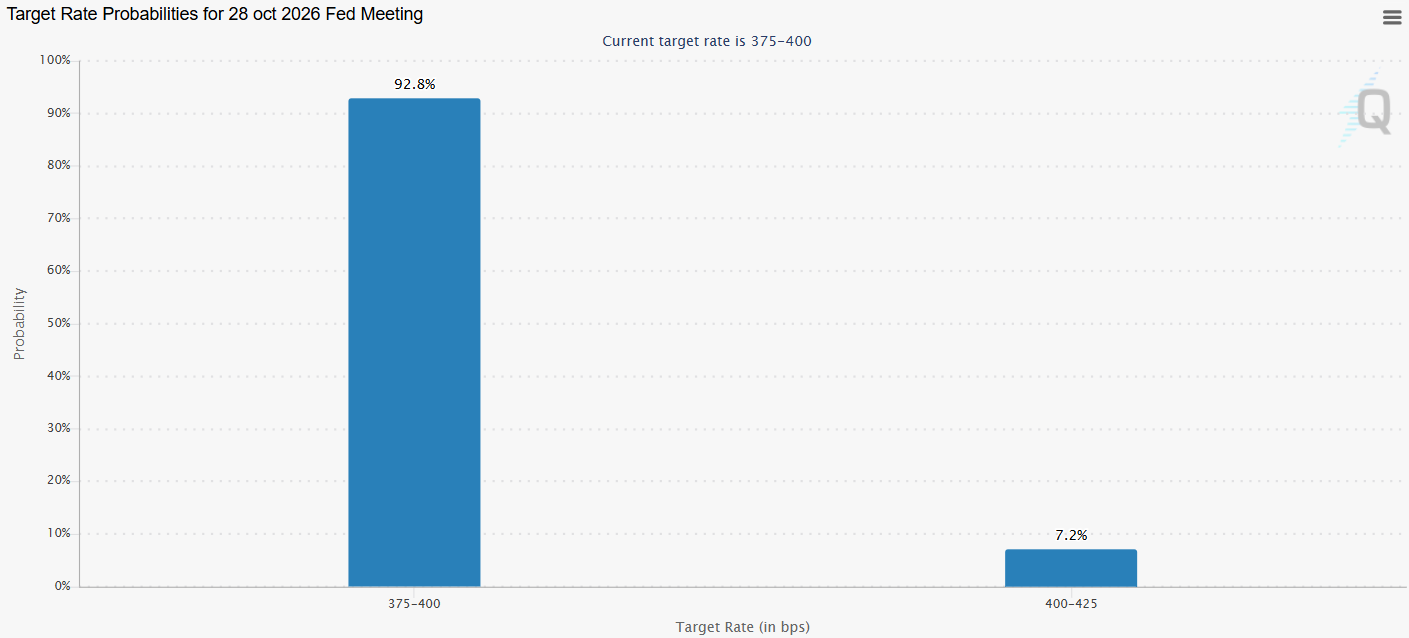
Source: CMEGROUP
This environment has already started to influence fixed-income markets on both sides of the Atlantic. In Europe, 10-year bond yields continue to show a gradual moderation and are currently trading near the 4.0% area, moving further away from the highs recorded earlier in the year. An even more pronounced move can be seen in the United States, where 10-year Treasury yields have fallen below the 5.0% level, also reflecting a relative loss of attractiveness within the bond market. Both developments appear to be driven by growing expectations that the ECB and the Federal Reserve will maintain a cautious stance in the short term.
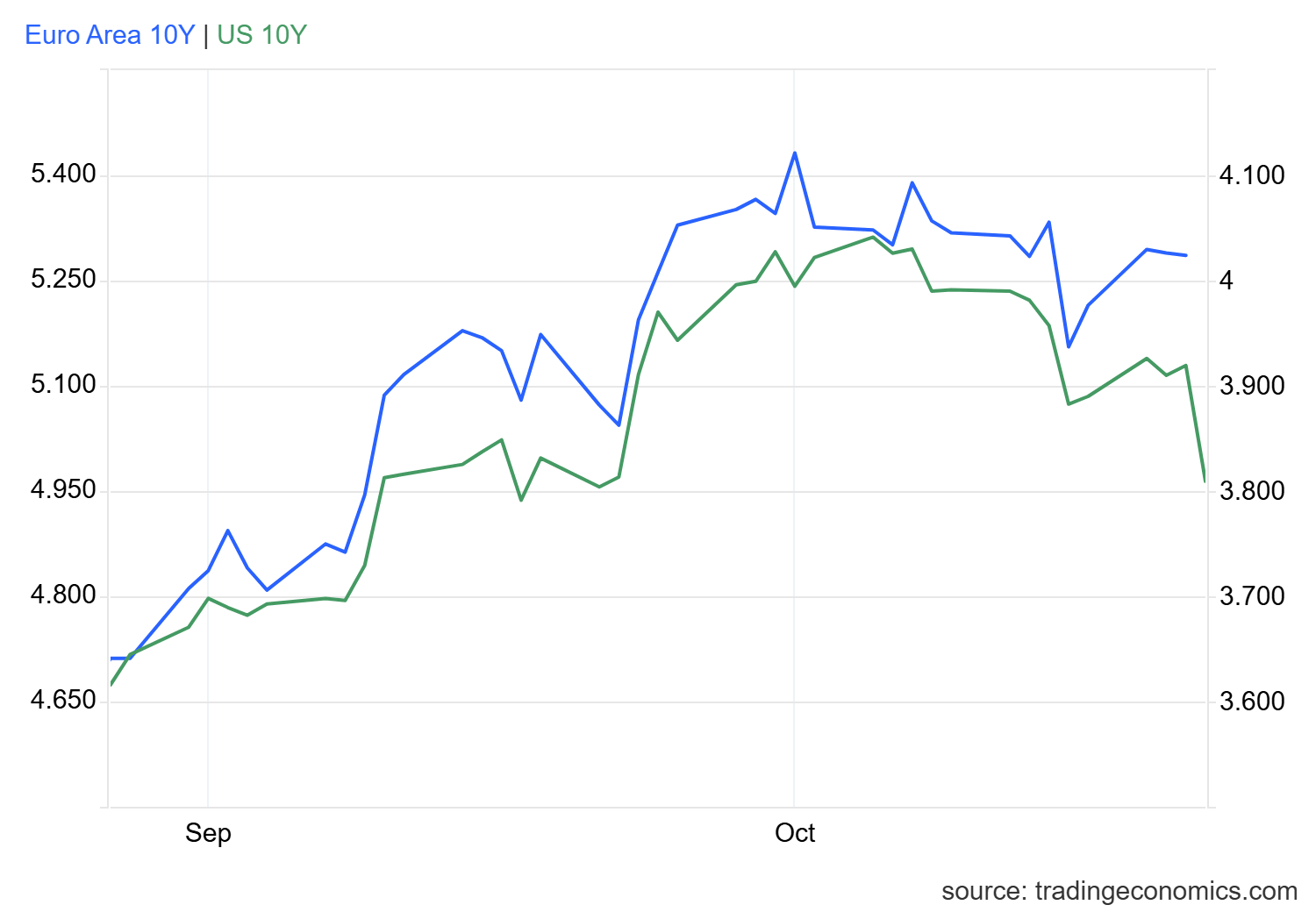
Source: TradingEconomics
With all of this in mind, the current backdrop is becoming increasingly relevant for both the euro and the U.S. dollar. The combination of cautious central banks and a decline in the relative attractiveness of fixed-income markets may be reducing demand for euro and dollar denominated investments in the short term. As a result, the lack of direction in EUR/USD continues to gain relevance and could remain an important theme over the coming sessions.
However, it is also important to remember that this dynamic could change following next week's policy decisions. If either institution begins to signal a more aggressive stance toward interest rates, the relative attractiveness of its currency could increase significantly and bring back a clearer directional bias to EUR/USD. As a consequence, the current lack of direction could begin to lose relevance and give way once again to a more structured trend over the weeks ahead.
EUR/USD Technical Forecast
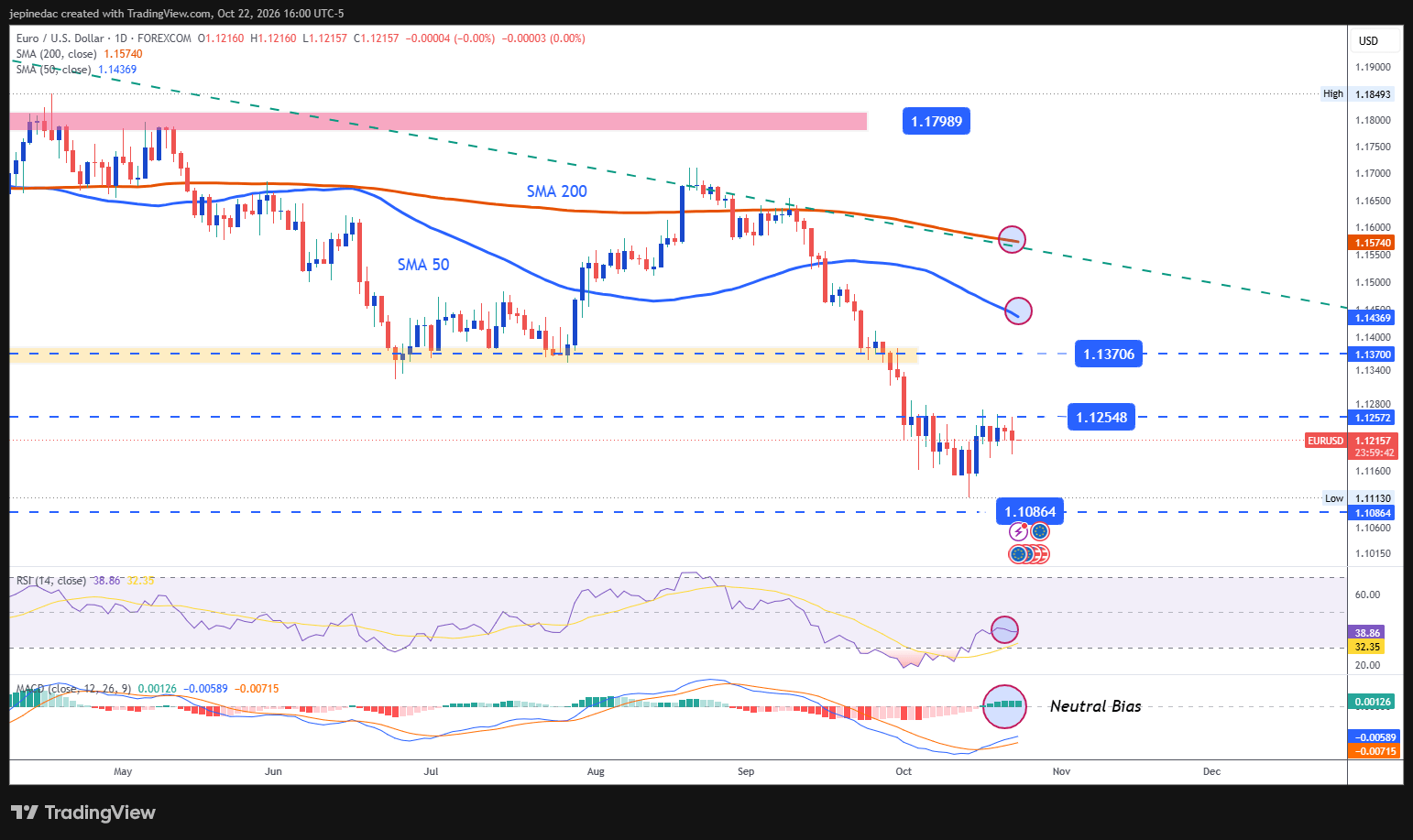
Source: StoneX, Tradingview
- The broader trendline enters a consolidation phase: Since January 2026, EUR/USD has developed an important bearish trendline that has dominated much of the pair's price action over recent months. However, recent sessions have increasingly highlighted a lack of direction, reflected in limited price movements and a loss of momentum within the dominant trend. As long as prices fail to break through key technical barriers, this phase of indecision could continue supporting the formation of a more established trading range in the short term.
- MACD: The MACD histogram continues to develop near the 0 neutral line, reflecting a relatively balanced dynamic in short-term moving-average momentum. This reading supports the possibility that a phase of indecision could remain relevant in the sessions ahead.
- RSI: A similar picture can be observed in the RSI, whose line continues to flatten. This behavior suggests that bearish momentum has begun to lose intensity and also supports a broader neutral outlook that could continue gaining relevance within the chart.
Key Levels:
- 1.13706 – Key Resistance: A level that aligns with an important support area observed several weeks ago and now acts as the main upside barrier on the chart. A move above this reference could reduce the selling pressure seen in recent months and open the door for a more consistent bullish bias in the coming sessions.
- 1.12548 – Near-Term Barrier: A level that coincides with an important retracement area observed in recent weeks and currently represents the main zone of neutrality on the chart. As long as price remains close to this level, the current phase of indecision could persist and continue supporting a broader trading range.
- 1.10864 – Key Support: A level not seen since May 2025 that remains the most important downside barrier within the current structure. Price action returning toward this area could restore relevance to the bearish bias and support a more aggressive extension of the broader downtrend in the weeks ahead.
Written by Julian Pineda, CFA, CMT – Market Analyst
Follow him on: @julianpineda25