



USD/CAD Outlook: The Canadian Dollar Weakens Ahead of NFP
During the current session, USD/CAD has posted a gain of around 0.38%, favoring the US dollar. The buying pressure is mainly driven by expectations surrounding tomorrow’s NFP release, as well as ongoing dynamics supporting the dollar amid persistent geopolitical tensions.
Share this:

During the current session, USD/CAD has posted a gain of around 0.38%, favoring the US dollar. The buying pressure is mainly driven by expectations surrounding tomorrow’s NFP release, as well as ongoing dynamics supporting the dollar amid persistent geopolitical tensions.
As updates on both events unfold, appetite for the US dollar could increase further, potentially sustaining buying pressure in USD/CAD in the short term.


NFP Day Approaches
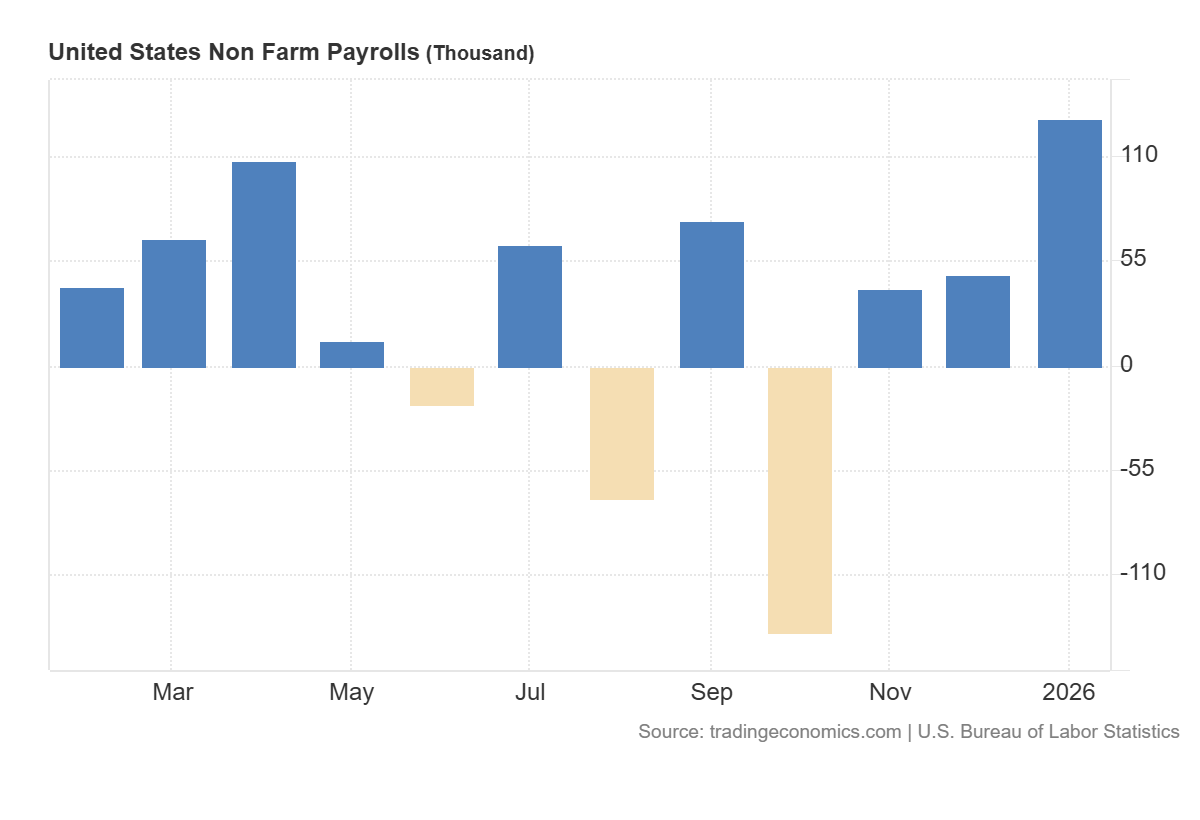
Tomorrow’s session will bring the release of the most relevant employment data of the month in the United States: the Non-Farm Payrolls (NFP). Current forecasts point to the creation of 59,000 new jobs in February, a lower figure compared to the 130,000 jobs reported in the previous release for January.
Overall, the market expects employment growth to continue, though at a more moderate pace in the short term. The broader trend still suggests a gradual recovery in the US labor market, which began to show improvement in November with 41,000 new jobs and peaked in January. This indicates that employment dynamics have been steadily recovering in recent months.
Source: TradingEconomics
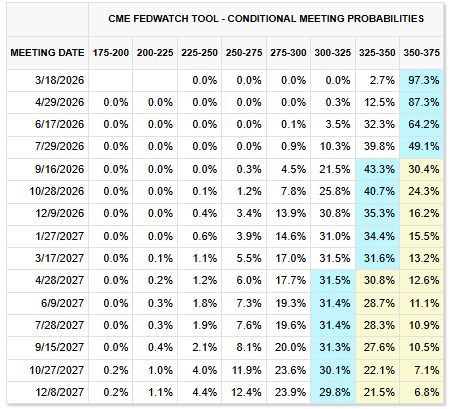
The NFP data are critical for short-term Federal Reserve policy expectations. Current probability tables show that for the March, April, and June meetings, there is a probability above 60% that interest rates will remain at the current 3.75% reference level. Even for the July meeting, there is a 49.1% probability that rates will remain unchanged.
Therefore, the Fed is expected to maintain a neutral but firm monetary stance in the coming months. In this context, strong employment data could reinforce a more restrictive posture by the Federal Reserve and potentially delay any rate-cut scenario until after the second half of 2026.
Source: CMEGROUP
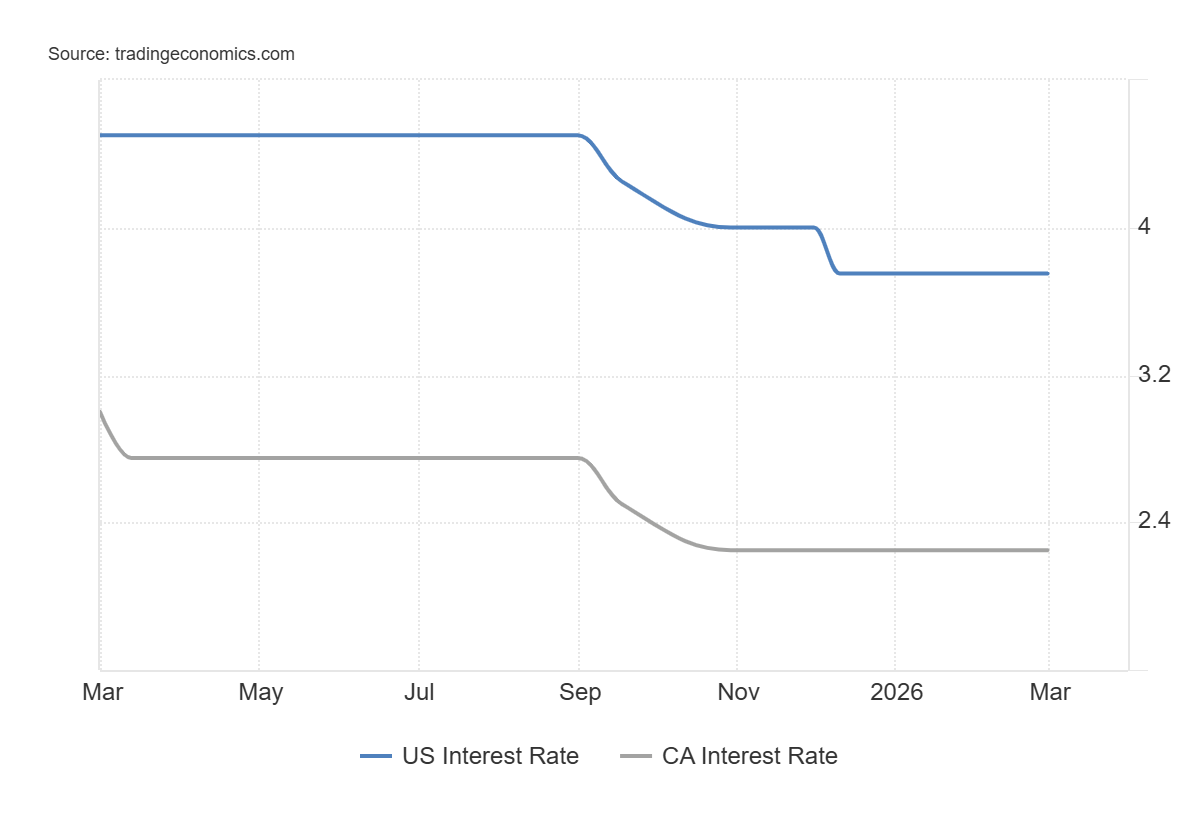
This dynamic is particularly relevant for the interest rate differential between the United States and Canada. The US benchmark rate stands at 3.75%, while Canada’s rate remains at 2.25%. If US monetary policy remains unchanged in the short term, this differential could continue influencing both currencies, increasing the relative attractiveness of US dollar-denominated investments compared to Canadian dollar assets, especially given the continued appeal of the US fixed-income market.
Source: TradingEconomics
Taking all of this into account, part of the recent strength in the US dollar can be attributed to the Federal Reserve’s firm neutral stance. If employment data reinforce this outlook, the Canadian dollar could lose ground more consistently, acting as a catalyst for potential stronger buying pressure in USD/CAD in the short term.
Do Tensions Benefit the USD?
Several sessions have passed since the start of military attacks in the Middle East, and no clear resolution has been reached. As a result, the geopolitical risk premium and overall market uncertainty remain present.
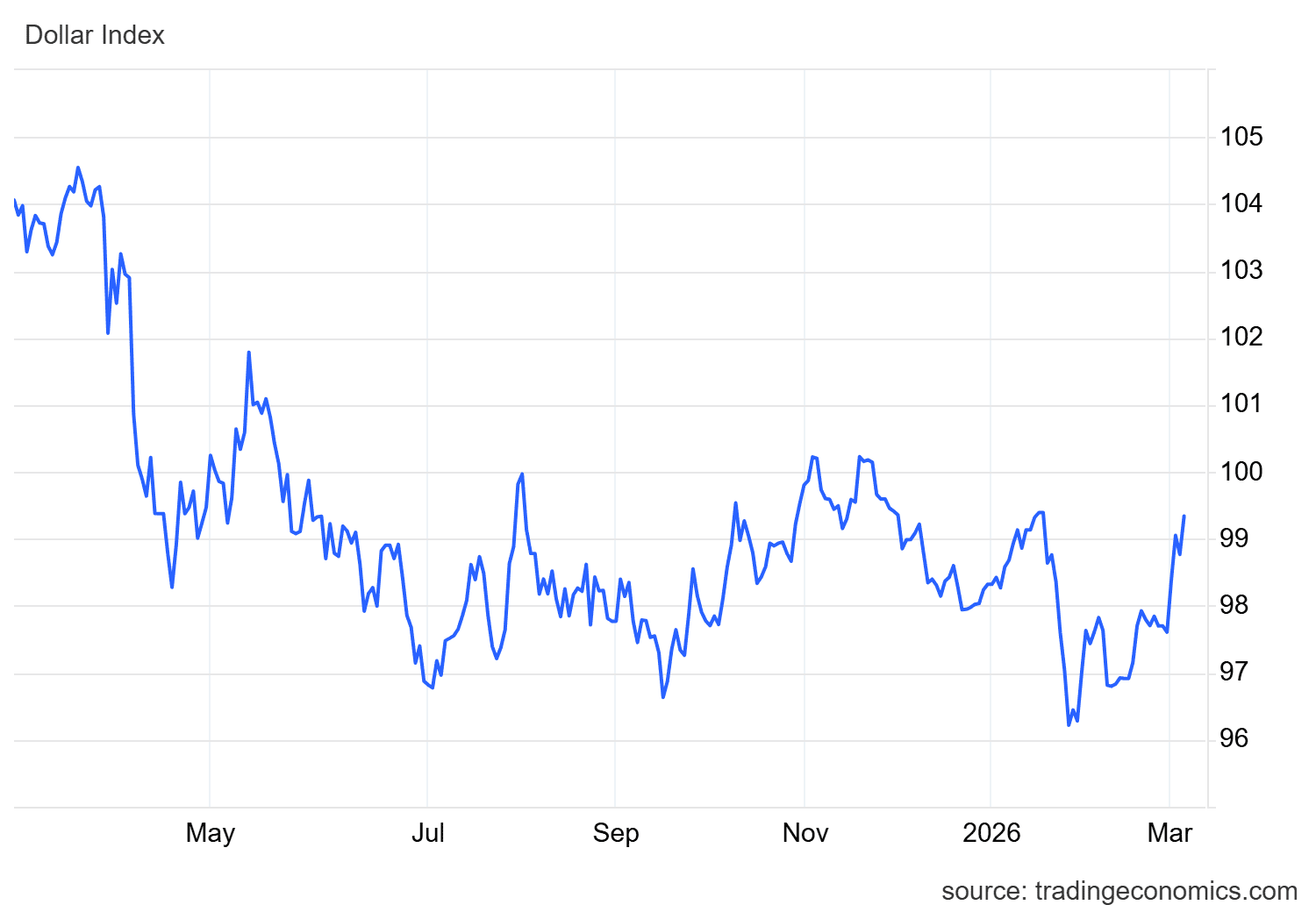
In this environment, the US dollar has taken on a more prominent role in the short term. As uncertainty increases, demand for the currency has shown consistent recovery. This is reflected in the DXY index, which has advanced toward the 99-point area since tensions began, moving closer once again to the key psychological 100 level, highlighting a notable rebound in dollar strength.
Source: TradingEconomics
If demand for dollars remains firm, the Canadian dollar could continue to weaken in the short term, supporting sustained buying pressure in USD/CAD in the coming sessions.
Technical Outlook for USD/CAD
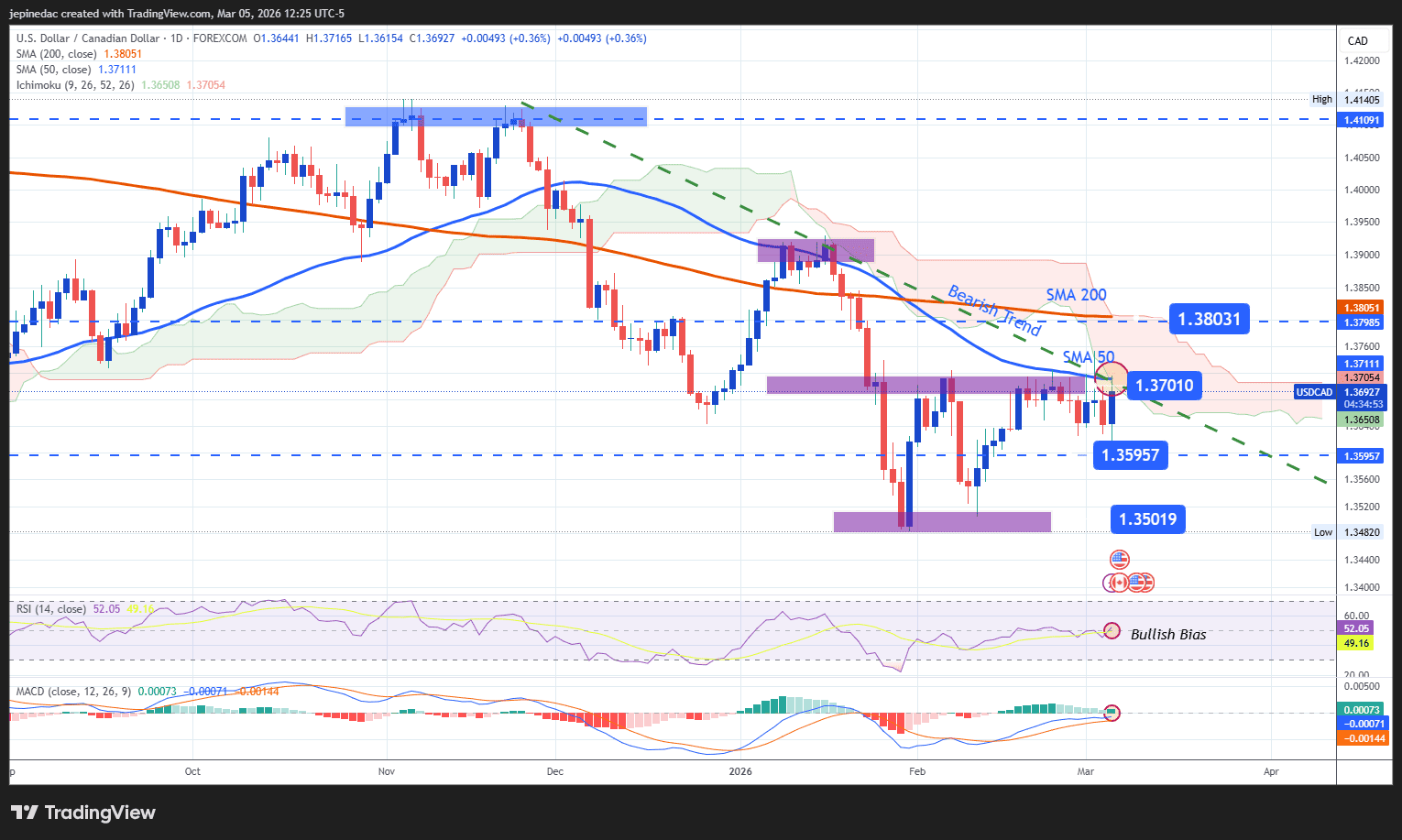
Source: StoneX, Tradingview
- Long-Term Trendline Enters Risk Zone: Since late November 2025, USD/CAD has maintained consistent bearish swings that formed a descending trendline on the daily chart. However, recent buying momentum has begun to threaten this bearish structure. If buying pressure continues to build, the pattern could be invalidated, potentially signaling a structural shift in the chart over the coming sessions.
- RSI: At present, the RSI shows a consistent positive slope and remains above the neutral 50 level. This suggests that average momentum over the last 14 sessions has shifted toward a meaningful buying impulse that could strengthen further if this dynamic persists.
- MACD: A similar scenario is visible in the MACD, whose histogram remains above the zero line. This indicates that short-term moving average momentum is beginning to tilt bullish, reinforcing the potential for more sustained buying pressure in the near term.
Key Levels:
- 1.38031 – Key resistance: Level aligned with the 200-period moving average on the chart. Sustained moves above this zone could confirm a more solid structural shift and open the door to a new bullish trend in the coming weeks.
- 1.37010 – Critical barrier: Area where the descending trendline converges with the 50-period simple moving average. A break above this level could invalidate the previous bearish structure and consolidate a dominant buying bias.
- 1.35957 – Crucial support: Level corresponding to a recent neutrality zone and the main downside barrier to monitor. Moves back below this area could reactivate a bearish bias and restore the prior downtrend structure.
Written by Julian Pineda, CFA, CMT – Market Analyst
Follow him on: @julianpineda25

Open an account in minutes
Experience award-winning platforms with fast and secure execution.
Economic calendar
Web Trader platform
Our sophisticated web-based platform is packed with features.
Related articles

How FX Majors Stack Up Against US Dollar Weakness in December
December has historically favoured a weaker US dollar. We compare the seasonal performance and timing of the major currency pairs.


USD/JPY Weekly Outlook: Fed Hikes, AI Volatility and a Sleeping Yen
USD/JPY is tracking the direction of US rates without responding with its usual magnitude. Can Jensen Huang and the payrolls lottery wake the pair from its slumber?

USD/MXN Forecast: Mexican Peso Weakness Persists as Year-End Approaches
These continue to be challenging sessions for the Mexican peso. The currency has remained under pressure in recent weeks, a trend clearly reflected in USD/MXN, which has now posted seven consecutive bullish sessions, gaining more than 7.0% over that period.
StoneX Financial Ltd (trading as "FOREX.com") is an execution-only service provider. This material, whether or not it states any opinions, is for general information purposes only and it does not take into account your personal circumstances or objectives. This material has been prepared using the thoughts and opinions of the author and these may change. However, FOREX.com does not plan to provide further updates to any material once published and it is not under any obligation to keep this material up to date.
This material is short term in nature and may only relate to facts and circumstances existing at a specific time or day. Nothing in this material is (or should be considered to be) financial, investment, legal, tax or other advice and no reliance should be placed on it. No opinion given in this material constitutes a recommendation by FOREX.com or the author that any particular investment, security, transaction or investment strategy is suitable for any specific person.
The material has not been prepared in accordance with legal requirements designed to promote the independence of investment research. Although FOREX.com is not specifically prevented from dealing before providing this material, FOREX.com does not seek to take advantage of the material prior to its dissemination. This material is not intended for distribution to, or use by, any person in any country or jurisdiction where such distribution or use would be contrary to local law or regulation. For further details see our full non-independent research disclaimer and quarterly summary.