
Shortly after registering price swings around 60 dollars, WTI crude continues to show intraday variations below 0.15%, a significantly less volatile behavior compared to the daily average of the past two weeks, where movements frequently exceeded 1% per session. This shift reflects a neutral bias that has begun to consolidate in the short term. The current phase of indecision in crude oil is largely tied to uncertainty surrounding a potential peace agreement between Russia and Ukraine, an outcome that could materially alter global oil supply. As long as there are no clear developments regarding this agreement, this neutral stance is likely to continue shaping WTI price action in the short term.

Could a Possible Peace Agreement Be Driving Neutrality?
On November 26, the United States submitted the official draft of a potential peace agreement directly to Russia, seeking to outline a pathway toward an eventual end to the conflict. The draft includes a system of multilateral security guarantees, conditions for a possible cease-fire, and guidelines for managing occupied territories.
Initially, the proposal was received with optimism, as it could lead to the lifting of some economic sanctions on Russia—particularly those related to oil production and exports. Russia currently produces around 9.81 million barrels per day, ranking among the top three global suppliers. The removal of sanctions could increase global supply, a factor that contributed to last week’s weakness in crude prices as markets feared a potential oversupply.
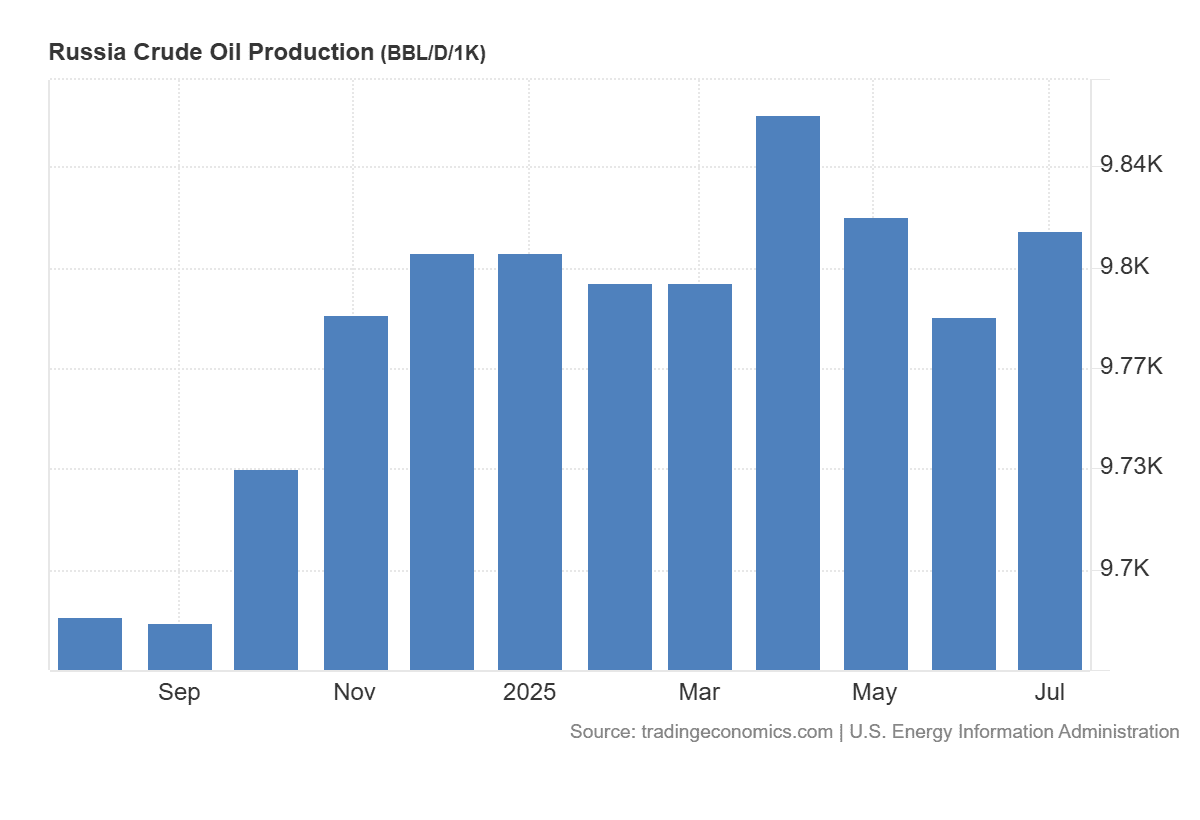
Source: TradingEconomics
However, WTI has shown a gradual recovery back toward 60 dollars in recent sessions, driven by new statements from both Ukraine and Russia. Ukraine has declared it is unwilling to cede territory, while Russia has expressed willingness to review, though not approve, the draft. These remarks cast doubt on the possibility of an early agreement, though they still represent meaningful diplomatic progress.
In light of this, the market appears to have shifted into a wait-and-see mode, anticipating Russia’s review of the agreement this week. This dynamic has reinforced the neutrality in crude oil movements and may continue to do so unless significant updates emerge. As long as uncertainty persists regarding a potential cease-fire, indecision is likely to remain a dominant feature in WTI price action.
WTI Technical Outlook
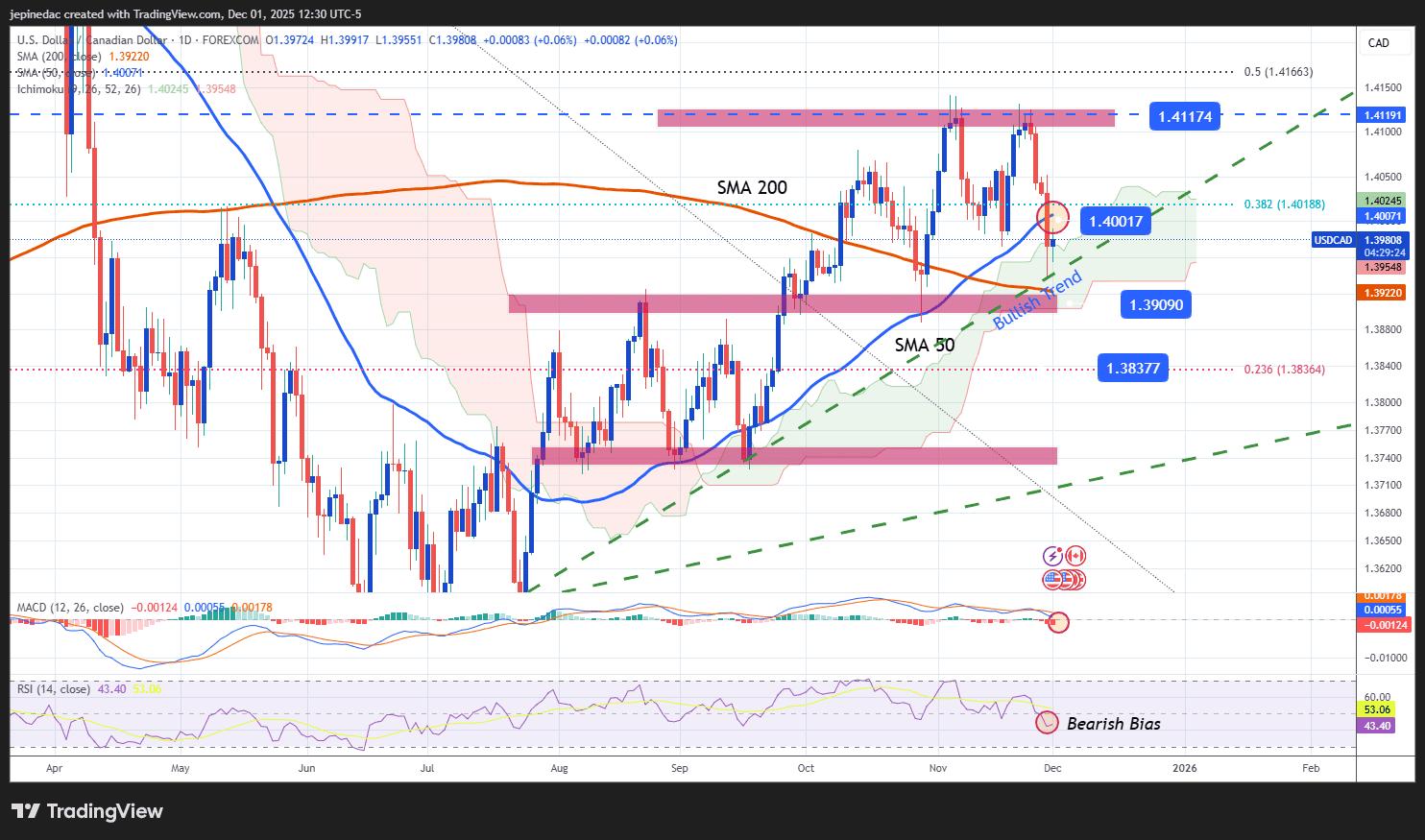
Source: StoneX, Tradingview
- Downtrend Begins to Face Challenges: Since mid-June, WTI has maintained a consistent downward trendline, pushing prices back toward the 2025 lows in recent weeks. However, a persistent sense of neutrality has emerged in recent sessions, beginning to pressure this trend. If this stability continues, the bearish phase may begin to weaken and give way to the formation of a range-bound consolidation, typical of markets searching for direction.
- RSI: The RSI line remains very close to the neutral 50 level, suggesting a sustained equilibrium between buying and selling momentum over the past 14 sessions. This balance continues to fuel short-term indecision as long as the indicator remains anchored near this zone.
- MACD: The MACD shows a similar pattern: its histogram has hovered around the zero line for several weeks, signaling indecision in short-term moving average strength. If this behavior persists, the likelihood of a sideways trading range in WTI will become increasingly evident in upcoming sessions.
Niveles clave:
- 62 USD – Major Resistance: This level corresponds to the highest price observed in October 2025 and serves as the primary resistance for bullish attempts. A decisive break above this zone would end the long-standing downtrend that has dominated the second half of 2025 and could signal the start of a new short-term bullish trend.
- 60 USD – Nearby Barrier: A key neutrality zone reinforced by the 50-period simple moving average. The price has shown repeated reactions around this level, increasing the probability of a short-term lateral channel if indecision persists.
- 57 USD – Key Support: This level marks the 2025 lows and serves as the most important bearish barrier. A break below this level could reactivate a dominant selling bias, allowing the broader downtrend to continue influencing WTI movement in the coming weeks.
Written by Julian Pineda, CFA, CMT – Market Analyst
Follow him at: @julianpineda25