

Key Events
- EURUSD enters 2026 with a bullish edge, while the DXY struggles amid relatively dovish expectations. High-timeframe key levels remain in focus for primary trend confirmation.
- US ISM Manufacturing PMI, a leading growth indicator, dropped to 47.9, levels last seen in late 2024, further boosting the euro’s relative strength toward the 1.17 range.
- Upcoming indicators: Eurozone CPI, US ISM Services PMI, and US Non-Farm Payrolls are expected to set the tone for early-year volatility, alongside rising haven demand amid escalating geopolitical frictions between the US and Venezuela.
This time last year, I published the article “EURUSD Forecast: Is 2025 a Bullish Reversal Year?”, outlining the probability of buy-the-dip opportunities on the euro near parity with the US dollar following Trump’s return.
After an extreme year driven by policy shifts and momentum, including US tariffs, weaker labor market data, and dovish Federal Reserve pressures, EURUSD revived its uptrend rallying from 1.017 to a high of 1.1918. This over 15% gain coincided with the US Dollar Index (DXY) declining toward its 17-year channel support near 96, extending from 2008 lows.
Under Trump’s agenda, this momentum risks extending into 2026, as dovish rate-cut expectations and Fed re-election risks continue to pressure the dollar. This has resulted in a bearish outlook for the DXY, despite its long-term 17-year uptrend structure. Meanwhile, ECB rate expectations remain neutral, supported by stabilizing inflation and growth, providing relative strength to the euro compared with the Fed’s neutral-to-bearish stance.
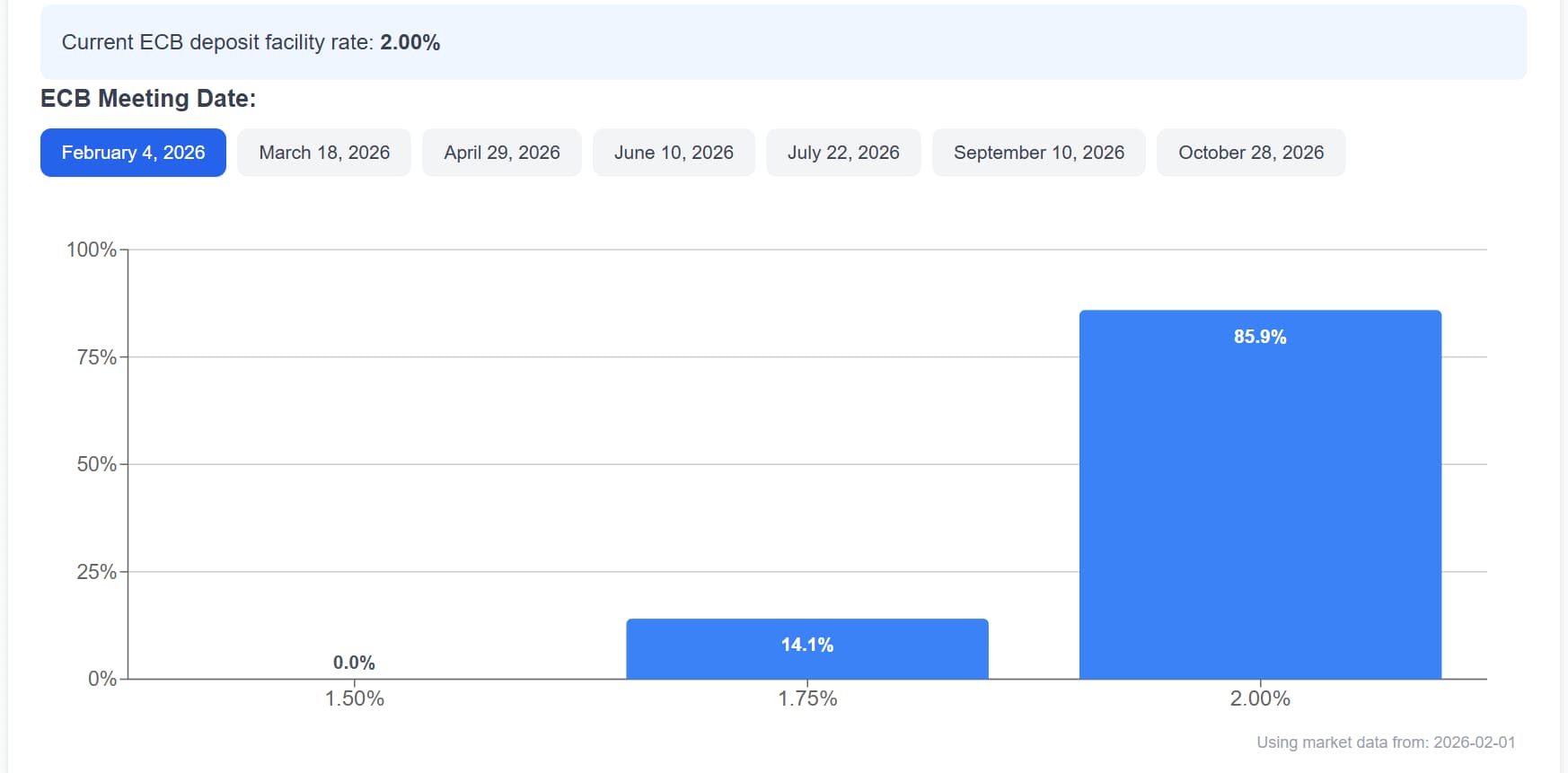
Source: ECB Watch Tool
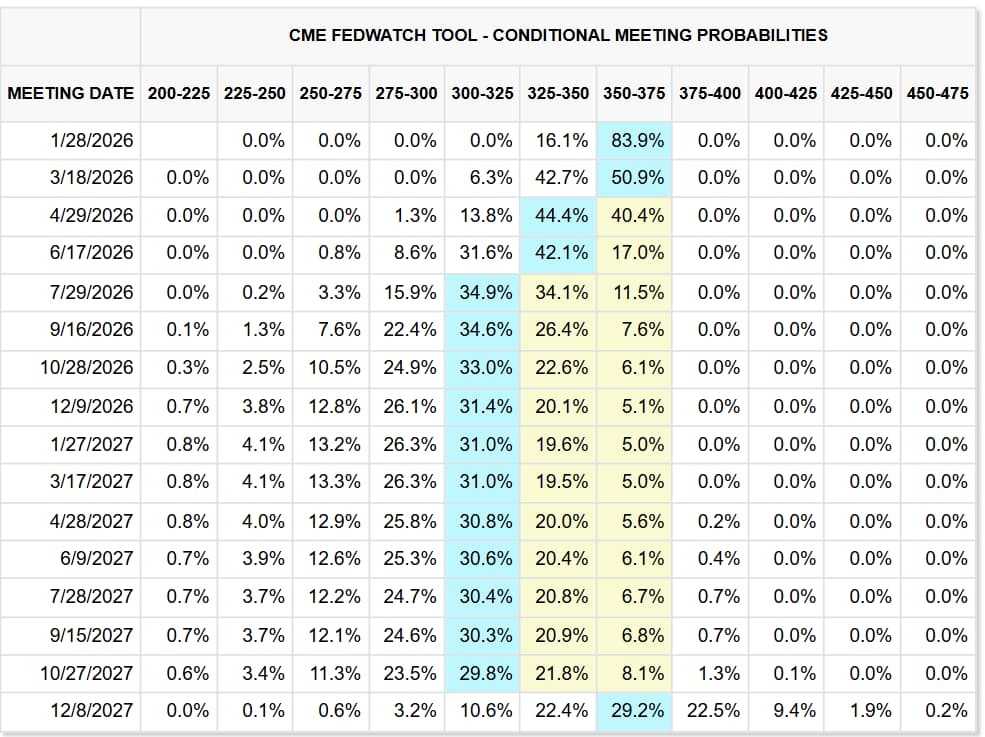
Source: Fed Watch Tool
While the Eurozone policy rate at 2% is expected to remain on hold throughout most of 2026, at least until October 2026, according to ECB Watch Tool probabilities, the Fed’s policy range at 3.50%–3.75% reflects a state of indecision around the March–April meetings. This divergence adds further pressure on the US dollar.
Upcoming Non-Farm Payrolls data and Eurozone CPI this week may alter current probabilities and influence the DXY and EURUSD trends.
DXY Outlook: Monthly Time Frame – Log Scale
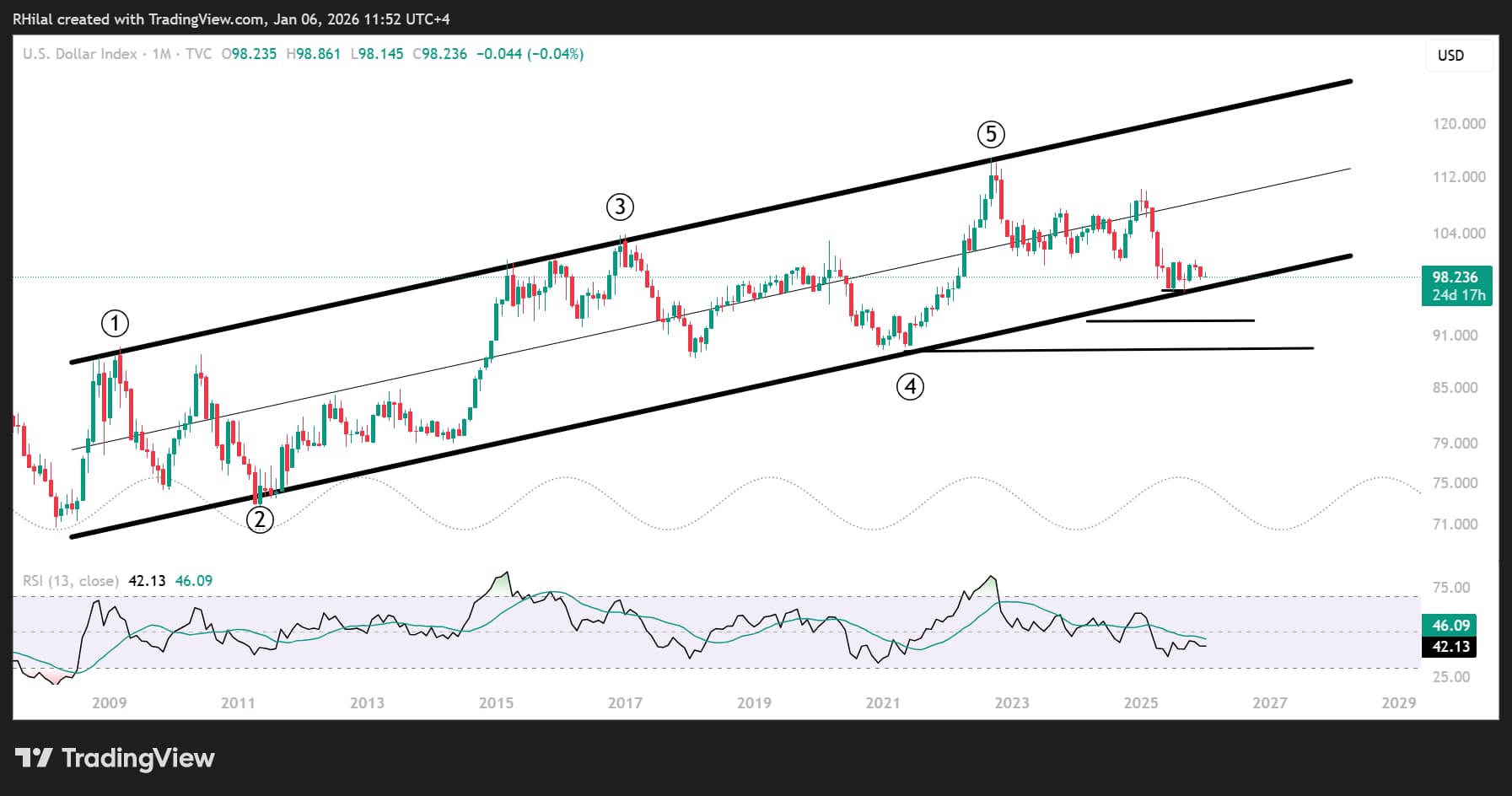
Source: Trading view
The bearish-to-neutral rate stance translates into a bearish-neutral price structure, with the DXY holding just above its 17-year trendline connecting higher lows since 2008 at 96. This level is pivotal:
- A break below 96 could expose a deeper drawdown toward 2021 lows, supporting EURUSD and GBPUSD extensions toward 1.22 and 1.42, respectively.
- A stable hold or bullish rebound within the channel may instead support corrective price action relative to the strong 2025 trends.
EURUSD Outlook: Weekly Time Frame – Log Scale

Source: Tradingview
While the DXY remains under pressure near long-term support, EURUSD is testing a resistance trendline connecting lower highs since 2018 near 1.19. A confirmed close above 1.18–1.19 would open the door to levels last seen in 2021 and 2018, at 1.22 and 1.25, respectively.
On the downside, 1.1660 and 1.1480 act as critical support levels. A break below these zones could extend bearish forecasts toward the 1.12–1.11 region, closer to parity.
Written by Razan Hilal, CMT
Follow on x: Rh_waves