

Over the past five trading sessions, EUR/USD price action has shown a consistent bearish bias, accumulating a short-term decline of close to 1%. One of the main drivers behind this growing weakness has been central bank dynamics, particularly in the United States, where new guidance could emerge following the release of key employment data scheduled for this week. As long as a clear scenario of U.S. rate cuts fails to materialize, this factor may continue to act as a relevant catalyst for a temporary recovery in U.S. dollar confidence. If this environment persists, the euro could continue to lose ground, allowing for more persistent selling pressure in EUR/USD over the coming sessions.

What Is Expected from the United States?
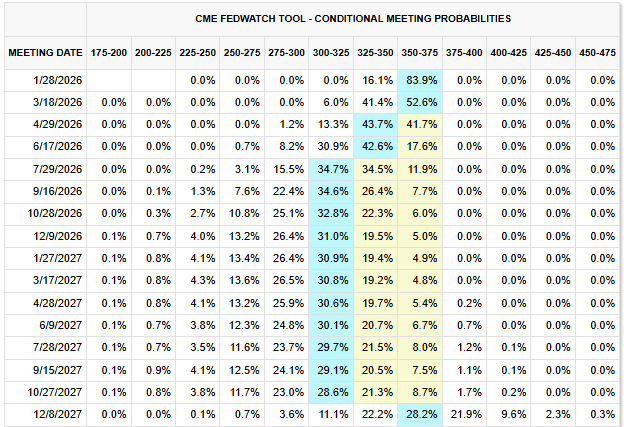
During the first days of January, expectations have been solidified that the Federal Reserve will maintain a neutral interest rate stance at its next two monetary policy meetings, scheduled for January 28, 2026, and March 18. At present, the market assigns an 83.9% probability that rates will remain unchanged in January and a 52.6% probability that this stance will also be maintained in March. This reinforces the perception that the U.S. central bank may begin 2026 with a stable monetary policy outlook.
Source: CMEGROUP
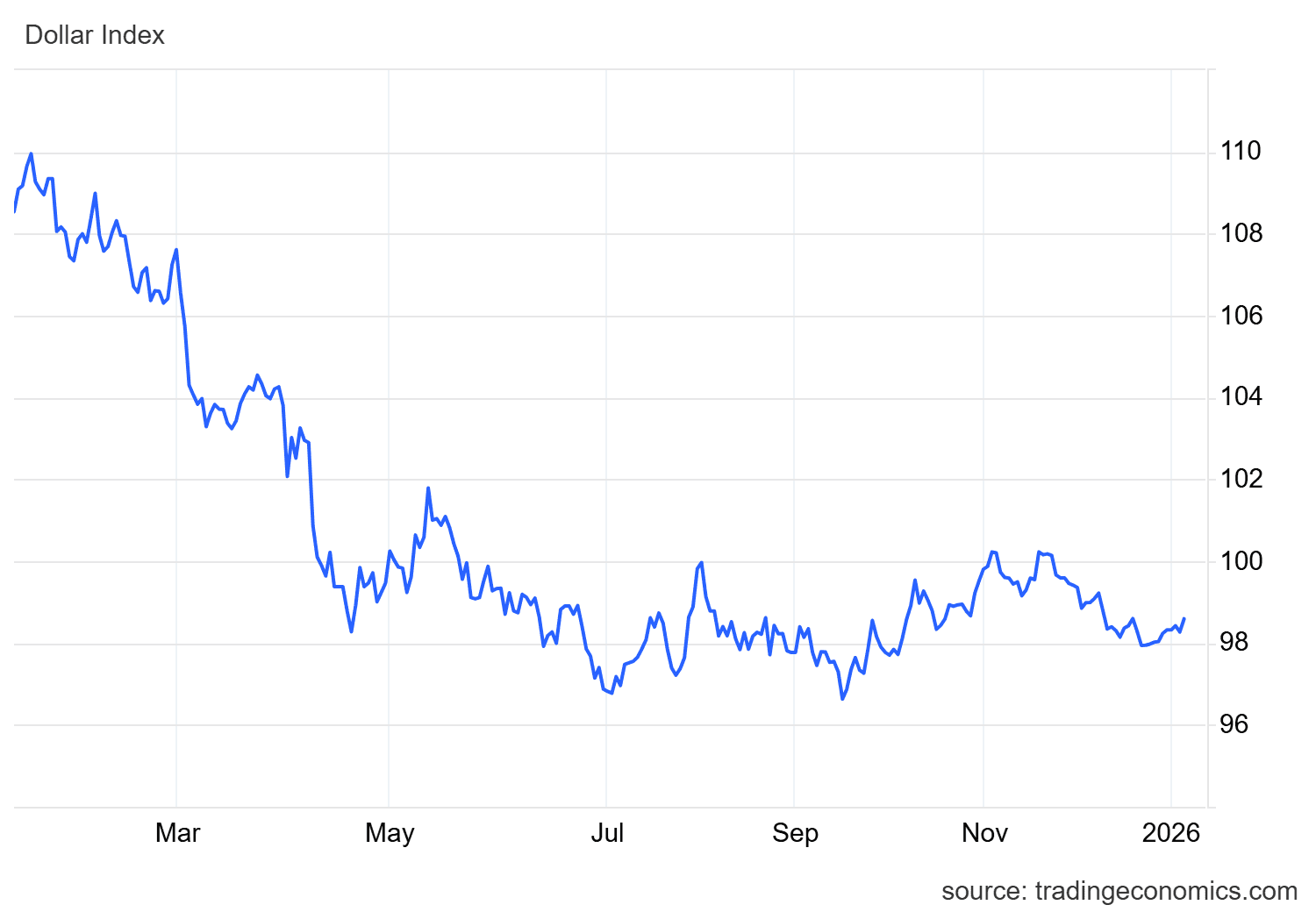
This expectation of neutral rates has contributed to a short-term recovery in the U.S. dollar in recent sessions. The DXY index, which measures the dollar’s strength against other currencies, has advanced with a positive slope, reaching the 98.5-point area, moving closer to the psychological 100-point level. This move reflects how stability in rate expectations has helped stabilize U.S. Treasury yields and, in turn, sustain consistent demand for the dollar, limiting the euro’s upside in recent sessions.
Source: TradingEconomics
This week, markets are also awaiting the release of the ADP Non-Farm Employment Change and Non-Farm Payrolls, two key indicators of U.S. labor market dynamics for December. For the ADP report, expectations point to an increase of around 51,000 new jobs, compared with the previous reading of -32,000, while NFP is expected to come in at 62,000 new jobs, slightly below the prior 64,000. Employment trends have been a key pillar in Federal Reserve decision-making, and if both indicators deliver positive and consistent results, it could reinforce the view that the labor market is not slowing as previously expected. This would support a neutral rate outlook, favor the U.S. dollar, and keep downward pressure on EUR/USD in the short term.
EUR/USD Technical Outlook
Source: StoneX, Tradingview
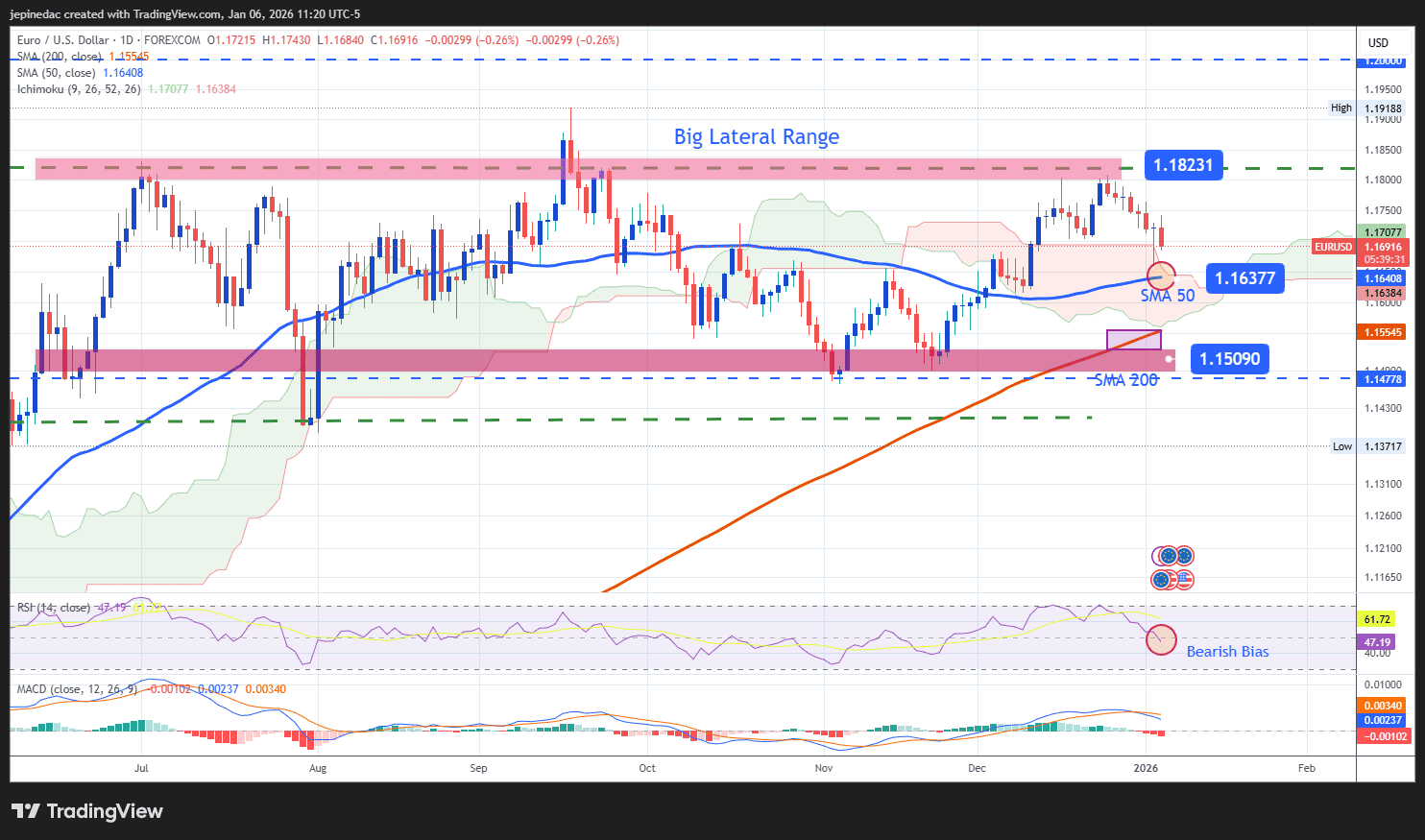
- The broad sideways range remains the most relevant structure: Since mid-June 2025, EUR/USD has traded within a wide consolidation range, capped at 1.18231 and supported near 1.15090. So far, price action has not been strong enough to threaten this structure, leaving the range as the dominant technical formation in the short term. As long as key support and resistance levels remain intact, price is likely to continue oscillating within this range, without a clear directional trend.
- RSI: The RSI has maintained a consistent decline, trading below the neutral 50 level, indicating that bearish momentum has begun to dominate recent price action. If the indicator continues to post lower readings, selling pressure could gain further relevance in the short term.
- MACD: The MACD also shows a histogram below the neutral zero line, suggesting that short-term moving average momentum has turned bearish. As long as this behavior persists, it may reinforce more consistent selling pressure in EUR/USD.
Key Levels:
- 1.18231 – Key resistance: The upper boundary of the consolidation range and the 2025 highs. A sustained bullish breakout above this zone could invalidate the range structure and activate a broader bullish trend over the coming weeks.
- 1.16377 – Nearby barrier: A neutrality zone aligned with the 50-period simple moving average. Price action around this level could favor an extension of the sideways range that continues to dominate short-term movements.
- 1.15090 – Major support: The lower boundary of the consolidation range, aligned with the lows seen over recent months. A sustained move toward this area could give way to the formation of a bearish trendline in the weeks ahead.
Written by Julian Pineda, CFA, CMT – Market Analyst
Follow him on: @julianpineda25