It has been a quiet start in FX after a mildly bearish week for the US dollar last week, when the greenback was unable to move in the positive territory against any major currencies, even a data-hit pound. We had a weaker US CPI report on Friday which outweighed the positive impact of the stronger-than-expected jobs report released earlier in the week. CPI applied some renewed pressure on the dollar, which helped to cushion the pound’s weakness in the GBP/USD pair. However, the pound remained quite weak against other currencies, most notably against commodity dollars following some weak growth figures and a rather dovish bank of England meeting in the previous week. Looking ahead, we have important UK data coming up this week, which should keep the GBP/USD in sharp focus, while in the US there is also some important data towards the end of the week.
The week that was: bearish week for US dollar
Last Wednesday’s payrolls report comfortably beat expectations and, in the immediate aftermath, markets reacted pretty much as you’d expect. The dollar jumped, equity futures pushed higher and bonds sold off, as traders pushed back expectations for the first full rate cut from June to July. In short, the market was caught on the wrong foot. But the move didn’t really last. The dollar quickly rolled over again, suggesting that the hawkish repricing of the Fed wasn’t enough to give the greenback any lasting support. To me, that’s another sign of persistent strategic bearishness on the dollar – something that will only be challenged by a sustained run of strong data.
In fact, by Friday, we had CPI come in surprisingly soft at 2.4% y/y instead of 2.5% expected, down from 2.7% recorded in December. That saw traders price in a 30% probability of a rate cut by April and more than 80% chance of easing by June.
GBP/USD forecast: Still bearish after GDP
Across the pond, economic data released last week revealed the UK economy ended 2025 on a fairly underwhelming note. That wasn’t a huge surprise, but the weakness in construction and business investment stood out. Given we already had data for October and November, there wasn’t a great deal here that was genuinely new for the Bank of England. Policymakers had already concluded that the economy finished the year on a softer footing. That partially explains why the GBP/USD exchange rate didn’t fall any further. From the Bank’s perspective, this week’s jobs and inflation data will be far more important.
Before discussing the GBP/USD forecast further from a macro point of view, let’s discuss some levels on the cable.
Key levels to watch on GBP/USD
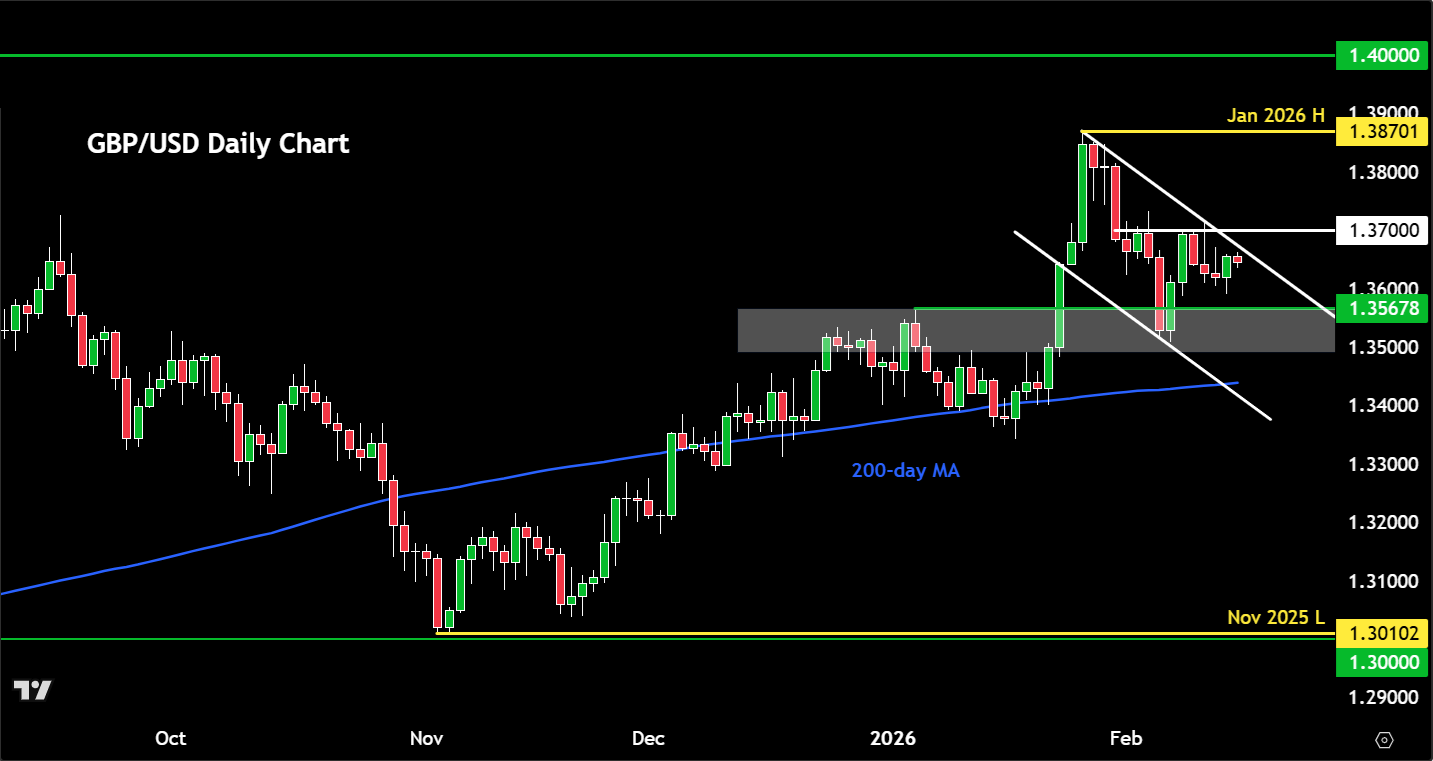
With the GBP/USD making higher highs and higher lows, this is more a reflection of the weakness in the US dollar than strength in the pound. Key support has held firm last week between 1.3500 to 1.3565 area. Previously, this was a key resistance range. It would therefore be a bearish development if the cable were to go below here, with next support not seen until the 200-day average around 1.3400 zone.
Resistance is seen around 1.3700, 1.3790 and then there’s nothing significant until the January high of 1.3870.
Week ahead: UK CPI, US GDP and global PMIs important for GBP/USD forecast
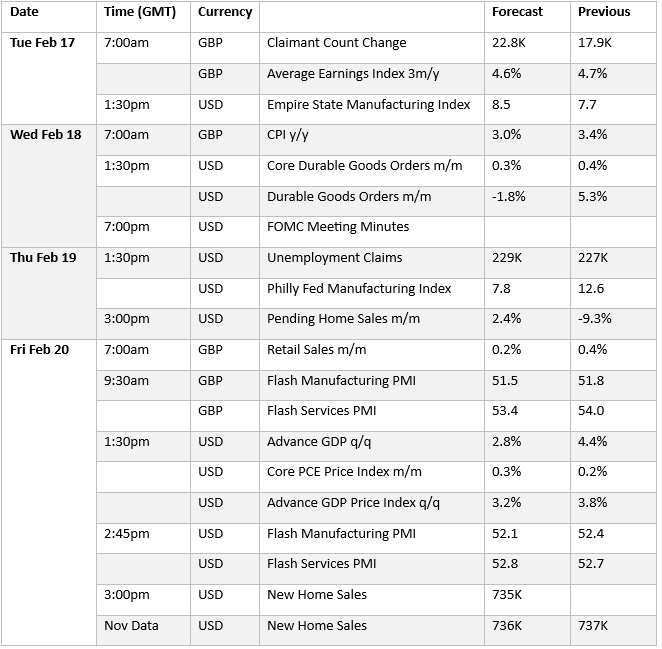
Among the above data highlights, UK CPI and wages data, global PMIs and US GDP will be important for shaping the GBP/USD forecast in the week ahead.
After a surprisingly dovish BoE rate hold a couple of weeks ago, and weaker growth and industrial production data last week, we will have wages data on Tuesday followed by CPI on Wednesday. These combined should provide markets with the clearest indication of the next rate move by the Bank of England.
Global PMIs will be released throughout the day on Friday. For those trading the GBP/USD, keep a close eye on UK PMIs first thing in the morning. Any further signs of weakness in UK economy would further raise bets of more BoE rate cuts.
US PMIs will be released in the afternoon, but more to the point, we will have the Advance GDP estimate and core PCE price index (Fed’s favourite inflation measure) to look forward to as well. Ahead of these, we will have some retail companies reporting their earnings in mid-week, which should all help to provide us with a snapshot of the health of the world’s largest economy.

-- Written by Fawad Razaqzada, Market Analyst
Follow Fawad on Twitter @Trader_F_R