
Gold ended the last trading session of the week with a gain of more than 1%, moving closer to the $3,400 level, driven by new monetary policy expectations following Jerome Powell’s comments at Jackson Hole. For now, buying pressure remains steady, as markets are pricing in that a decline in U.S. interest rates could weaken the dollar and renew short-term demand for gold as one of the main safe-haven assets.

A New Shift in the Federal Reserve’s Outlook?
A new outlook has emerged for the Federal Reserve following Powell’s remarks at the Jackson Hole Symposium. The Fed Chair noted that inflation could begin to moderate in the short term, but at the same time warned of potential weakness in employment and economic activity, which has altered the probability outlook for interest rates.
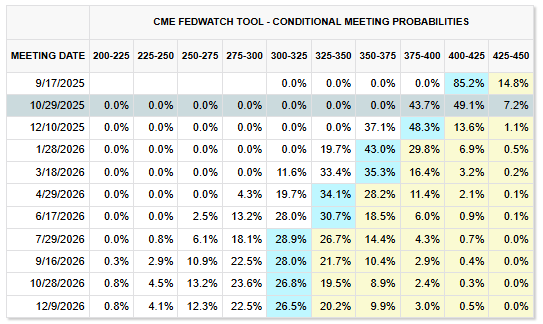
According to data from CME Group, there is currently an 85.2% probability that at the September 17 meeting the Fed will cut rates by 25 basis points (0.25%). In addition, there is a 43.7% probability that by the October meeting, rates could fall further to 4.00%, down from the current 4.5% — signaling a significant adjustment in the interest rate path.
Source: CME Group
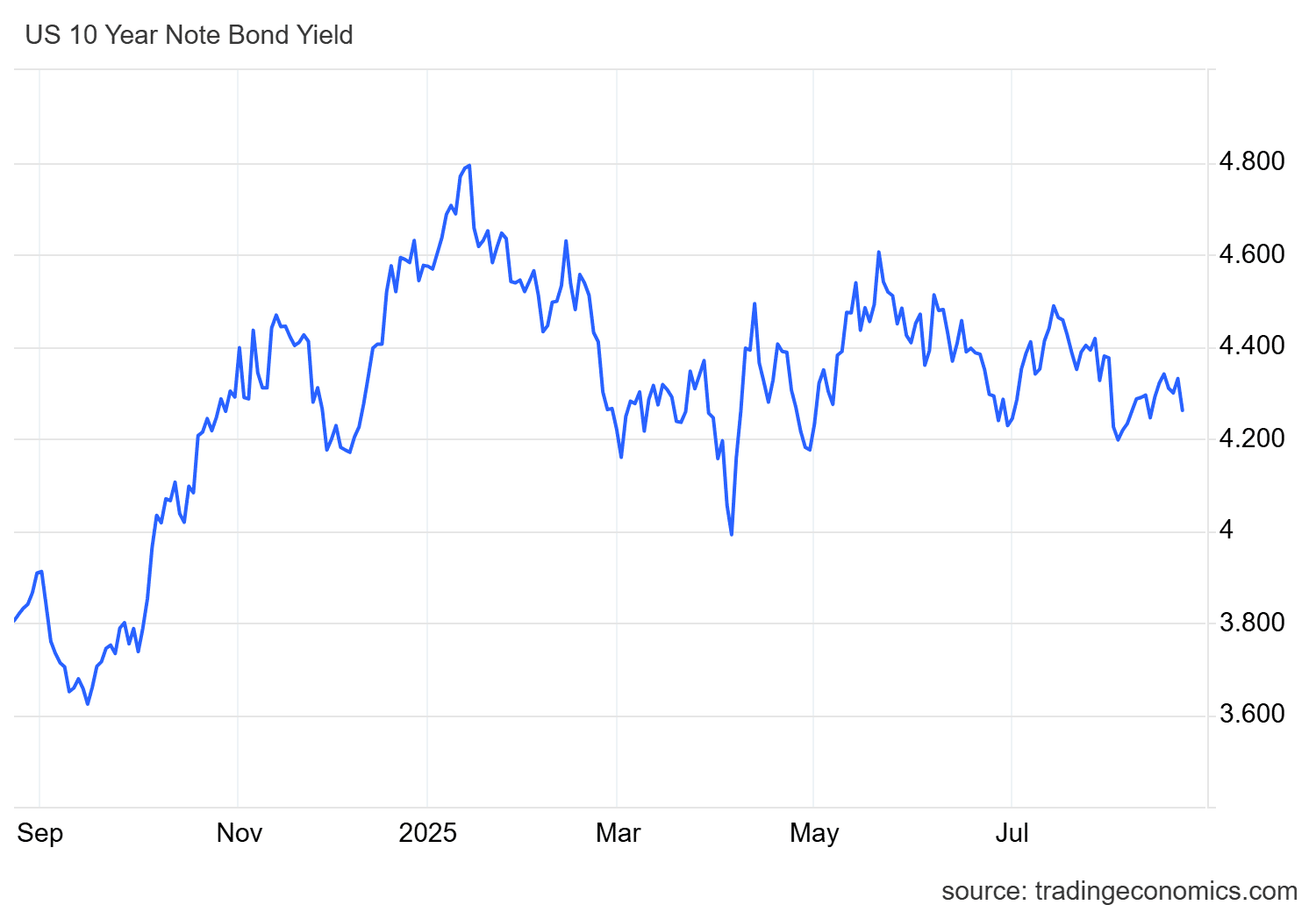
These expectations have also begun to influence the 10-year U.S. Treasury yields, considered the most relevant fixed-income benchmark against gold. Yields have now fallen toward 4.2%, reflecting that the U.S. bond market could offer lower returns in the short term due to anticipated rate cuts.
Source: TradingEconomics
This dynamic is important because lower bond yields reduce the attractiveness of these traditionally safe assets and open the door for capital to shift into other safe havens, such as gold. As the opportunity cost of holding gold decreases, its appeal strengthens. If this market sentiment continues, buying pressure on XAU/USD could become more significant in the near term.
Is the U.S. Dollar Being Affected?
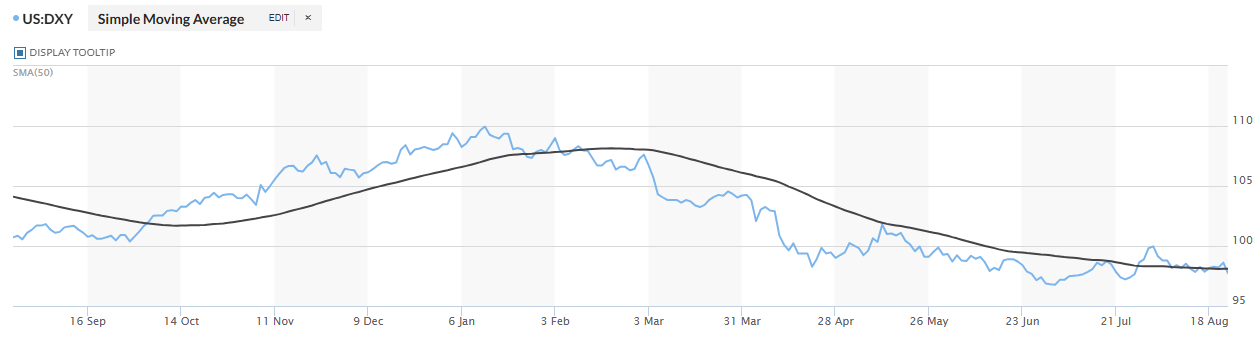
The Fed’s new stance has not only impacted Treasury yields but has also weighed on the U.S. dollar. The DXY index, which tracks the greenback against a basket of currencies, has fallen back toward the 98 level, extending the downtrend observed in recent weeks.
Source: MarketWatch
Expectations of lower rates in the U.S. reduce the appeal of dollar-denominated investments and weaken demand for the currency. In this environment, a weaker dollar favors gold demand, as the metal becomes cheaper for buyers using other currencies. This effect could reinforce a stronger bullish bias in gold over the coming sessions if dollar weakness persists.
Gold Technical Outlook

Source: StoneX, Tradingview
- Sideways Range Persists: In recent weeks, gold has continued to trade within a broad sideways range, with resistance near $3,400 per ounce and support around $3,200. Although recent gains have been notable, they have not yet been sufficient to break out of this structure, leaving a neutral bias in place for the short term.
- RSI: has moved above the 50 neutral level and maintains an upward slope, reflecting growing buying momentum. As long as this trend continues, buying pressure could consolidate in the coming sessions.
- TRIX: remains close to the 0 line, showing that the strength of exponential moving averages is still in neutral territory. This suggests that while there is some positive bias, the market still lacks a clear long-term direction.
Key Levels to Watch:
- $3,400 – Major Resistance: marks recent highs and the most important bullish barrier. A sustained break above this level would confirm the continuation of the long-term uptrend.
- $3,300 – Near-Term Support: corresponds to the mid-range level and coincides with the Ichimoku cloud. As long as price holds above this area, the bullish bias will remain supported.
- $3,200 – Critical Support: represents the base of the range and recent lows. A break below would confirm a structural shift toward a more aggressive selling trend.
Written by Julian Pineda, CFA – Market Analyst
Follow him at: @julianpineda25