

Recent sessions have been difficult for the Japanese yen, as USD/JPY has gained more than 0.5% over the last six sessions, moving increasingly closer to the 160 yen per dollar area. This move reflects short-term US dollar strength against the Japanese currency.
For now, buying pressure remains supported by stable demand for the dollar and by the interest rate differential between central banks, a factor that continues to make it difficult for the yen to recover consistently. If these elements remain in place, buying pressure around USD/JPY could stay relevant over the coming trading sessions.

Does the bond market remain relevant?
In recent trading sessions, the US 10-year Treasury yield has remained stable at around 4.5%. In contrast, Japan’s 10-year bond yield has posted a considerable decline, with a daily drop of -4.42%, moving slightly below 2.6%. This shows that while the US bond market remains relatively stable, Japanese yields are showing significant short-term weakness.
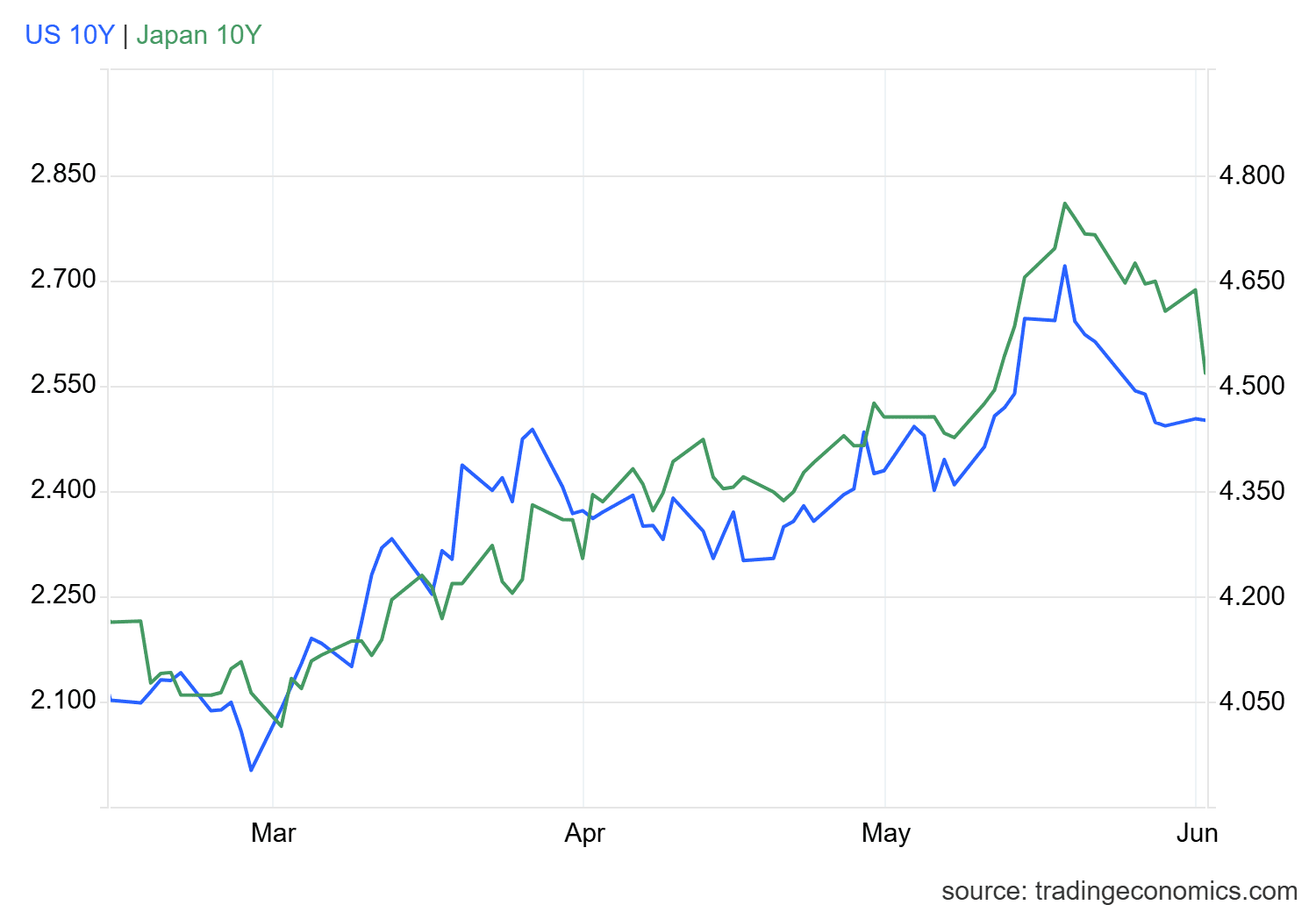
Source: TradingEconomics
This behavior can be explained mainly by the difference in monetary policy expectations between both countries. In the United States, the CME Group probability table shows that the market expects the benchmark rate to remain unchanged around 3.75% for much of the rest of 2026. However, there is already a probability above 40% that rates could increase by the January 2027 decision. This suggests that the market is starting to consider the possibility of a more aggressive Federal Reserve eventually, which helps support the stability of US yields.
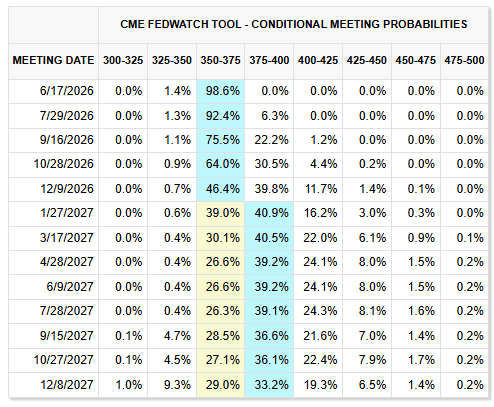
Source: CMEGROUP
On the Bank of Japan side, the outlook is not as clear. Although the market is pricing in the possibility of a rate increase at the June decision, there is still no full certainty that this trend will continue for the rest of the year. In addition, Japan’s current rate, at 0.75%, remains far from the US reference rate, which does not favor a stronger recovery in Japanese yields.
This difference is essential for both currencies. A more stable bond market with higher yields in the United States can attract demand toward US securities, while Japanese bonds continue to show lower yields and recent weakness. This effect, linked to expectations around future central bank decisions, may be supporting capital flows toward the more attractive bond market and, as a result, helping demand for dollars remain more stable than demand for yen.
For this reason, as long as Japanese bonds continue to show weakness and the rate differential keeps favoring the United States, buying pressure around USD/JPY could remain relevant over the coming sessions.
Is the Middle East outlook still having an impact?
Despite attempts to calm the situation in the Middle East, the market continues to show a cautious tone around this issue. For now, there have been no relevant advances toward a short-term peace agreement, and the outlook remains exposed to possible new escalations in the conflict. Although the United States and President Trump have recently said they see progress in the negotiations, reports of repeated attacks over the weekend do not fully support that expectation. For this reason, market uncertainty has not disappeared.
This matters for two reasons. First, WTI crude oil remains above $90, keeping concerns about longer-term inflationary pressures alive. Second, in this environment, the US dollar continues to stand out as a liquidity safe-haven currency, especially while uncertainty remains elevated.
This effect can also be seen in DXY, which has managed to hold above the 99-point area, indicating that demand for US dollars remains relatively important in the short term.
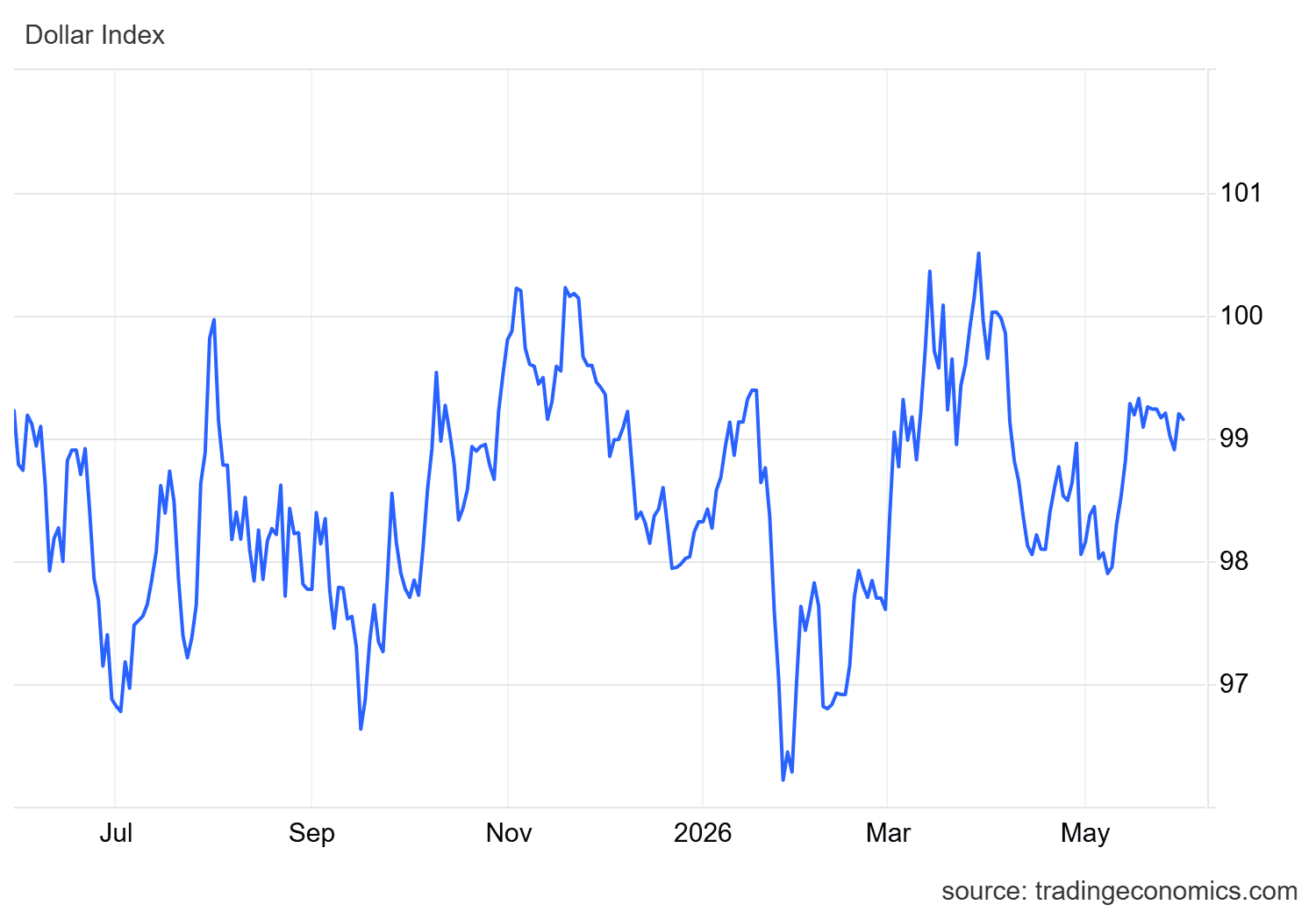
Source: TradingEconomics
The Middle East outlook continues to play a key role. If this event supports consistent demand for dollars in the short term, the yen may continue to face difficulties recovering ground. Therefore, if the situation in the Middle East does not show real improvement, relevant buying pressure could also remain in USD/JPY over the coming sessions.
Technical outlook for USD/JPY
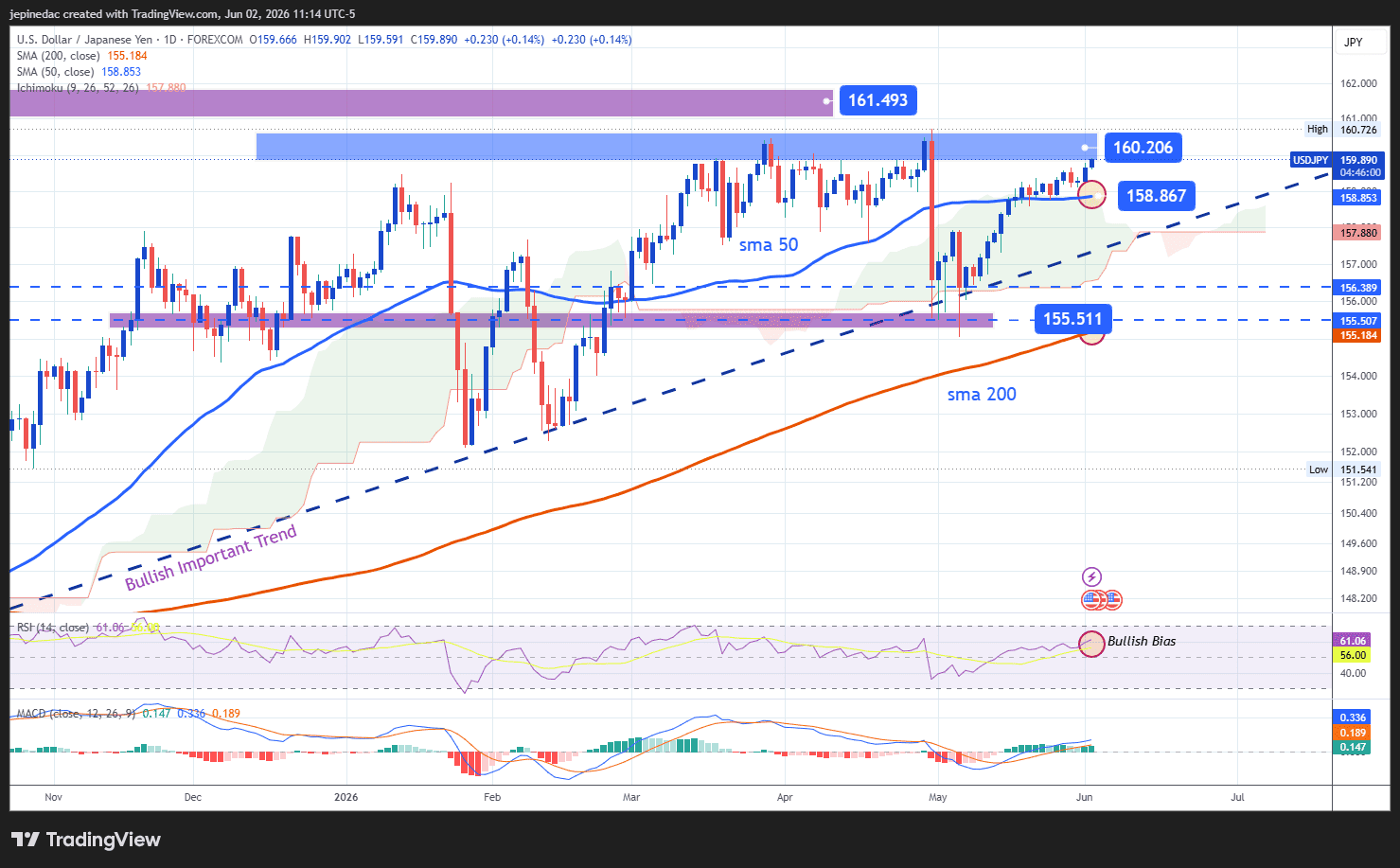
Source: StoneX, Tradingview
- The long bullish trendline remains firmly in place: For several months, average USD/JPY price action has maintained a long-term bullish trendline. So far, there has been no relevant selling correction capable of putting this structure at risk, making it the most important technical pattern to watch. If buying pressure remains stable, this trendline could continue to be relevant over the coming sessions.
- RSI: Now, the RSI continues to show consistent readings above the neutral 50 level, suggesting that average momentum over the last 14 sessions still reflects a relevant buying bias. If this behavior continues, bullish pressure could remain in place over the coming trading sessions.
- MACD: A similar scenario can be seen in the MACD, as the histogram remains above the 0 line. This shows that bullish strength is still present in the average of short-term moving averages and reinforces the importance of the buying pressure that has formed recently.
Key levels:
- 160.000 – Key resistance: A relevant psychological level that coincides with recent highs. Moves toward this area could reinforce the current buying bias and open the door to an extension of the bullish trendline over the coming weeks.
- 158.867 – Near-term barrier: A neutral zone aligned with the 50-period moving average. Price action that remains too close to this level could reinforce a phase of indecision or even lead to the formation of a short-term range.
- 155.511 – Main support: A recent low that coincides with the base of the bullish trendline and aligns with the 200-period moving average barrier. This level is critical, as a break below it could fully invalidate the long-term bullish structure and open the door to a more dominant selling bias that could extend for several weeks.
Written by Julian Pineda, CFA, CMT – Market Analyst
Follow him on: @julianpineda25