
- USD/JPY rudderless as traditional drivers disintegrate
- Kevin Warsh’s nomination shift dollar pricing and sentiment
- US non-farm payrolls key data release
- Japanese election landslide looking less likely
- BOJ intervention risk stays live if the rebound extends
Summary
USD/JPY enters the week without a clear anchor, with traditional drivers such as rate differentials and risk appetite offering little to no guidance. Price action instead reflects a mix of shifting policy risk, political uncertainty and intervention concerns, leaving the pair prone to abrupt moves in both directions.
In Japan, less volatility in the long end of the JGB curve and a tightening election race have helped take pressure off the yen, although the threat of intervention remains live should USD/JPY push higher again. In the US, attention has shifted toward how the monetary policy outlook and data interact at a time when markets may be less willing to take signals at face value.
That backdrop brings the focus squarely onto developments in Washington, starting with the nomination of Kevin Warsh as the next Federal Reserve chair.
Warsh’s Nomination Reprices Dollar Risk
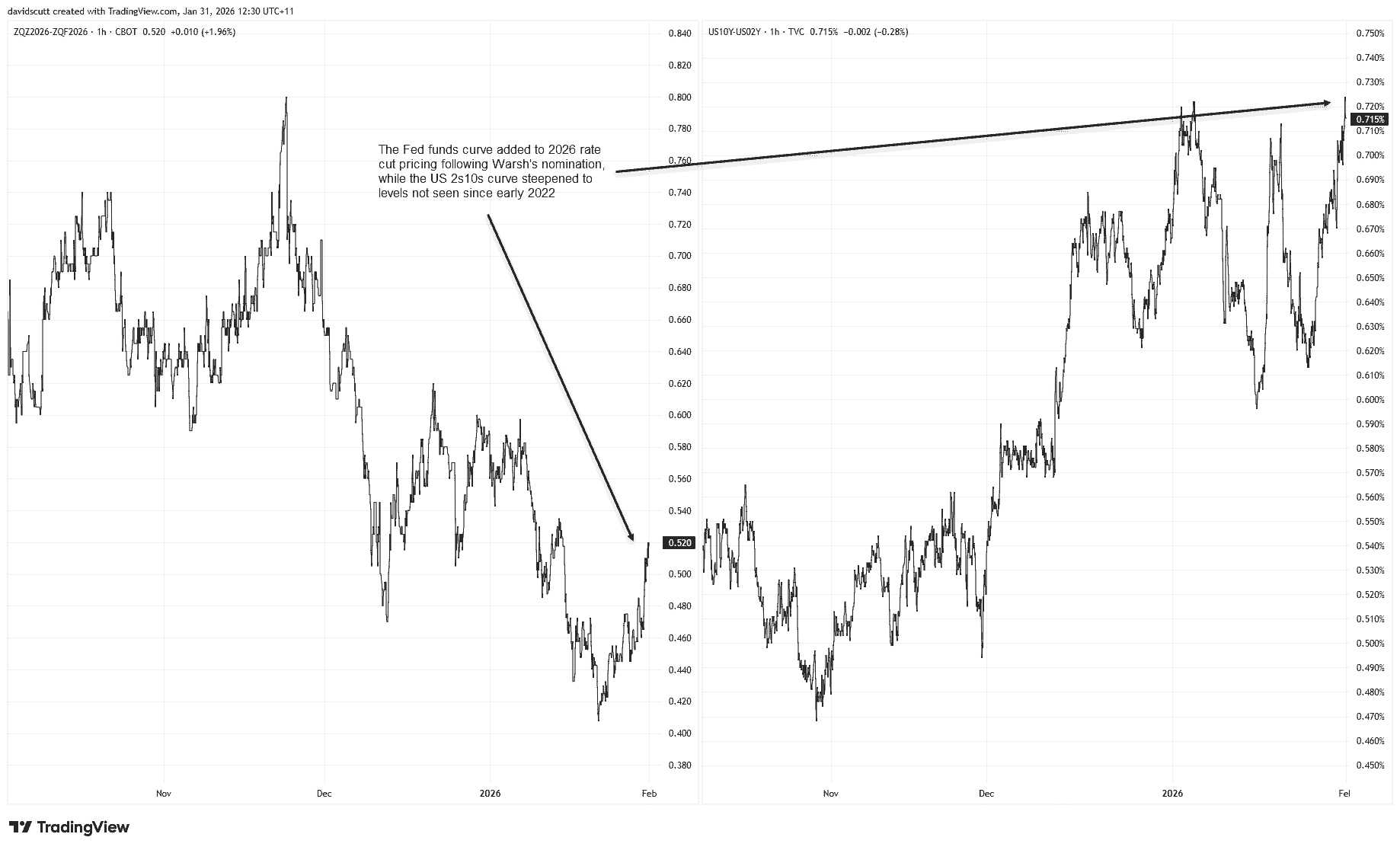
The nomination of Kevin Warsh as the next Federal Reserve chair has had an immediate impact on the dollar. Despite his reputation as a hawk, the Fed funds curve added to rate cut pricing for 2026 last Friday, pushing back against the simplistic view that a Warsh-led Fed would be less likely to cut rates.
There is nuance to his hawkishness. Warsh has been critical of the use of the Fed’s balance sheet as a policy tool, but that stance does not automatically translate into opposition to rate cuts. While he is inflation-focused, he has also argued that strong economic growth can be achieved without generating inflation, perhaps explaining why Donald Trump has settled on him.
Source: TradingView
It was notable that the US 2s10s curve briefly steepened to levels not seen since January 2022 following the news, with outright yields falling despite the release of hot producer price inflation data. That reaction hints that markets may be starting to look through data points that would typically influence near-term policy expectations, even as upstream price pressures show signs of re-emerging.
Warsh’s nomination has helped alleviate some concerns around Fed independence, though not all. Even so, it appears to have been enough to unwind part of the risk premium that had been built into the dollar, helping to limit near-term downside risks for USD/JPY.
Payrolls Loom as Markets Test a New Mindset
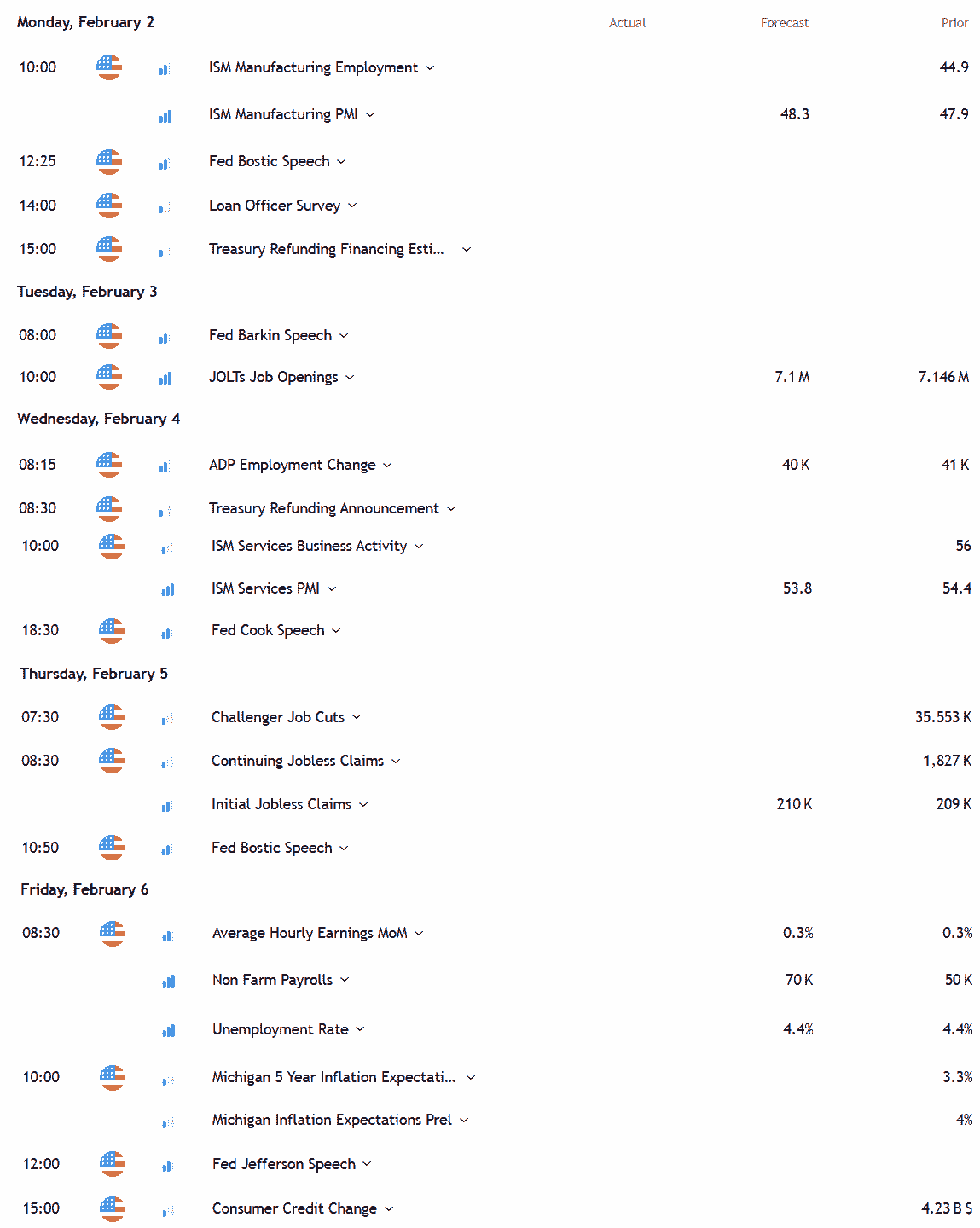
The idea that markets may now be looking through data will be tested this week with a raft of US labour-market releases, culminating in January’s US non-farm payrolls on Friday.
Source: TradingView (US ET)
JOLTS, ADP, ISM services, jobless claims and Challenger job cuts all carry the potential to generate volatility, but it would likely take a material deviation from consensus to have a lasting impact, particularly if the surprise comes on the downside. Given the Federal Reserve removed references to downside labour-market risks in its January FOMC statement, it suggests that data that challenges that assessment may generate the largest impact.
That applies even more so to payrolls, especially given this report is not meaningfully dated like some recent releases. As usual, markets will likely react initially to the headline jobs gain from the establishment survey, even though the unemployment rate in the household survey likely still carries more influence with the Fed.
Uncertainty around the impact of the Trump administration’s immigration policies on hiring means participation and broader underemployment metrics are worth paying close attention to. Rising participation alongside falling underemployment would point to improving conditions, and vice versa.
Away from the data, several Fed speakers are scheduled, including embattled Lisa Cook, though vice chair Philip Jefferson may be the pick of the bunch given he speaks after the payrolls report. Elsewhere, the loan officer survey and quarterly Treasury Refunding Announcement have sparked volatility in the past. They could again, although the former is dated and the latter looks like a lower-risk event given recent stability in the Treasury market, with little expectation of a sharp increase in longer-dated issuance. The last estimate for March-quarter borrowing, released in November, stood at $578b.
Japanese Election Risk in Focus
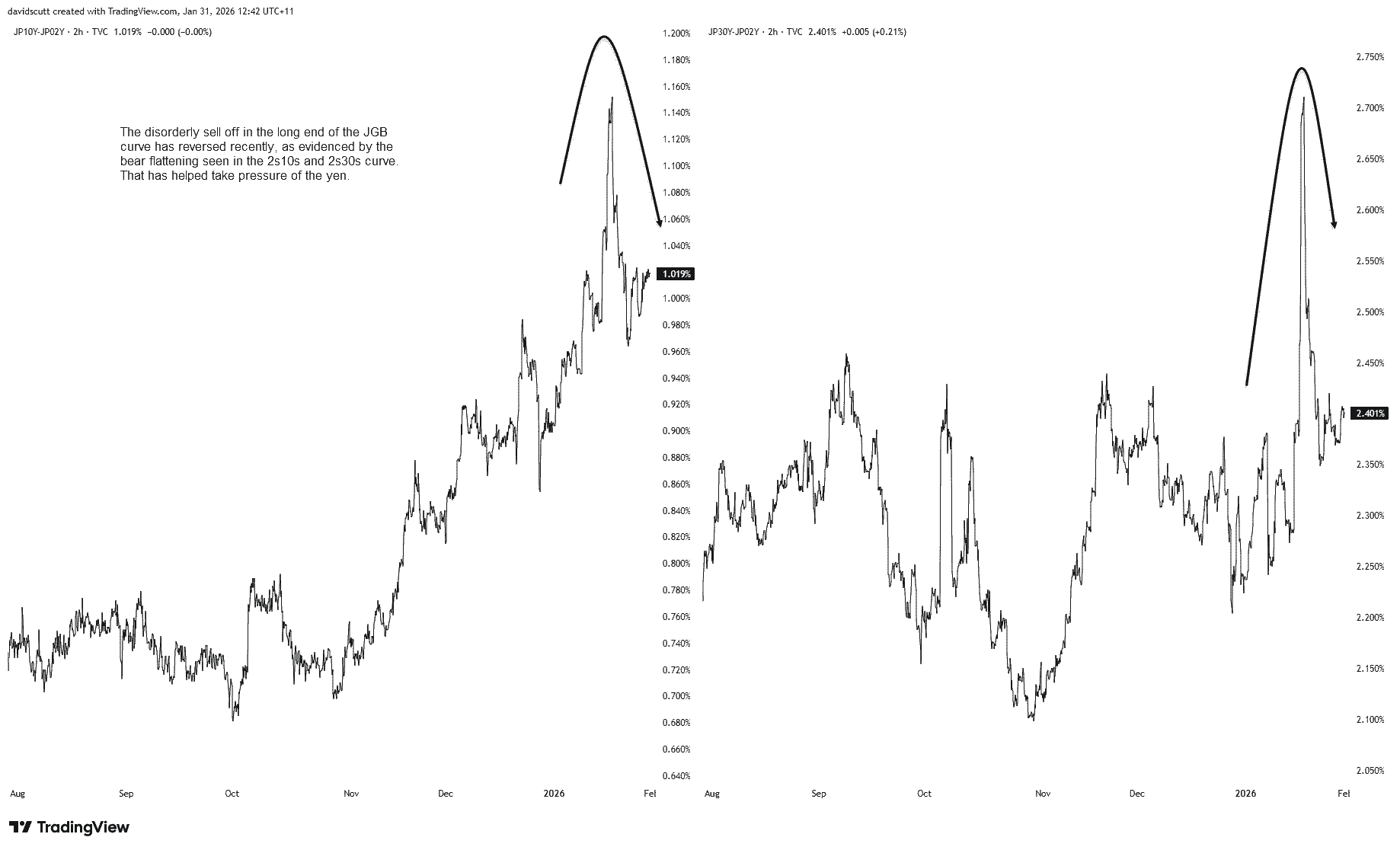
When it comes to Japanese influences on USD/JPY, the bond market and politics are in focus. The sharp sell-off earlier this month in the long end of the JGB curve has largely reversed over the past fortnight, with both the 2s10s and 2s30s curves flattening sharply. That likely reflects the growing threat of the Bank of Japan stepping up bond purchases to improve market functioning, but also a diminished risk of a landslide election win for the LDP based on recent polls.
Source: TradingView
With momentum cooling ahead of next Sunday’s vote, markets appear to be reassessing how strong a mandate Sanae Takaichi may have to push ahead with highly stimulatory fiscal policy. That reassessment, alongside the persistent threat of FX intervention, has gone some way to taking pressure off the yen.
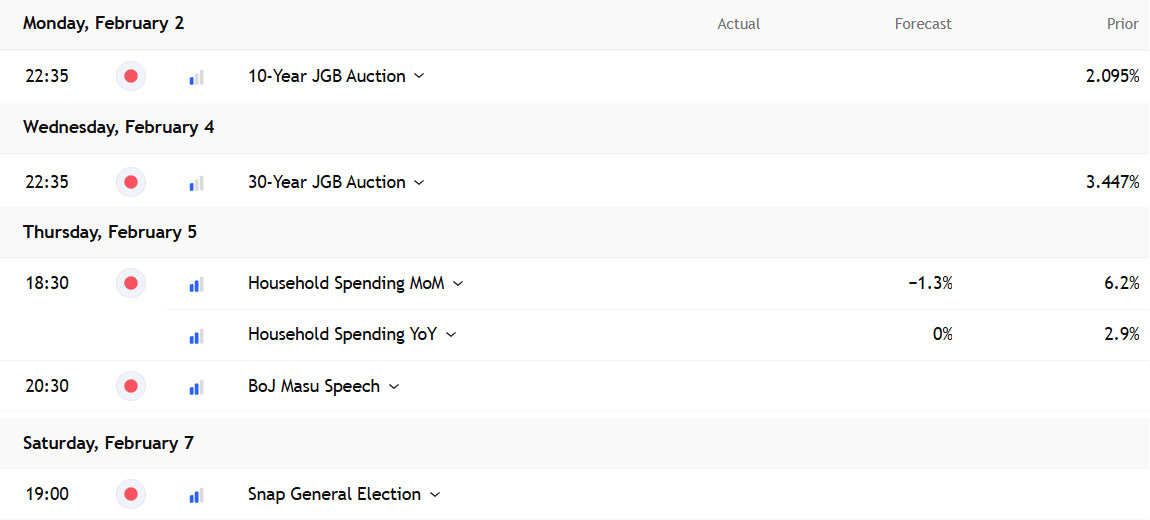
While far from guaranteed, the stabilisation in rates hints at the potential for decent demand at next week’s 10 and 30-year JGB auctions on Tuesday and Thursday. A speech from BOJ board member Masu on Friday will draw interest, although he has voted in line with recent policy decisions rather than acting as a dissenter.
Source: TradingView (US ET)
Household spending data out on Friday is unlikely to move markets, but it does matter for the BOJ as it looks for evidence of a virtuous cycle between wages, demand and inflation. To finish, the risk of yen intervention remains live, particularly if the latest push higher in USD/JPY accelerates early next week.
Fragile Rebound Faces Test
Source: TradingView
Downside risks flagged in last week’s outlook report materialised early in the new week, aided by follow-up rate checks from Japan’s Ministry of Finance on Monday that saw USD/JPY hit three-month lows. However, the revelation from US Treasury Secretary Scott Bessent midweek that the US would not intervene in the yen helped relieve downside pressure, essentially telling traders that Japan, with the US blessing, was acting alone to support the yen. That, followed by soft inflation data from Tokyo and Kevin Warsh’s nomination on Friday, ensured much of the initial declines were reversed.
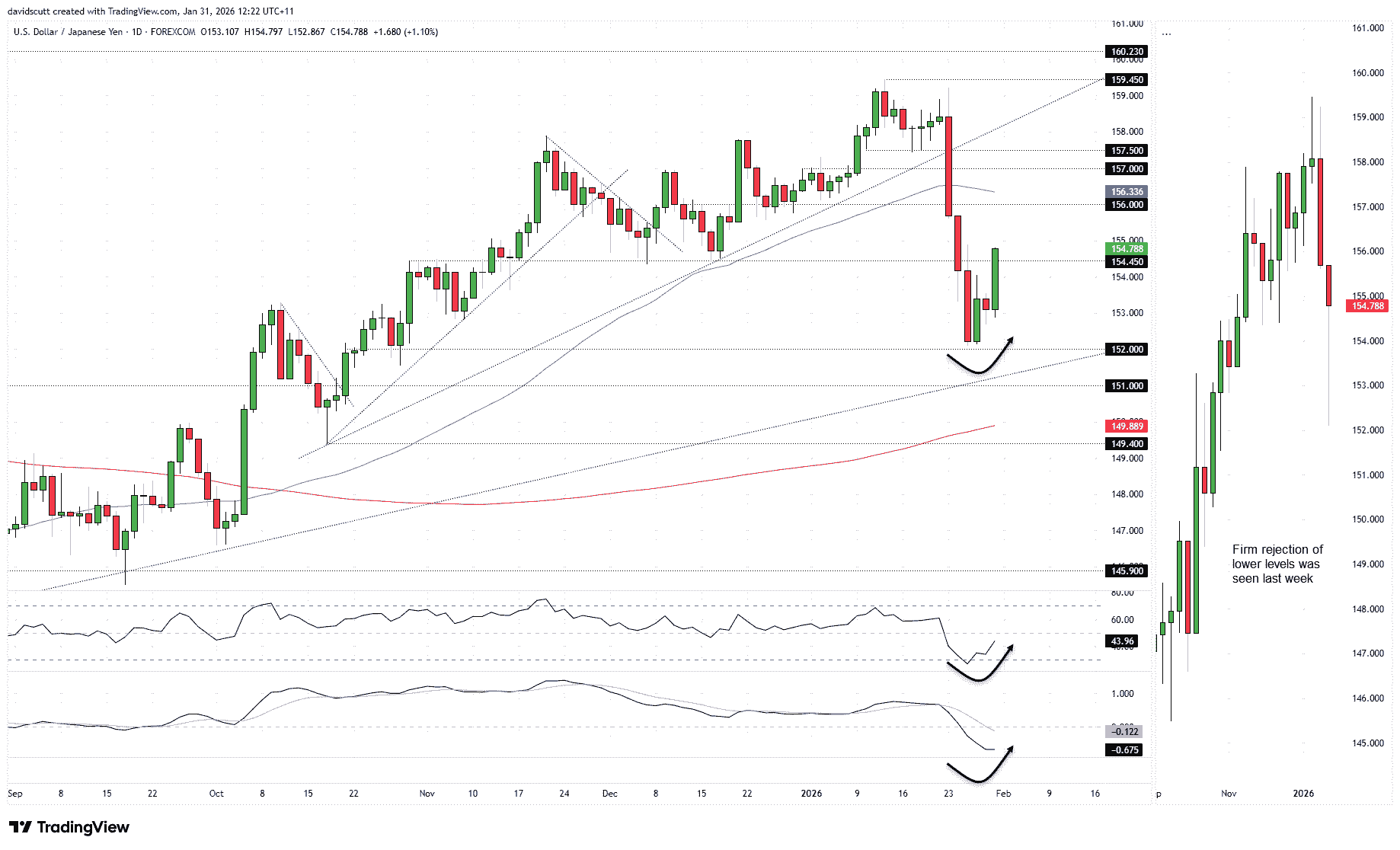
The question now is whether the rebound can continue, and what the MOF may do if it does. There’s no clear message from the weekly candle on the right-hand pane, with it more reflective of a firm rejection of lower levels rather than a bullish signal.
Zooming in on the left to the daily timeframe, it’s notable the late rebound saw USD/JPY close above 154.45, a level that offered support and resistance for periods late last year. Price action around the level may therefore be instructive early in the week.
Should the rebound extend further, 156.00 and 157.00 are the levels to watch, with the 50DMA located in between. Anything above those levels would likely amplify the risk of outright Bank of Japan intervention, should the MOF’s behaviour remain consistent.
Beneath 154.45, the unwind has left something of a clean slate down to 152.10 where the pair rebounded from last week, although it’s been noticeable for some time that at these historically elevated levels, USD/JPY has tended to gravitate towards big figures, so keep that in mind when assessing setups.
The message from the oscillators on the daily tick is one of diminishing downside strength. RSI (14) is trending higher towards 50 having fallen into oversold territory. With MACD curling back towards the signal line while remaining in negative territory, it provides a warning to bears that their dominance is fading. Directional risks therefore look far more balanced than only a week ago.