
The USD/JPY started the session with a gain of nearly 1% in favor of the US dollar and against the yen. The short-term weakness shown by the yen is linked to recent comments from Japan’s Prime Minister opposing further interest rate hikes. This comes alongside renewed strength in the US dollar, both acting as key catalysts behind the recent upward movements in USD/JPY. If these factors continue to weigh on sentiment toward the yen, current buying pressure in USD/JPY could gain further relevance in the coming trading sessions.

Will Japan avoid higher interest rates?
Recently, Japan’s Prime Minister, Sanae Takaichi, expressed concern to the Governor of the Bank of Japan regarding the possibility of continuing rate hikes from the current 0.75% level. This follows previous remarks from the Governor indicating that gradual adjustments could be implemented if economic conditions and inflation allowed. However, after this meeting, markets interpreted the situation as a sign that the government will closely monitor monetary policy and seek to prevent further rate increases from negatively affecting economic growth in the coming months. Shortly after these comments, probability of additional rate hikes for the March and April decisions began to decline.
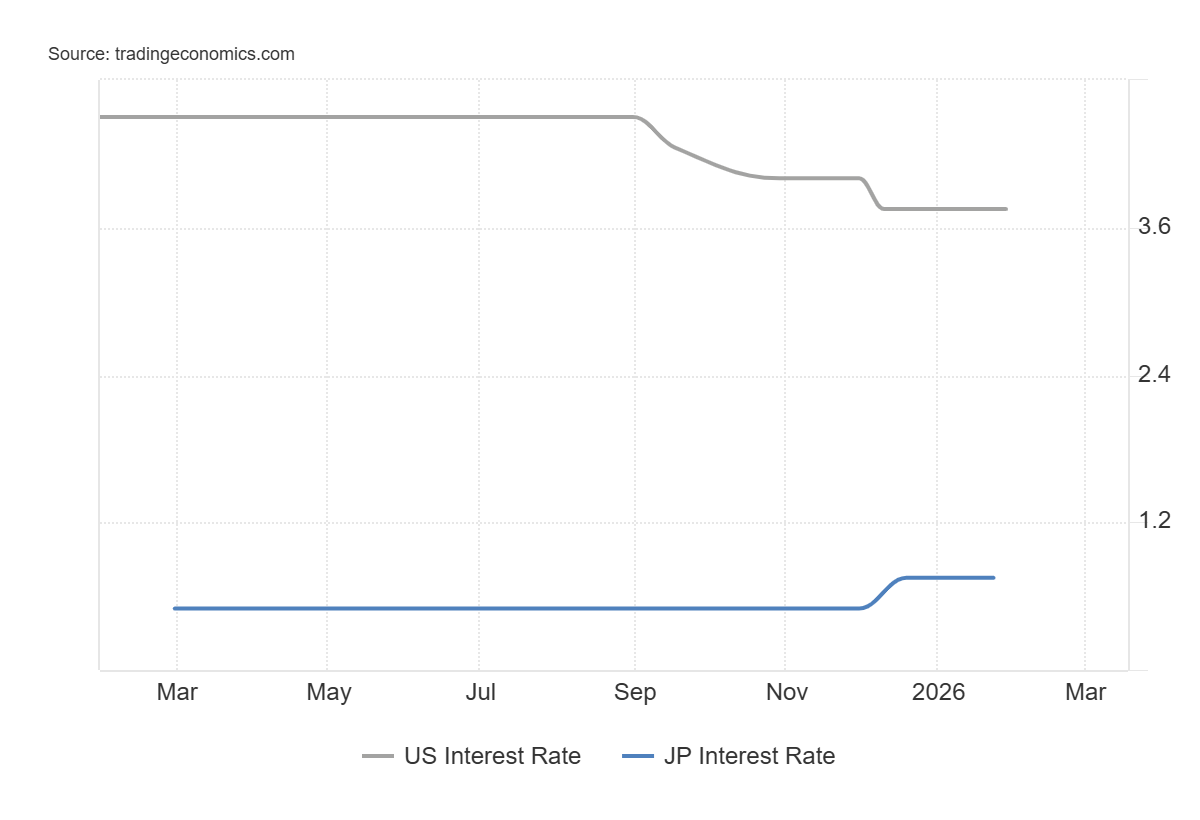
What now seems relevant is that markets may be anticipating that the Bank of Japan will keep rates low for a longer period. This becomes even more significant considering that while Japan maintains its rate at 0.75%, the United States holds a rate near 3.75%, with no immediate changes expected. This rate differential continues to favor dollar-denominated assets, as US fixed-income investments are perceived as more attractive than those denominated in yen. With a lower probability of the Bank of Japan adopting a more aggressive stance, this differential could persist in the coming months, consistently pressuring the yen’s strength.
Source: TradingEconomics
Additionally, recent reports indicate that China has imposed new restrictions targeting Japanese companies linked to technology and strategic materials sectors. This could maintain economic uncertainty in Japan and weaken growth expectations, potentially supporting a more accommodative monetary stance from the central bank and reducing the attractiveness of yen-denominated fixed income in the short term.
In this context, comments pointing toward a more relaxed, growth-focused Bank of Japan could continue weakening the yen’s appeal, allowing the US dollar to regain ground and sustaining a bullish dynamic in USD/JPY in the coming sessions.
The dollar recovers ground
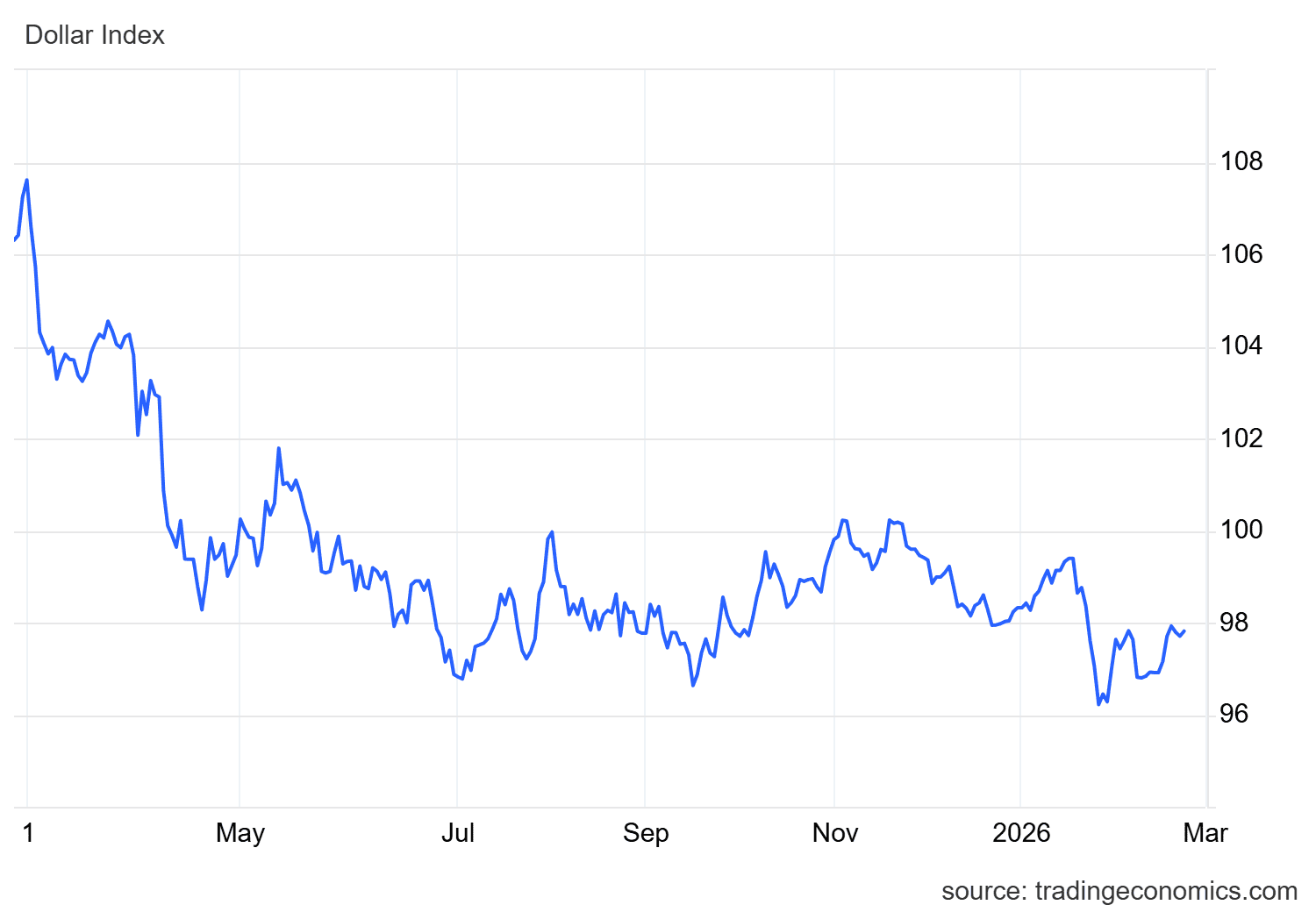
In recent sessions, the DXY index, which measures the strength of the US dollar against other major currencies, has moved above the 97.5 level, maintaining a positive short-term slope. This reflects a consistent recovery of the dollar against its key peers.
Source: TradingEconomics
If the dollar index manages to sustain moves above the 98 level, it could consolidate renewed demand for US dollars, potentially pressuring currencies such as the yen and favoring stronger buying pressure in USD/JPY in the short term.
Technical outlook for USD/JPY
Source: StoneX, Tradingview
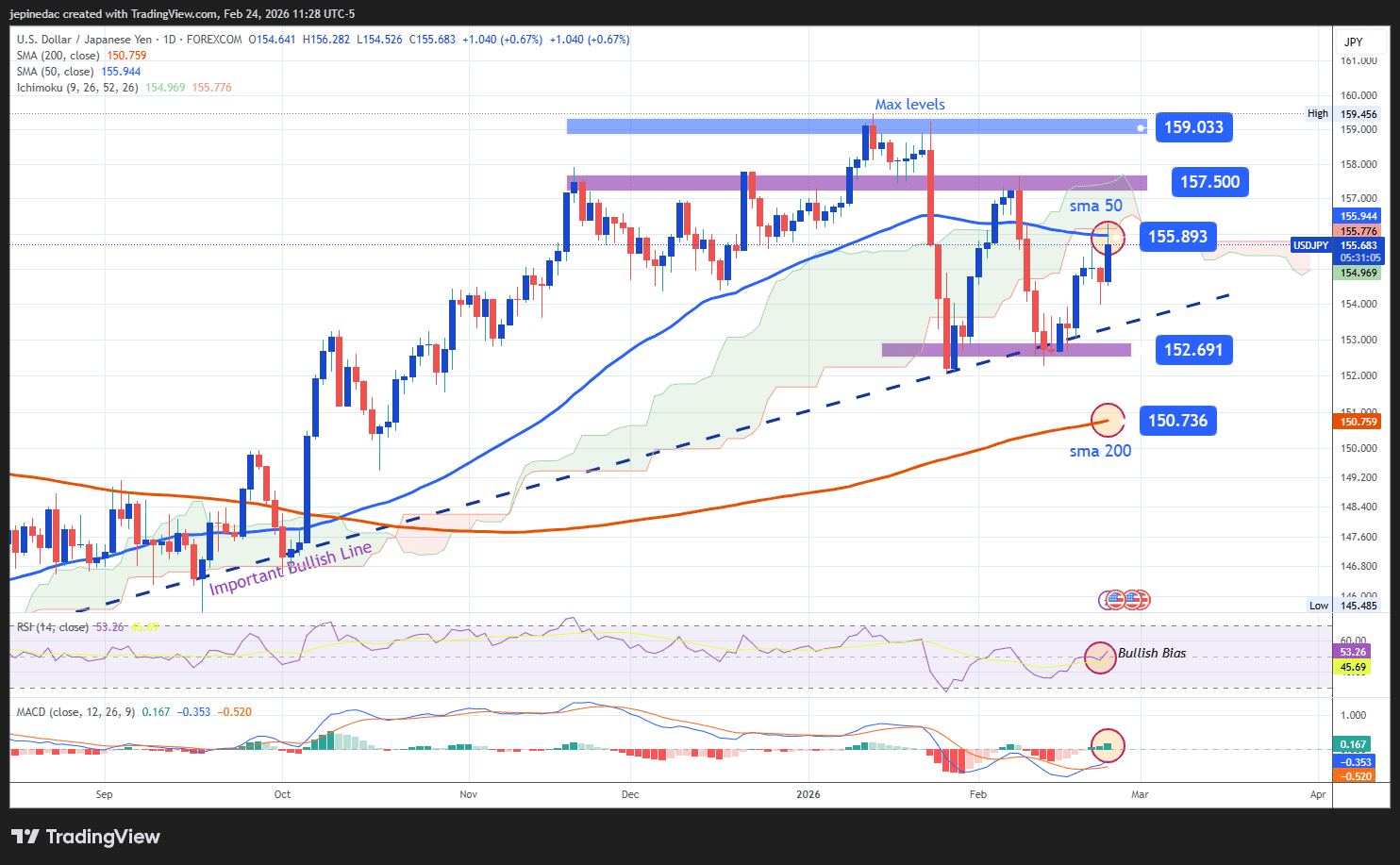
- Bullish trend remains relevant: For several months, USD/JPY has maintained a consistent buying bias, forming a broad upward trendline that continues to dominate price movements. So far, no correction has been deep enough to threaten this technical structure, meaning the trendline remains the key pattern to monitor. However, a recent phase of neutrality has emerged within the trend, and if buying pressure fails to strengthen, a clearer period of short-term indecision could develop.
- RSI: The RSI remains above the neutral 50 level, indicating that average buying momentum over the past 14 sessions continues to dominate. If the indicator keeps advancing, it could reinforce stronger bullish pressure in USD/JPY.
- MACD: The MACD histogram remains above the zero line, reflecting that short-term moving averages maintain bullish dominance. If this dynamic persists, the buying bias could remain relevant in upcoming sessions.
Key levels:
- 157.500 – Key resistance: Area of recent highs located above the 50-period moving average. Sustained moves above this level could consolidate a dominant buying bias and extend the broader upward trend in the coming weeks.
- 155.893 – Near-term barrier: Level marked by the 50-period moving average, representing the most consistent neutrality zone observed in recent weeks. If price fails to move decisively away from this level, a short-term sideways range could develop.
- 152.691 – Main support: Level corresponding to recent lows. Moves below this zone could put the current bullish structure at risk and open the door to a more relevant selling bias in the coming trading sessions.
Written by Julian Pineda, CFA, CMT – Market Analyst
Follow him on: @julianpineda25