
As the week progresses, the yen has once again shown renewed bullish strength in the short term, which is reflected in USD/JPY price action, with the pair declining by at least 0.5% in favor of the yen. The selling pressure that has begun to dominate the pair is partly driven by the improvement in market confidence, supported by the relative calm surrounding the Middle East conflict.
This environment has started to reduce the demand for the U.S. dollar as a safe-haven asset in the short term, allowing the yen to gain ground more consistently. If this dynamic persists, it is possible that downward pressure in USD/JPY will remain relevant in the coming sessions.

Demand for dollars weakens
The situation in the Middle East appears to have taken a more positive direction for markets. Despite the ongoing naval blockade over Iran in the Strait of Hormuz by the United States, both sides are still considering resuming negotiations to extend the initial two-week ceasefire agreement.
Both parties are preparing to restart dialogue in the coming days, which is currently being interpreted as a meaningful step toward de-escalation, a factor that has been key in recent weeks.
Market sentiment has improved, reducing previous uncertainty. This renewed attempt at negotiation is seen as a positive step toward a more stable resolution in the short term. As a result, there has been a notable reduction in demand for the U.S. dollar as a safe-haven asset, weakening its recent performance.
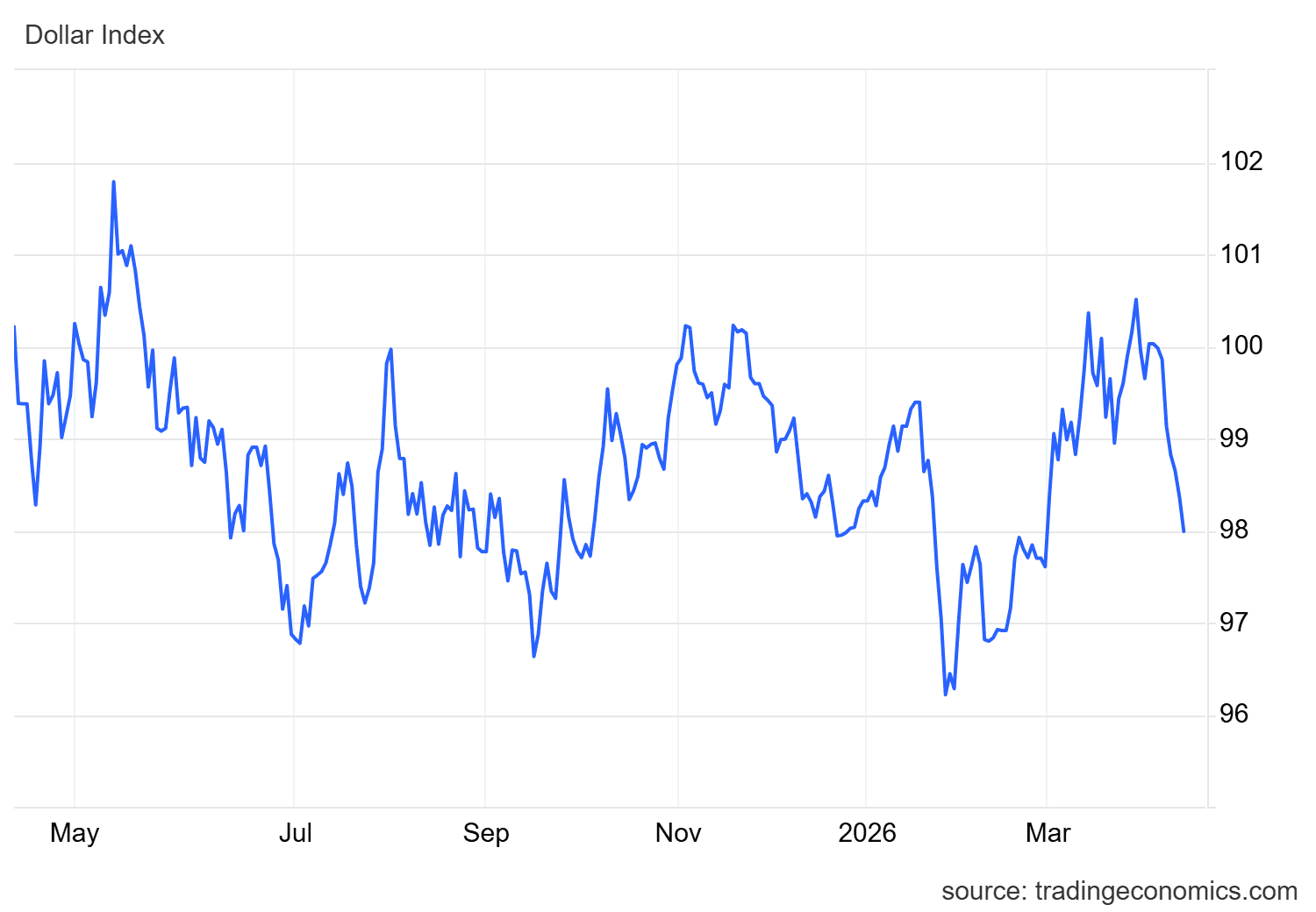
This is clearly reflected in the DXY index, which has declined sharply from the 100 level to below 98 within just a couple of sessions. This level had not been seen since early March, and the move highlights a loss of demand for the dollar as calm conditions return to financial markets.
Source: TradingEconomics
This dynamic is particularly important for the Japanese yen, as dollar weakness has allowed it to recover ground consistently. If this trend continues, USD/JPY may continue to show relevant selling pressure, as long as no new escalation in the Middle East conflict occurs.
Bond markets begin to favor Japan
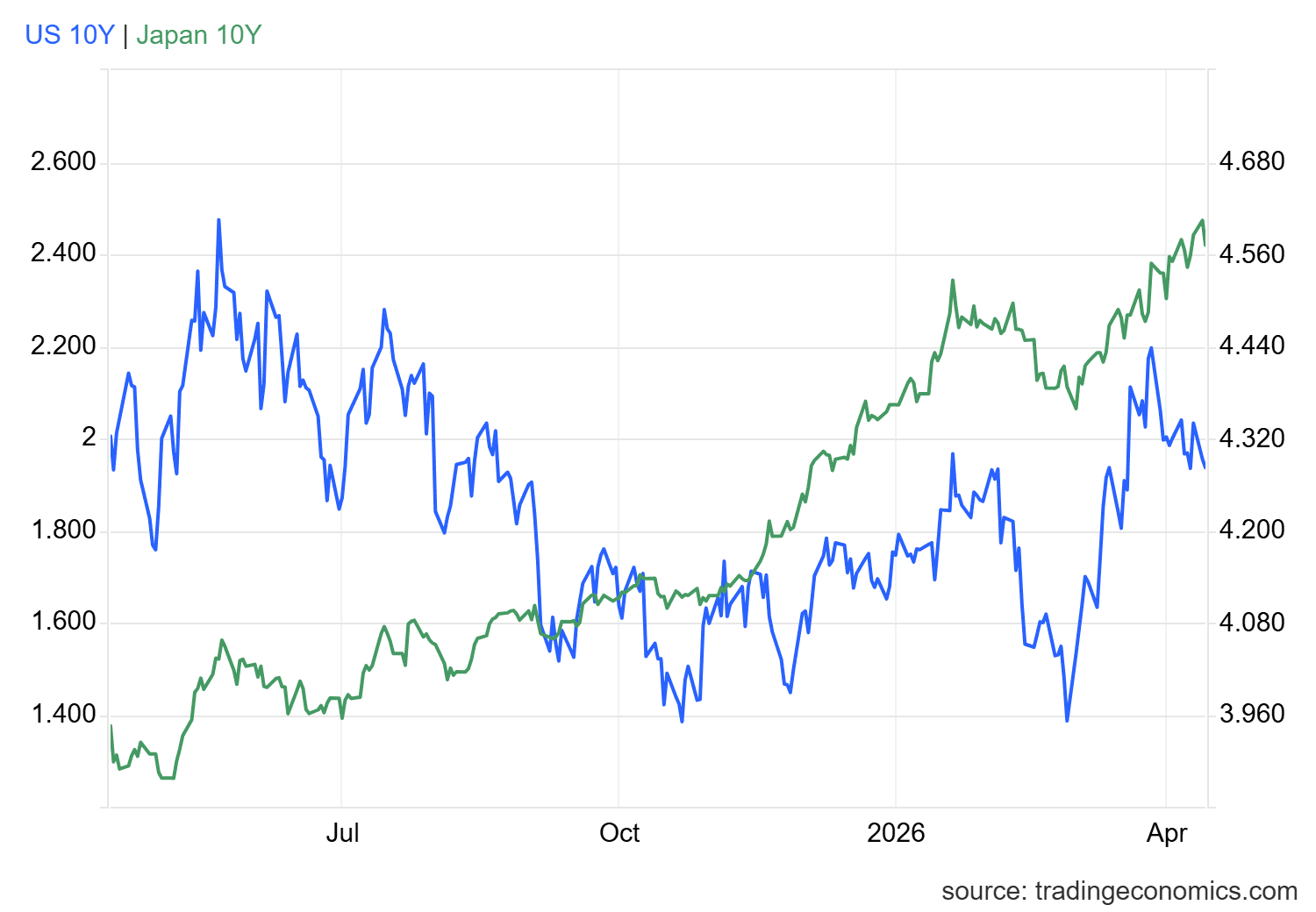
The behavior of bond yields in the U.S. and Japan has started to show important divergences in the short term. In Japan, 10-year bond yields continue to rise steadily, moving above 2.4% and approaching 2.5%, reaching yearly highs and maintaining a clear upward trend.
Meanwhile, U.S. Treasury yields have shown a gradual weakening, with a downward slope becoming more dominant in recent sessions. After reaching levels near 4.5%, yields are now approaching 4.2%, reflecting a loss of momentum.
Source: TradingEconomics
This shift is relevant because it suggests that the interest rate differential between both economies is narrowing, which may reduce the relative attractiveness of dollar-denominated assets. At the same time, stable and rising yields in Japan may begin to attract more interest in yen-denominated investments.
If this dynamic persists, it could continue to support downward pressure in USD/JPY, as markets adjust their expectations in response to these changes in yields.
USD/JPY Technical Outlook
Source: StoneX, Tradingview
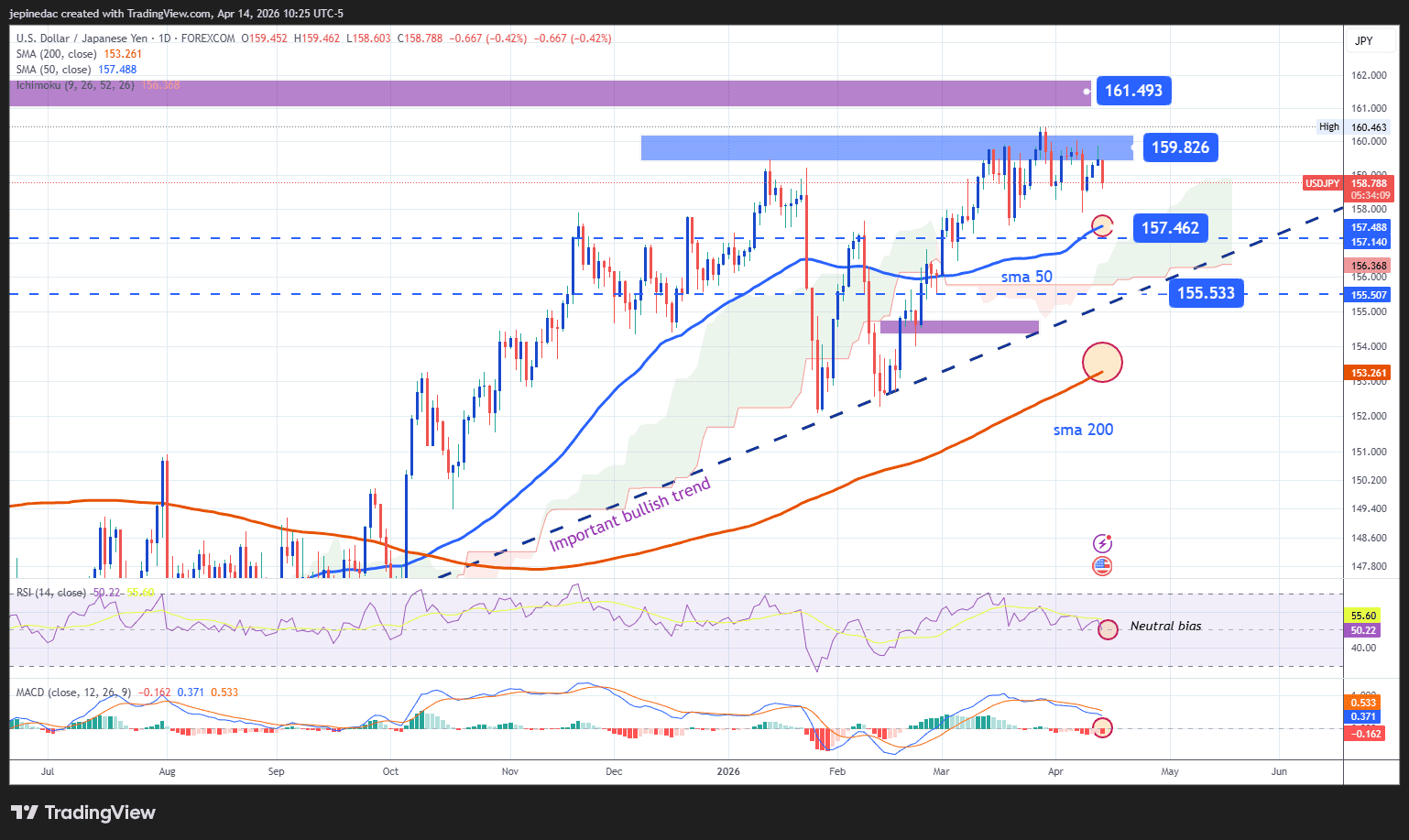
- There is still room before breaking the long-term uptrend: Despite recent declines, USD/JPY remains far from invalidating its long-term upward trendline, which continues to be the dominant structure in the chart. Although selling pressure has increased in the short term, it is still not strong enough to confirm a more structural trend reversal. As long as key levels are not broken, the upward trend will remain the primary reference in the medium term.
- RSI: The RSI is moving toward the 50 neutral level, reflecting a balance between buying and selling momentum over the last 14 sessions. This suggests that if selling pressure does not consolidate, a more consistent phase of indecision could develop in the short term.
- MACD: The MACD shows a similar behavior, with the histogram fluctuating around the zero line. This indicates that short-term moving average momentum remains balanced, reinforcing the idea of neutral conditions in the pair’s price action.
Key levels:
- 159.826 – Key resistance: A recent high and key barrier for upward movements. A break above this level could reactivate a bullish bias and support continuation of the uptrend.
- 157.462 – Near-term barrier: A neutral level aligned with the 50-period moving average. Moves toward this level could reinforce a short-term bearish bias.
- 155.53 – Key support: A level aligned with recent lows and the base of the long-term trendline. A move toward this area could begin to challenge the current structure and potentially lead to a more significant trend shift in the coming weeks.
Written by Julian Pineda, CFA, CMT – Market Analyst
Follow him on: @julianpineda25