
USD/MXN is approaching the end of the week with a consistent bullish bias, as price action has gained more than 1.00% during today’s session, moving against the Mexican peso and in favor of the U.S. dollar in the short term. This upward pressure has followed the Bank of Mexico’s decision to continue along a path of lower interest rates, which has reduced the peso’s attractiveness in the short term. If this dynamic persists, buying pressure in USD/MXN could remain relevant in the coming sessions.

Banxico decision day
During today’s session, the Bank of Mexico delivered its interest rate decision, surprising the market with a 25-basis point cut, taking rates from 7.00% to 6.75%. This move marks a shift in the central bank’s outlook, after keeping rates unchanged since December 2025, and begins to narrow the rate differential with other central banks such as the Federal Reserve, which holds rates at 3.75%.
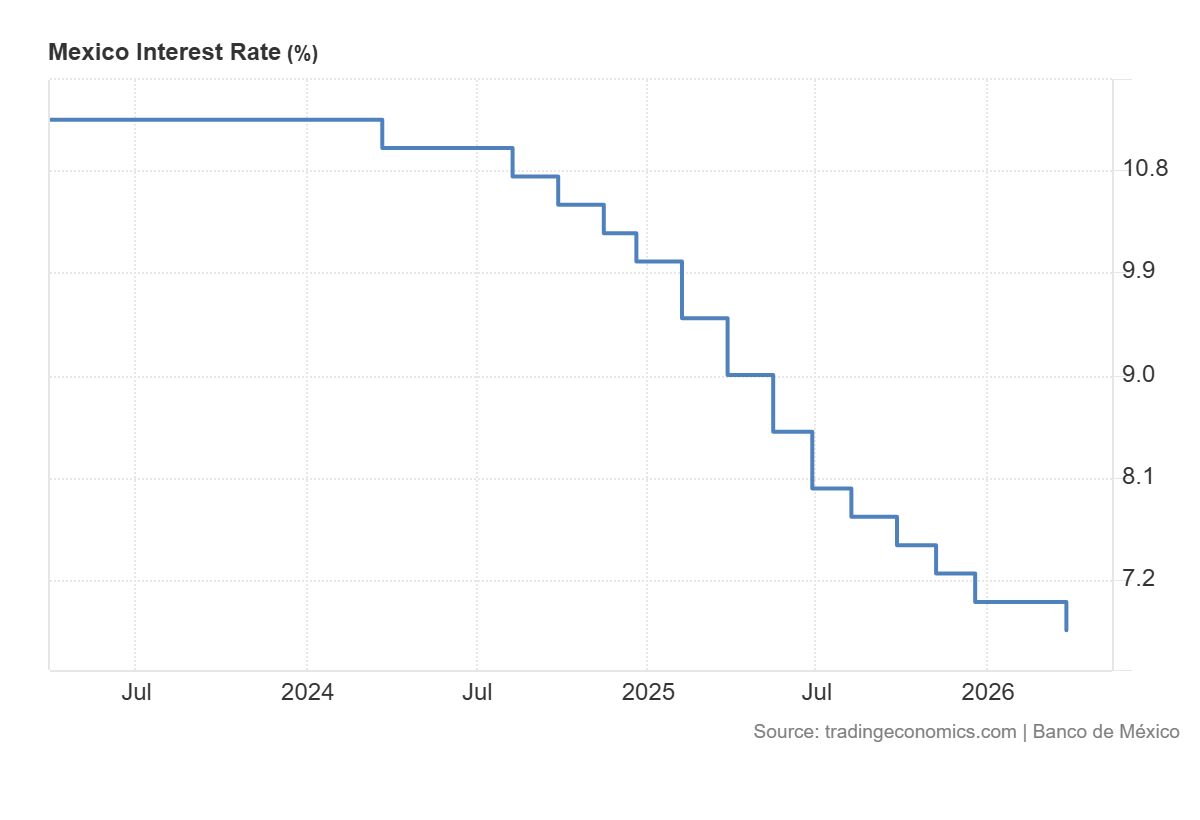
Source: TradingEconomics
This development has had a direct impact on Mexico’s bond market, as yields on 10-year government bonds have declined from around 9.40% to near 9.2% in the short term. While these yields remain above those in the United States—where 10-year yields are around 4.4%—Mexican assets are still perceived as riskier.
In this context, while U.S. bond yields remain stable or trending higher, Mexican bond yields have begun to lose appeal. This has reduced interest in peso-denominated investments and increased the preference for U.S. dollar assets in the short term.
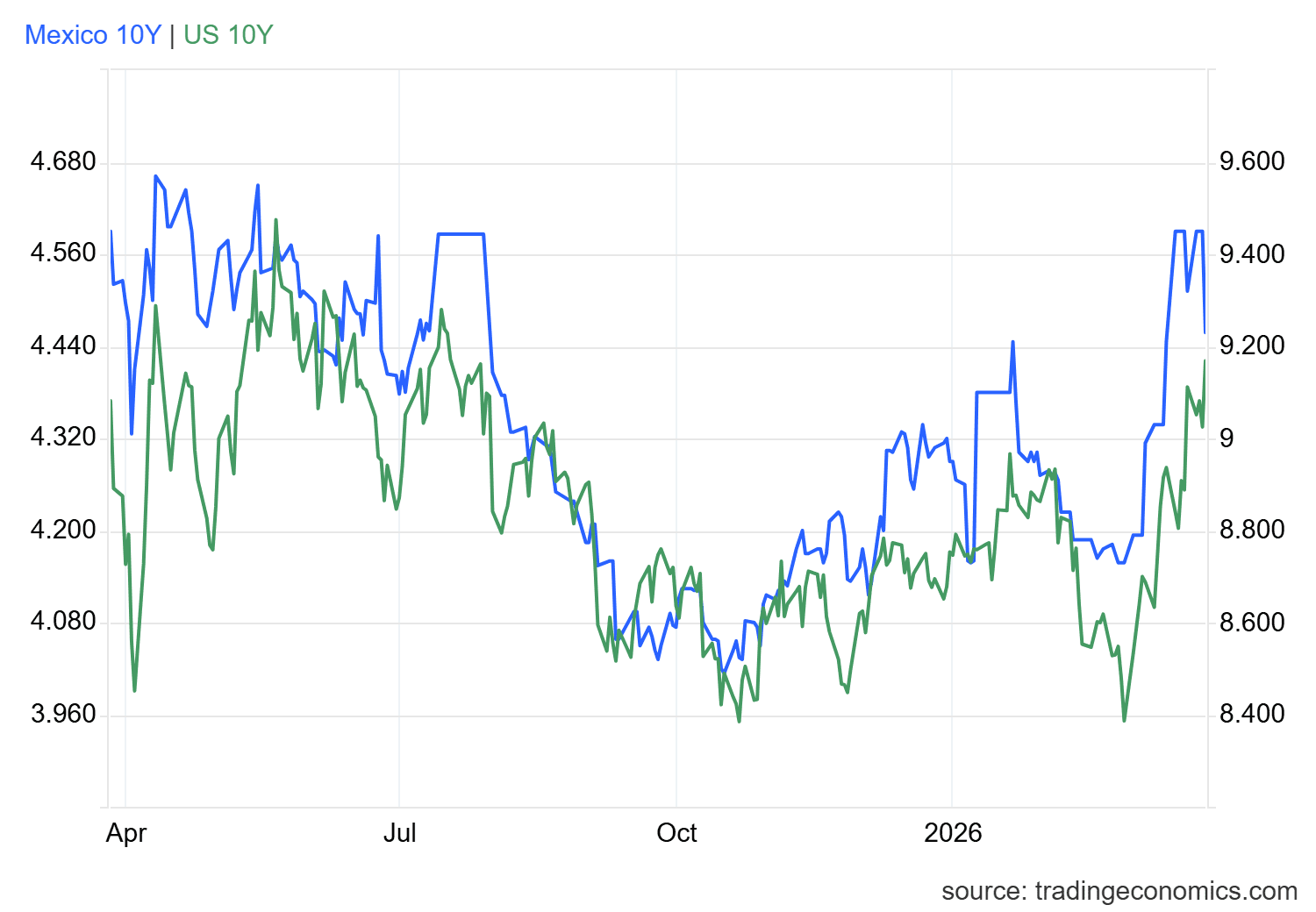
Source: TradingEconomics
For now, this rate decision may hinder the recovery in demand for the Mexican peso seen in recent weeks, as lower rates reduce its relative attractiveness compared to economies like the United States. As a result, buying pressure on USD/MXN could remain dominant in the coming sessions.
However, it is important to note that the decision was not unanimous, as some board members favored keeping rates at 7.00% due to inflation concerns. This highlights internal indecision within the central bank and does not fully confirm the continuation of a rate-cutting cycle. In this sense, if stronger inflation concerns re-emerge, this could provide some support for the peso. For now, however, the market continues to favor the U.S. dollar over the Mexican currency.
Is the U.S. dollar gaining strength again?
Beyond domestic monetary policy, the ongoing conflict in the Middle East remains a key factor, with recent developments suggesting that a peace agreement is unlikely in the short term, especially after Iran rejected proposals from the United States.
In this environment, the U.S. dollar has regained prominence as a safe-haven asset, as markets seek liquidity in times of uncertainty. This is reflected in the DXY index, which measures the strength of the dollar against its major peers, and has shown a consistent upward move, approaching once again the 100 level.
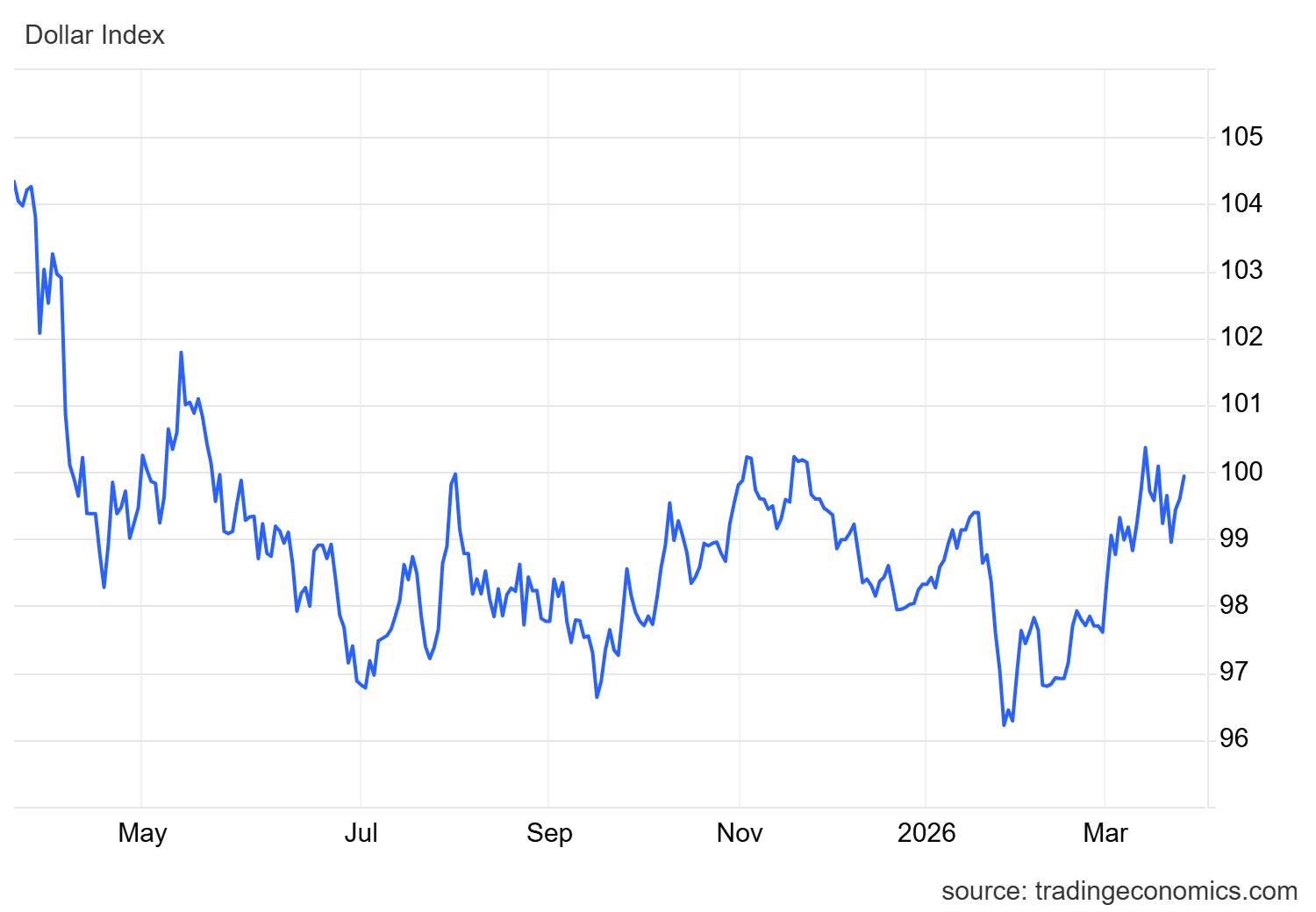
Source: TradingEconomics
This factor is also important, as stronger demand for the dollar may continue to weigh on currencies such as the Mexican peso. If dollar strength persists, it could maintain sustained buying pressure in USD/MXN in the short term.
USD/MXN Technical Outlook

Source: StoneX, Tradingview
- The broader downtrend is under pressure: Over recent months, USD/MXN has followed a consistent downward channel formed since 2025. However, recent price recovery has begun to challenge the descending trendline, suggesting that the prevailing bearish structure may be at risk. If buying pressure continues to build, this could lead to a shift in market structure and open the door to a more dominant bullish bias in the coming weeks.
- RSI: The RSI remains consistently above the 50 level, indicating that buying momentum has started to dominate over the past 14 sessions. If this behavior continues, it could further support upward pressure in USD/MXN.
- TRIX: The TRIX indicator is trending higher and remains above the zero line, suggesting that long-term exponential moving average momentum is in bullish territory, reinforcing the case for sustained buying pressure.
Key levels:
- 18.07 – Key resistance: A level of recent highs aligned with the 200-period moving average and the 23.6% Fibonacci retracement. A break above this area could invalidate the bearish structure and confirm a dominant bullish bias.
- 17.50 – Current barrier: A neutrality zone aligned with the 50-period moving average. Price action around this level could reinforce a phase of indecision or lead to the formation of a sideways range.
- 17.10 – Key support: A level not seen since April 2024. A sustained break below this zone could intensify the bearish bias and reinforce the downward trend in USD/MXN over the coming weeks.
Written by Julian Pineda, CFA, CMT – Market Analyst
Follow him on: @julianpineda25