



EUR/USD Analysis: Euro Starts the Week Showing Weakness
Following the strong recovery of the euro against the US dollar last week, slight indecision has reemerged on the EUR/USD chart. This is reflected in early week trading fluctuations, which now show a price decline of around -0.2%, indicating modest short-term strength for the dollar.
Share this:

Following the strong recovery of the euro against the US dollar last week, slight indecision has reemerged on the EUR/USD chart. This is reflected in early week trading fluctuations, which now show a price decline of around -0.2%, indicating modest short-term strength for the dollar. For now, this shift is paving the way for a neutral scenario following the recent bullish pressure. This pause may be tied to the lingering threat of higher interest rates in the United States and a potential rebound for the greenback after its recent depreciation. If these factors persist, consolidation could become the dominant theme in the coming sessions.


Is the FED Still Relevant?
Last week was crucial for the US monetary policy outlook. The Federal Reserve announcement featured comments that remain focused on the central bank's 2.00% inflation target, an objective yet to be achieved and heavily emphasized during the meeting. However, statements from FED Chair Kevin Warsh failed to confirm an overly aggressive stance for the coming months. Markets, anticipating more decisive signals, triggered a pronounced drop in dollar demand during those sessions.
The context now looks slightly different following the central bank announcements. A couple of sessions ago, the core PCE Price Index for June was released. This is the official inflation gauge tracking price changes for consumed goods and services while excluding volatile items like food and energy. The June data showed the index settling around 3.3%. Although slightly below the year's peak of 3.4%, it has yet to show a significant enough decline to establish a clear downward trend in overall inflation. To some extent, this highlights lingering inflationary pressures still embedded in the economy.
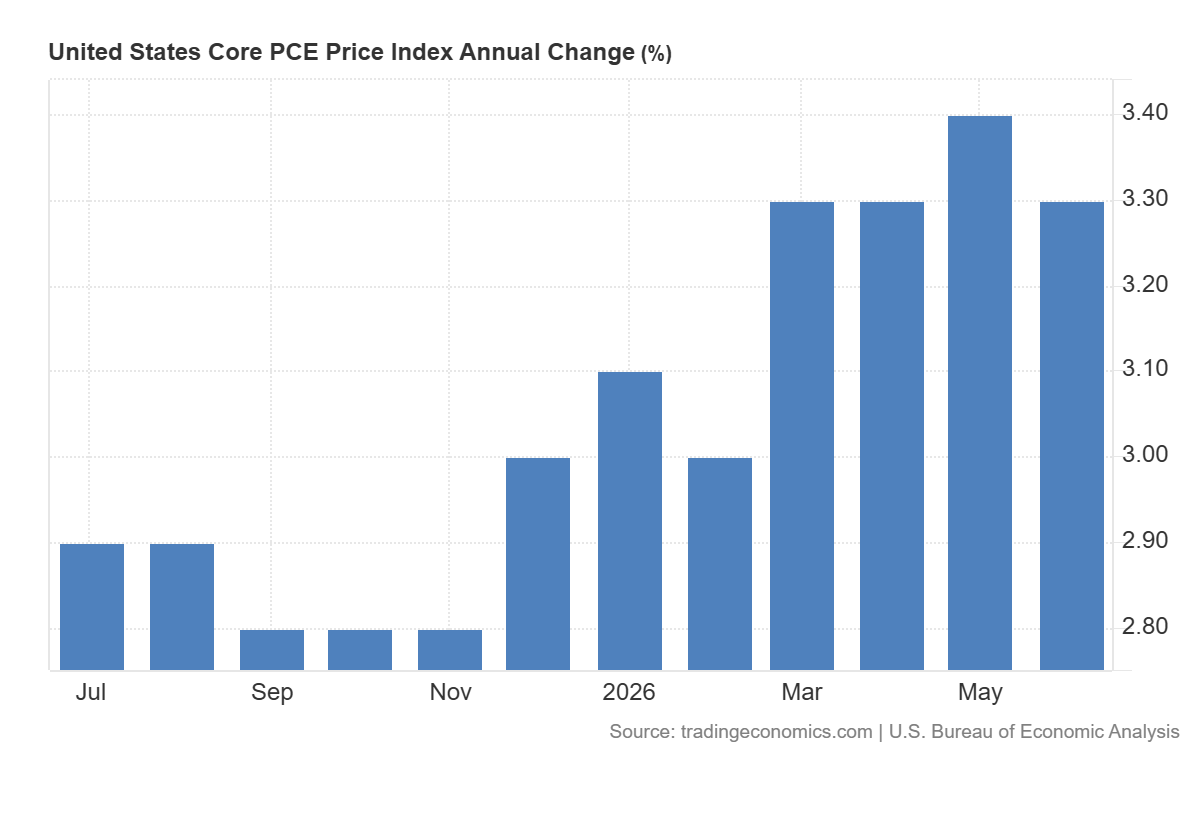
Source: TradingEconomics
This data release likely played a key role in shaping expectations for the Federal Reserve September decision. A week ago, the probability according to CMEGROUP of a potential rate hike on September 16 to a new benchmark zone of 4.00% in the United States stood at around 55%. Today, following the inflation data, that probability has climbed to nearly 62%. This underscores that the market may still be pricing in a possible rate increase due to persistent inflationary pressures expected to linger in the US economy over the coming months.
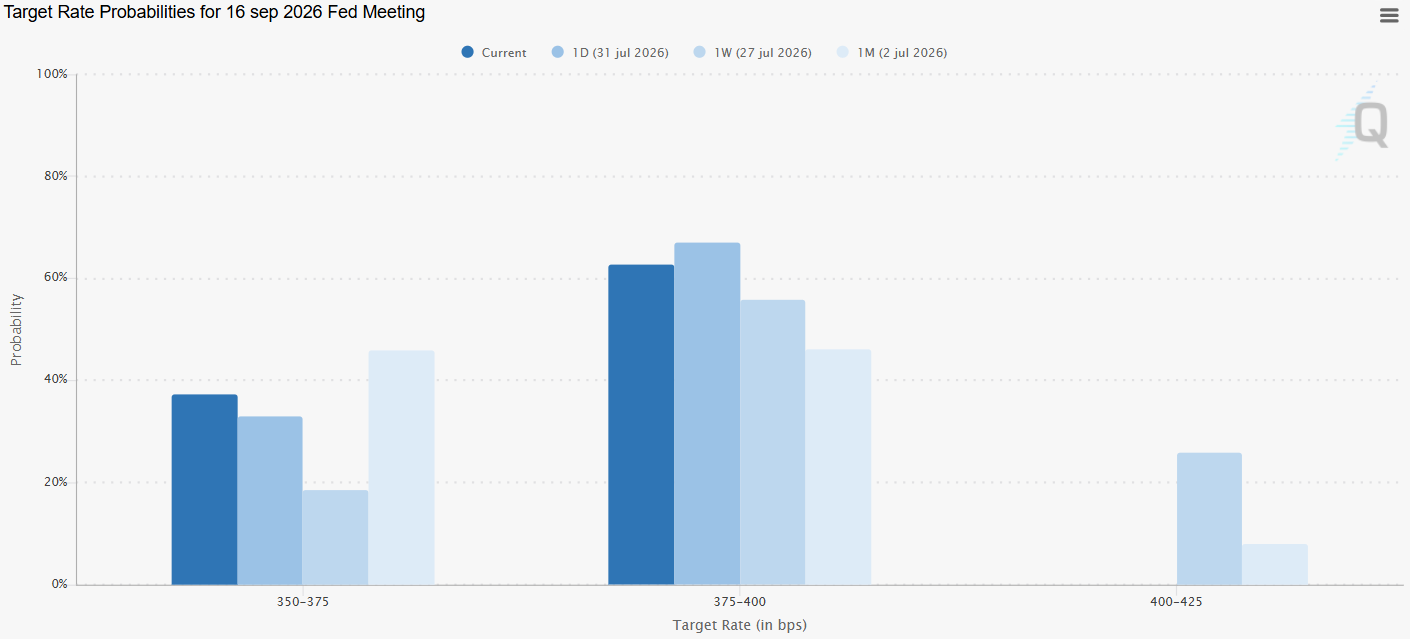
Source: CMEGROUP
Taking all this into account, the prospect of the US central bank potentially raising interest rates in September could be helping the US dollar hold its ground in the short term. This is particularly noticeable after last week's loss of momentum, which allowed the euro to steadily regain ground. If the probability matrix for the FED continues to highlight a potential rate hike next month, dollar-denominated investments will likely remain attractive. This is because the US interest rate remains higher than Europe's, making it harder for the euro to resume its recovery easily and reinforcing a more solid phase of consolidation in the EUR/USD.
EUR/USD Technical Outlook
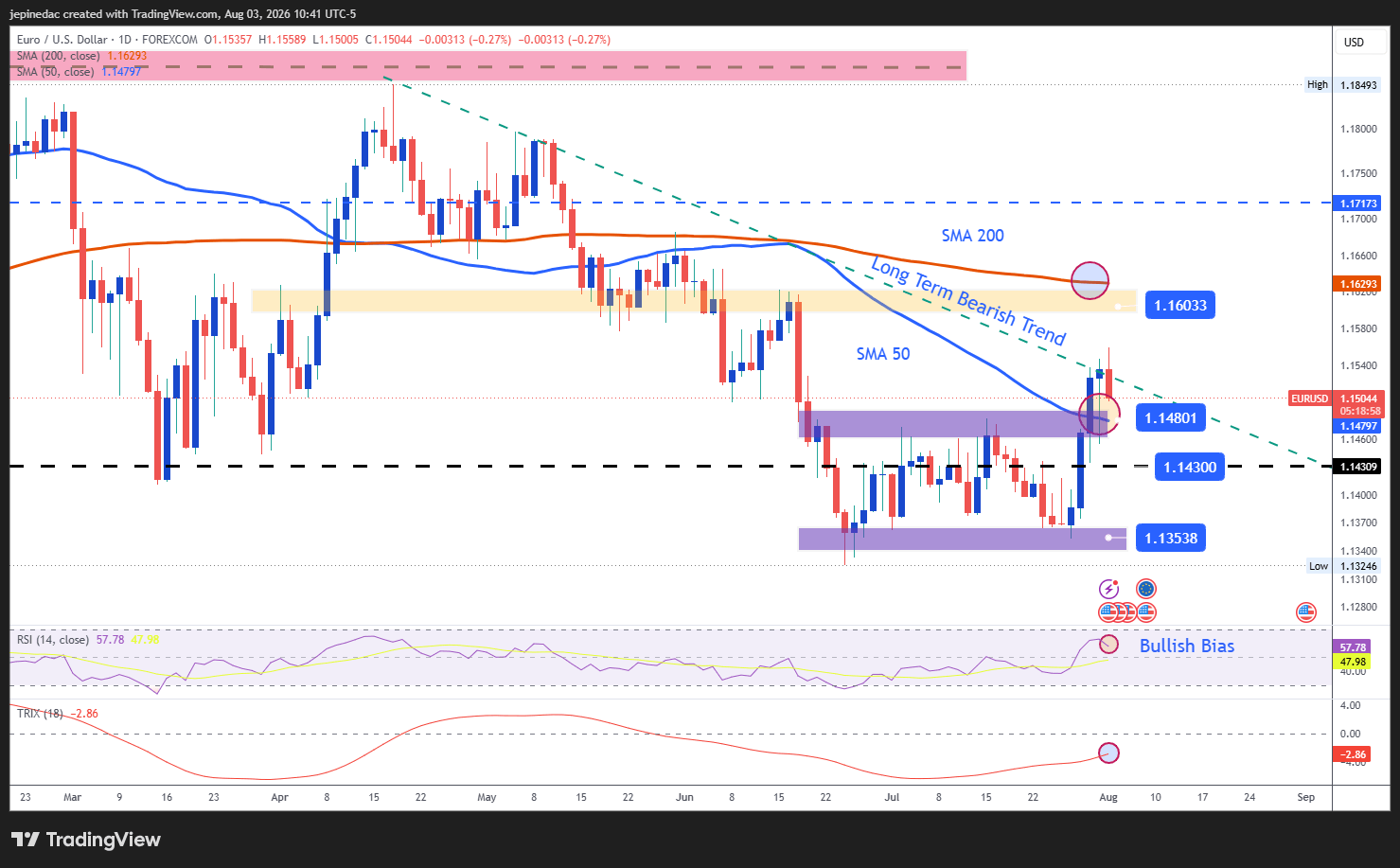
Source: StoneX, Tradingview
- Long-term trendline holds firm: For several months, average fluctuations in the EUR/USD have been defined by a long-term bearish trendline, which remains the most critical technical structure to watch. Despite the recent price recovery, buying pressure has not been strong enough to break through this line in the short term. Until a more robust bullish momentum emerges, this pattern will remain the primary technical driver for upcoming sessions.
- RSI: Currently, the RSI is consistently fluctuating above the 50 level, indicating that bullish momentum has dominated over the last 14 sessions. However, the indicator's curve has started to flatten. Over time, this could signal fading buying momentum, pointing to increased market indecision in the near term.
- TRIX: The TRIX also remains below the neutral 0 line, confirming that bearish pressure in the exponential moving averages is still relevant. If it fails to cross the neutral threshold, the broader chart will likely remain weighed down by the bearish bias that has dominated recent months.
Key Levels:
- 1.16033 (Key Resistance): This previous high acts as the most important bullish barrier above the long-term bearish trendline dominating the chart. A sustained price move and close above this level could trigger a breakout of the current technical structure, opening the door for a new short-term bullish trendline to take shape.
- 1.14801 (Nearby Barrier): This level corresponds to a significant retracement zone and coincides with the 50-period simple moving average. Failure of the price to consistently move away from this area could highlight ongoing indecision, potentially leading to the formation of a prolonged sideways channel.
- 1.14300 (Ultimate Support): This level aligns with a retracement zone from previous weeks and stands as the most crucial psychological support. A drop back below this threshold could revive a dormant bearish bias and reinforce the extension of the long-term bearish trendline as the dominant structure.
Written by Julian Pineda, CFA, CMT – Market Analyst
Follow him on: @julianpineda25



The complete CFD trading experience
Award-winning platforms, competitive spreads, low commissions and dedicated support.
We live and breathe the markets and are dedicated to helping traders realise their ambitions as we continue to set the industry bar.
Economic calendar
Web Trader platform
Our sophisticated web-based platform is packed with features.
Related articles
GBP/USD, DJIA Outlook: Support Levels Meet Oversold Risks
GBP/USD and the Dow test key support levels as rising Treasury yields, Fed rate-hike expectations and oversold momentum increase reversal risks.

USD/JPY outlook: Hawkish Fed recalibration pressures the yen
Stronger US growth momentum and rising Treasury yields are keeping USD/JPY pointed higher, even as Japanese policymakers try to limit the pressure building across domestic markets.


USD/MXN Forecast: Peso Loses Momentum Ahead of Banxico Decision
Over recent trading sessions, the Mexican peso has started to show signs of losing strength against the U.S. dollar. This can be seen in the performance of USD/MXN, which has gained more than 1.7% over the last three sessions, highlighting the dollar's renewed strength against the peso.
StoneX Europe Ltd may make third party material available on this website which may contain information included but not limited to the conditions of financial markets. The material is for information purposes only and does not contain, and should not be construed as containing, investment advice and/or investment recommendation and/or an investment research and/or an offer of or solicitation for any transactions in financial instruments; any decision to enter into a specific transaction shall be made by the client following an assessment by him/her of their situation.
StoneX Europe Ltd makes no representation or warranty and assumes no liability as to the accuracy or completeness of the information provided, nor any loss arising from any investment based on a recommendation, forecast or other information supplied. You should always seek independent advice as to your suitability to speculate in any related markets and your ability to assume the associated risks, if you are at all unsure. We are not under any obligation to update any such material. Any opinion made may be personal to the author and may not reflect the opinion of StoneX Europe Ltd.