



Gold outlook hurt by surging oil prices
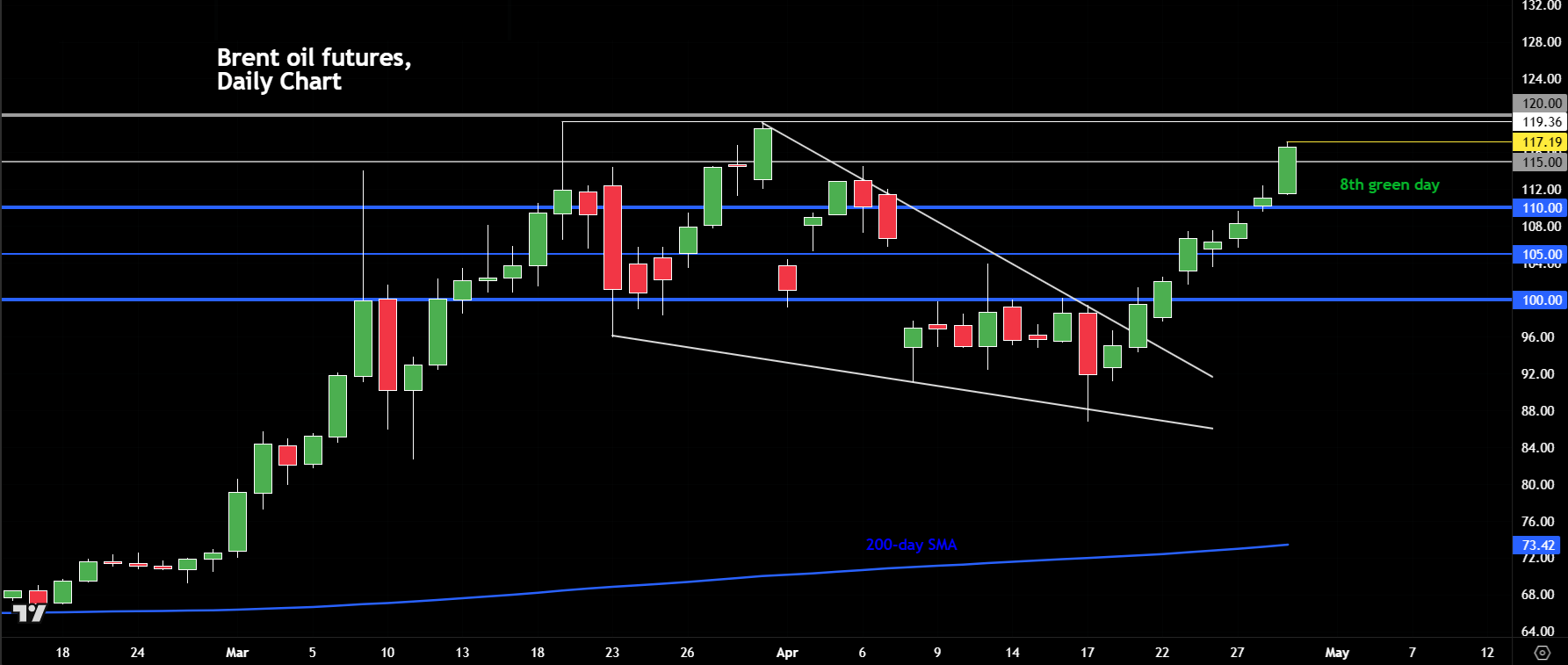
Gold was again struggling to find love, and it’s not hard to see why. Oil just won’t cool off. Brent futures have now pushed through the $115 mark, extending its run for an eighth straight session and approaching levels last seen at the height of the Middle East crisis.
Share this:

Gold was again struggling to find love, and it’s not hard to see why. Oil just won’t cool off. Brent futures have now pushed through the $115 mark, extending its run for an eighth straight session and approaching levels last seen at the height of the Middle East crisis. And that’s continuing to ripple across pretty much every major asset class. Inflation expectations are creeping higher, which is the main worry for investors who were hoping for a bit more clarity from central banks. But they won’t get that. Only Trump and Iran can rescue markets, but the two sides are not getting any closer to a deal and oil is reflecting that. Against this backdrop, the gold outlook is not looking so bright right now.
Why is gold struggling?
Well at the heart of it, you’ve got a strengthening dollar, rising yields, and a market that’s steadily walking back on any expectations of further rate cuts from the Federal Reserve. Put those together, and it creates a fairly uncomfortable environment for precious metals. This is also outweighing supportive factors such as continued central bank buying and haven demand. Those factors should support prices in the longer run, but for now, the short-term gold outlook is muddy to say the least.
Oil remains firmly in the driving seat here. The situation around the Strait of Hormuz continues to keep traders on edge, and until there’s any meaningful de-escalation, the bias in crude looks skewed to the upside. Brent futures were pushing beyond $117 at the time of writing, in a clear sign that supply risks are very much the main worry. And with prices edging back towards the highs seen during the peak of Middle East tensions, the pressure is building on all sides to find some sort of resolution. Yet, the two sides remain far apart.
Stagflation concerns are on the rise meanwhile, as higher oil prices feed straight into inflation and consumption – boosting the former and weighing on the latter. Fuel, transport, logistics — it all adds up. And as those costs climb, so do bond yields. That’s been one of the more consistent themes over the past week, and it’s a key reason why gold has come under renewed pressure. When yields rise, the appeal of non-yielding assets like gold tends to fade.
The dollar is another large piece of the puzzle. It’s been quietly regaining strength, helped in part by the US being less exposed to the oil shock compared to major importers in Europe and Asia. Add to that the shift in expectations around Fed policy, and you’ve got a fairly solid bid underpinning the greenback.
Don’t expect any fireworks from the Fed
Attention now turns to the Federal Reserve’s latest decision. Rates are expected to remain unchanged, sitting within that 3.5% to 3.75% range, so the real focus will be on the messaging. Markets will be hanging on every word from Jerome Powell, especially given the ongoing debate around whether inflation is truly “transitory” or something a bit more persistent.
There’s also a busy earnings slate to contend with. Several big tech names are reporting their results, and their outlooks could have a broader impact on market sentiment. If we see any wobble in equities off the back of those results, it could drive a fresh wave of demand into the dollar. And if that happens, gold is unlikely to benefit.
Technical gold outlook: Downside momentum building
From a technical standpoint, the gold outlook isn’t looking particularly good either. The metal has now dropped for a second consecutive week and broken below some key support levels. The move through the $4,650 area stands out — that had been holding things together for a while until yesterday.
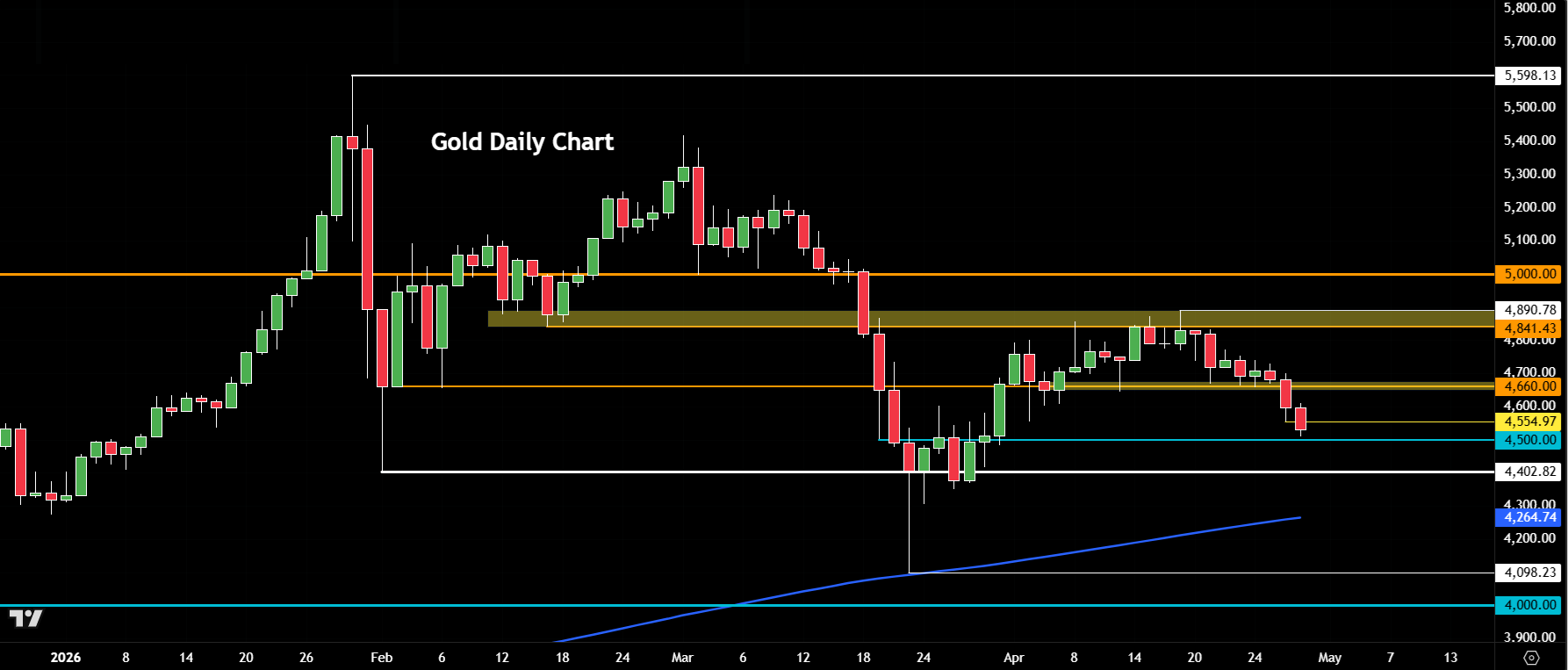
With that level gone, the downside starts to open up a bit more. The next areas to watch on gold spot prices sit around $4,500, now just a spitting distance away, followed by the $4,400 region if selling pressure really gathers pace. Further out, the $4,000 level still represents a more significant level, but I wouldn’t rule out price getting there soon.
However, should we see a sudden change in the current situation regarding Strait of Hormuz, then we could see a nice recovery. For now, any attempt at a rebound is likely to run into resistance fairly quickly. The $4,645 to $4,660 zone — essentially the old support — now looks like a cap on the upside. Yesterday’s low of $4,555 is the initial resistance to watch.

-- Written by Fawad Razaqzada, Market Analyst
Follow Fawad on Twitter @Trader_F_R

The complete CFD trading experience
Award-winning platforms, competitive spreads, low commissions and dedicated support.
We live and breathe the markets and are dedicated to helping traders realise their ambitions as we continue to set the industry bar.
Economic calendar
Web Trader platform
Our sophisticated web-based platform is packed with features.
Related articles

Gold Update: XAU/USD Remains Under Pressure Even After the NFP Report
As the trading week comes to an end, weakness around gold price action remains evident in the short term. This can be seen in the performance of the past two sessions, where the metal has declined by approximately 0.3%. Although the move has not been particularly aggressive, it highlights that buying pressure continues to struggle to regain control of the market.


USD/CAD forecast: rally could accelerate above June highs at 1.4250
USD/CAD recovered quickly after weaker US jobs data, keeping the bullish trend in focus. A move above the June highs could accelerate the rally as inflation keeps the Fed under pressure.

Dow Jones Slide Shows What Rate Hike Bets Mean for Stocks
The Dow Jones support breakdown shows rising bond yields and rate hike bets hitting U.S. stocks while tech giants prop up the Nasdaq.
StoneX Europe Ltd may make third party material available on this website which may contain information included but not limited to the conditions of financial markets. The material is for information purposes only and does not contain, and should not be construed as containing, investment advice and/or investment recommendation and/or an investment research and/or an offer of or solicitation for any transactions in financial instruments; any decision to enter into a specific transaction shall be made by the client following an assessment by him/her of their situation.
StoneX Europe Ltd makes no representation or warranty and assumes no liability as to the accuracy or completeness of the information provided, nor any loss arising from any investment based on a recommendation, forecast or other information supplied. You should always seek independent advice as to your suitability to speculate in any related markets and your ability to assume the associated risks, if you are at all unsure. We are not under any obligation to update any such material. Any opinion made may be personal to the author and may not reflect the opinion of StoneX Europe Ltd.