

Over the past five trading sessions, USD/CAD price action has maintained a consistent bearish bias, leading the pair to post a short-term decline of close to 1% as the final market oscillations of 2025 approach. Selling pressure has remained firm, largely because indecision around U.S. interest rate policy has allowed a structural weakness in the U.S. dollar to persist. This environment has supported a steady appreciation of the Canadian dollar. As long as this perception of U.S. dollar weakness remains in place, USD/CAD is likely to continue exhibiting a dominant bearish bias over the coming trading sessions.

The Federal Reserve Continues to Show Indecision
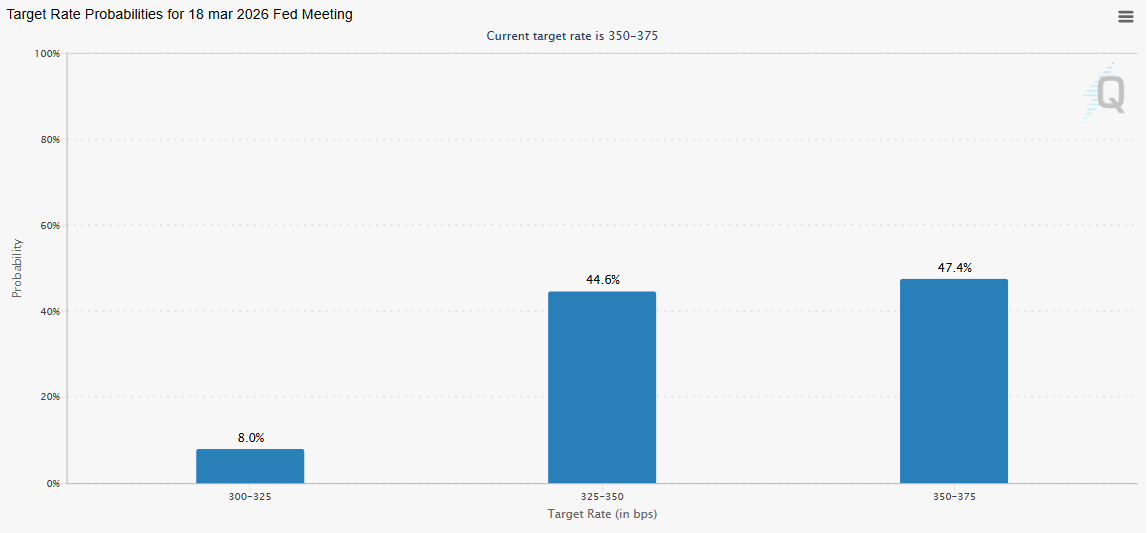
As the end of 2025 approaches, the Federal Reserve’s probability outlook continues to reflect uncertainty heading into the first quarter of 2026. For the January 28 decision, markets assign a probability of over 80% that interest rates will remain unchanged. However, the outlook for the March 18, 2026 meeting is more divided: there is a 47% probability that rates stay at the current 3.75% level, while a probability close to 44% already prices in a 25-basis-point rate cut, which would bring the policy rate to around 3.50%. This distribution highlights the lack of a clear market consensus on the direction of U.S. monetary policy in 2026, reinforcing a broader sense of indecision surrounding the Federal Reserve.
Source: CMEGROUP
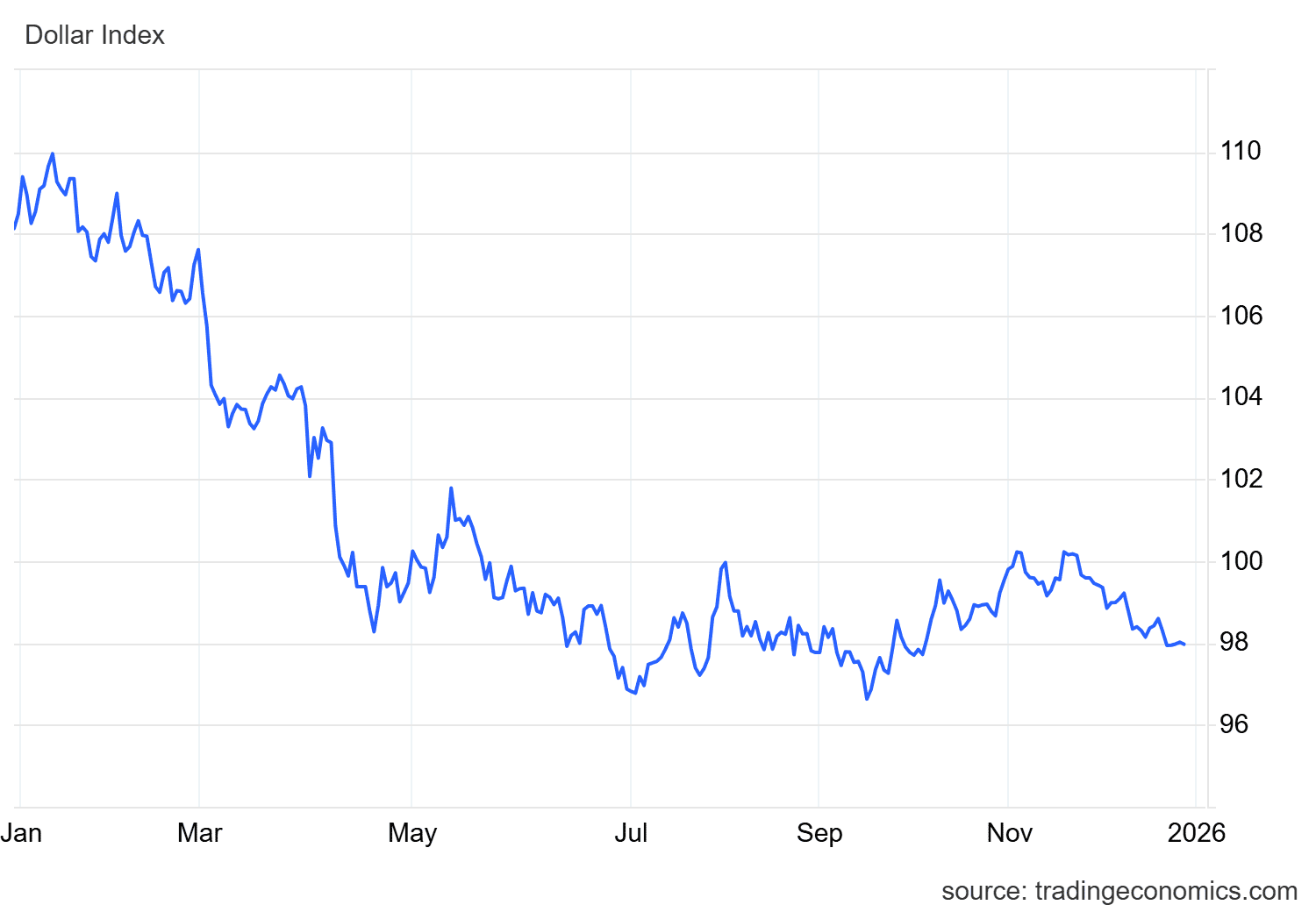
This uncertainty around U.S. monetary policy has begun to weigh on the strength of the U.S. dollar, as expectations of lower rates reduce the attractiveness of dollar-denominated investments and limit the formation of solid short-term demand for the currency. This weakness has been clearly reflected in the DXY index, which measures the dollar’s strength against other currencies. In recent sessions, the DXY has moved away from the 100-point area and is now trading below 98, levels not seen since October 2025, confirming a significant weakening of the U.S. dollar toward year-end.
Source: TradingEconomics
Canada, meanwhile, maintains a neutral interest rate outlook heading into 2026. For its next policy decision, scheduled for January 28, the Bank of Canada is expected to keep rates unchanged at the current 2.25% level, with no meaningful surprises anticipated by the market. Inflation data have not shown a sufficiently sharp slowdown to justify rate cuts during the early months of 2026.
When contrasting a hesitant Federal Reserve, which continues to exert downward pressure on the U.S. dollar, with a more stable stance from the Bank of Canada, this dynamic appears to be supporting a strengthening Canadian dollar toward the close of 2025. As long as this expectations gap remains in place, selling pressure is likely to continue dominating short-term USD/CAD price action.
USD/CAD Technical Outlook
Source: StoneX, Tradingview
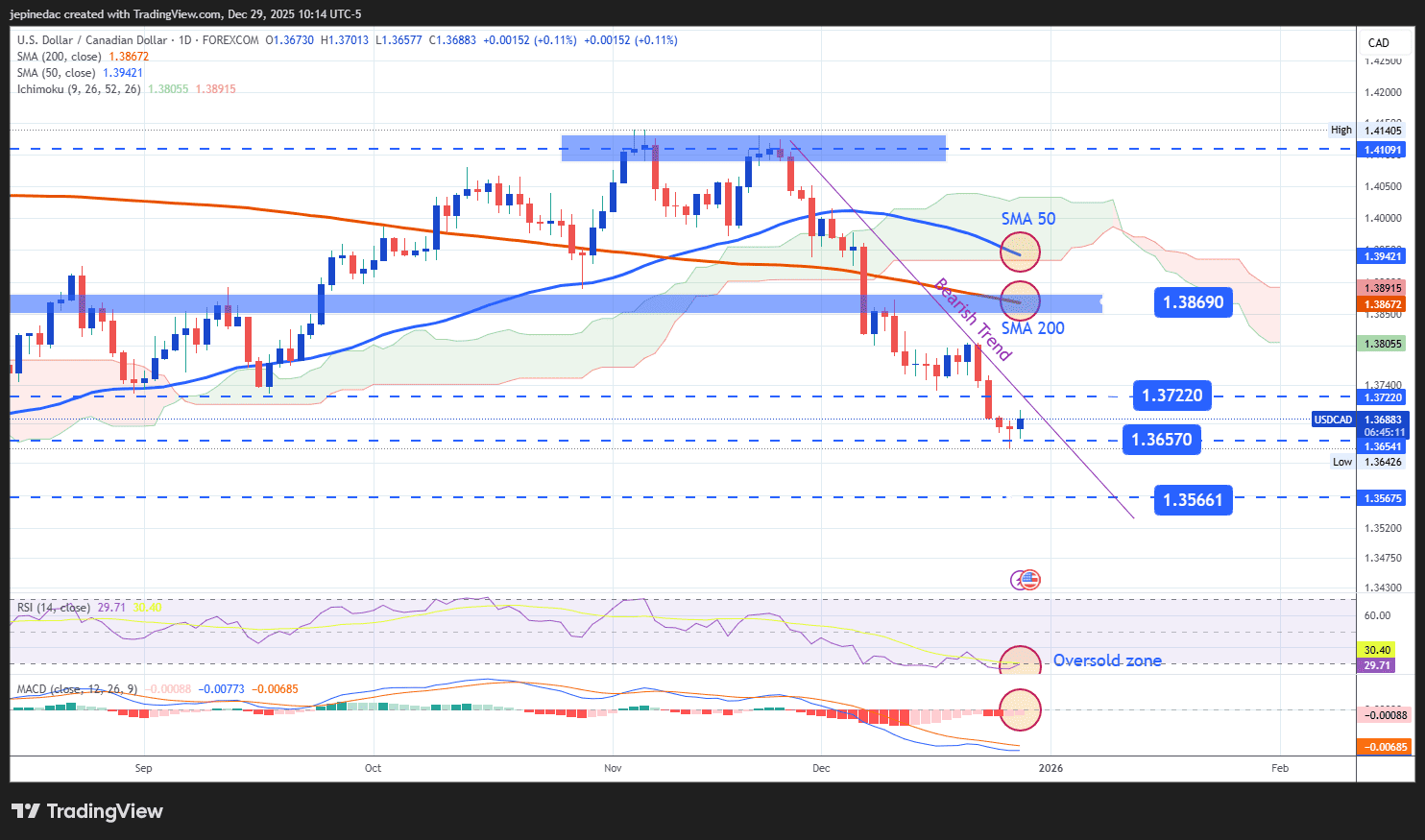
- The bearish trend remains firmly in place: Since late November 2025, USD/CAD has sustained a downward trendline, gradually pushing price closer to the year’s lows. So far, no meaningful bullish corrections have emerged that would threaten this technical structure, leaving it as the primary technical reference for the pair. However, toward year-end, a growing sense of neutrality has begun to appear on the chart, which, if sustained, could open the door to short-term bullish corrections.
- RSI: The RSI remains below the neutral 50 level, suggesting that average momentum over the past 14 sessions continues to favor sellers. That said, the indicator has reached the oversold zone, near the 30 level, which could be signaling a potential imbalance in momentum and open space for short-term corrective rebounds in USD/CAD.
- MACD: The MACD histogram is oscillating close to the neutral zero line, reflecting neutral momentum in short-term moving averages. If this lack of directional strength persists, it could facilitate the emergence of technical rebounds in the short term.
Key Levels:
- 1.37220 – Key resistance: The nearest upside barrier and a relevant reference level in the event of corrective rebounds. A sustained move above this area would put the current bearish trendline at risk and open the door to a more meaningful bullish bias toward the end of 2025.
- 1.36570 – Current barrier: A recent support level aligned with a neutrality zone observed in July 2025. Price action around this level could favor a short-term consolidation phase or sideways range.
- 1.35661 – Crucial support: This level marks the 2025 lows and stands out as the most relevant downside barrier. A break below this zone could lead to new annual lows and extend the dominant bearish trend over additional sessions.
Written by Julian Pineda, CFA, CMT – Market Analyst
Follow him on: @julianpineda25