

The GBP/USD has risen by just over 0.4% in today’s session, following recent comments from the Bank of England (BOE) suggesting that a possible rate cut may not materialize in the short term. Buying pressure has remained firm, and as expectations of maintaining higher rates in the UK increase, this pressure could gain more relevance in the pair’s movements in the sessions ahead.

BOE Monetary Policy Comments
BOE Governor Andrew Bailey stated that although markets have assumed the central bank’s rates could continue to fall gradually, there are still doubts about when and at what pace those cuts might occur. This is mainly due to the fact that inflation data in the UK has not behaved as dovishly as the bank expected in the short term.
Currently, the monetary policy committee is divided. Some members are advising caution against persistent inflationary risks, creating uncertainty about whether consensus will be reached to approve another cut at the next meeting scheduled for Thursday, September 18.
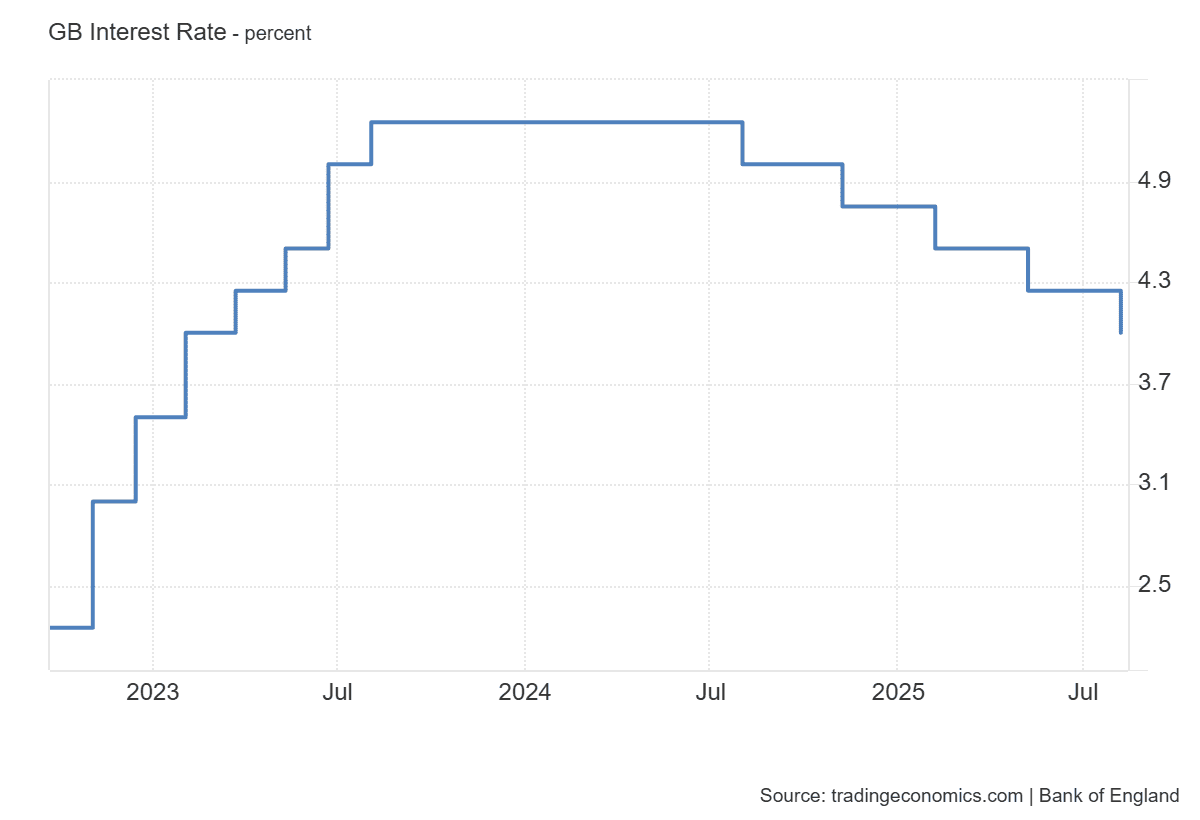
The bank’s position is tied to recent inflation trends. Since March of this year, when inflation stood at 2.6%, the annual figure has been rising steadily and reached 3.8% in July, far from the 2% target. Moreover, August inflation is expected to come in around 4%, which explains the BOE’s caution in upcoming decisions.

Source: TradingEconomics
If August inflation exceeds July’s 3.8%, the probability of another rate cut could be reduced, interrupting the trajectory of cuts the central bank had been promoting. This would limit the chances of lowering the current reference rate of 4.00%.
Source: TradingEconomics
Thus, the pound is benefiting from this possible shift in the BOE’s stance. The BOE remains one of the few major central banks keeping interest rates high, making pound-denominated investments more attractive in the short term compared to other currencies. This could generate steady demand for sterling and strengthen its position against the U.S. dollar, keeping buying pressure on GBP/USD.
What About the Fed?
In contrast, the likelihood of continuous rate cuts remains high for the Federal Reserve. Unlike the BOE, the Fed appears ready to pursue a steady path of rate reductions in the short term.
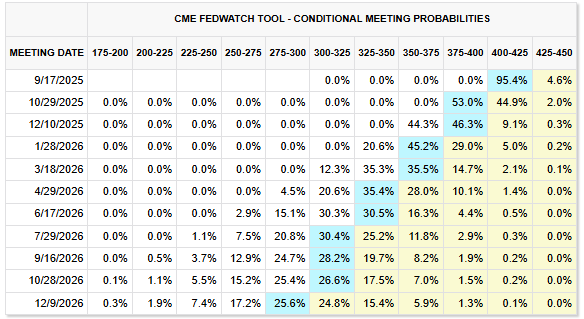
According to the CME Group, there is a 95.4% probability of a cut at the September 17 meeting and a 53% probability of another cut on October 29. Each would be 0.25%, potentially bringing the current rate of 4.5% down to levels similar to the BOE’s 4.00%.
Source: CMEGroup
If this divergence persists, the Fed’s more flexible stance could reduce the appeal of dollar-denominated assets compared to those in pounds. This would compromise demand for the dollar in the short term and favor steady buying pressure on GBP/USD.
GBP/USD Technical Outlook
Source: StoneX, Tradingview
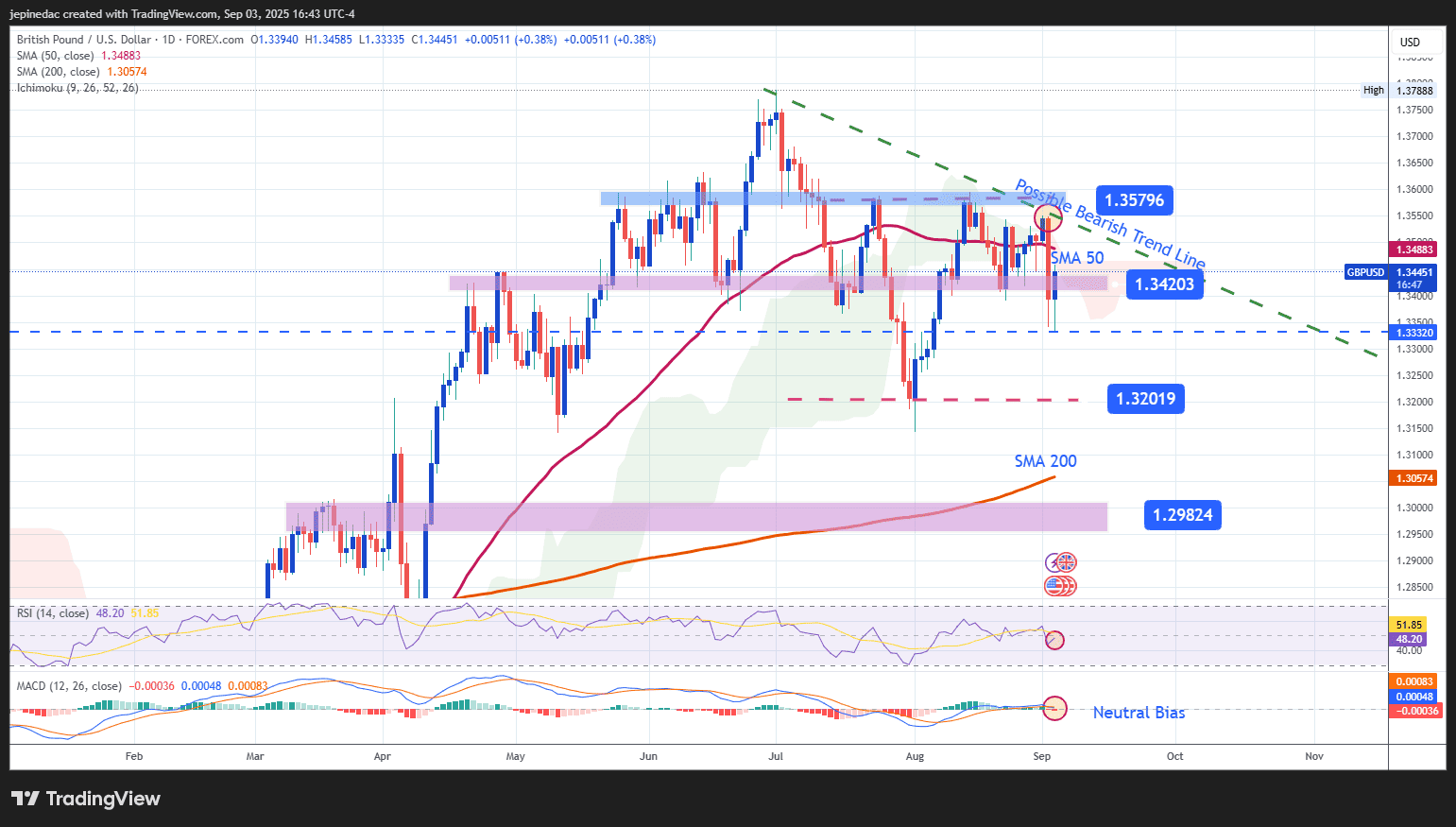
- Possible New Trend: Since early July, a bearish trend had been forming in GBP/USD, with lower highs on the chart. However, the recent rebound in buying strength could pave the way for a more relevant sideways range and potentially break the early bearish formation.
- RSI: currently shows an upward slope in the short term, approaching the neutral 50 level. If it crosses above, average buying momentum could gain importance, reinforcing bullish pressure in the sessions ahead.
- MACD: the histogram remains close to the 0 line, suggesting that short-term moving averages reflect a neutral bias. If this condition persists, neutrality may continue to dominate the chart.
Key Levels:
- 1.35796 – Main Resistance: corresponds to recent highs. A breakout above this level would end the short-term bearish trendline and establish a dominant bullish bias.
- 1.34203 – Near-Term Barrier: a neutrality zone observed in recent weeks. As long as the price stays below, bearish bias could remain active in the short term.
- 1.32019 – Final Support: corresponds to the low registered at the beginning of August. A drop to this level would confirm the presence of a consistent bearish trend.
Written by Julian Pineda, CFA – Market Analyst
Follow him at: @julianpineda25