
- USD/JPY tracking front-end U.S. yields, Fed cut pricing
- Payrolls forecast to increase 40k, unemployment steady at 4.4%
- Supreme Court case may spark Fed independence fears
- BoJ hike odds 80–90%, Ueda tone key for yen reaction
Summary
USD/JPY enters a critical week with multiple catalysts that could break its recent range. U.S. payrolls remain the headline act, with Fed speakers and a Supreme Court case adding intrigue around the policy outlook. In Japan, the BoJ is widely expected to hike, but Governor Ueda’s press conference looms as a bigger risk event. With technical signals neutral, price action deserves greater attention.
Front-End U.S. Yields Driving USD/JPY Moves
Source: TradingView
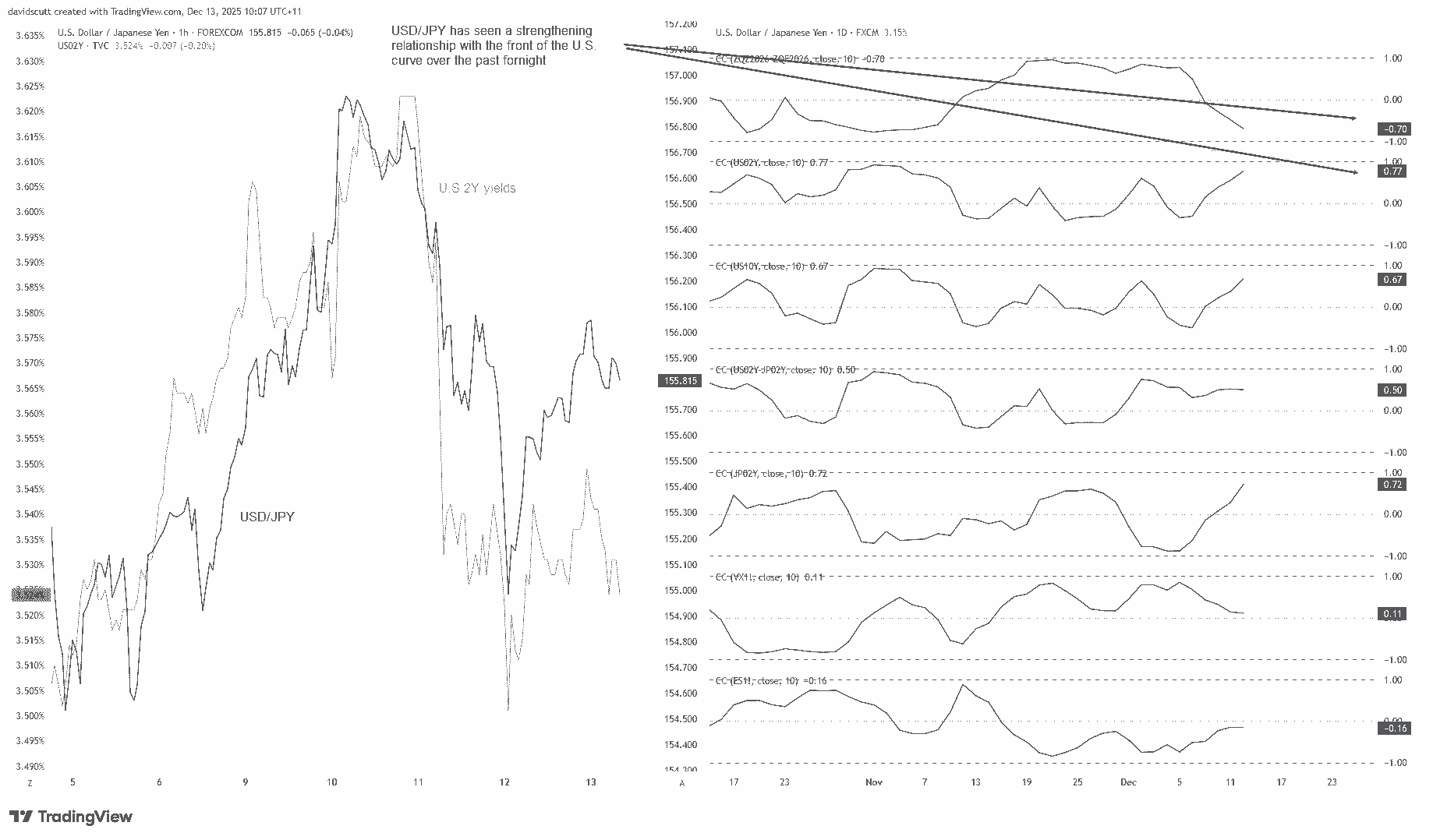
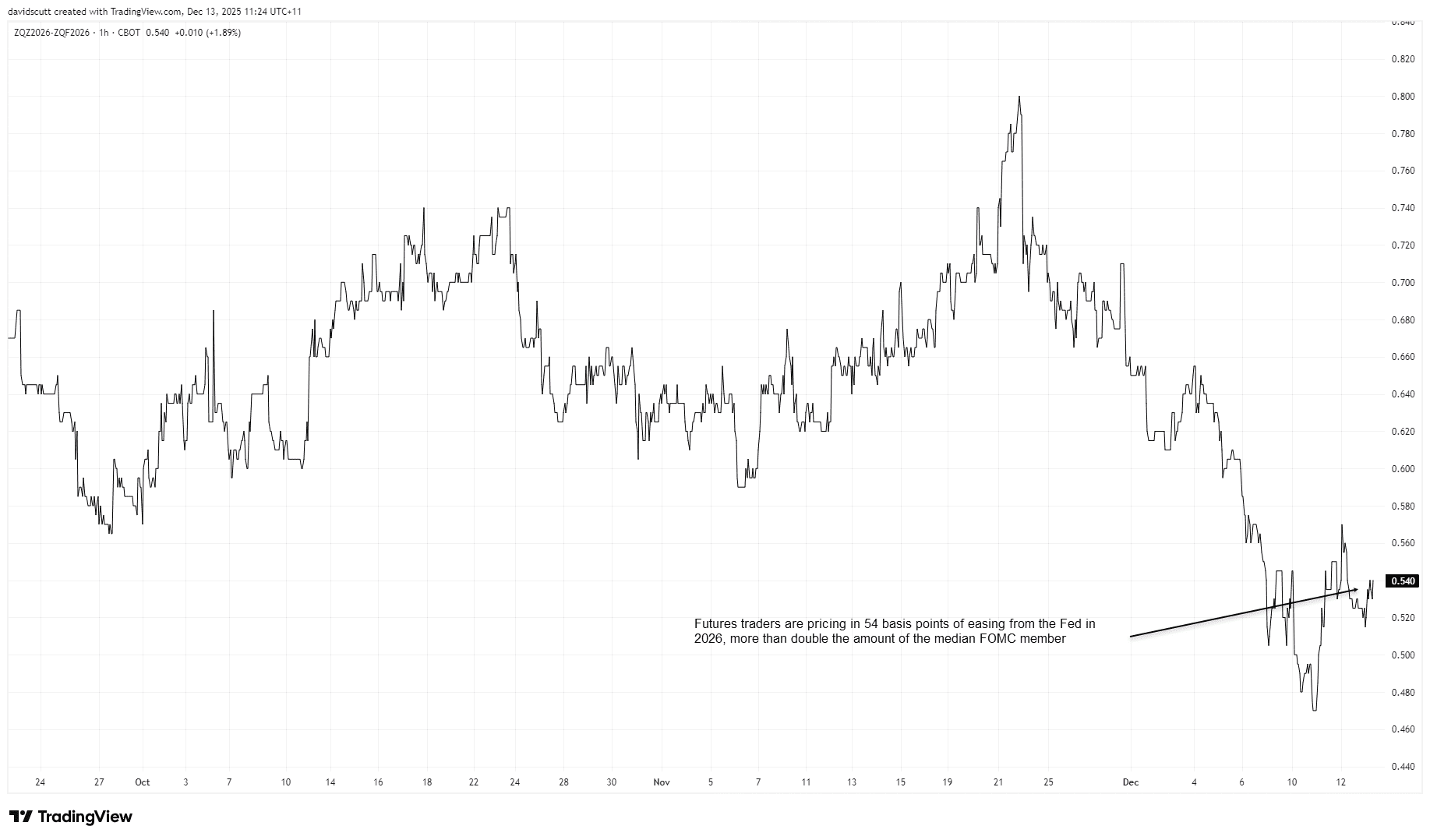
USD/JPY has seen a strengthening relationship with movements at the front of the U.S. interest rate curve over the past fortnight, logging correlation coefficients with market pricing for Fed rate cuts in 2026 and two-year yields of -0.7 and 0.77 respectively. That’s far stronger than for longer-dated U.S. yields, yield spreads between the U.S. and Japan, or risk-linked instruments such as S&P 500 or VIX futures over the same period. This suggests the U.S. interest rate outlook has become an increasingly dominant influence on its recent performance, placing greater emphasis on upcoming risk events that could meaningfully impact Fed pricing.
Payrolls Take Centre Stage Amid Fed’s Employment Focus
Source: TradingView (U.S. Eastern Time)
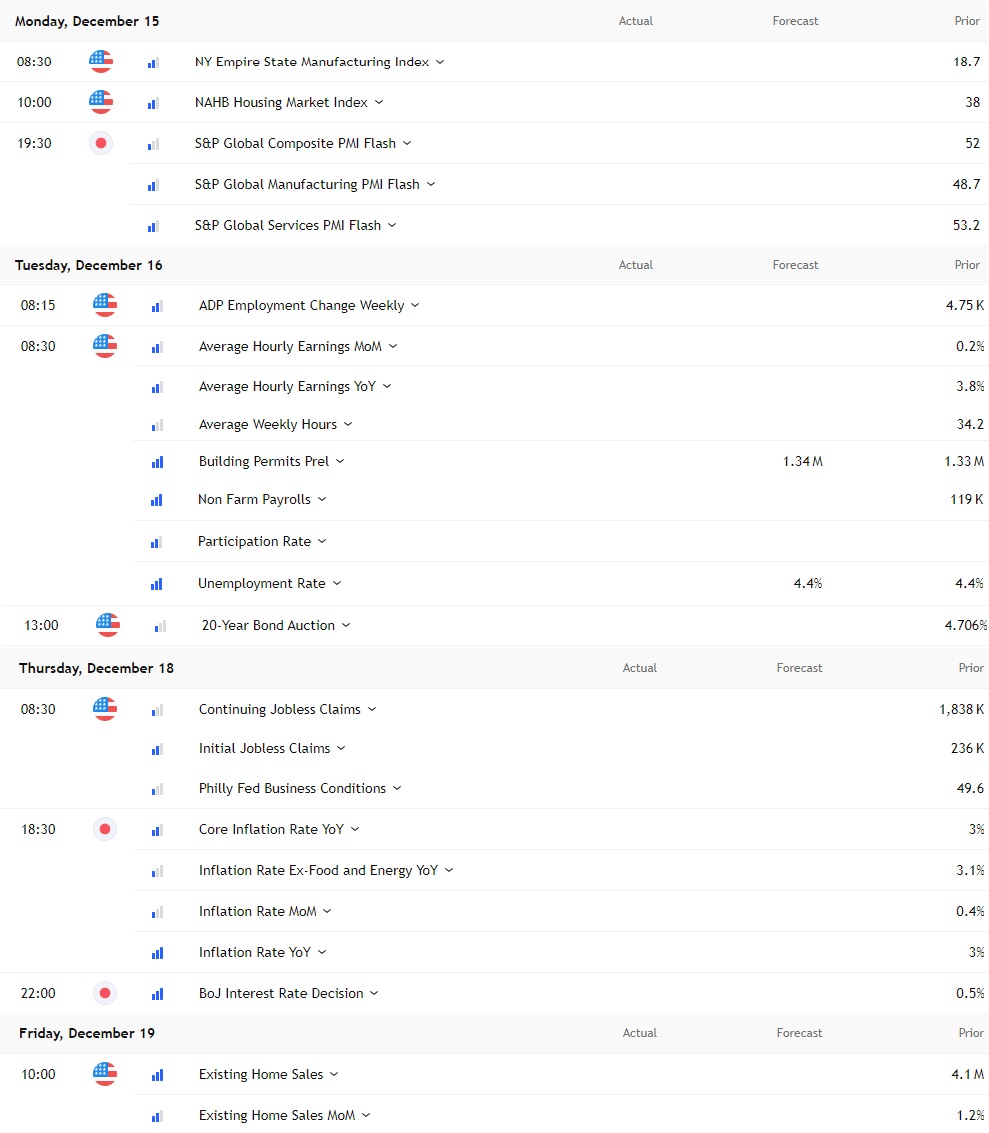
When it comes to volatility events that could do just that, few come bigger than U.S. nonfarm payrolls, especially at a time when the Fed’s reaction function is heavily skewed towards achieving its full employment mandate rather than price stability. Yes, the October report is dated due to the prior U.S. government shutdown and arrives unusually on a Tuesday rather than Friday, but make no mistake: markets will still react as they would on any other occasion, particularly given the Fed’s eagerness to ease policy on even a hint of weakness.
An increase of 40,000 is expected, with the unemployment rate forecast to hold at 4.4%. While the Fed is judged on the unemployment rate, it’s clear a majority of FOMC members are concerned that slower jobs growth risks lifting unemployment, so expect the payrolls figure to be a dominant driver of USD/JPY in the immediate aftermath of the release. Weakness risks sparking a sharp downside flush in USD/JPY, while a strong outcome is likely to result in upside.
With less focus on the inflation mandate, readings on average hourly earnings and underemployment may garner less attention than usual. Aside from the payrolls report, flash PMI releases from S&P Global and jobless claims data are the other releases to watch, especially the latter with seasonal volatility around Thanksgiving likely to subside, providing a real-time indication of what’s happening in the labour market.

Fed Speakers and Legal Risks Add Intrigue
Source: TradingView (U.S. Eastern Time)
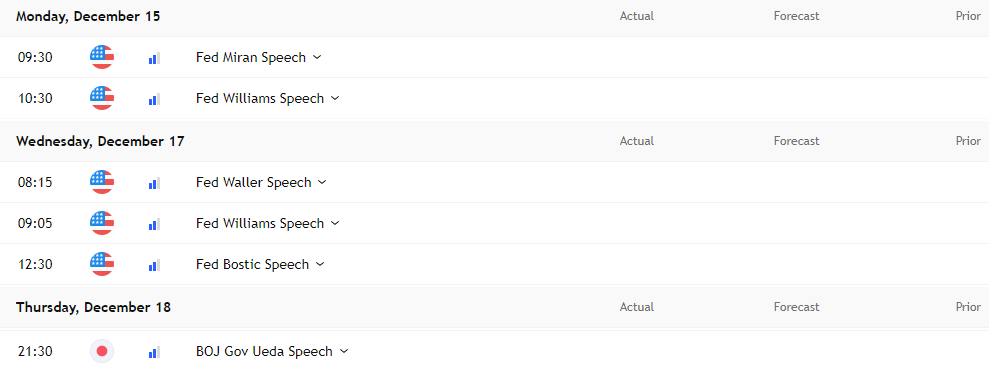
On the central bank front, several FOMC members will be in action with speeches from New York Fed President John Williams and Governor Christopher Waller the ones to watch. They were the two FOMC members who sparked the dovish shift in rate cut pricing prior to the December FOMC, so the fact they’re talking on payrolls day is no coincidence.
Source: TradingView
While it’s not on the economic calendar, Monday’s Supreme Court hearing on Trump’s attempt to remove FTC Commissioner Rebecca Slaughter also matters for the Fed. It’s a test of presidential power over independent agencies and may provide a preview of arguments on Trump’s bid to fire Fed Governor Lisa Cook, due to begin on January 21. Any sign the court could weaken job protections may raise fears about Fed independence, likely weighing on the U.S. dollar and longer-dated U.S. Treasury yields.
Ueda’s Tone Could Dictate Price Action
In Japan, the key risk event arrives late in the week with the Bank of Japan interest rate decision on Friday. Economists overwhelmingly expect a 25bp hike to 0.75%, with market pricing oscillating between 80–90% after weeks without pushback from the BoJ or government officials. Traders will also be watching for any signals on the path ahead, with expectations leaning toward at least one more hike in 2026.
The bigger swing factor may come after the decision when Governor Ueda speaks. His press conferences often sound less hawkish than the statement, creating a risk the yen softens even if the BoJ hikes.
Outside the BoJ, the Japanese calendar is devoid of major risk events with the nationwide inflation report now superseded in significance by the advanced Tokyo figure released three weeks beforehand.
Technical Picture: Range Holds, Bias Neutral
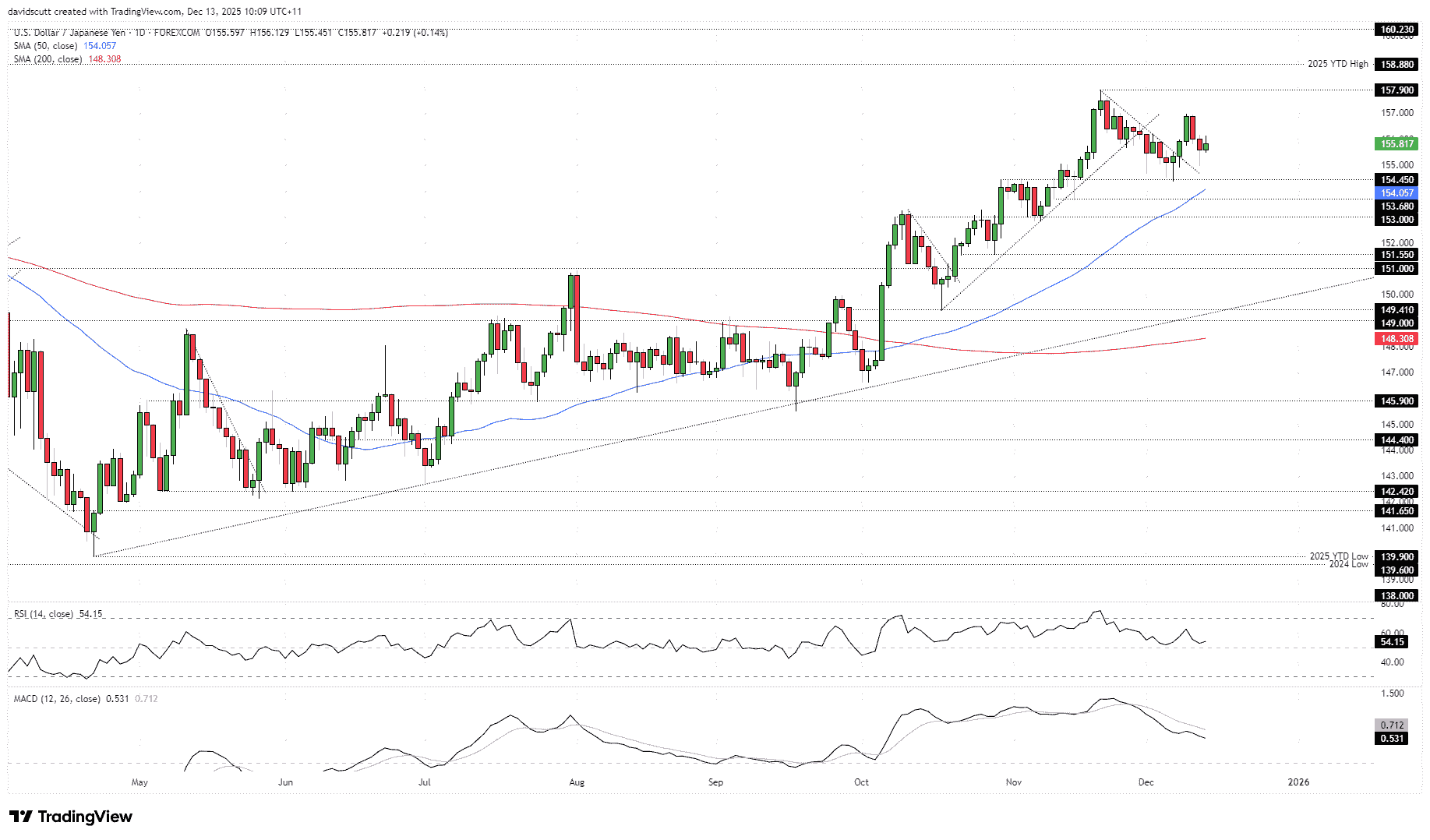
Source: TradingView
USD/JPY continues to trade within a relatively narrow range between 154.45 support on the downside and 157.90 on the top side, consolidating upon the bullish move from mid-October. Within that range, the pair has consistently gravitated towards big figures over recent weeks, stalling at 157.00 last week following a break of the downtrend from the November highs. That makes them a reference point for anyone assessing setups in the week ahead.
Like the rangy price action, the message from RSI (14) and MACD is neutral when it comes to directional bias. The former has been drifting lower and now sits just above 50 while the latter is sliding back towards zero having crossed the signal line from above. That favours range trading and putting greater emphasis on price action.
If 154.45 support were to break, downside levels to watch include the 50-day moving average, 153.68, then 153.00 and 151.55. If the November high were taken out, the year-to-date high of 158.88 and 160.23 would be on the radar for bulls.