
The first reduction in US dollar net-long exposure for two months suggests bullish sentiment may finally be cooling after reaching decade-high levels. While sterling positioning has improved, commodity-linked currencies continue to rally against bearish futures positioning, raising the prospect of further short covering if the US dollar extends its pullback.
View related analysis:
- Australian Dollar Outlook: AUD/USD Bulls Hold the Edge Ahead of Jobs Data
- Nasdaq 100 Signals Deeper Pullback, Chipmakers Lead Selloff into Earnings
- Gold Outlook: XAU/USD Closes Below 4,000 for the First Time Since October
- Yen Bears Capitulate, US Dollar Nearing Sentiment Extreme? | COT report
US Dollar Positioning Softens as Commodity FX Defies Futures Positioning
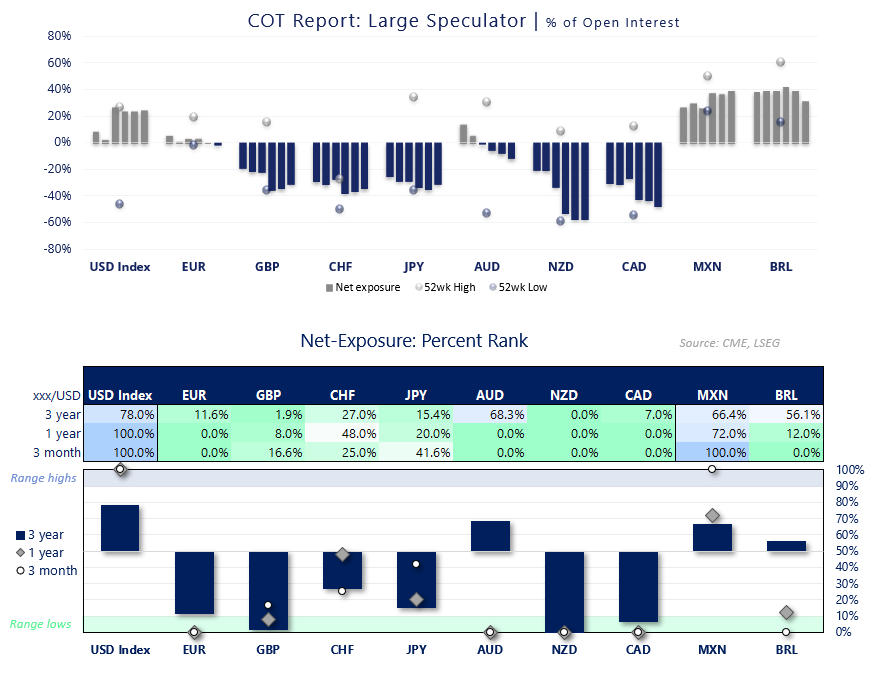
Large Speculator Positioning from the COT report
Source: CFTC (COT), LSEG
For traders wanting a deeper understanding of futures positioning, I’ve also published a guide on how to read and interpret weekly COT data in forex markets.
Only marginal changes were made to positioning last week among FX majors, aside form the British pound. This seems to be on par with the lower levels of volatility seen during the summer months in the US.
- US Dollar: Net-long exposure was down slightly by -$1.3 billion from its 10-year high to $38.5 billion
- EUR/USD: Large speculators were net-short for a second week to euro futures, but only by 12.6k contracts
- GBP/USD: Traders reduced their net-short exposure to British pound futures by a combined 28.5k contracts
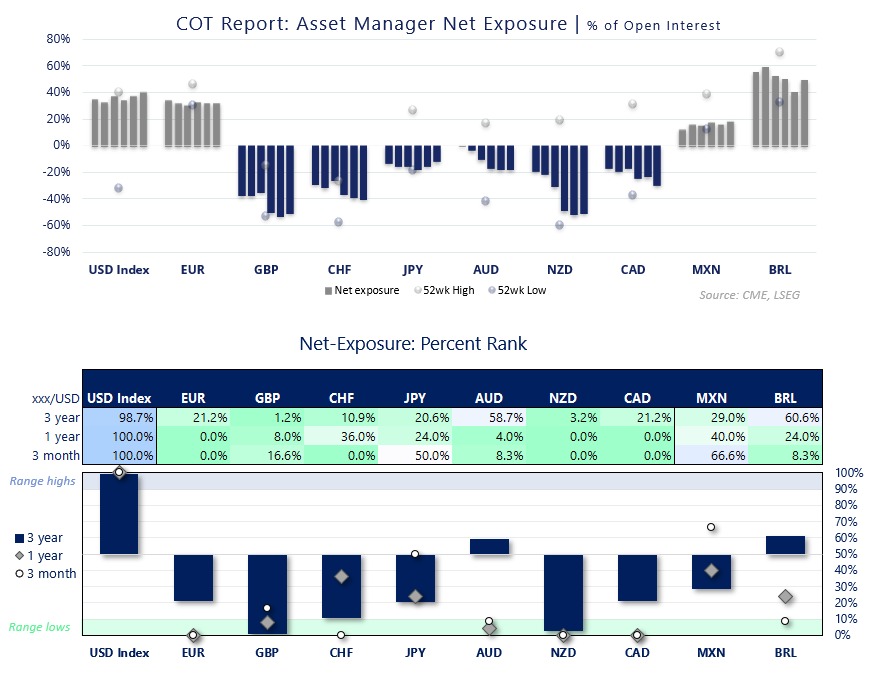
- USD/JPY: Asset managers increased their net-short exposure to Japanese yen futures by 5.2k contracts
- USD/CHF: Traders trimmed net-short exposure to Swiss franc futures by a combined 2.2 contracts
- USD/CAD: Net-short exposure rose to an 18-month high among large speculators, hinting at a sentiment extreme for bears
- AUD/USD: Large speculators increased net-short exposure for a fifth consecutive week, though only by 6k contracts
- NZD/USD: The small reduction of net-short exposure does not reflect the 3-week rally in NZD/USD prices, which could hint at further short-covering ahead
Asset Manager Positioning | COT Report
Source: CFTC (COT), LSEG
FX Futures Positioning | COT Report (IMM Data)
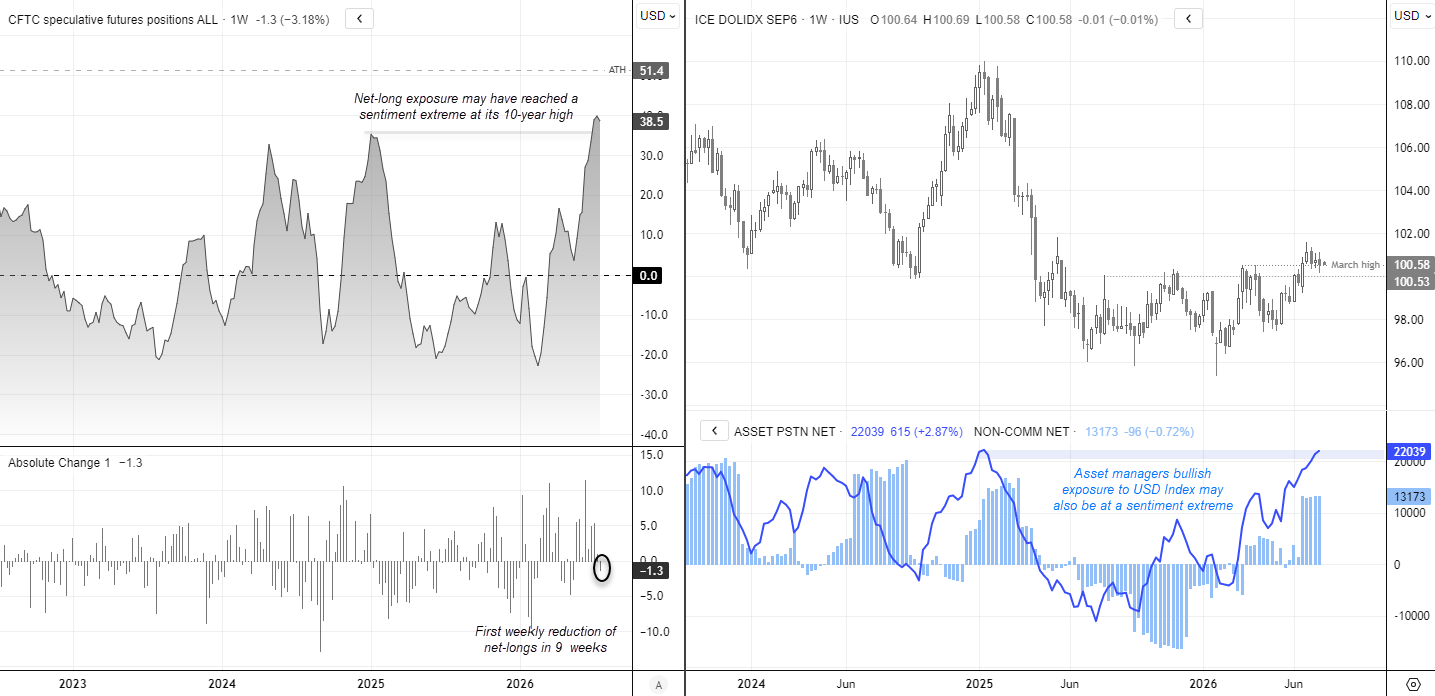
US Dollar Index (DXY) Futures Positioning | COT Report
It seems my multiple warnings that the US dollar could be nearing a sentiment extreme are beginning to show up in both price action and futures positioning. Traders were effectively net-long the dollar by $38.5 billion, just shy of a 10-year high. The $1.3 billion reduction from the previous week marked the first decline in net-long exposure in two months.
Also note that the US Dollar Index's 1-year and 3-year percentage ranks stood at 100%, while the 3-month rank was 98.3%, highlighting increasingly stretched bullish sentiment.
While asset managers increased net-long exposure on the US Dollar Index by a modest 615 contracts, total bullish positioning of around 22,000 contracts also sits near its January 2025 high, reinforcing the view that sentiment has become increasingly stretched.
With expectations for an imminent Fed rate hike now pared back, the US dollar could be vulnerable to a deeper pullback, or at least an extended pause for breath, after delivering a strong rally since the May low.
For now, the 100 level is the best line of defence for USD bulls.
Source: CFTC (COT), ICE, LSEG

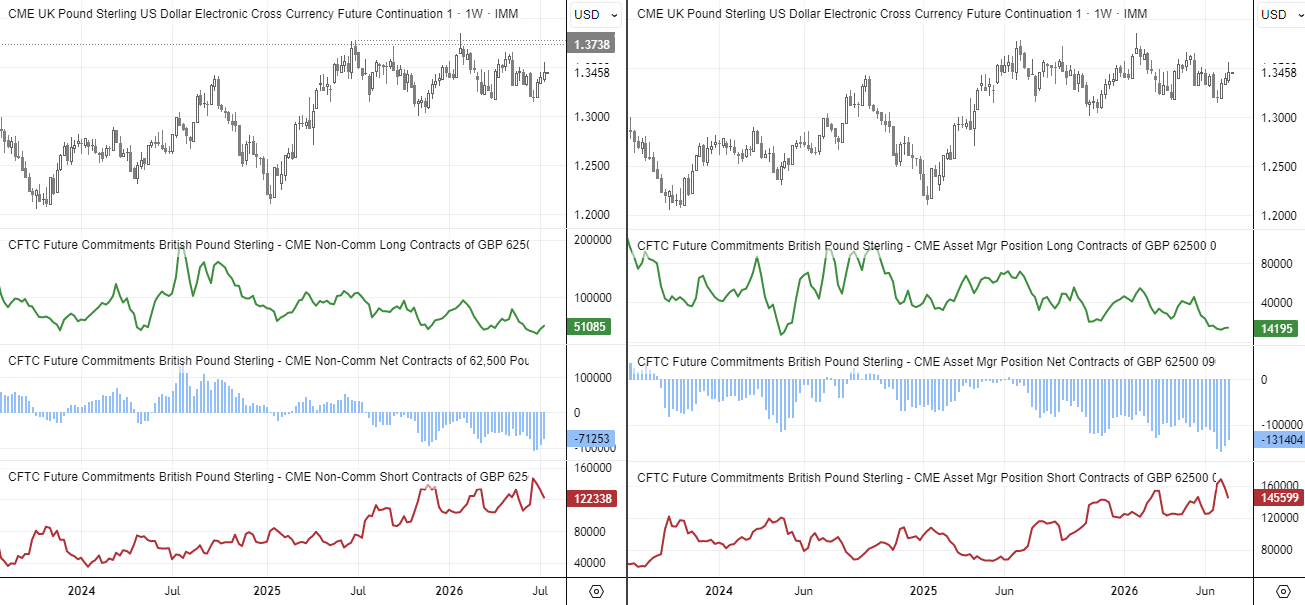
GBP/USD Futures Positioning | COT Report
The British pound rallied for a third consecutive week, and the reduction in net-short exposure over the same period supports the move. Large speculators have cut their net-short exposure by around a third over the past three weeks after coming close to matching a record high. Asset managers have also reduced their net-short exposure by 16% from a record high. Both groups reduced short positions while increasing longs over the period, strengthening the bullish case for GBP/USD.
Source: CFTC (COT), CME, LSEG
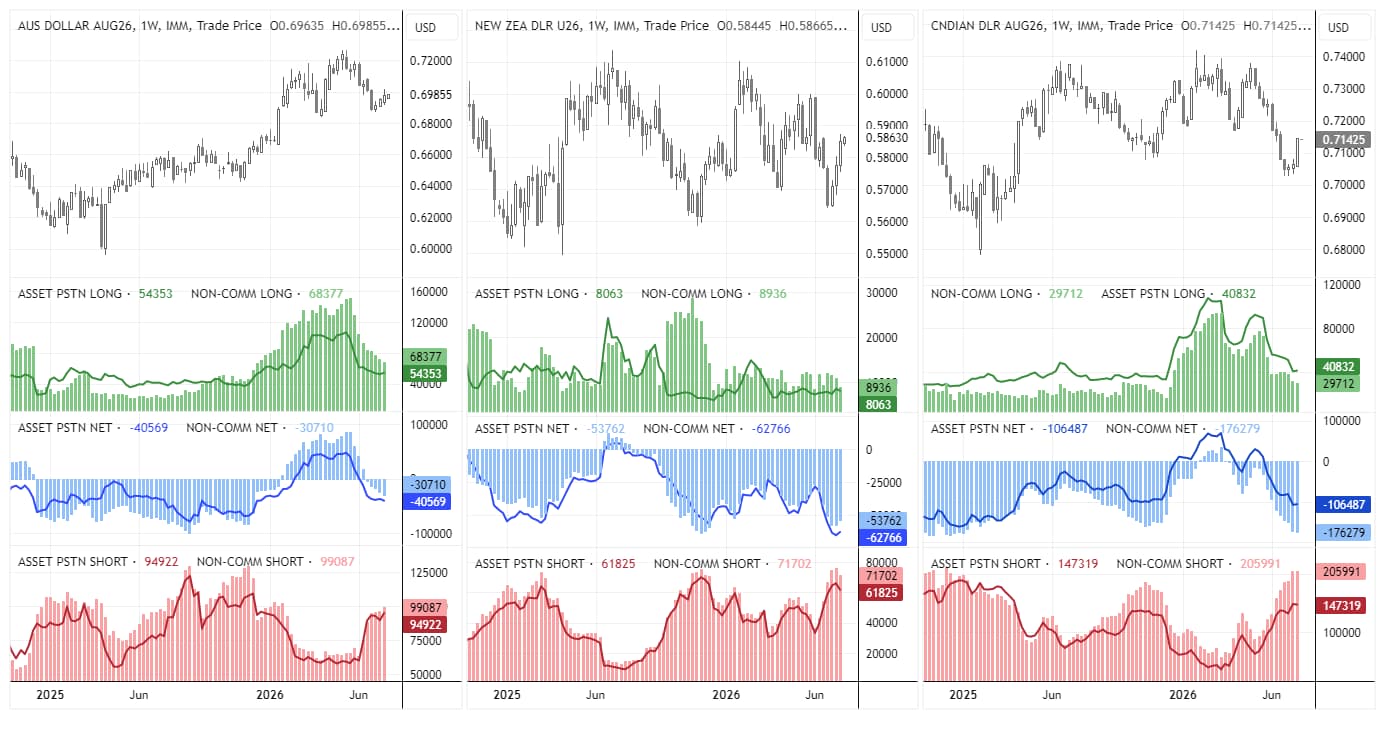
Commodity FX Futures Positioning (AUD, CAD, NZD) | COT Report
There continues to be a disconnect between commodity FX prices and market positioning, particularly for the Canadian and Australian dollars.
Canadian Dollar Shorts Look Vulnerable
USD/CAD suffered its worst week in 13 last week as expectations for a Fed hike were scaled back, while the Bank of Canada left interest rates unchanged and praised the economy's growth prospects. I have to assume there was plenty of short-covering in the Canadian dollar futures market, given net-long exposure among large speculators had risen to an 18-month high beforehand.

Australian Dollar Rises Against Bearish Positioning
AUD/USD rose for a third consecutive week despite large speculators increasing their net-short exposure for a fifth straight week. Admittedly, there is no immediate sign of a sentiment extreme among Australian dollar bears. Regardless, gross long exposure continued to trend gently lower, suggesting upside potential could remain capped.
Commodity FX Continues to Defy Futures Positioning
While net-short exposure to New Zealand dollar futures edged lower, NZD/USD rallied for a third consecutive week and was once again the strongest-performing FX major.
Ultimately, price action in AUD/USD, NZD/USD and USD/CAD has favoured bullish commodity FX trades despite arguably bearish positioning. And with expectations for further Fed hikes continuing to be pared back, perhaps the path of least resistance in the near term remains higher for commodity FX.
Source: CFTC (COT), CME, LSEG
View the full economic calendar
-- Written by Matt Simpson
Follow Matt on Twitter @cLeverEdge