
- USD/JPY back to trading US Japan yield spreads
- Oil swings driving shifts in rate expectations
- Trump signal triggers sharp but questionable crude move
- JGB pressure building with 40Y auction in focus
- BOJ intervention risk rising as pair holds near 160
USD/JPY Outlook Summary
The return of USD/JPY as a rates play has coincided with a sharp turn in the US rate outlook, with markets moving from pricing cuts to the risk of a hike. With that shift being driven by energy and geopolitical developments, it points to a market regime that remains reactive rather than settled.
Rates back in control
Source: TradingView
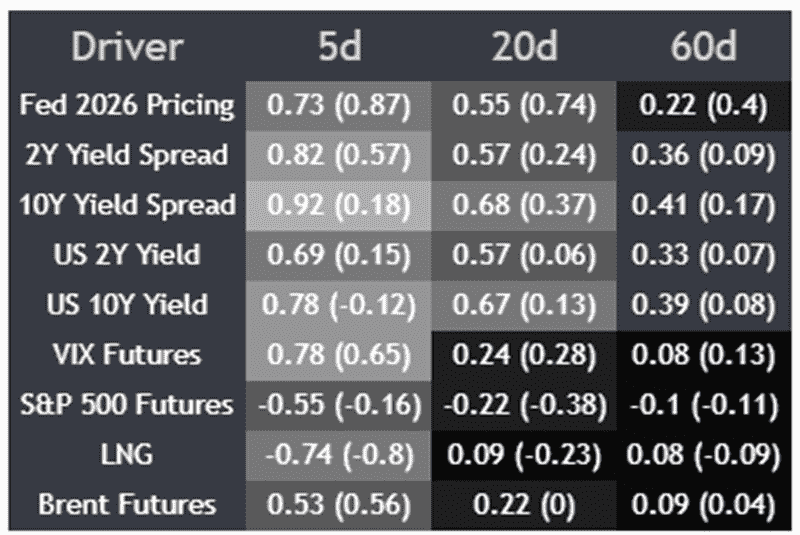
USD/JPY has firmly re-established itself as a rates play over the past month, with that relationship strengthening sharply in the past week.
Fed pricing, along with US-Japan two and 10-year yield spreads, are all running strong positive correlations on five and 20-day windows, pointing to a market trading relative policy expectations again. US yields are reinforcing the move, with both 2-year and 10-year yields closely aligned with the pair in the near-term.
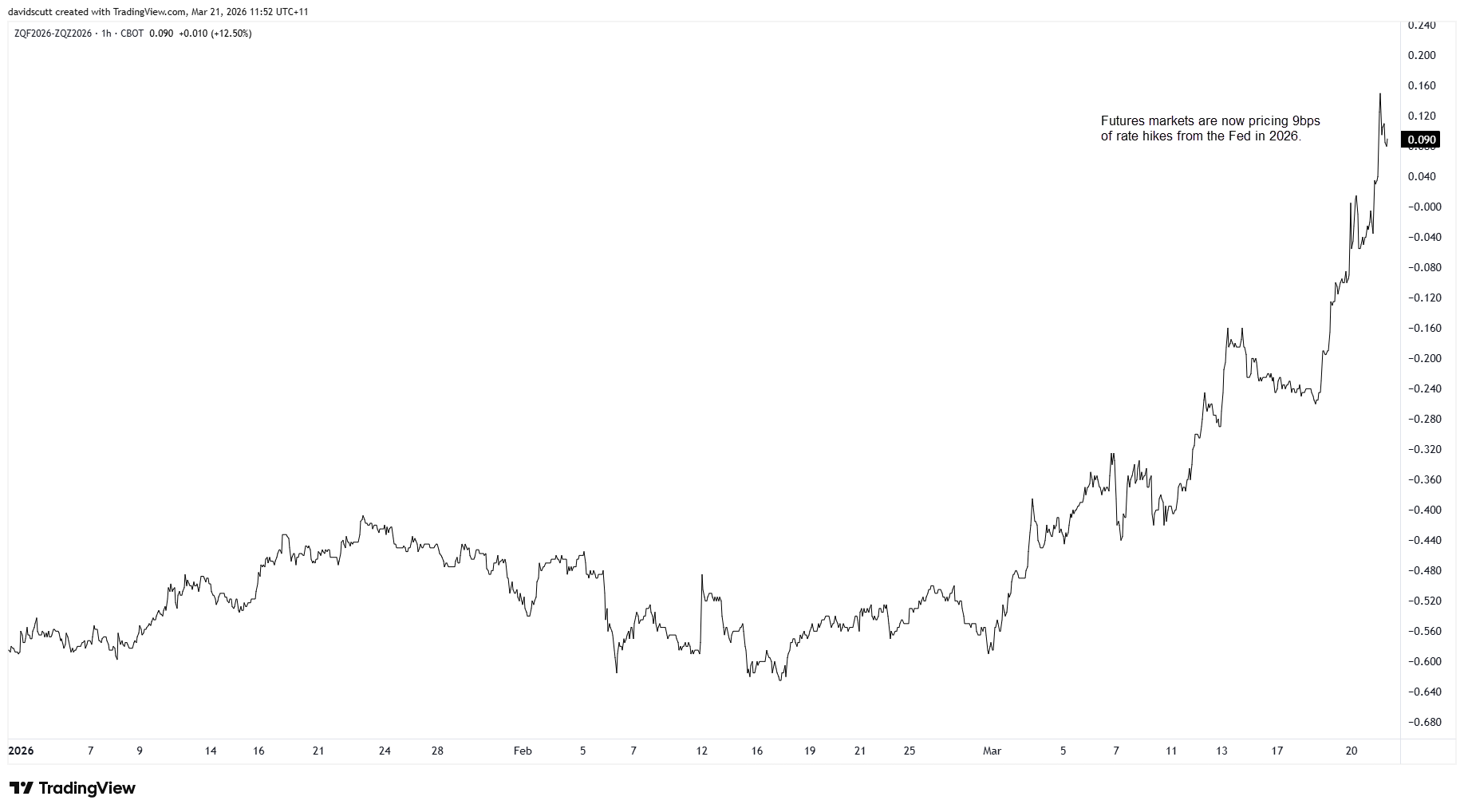
The shift comes alongside a decisive turn in the US rates outlook. Markets have moved from pricing around 60 basis points of easing at the start of March to now entertaining the risk of a rate hike this year, a meaningful repricing that’s fed directly into USD/JPY.
Source: TradingView
While energy prices remain a key driver for broader markets, for USD/JPY the focus is increasingly on how those fluctuations feed into relative growth and interest rate expectations.
That leaves the pair highly sensitive to anything that shifts rate pricing, including the late move in oil and geopolitical headlines into Friday’s close.
Trump “truth” slams oil

Source: X
A late Truth Social “truth” from Donald Trump declaring the US was “very close” to achieving its objectives in the Middle East saw Brent futures dumped into the Friday close, falling more than $6 at one point before retracing roughly half the move.
The timing was notable, landing into thin liquidity ahead of the weekend, something markets have seen repeatedly when major headlines hit late.
On the surface, it points to de-escalation and lower near-term energy supply risks, creating downside pressure for USD/JPY into the Monday open. But traders have seen this before. Similar messaging has been heard before only for tensions to escalate further, and only hours earlier there was little indication of any shift towards a ceasefire, while any lasting de-escalation still relies on all sides aligning.
That leaves the move looking vulnerable. While the initial reaction may extend into the Asia open, unless there’s evidence to back it up, markets may be inclined to fade it.
It also raises the question of whether the shift in tone reflects growing sensitivity to market moves, particularly with gasoline prices, equities and long-end yields areas that carry political weight heading towards US midterm elections in November.
Pressure building in key markets
Source: TradingView
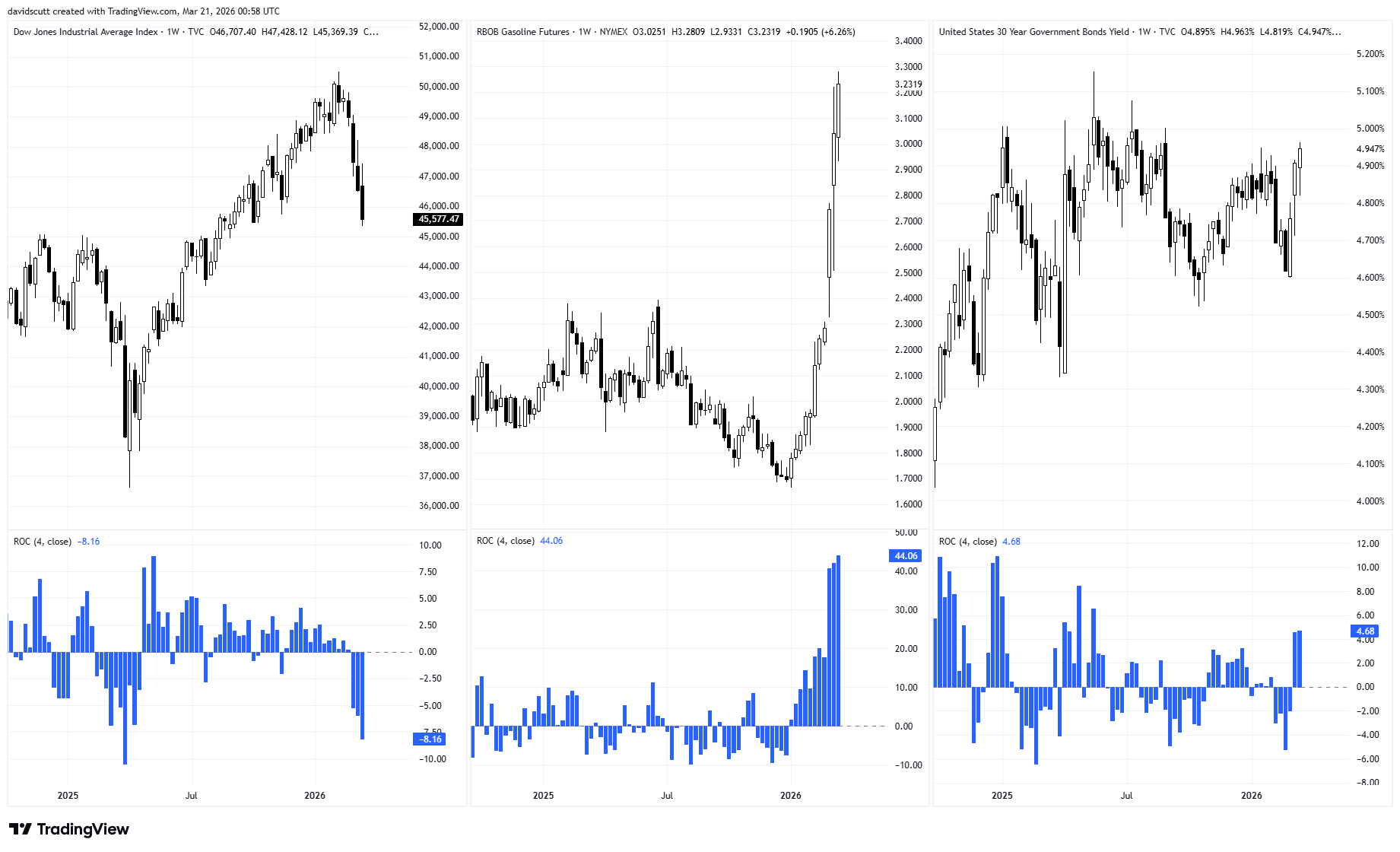
Perhaps explaining why Trump may be seeking an off ramp to the war, key markets are moving against him.
Trump loves to tout the Dow when it’s rising, has pledged to bring down gasoline prices, and wants lower long-term Treasury yields to ease mortgage rates. Right now, none are cooperating.
Since the escalation in late February, the Dow is down more than 8%, RBOB gasoline futures have surged around 44%, and 30-year Treasury yields have pushed to fresh multi-month highs, leaving all three moving in the opposite direction to what would be politically desirable.
That’s not the backdrop you want heading into midterms where polling has already been unfavourable.
Japanese bonds, yen continue to slide
Source: TradingView
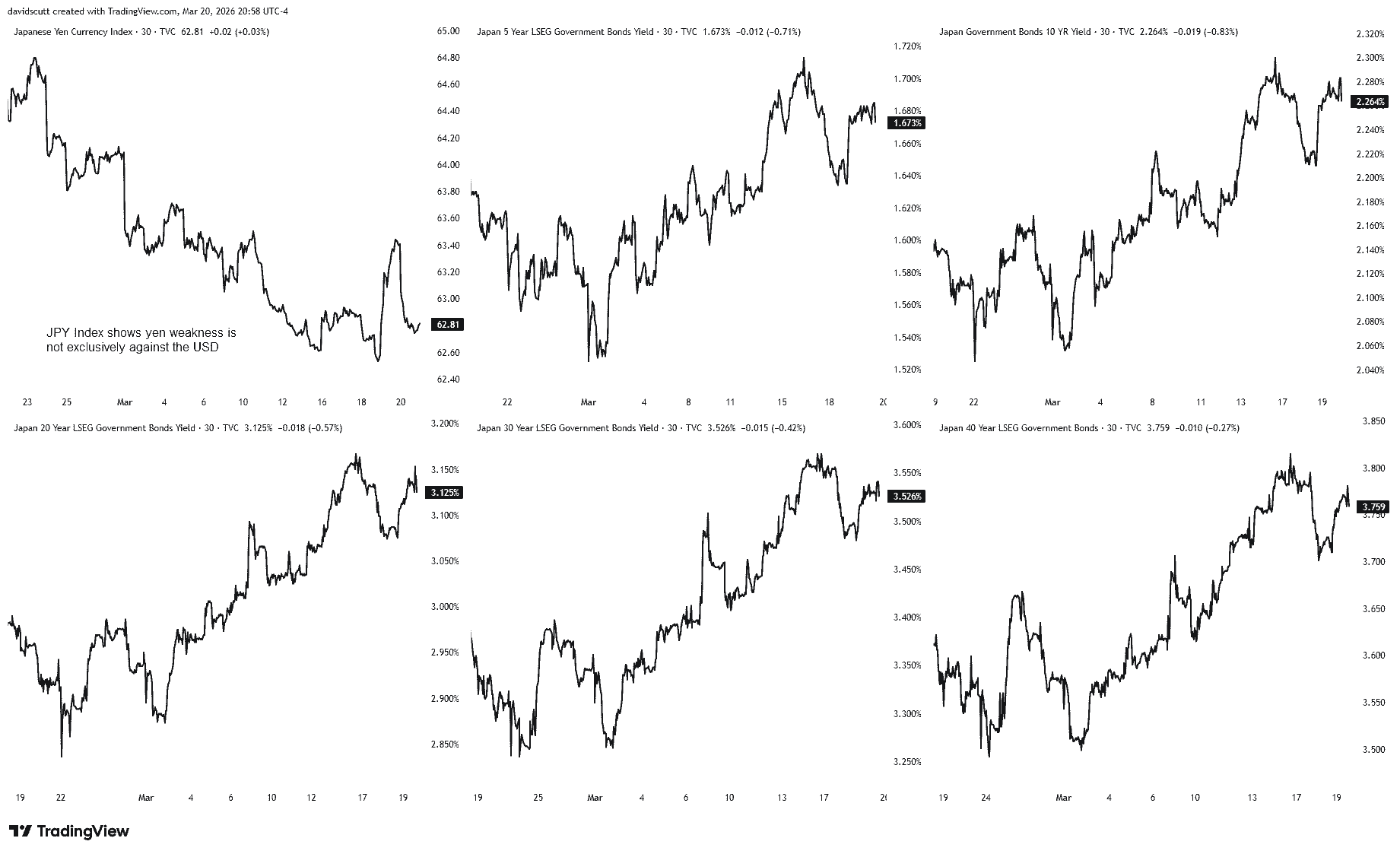
Markets continue to test Japanese policymakers, leaning on both the yen and Japanese government bonds (JGBs), especially at the long end.
As seen in the top right pane in the graphic above, the yen has been weakening against a basket of currencies even as yields push higher across the curve, so this isn’t just a USD strength story.
Energy is a big part of it. Japan is highly reliant on imports, so higher prices feed straight into inflation while also raising questions about the fiscal outlook. If the shock starts to bite and pushes the economy into a downturn, that’s where things could get more uncomfortable, raising the risk of bond vigilantes demanding higher compensation to hold long-dated debt.
That’s where the pressure is showing up. Yields on 20, 30 and 40-year JGBs have been pushing higher since the war began, suggesting investors are demanding higher premiums to hold duration as those risks build.
For USD/JPY, the key point is that rising Japanese yields are not delivering support for the yen, leaving the pair vulnerable if pressure at the long end intensifies.
That puts this week’s 40-year JGB auction firmly in focus given it’s an event where those concerns could crystalise, with a weak outcome likely to amplify pressure on both the curve and the yen.
Data secondary to headlines
Source: TradingView
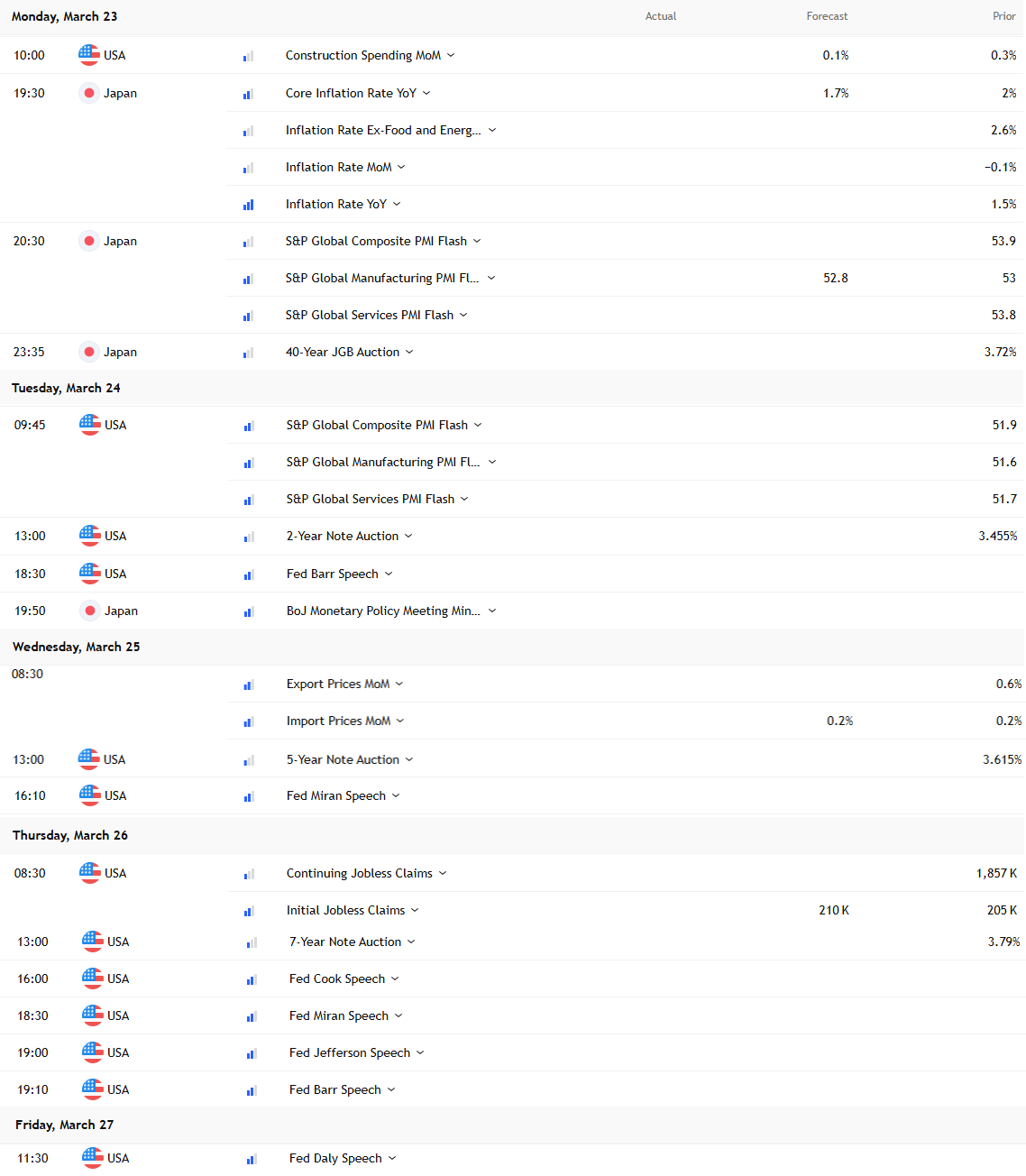
The 40-year JGB auction on Tuesday stands out as the key event on the calendar. Beyond that, the calendar looks largely irrelevant in the current environment. Japan’s February inflation report already comes across as ancient history given the shift in the macro backdrop, with much of the remaining data likely being treated the same way.
Flash PMI releases from the US and Japan are worth watching, offering a near real-time read on activity, pricing and supply chains, particularly in the context of the energy shock. Fed speakers later in the week may also provide some colour on whether the shift towards pricing the risk of a hike this year is justified.
But in this kind of regime, the calendar is playing a distant second fiddle. With geopolitics driving energy, and energy feeding directly into rate expectations, markets are likely to remain far more sensitive to headlines than scheduled releases.
Stalemate near 160
Source: TradingView
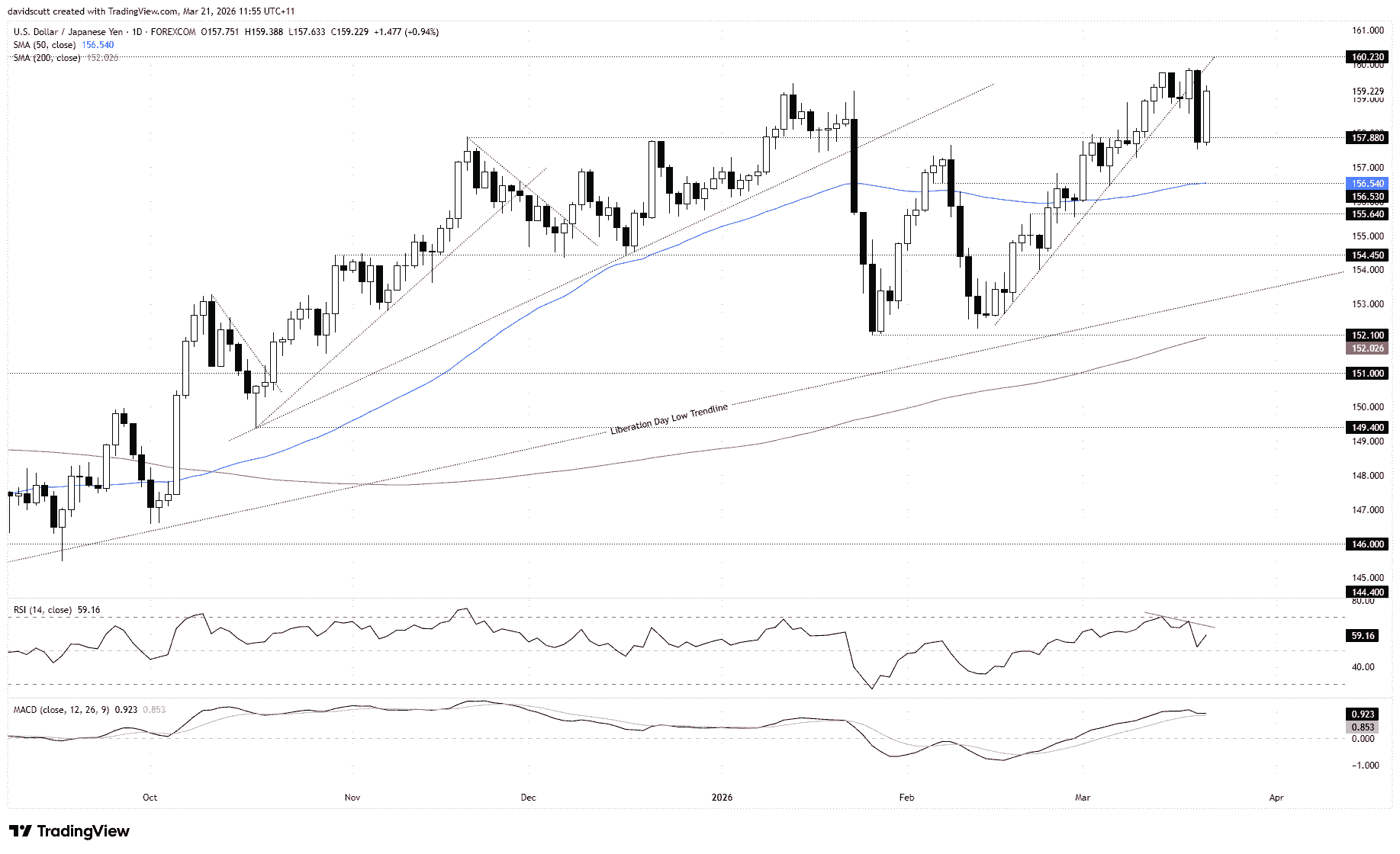
The technical picture for USD/JPY is one of competing forces, with neither side able to take control for more than a fleeting period.
Pullbacks have been limited over the past couple of months, and when they do occur they tend to be shallow. That was evident again last week, with a bout of USD weakness around the Takaichi-Trump meeting in Washington on Thursday quickly reversed on Friday.
On one side, elevated energy prices continue to feed into higher US Treasury yields and USD strength, providing a solid underpinning for the pair. On the other, the threat of BOJ intervention and the prospect of eventual de-escalation in the Middle East are acting as an offset.
Another downside risk comes from the potential for a disorderly unwind of carry trades, if losses in broader markets become more acute. For now, there’s little evidence of forced yen buying, suggesting that threat has yet to be materialise.
The result is a stalemate on the charts. Until there’s greater clarity on the geopolitical front, range trading looks the way to play it.
Selling into strength towards 160 remains an option for bears, while dips towards 157.88 offer buying opportunities for bulls. Above the range, 160.23 and 161.95 are the levels to watch, both marking prior intervention episodes from the BOJ. On the downside, the 50-day moving average, 156.53 and 155.64 have provided both support and resistance in the past.
Oscillators suggest upside momentum is starting to ease, but there’s no clear bearish signal. If anything, they reinforce the risk of sideways trade in the near term.