


USD/JPY Update: The Yen Weakens Rapidly After the Release of US CPI
The trading week continues and, for now, over the last two sessions, USD/JPY has begun to show a renewed buying bias, accumulating gains of more than 0.7% in the short term in favor of the US dollar and highlighting consistent weakness in the Japanese yen.
Share this:

The trading week continues and, for now, over the last two sessions, USD/JPY has begun to show a renewed buying bias, accumulating gains of more than 0.7% in the short term in favor of the US dollar and highlighting consistent weakness in the Japanese yen.
At the moment, buying pressure has gained traction following the release of US inflation data earlier today, allowing markets to anticipate a potential policy dynamic from the Federal Reserve. In the absence of meaningful surprises from the Bank of Japan, the dollar appears to be benefiting from a buying bias that could remain relevant in the coming sessions.


Inflation Data Day
During today’s session, inflation data for February in the United States were released. The annual CPI (Y/Y) came in at 2.4%, exactly in line with expectations and unchanged from the previous reading.
For now, inflation appears to have shown meaningful moderation in the early months of 2026 based on recent trends. However, it is important to note that it remains slightly above the Federal Reserve’s target of 2.00%.
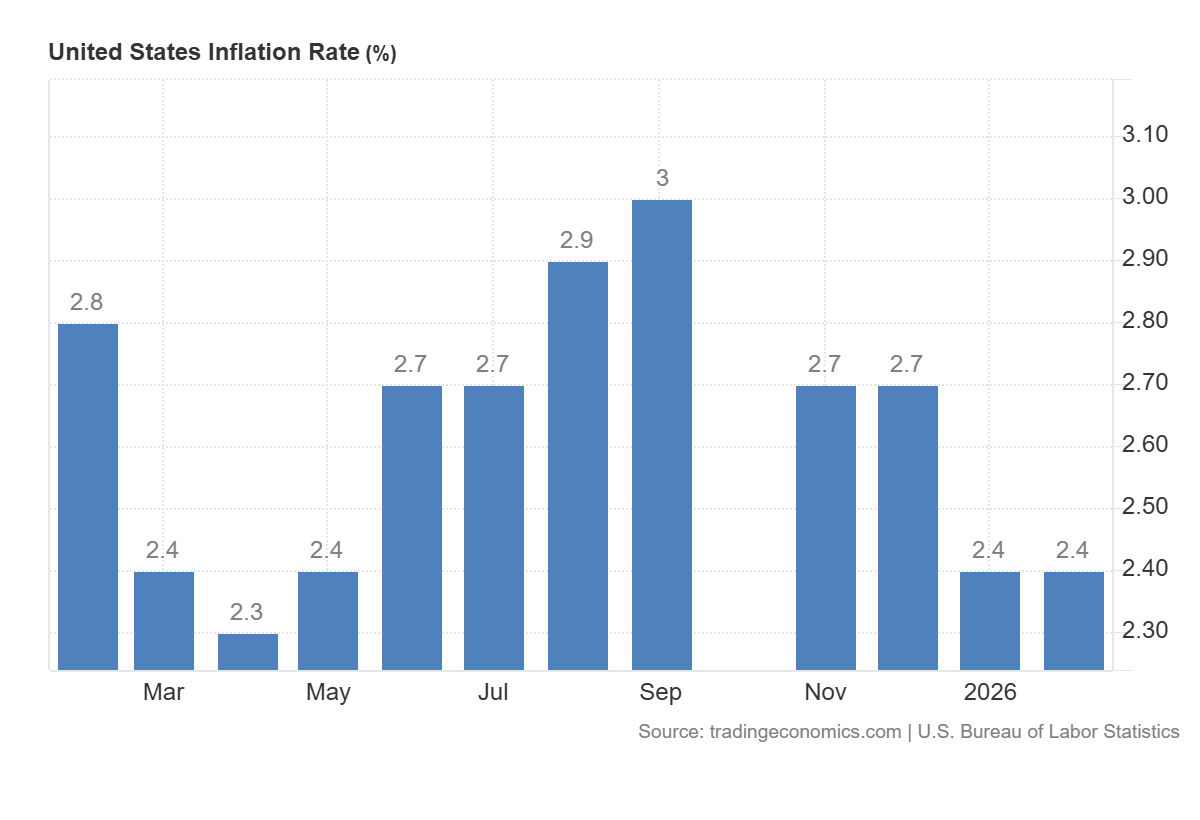
Source: TradingEconomics
That said, what must be considered is that the recent inflation release was accompanied by commentary suggesting that a clear deceleration in prices may not materialize in the coming months. This is largely because the recent spike in crude oil prices observed this week has not yet been reflected in today’s data, and this could eventually increase global energy costs and generate additional inflationary pressures in future readings.
In fact, despite the inflation data not showing a meaningful acceleration, the expected neutral monetary outlook for the Federal Reserve has not changed. This is partly due to ongoing expectations that inflation could reaccelerate.
According to CME Group, the rate probability table shows a 97.3% likelihood that the benchmark rate will remain at the current 3.75% level for the March 18 meeting. Additionally, there is more than a 50% probability that rates will remain unchanged through the July 29 meeting of this year. This highlights the prevailing sense of strong neutrality surrounding the Federal Reserve, even after today’s inflation data release.
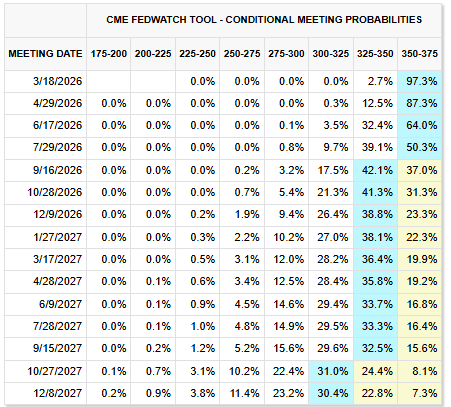
Source: CMEGROUP
This development is particularly relevant because as long as expectations for stable interest rates persist, the US Treasury bond market may continue to gain attractiveness. A prolonged period of steady rates allows 10-year Treasury yields to remain appealing, and these bonds are currently considered one of the key safe-haven assets.
As a result, if this dynamic continues, consistent foreign capital inflows into the United States may strengthen dollar demand relative to the yen, potentially reinforcing buying pressure in USD/JPY in the short term.
The Bank of Japan Does Not Surprise
Although the Bank of Japan’s benchmark rate currently stands at 0.75%, one of the highest levels seen in decades, there has been no clear signal or confirmation that rates will continue to rise consistently in upcoming meetings, including the next one scheduled between March 18 and 19.
For now, perspectives between the central bank and the government remain divided. While the Bank of Japan views rising inflation as an increasingly relevant factor, the government is not fully aligned with the idea of further rate hikes. This has created a broadly cautious environment that could influence a neutral monetary policy stance in upcoming decisions.
With this in mind, it is important to recognize that Japan’s relatively low interest rate may be reducing the appeal of yen-denominated investments compared to assets in currencies such as the US dollar. Unless markets perceive clear and consistent signals that Japanese interest rates could rise further, it may remain difficult to establish sustained demand for the yen in the short term. This, in turn, could continue to support buying pressure in USD/JPY in the coming sessions.
Technical Outlook for USD/JPY

Source: StoneX, Tradingview
- Nothing Stops the Uptrend: For several months, the average price movements of USD/JPY have maintained a consistent upward trendline, which remains intact as no significant selling moves have threatened the current structure. Buying pressure has once again shown dominant strength, and if new highs begin to form, this could reflect a more pronounced extension of the prevailing uptrend in the coming sessions.
- RSI: The RSI remains above the neutral 50 level, suggesting that average buying momentum over the last 14 sessions has gained relevance. However, the indicator is approaching the 70 level — the overbought threshold — which may signal a potential excess of buying pressure and open the door for short-term corrective pullbacks.
- MACD: The MACD histogram remains above the zero line, indicating that the buying bias continues to dominate short-term moving average momentum. As long as this dynamic persists, buying pressure may remain relevant in upcoming sessions.
Key Levels:
- 159.004 – Key Resistance: Area corresponding to the 2026 highs and the main bullish barrier to monitor. A sustained move above this level could consolidate a dominant buying bias and enable a more aggressive extension of the current trendline.
- 156.301 – Near-Term Barrier: Level aligned with the 50-period moving average and a potential reference point for short-term corrective pullbacks.
- 153.900 – Key Support: Level corresponding to recent lows. Moves below this area could threaten the current bullish structure and open the door to a more relevant selling bias in the coming sessions.
Written by Julian Pineda, CFA, CMT – Market Analyst
Follow him on: @julianpineda25
Latest market news



The complete CFD trading experience
Award-winning platforms, competitive spreads, low commissions and dedicated support.
We live and breathe the markets and are dedicated to helping traders realise their ambitions as we continue to set the industry bar.
Economic calendar
Web Trader platform
Our sophisticated web-based platform is packed with features.
Related articles
EUR/USD Forecast: Euro Under Pressure After Strong NFP Data
As the trading week comes to an end, the euro has once again struggled to sustain a meaningful recovery against the U.S. dollar, highlighting renewed weakness within EUR/USD price action. During the final trading session of the week, the pair declined nearly 0.7%, reflecting that confidence around the European currency remains limited in the short term.
Australian Dollar Short-term Outlook: AUD/USD 3% Plunge Puts Multi-Month Range at Risk 11 6 2026
A sharp equity-led selloff has driven AUD/USD toward critical June-low support, with strong NFP data adding pressure ahead of next week’s U.S. CPI.

Dollar forecast: NFP provides dollar, already supported amid tech sell-off, additional boost
The US dollar has found some mild amid the tech rout in recent days, most visibly against risk sensitive and commodity dollars. Today, we have so far seen a bit of a recovery in global indices from their overnight lows. Investors will be watching the markets to see whether fresh losses will be on the again once Wall Street gets going. Ahead of that, we have just seen the release of the October US non-farm payrolls report – and it was much stronger at 165K than expected.

StoneX Europe Ltd may make third party material available on this website which may contain information included but not limited to the conditions of financial markets. The material is for information purposes only and does not contain, and should not be construed as containing, investment advice and/or investment recommendation and/or an investment research and/or an offer of or solicitation for any transactions in financial instruments; any decision to enter into a specific transaction shall be made by the client following an assessment by him/her of their situation.
StoneX Europe Ltd makes no representation or warranty and assumes no liability as to the accuracy or completeness of the information provided, nor any loss arising from any investment based on a recommendation, forecast or other information supplied. You should always seek independent advice as to your suitability to speculate in any related markets and your ability to assume the associated risks, if you are at all unsure. We are not under any obligation to update any such material. Any opinion made may be personal to the author and may not reflect the opinion of StoneX Europe Ltd.