



USD/MXN Analysis: The “Super Peso” Continues to Resist the Growing Strength of the U.S. Dollar
Over the past five trading sessions, the USD/MXN pair has shown minimal variation of just 0.4% in the short term. This steady neutrality reflects the Mexican peso’s ability to prevent the U.S. dollar from gaining sustained ground, despite the recent strength the American currency has shown against other currencies.
Share this:

Over the past five trading sessions, the USD/MXN pair has shown minimal variation of just 0.4% in the short term. This steady neutrality reflects the Mexican peso’s ability to prevent the U.S. dollar from gaining sustained ground, despite the recent strength the American currency has shown against other currencies.
For now, Mexico’s high interest rates continue to serve as a key factor allowing the peso to withstand strong market swings. If the Bank of Mexico maintains this policy in the short term, the neutral bias could continue to limit the dollar’s advance in the coming sessions.


Why Does the Peso Remain Stable?
Despite gradual interest rate cuts by the Bank of Mexico in recent months — such as during the November 6 meeting, when the rate was held at 7.25% — the benchmark level remains significantly higher than that of other major central banks. In comparison, the U.S. Federal Reserve has its benchmark rate at 4.00%, leaving a 3.25-point differential, one of the widest globally. This gap has kept peso-denominated investments attractive, especially relative to U.S. dollar assets, which offer lower returns.
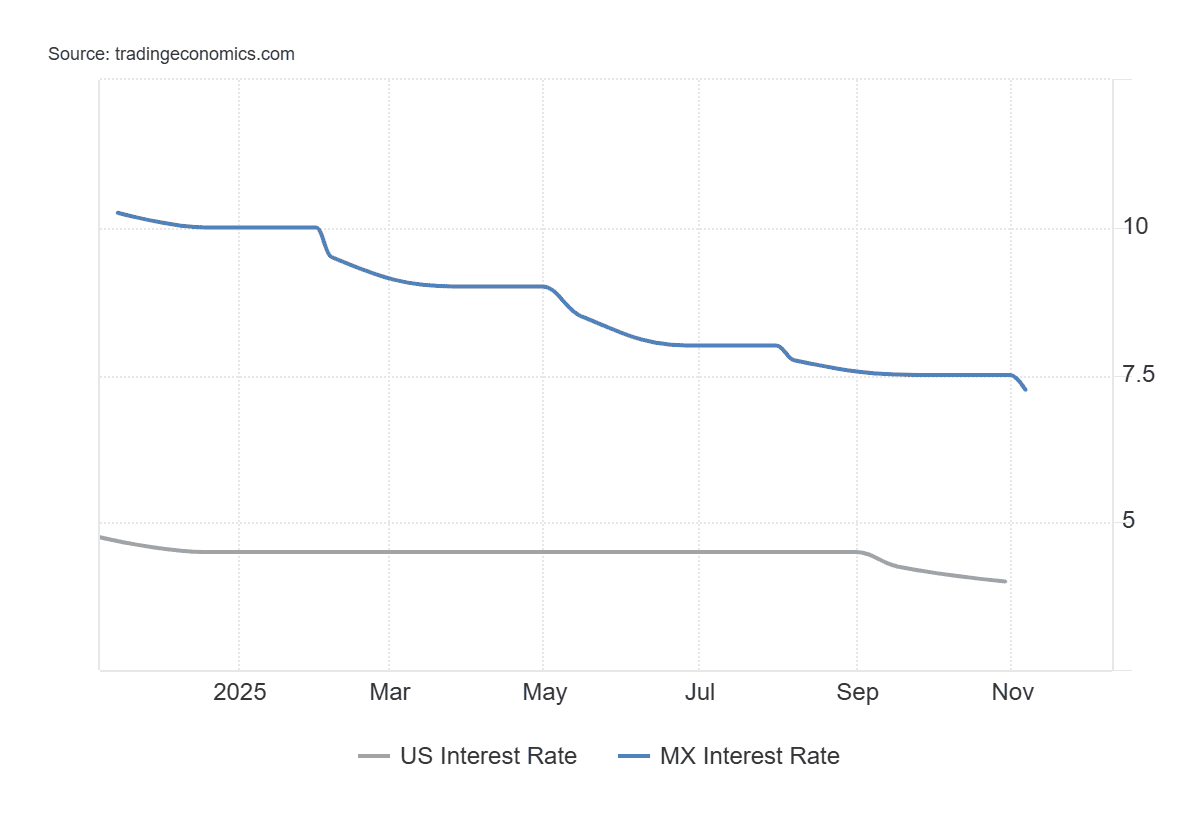
Source: TradingEconomics
Additionally, the peso has benefited from structural factors such as nearshoring, a strategy encouraging the relocation of supply chains to Mexico to reduce costs and tariffs in trade with the United States. This trend has boosted foreign investment and reinforced confidence in the Mexican peso, solidifying its status as the “super peso”, one of the most resilient currencies against U.S. dollar fluctuations.
However, inflation in Mexico has shown clear signs of moderation. Data from October revealed a decline to 3.57%, compared with 3.76% in September, confirming that inflation is easing gradually. This trend opens the possibility that the currently high interest rates could begin to decrease progressively. Nevertheless, if these cuts occur too aggressively, the peso’s appeal could weaken against currencies such as the U.S. dollar, particularly if the Federal Reserve maintains a neutral or high-rate policy in the short term.

Source: TradingEconomics
In this scenario, if the Bank of Mexico adopts an overly aggressive stance on rate cuts, the yield differential with the United States could narrow, reducing the peso’s attractiveness. This could strengthen demand for U.S. dollars, leading to more consistent buying pressure on USD/MXN in the weeks ahead.
Could the Dollar Become a Threat?
In recent weeks, the U.S. Dollar Index (DXY) has shown a steady rebound, consolidating a short-term uptrend that has brought it back toward the psychological 100-point level. If the index holds above this threshold, a stronger dollar could consolidate in the short term.
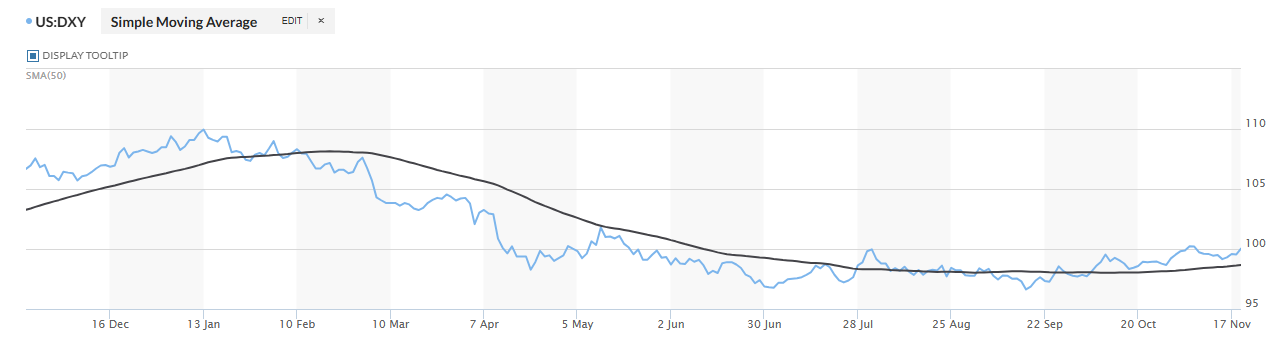
Source: TradingEconomics
Despite the dollar’s rebound, the Mexican peso has not lost significant ground. However, considering that the DXY traded near 110 points at the beginning of 2025, there is ample room for additional recovery. If this trend continues, the DXY’s advance could become a real threat to the peso’s strength, generating increased buying pressure on USD/MXN.
USD/MXN Technical Outlook
Source: StoneX, Tradingview
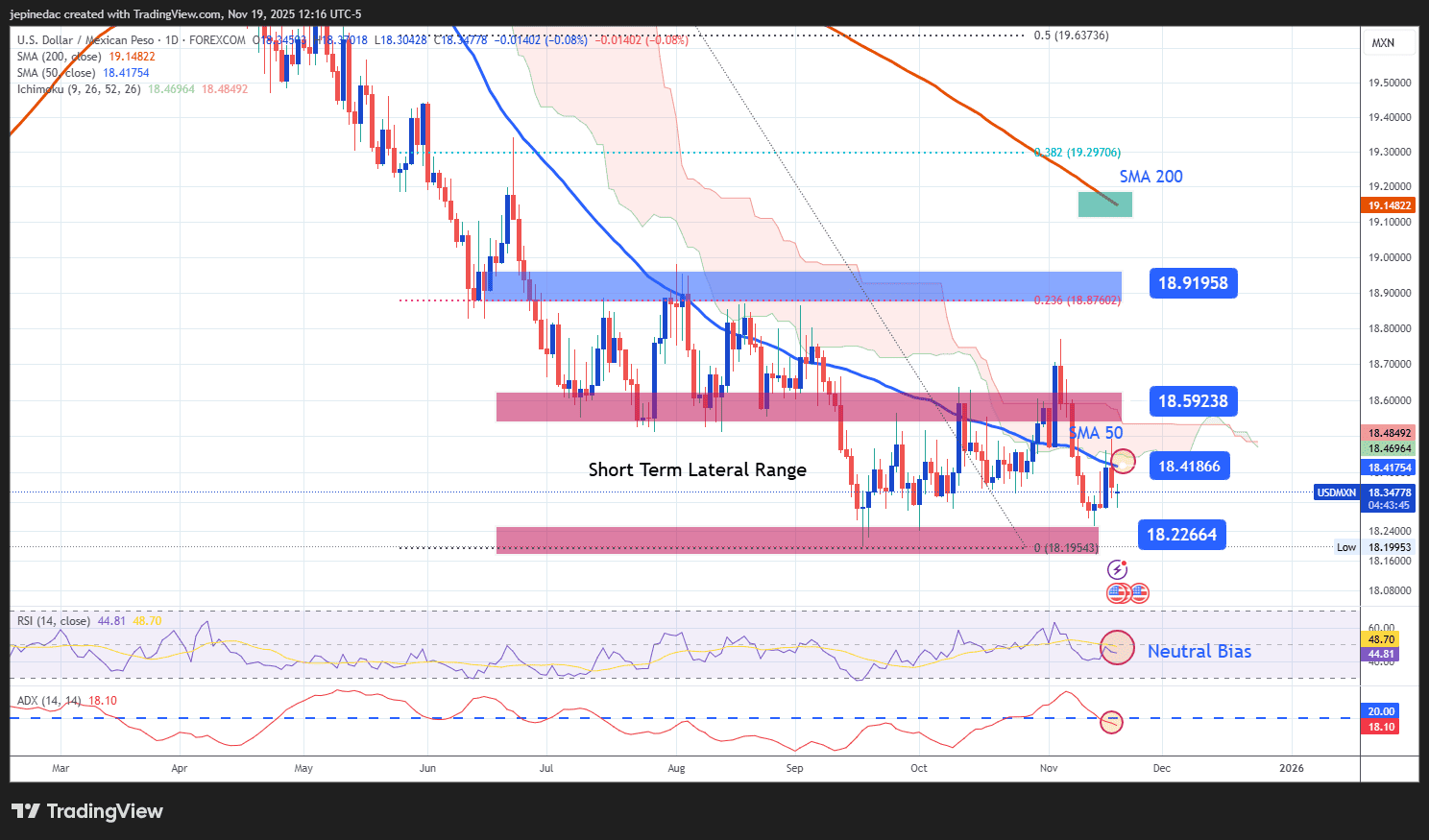
- Lateral Bias Remains Intact: Recent USD/MXN price movements have defined a short-term sideways range, with resistance at 18.50 and support at 18.22 pesos per dollar. So far, fluctuations have not been strong enough to break this pattern, suggesting that market indecision may persist in the coming sessions unless a clear directional move emerges.
- RSI: The RSI remains slightly below the neutral 50 level, reflecting an equilibrium between buying and selling momentum. As long as the indicator stays around this zone, the current neutrality is likely to persist in the short term.
- ADX: Similarly, the ADX has fallen below the 20 level, indicating reduced average volatility and weak directional strength, confirming a period of sustained indecision in the market.
Key Levels to Watch:
- 18.59 – Major Resistance: Represents the upper boundary of the sideways range, where bullish pressure has faced resistance. A breakout above this level could trigger a stronger bullish bias and initiate a new medium-term uptrend.
- 18.40 – Nearby Barrier: Corresponds to the 50-period simple moving average. As long as the price remains close to this level, the sideways channel may extend further, underscoring the market’s lack of clear direction.
- 18.22 – Key Support: Marks the most important retracement zone of recent weeks. A sustained move below this level could reactivate the downtrend that dominated USD/MXN for most of the year.
Written by Julian Pineda, CFA – Market Analyst
Follow him on: @julianpineda25

The complete CFD trading experience
Award-winning platforms, competitive spreads, low commissions and dedicated support.
We live and breathe the markets and are dedicated to helping traders realise their ambitions as we continue to set the industry bar.
Economic calendar
Web Trader platform
Our sophisticated web-based platform is packed with features.
Related articles

USD/CAD shooting star puts September surge on notice
USD/CAD has printed a clear bearish reversal pattern after an extraordinary September surge, but confirmation may depend heavily on how US Treasury yields react to Friday’s payrolls report.


USD/MXN Analysis: Is Super Peso Starting to Fade?
Over recent trading sessions, the Mexican peso has continued to show signs of weakness against the U.S. dollar. This can already be seen in USD/MXN, which has gained more than 1.7% over the last three sessions, highlighting sustained buying pressure in favor of the dollar in the short term.

Canadian Dollar Analysis: USD/CAD Returns to July Highs Ahead of NFP
The Canadian dollar continues to face one of its most challenging environments in recent months when it comes to maintaining strength against the U.S. dollar. The weakness of the Canadian currency is clearly reflected in USD/CAD, which has now recorded nine consecutive bullish sessions and gained more than 1.7% during that period.
StoneX Europe Ltd may make third party material available on this website which may contain information included but not limited to the conditions of financial markets. The material is for information purposes only and does not contain, and should not be construed as containing, investment advice and/or investment recommendation and/or an investment research and/or an offer of or solicitation for any transactions in financial instruments; any decision to enter into a specific transaction shall be made by the client following an assessment by him/her of their situation.
StoneX Europe Ltd makes no representation or warranty and assumes no liability as to the accuracy or completeness of the information provided, nor any loss arising from any investment based on a recommendation, forecast or other information supplied. You should always seek independent advice as to your suitability to speculate in any related markets and your ability to assume the associated risks, if you are at all unsure. We are not under any obligation to update any such material. Any opinion made may be personal to the author and may not reflect the opinion of StoneX Europe Ltd.