
Over the last five trading sessions, gold’s average daily fluctuations have been close to 3%, representing a notable reduction compared to previous weeks when daily moves exceeded 8%. At present, there is no clearly dominant direction, and indecision has become a relevant part of market behavior.
This neutrality is partly explained by the lack of a strong recovery in safe-haven demand, while confidence indicators remain relatively stable. In addition, the market continues to monitor substitute assets such as U.S. Treasury bonds and the Federal Reserve’s monetary policy outlook. For now, the absence of meaningful fundamental catalysts may keep indecision as the dominant factor in upcoming XAU/USD sessions.

What Is Expected from the Fed?
Yesterday, the minutes from the Federal Reserve’s latest meeting were released. Policymakers acknowledged progress in inflation levels but indicated that it remains insufficient to quickly reach the 2.00% target. This suggests that the Fed is in no rush to implement aggressive rate cuts in the short term.
It was also noted that the strength of economic activity could generate inflationary pressures that may be difficult to manage over the long term. As a result, the central bank continues to maintain a neutral stance, rather than signaling a meaningful and immediate rate reduction cycle.
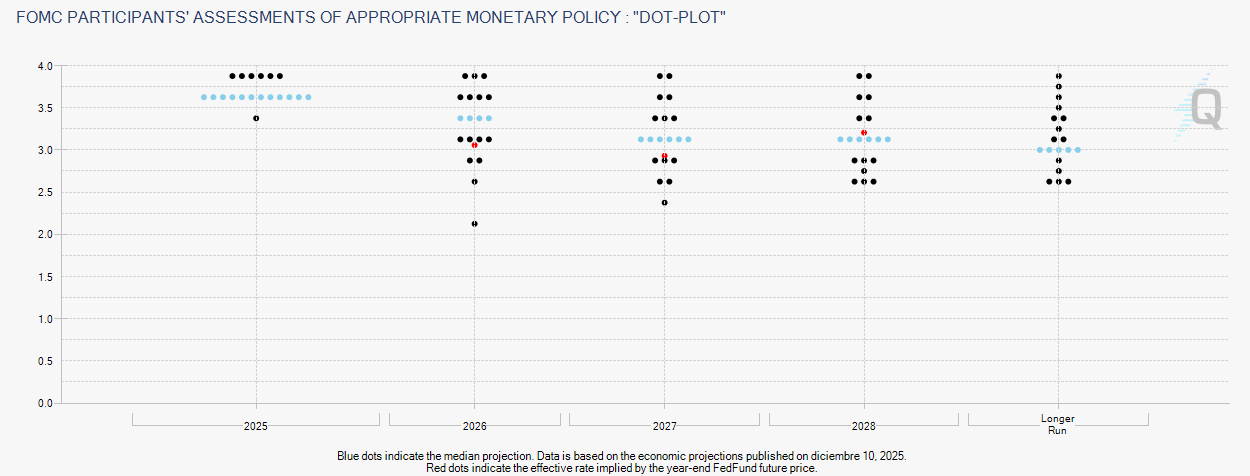
This outlook is reflected in the CME Group’s “Dot Plot,” where the median expectation among Fed members points to rates below 3.5% later this year, implying gradual cuts. However, several projections still cluster around the 3.75% level, highlighting a lack of consensus on the speed of future adjustments. This suggests that any rate reductions may occur at a slow pace in the coming months.
Source: CMEGROUP
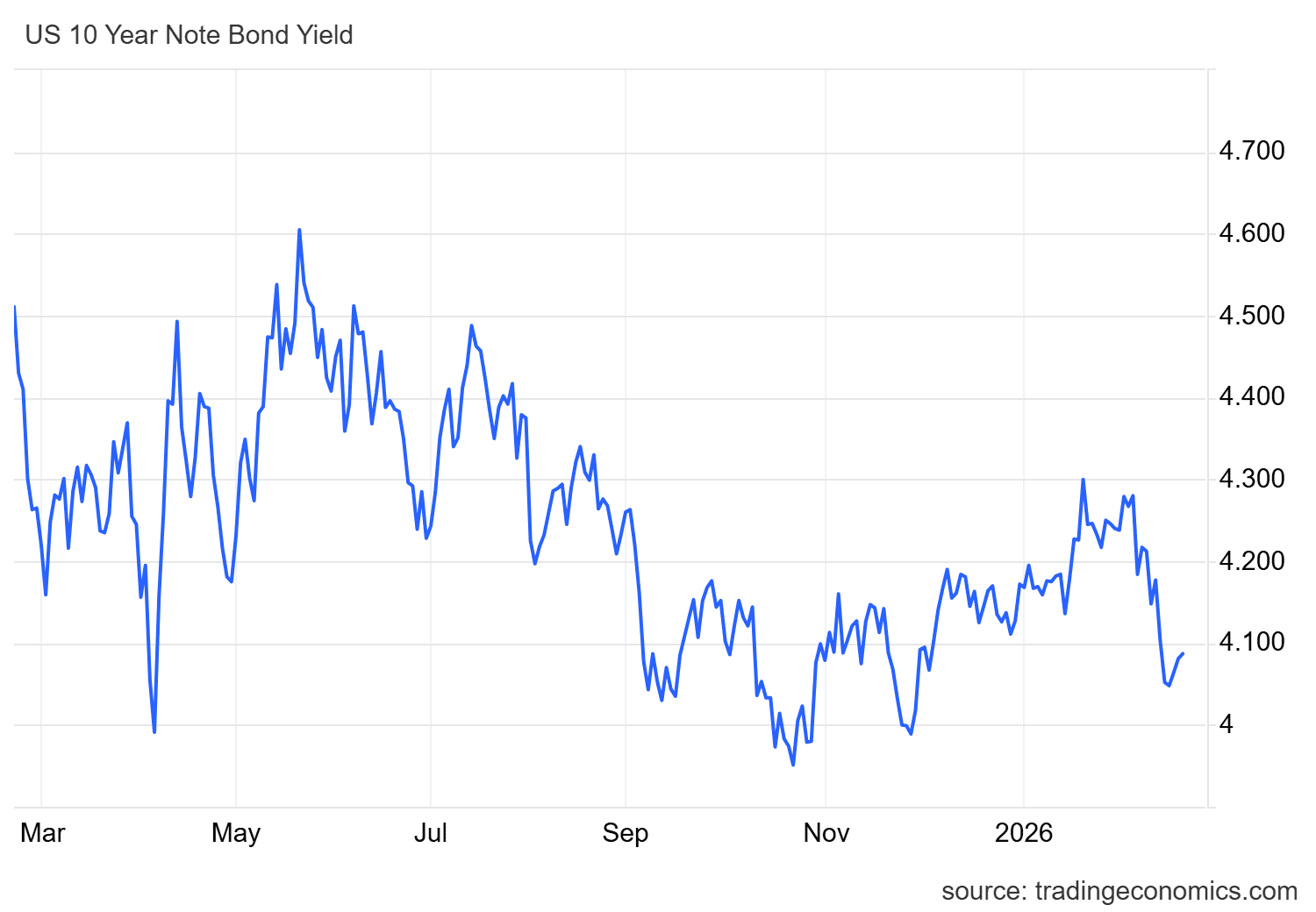
This neutral environment has also influenced the U.S. bond market. Yields on 10-year Treasuries, which had recently hovered near 4.00%, have rebounded slightly toward 4.1%, reflecting renewed attractiveness in fixed income following the release of the Fed minutes.
Source: TradingEconomics
This dynamic is particularly relevant for gold, as U.S. Treasuries serve as a substitute asset within the safe-haven universe. If bond yields continue to recover, they may reduce gold’s relative appeal and limit capital inflows into the metal. In this sense, rather than supporting a sustained rally, the Fed’s neutral stance may be contributing to continued indecision in gold demand in the near term.
Confidence Shows No Major Changes
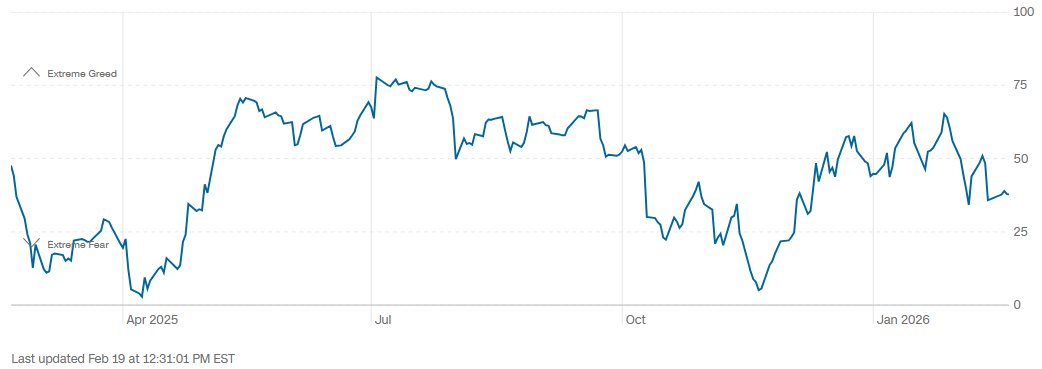
Gold, as the traditional safe-haven asset, tends to benefit when market confidence deteriorates significantly. Currently, the Fear and Greed Index remain around 38 points, within the “fear” zone, though without showing further meaningful deterioration in recent sessions.
Source: CNN
While sentiment remains cautious, the recent stability in the index suggests that there is no new wave of uncertainty strong enough to trigger consistent safe-haven demand. Unless significantly lower readings emerge, reflecting deeper pessimism, gold is likely to continue showing indecisive price action in the short term.
Gold Technical Outlook
Source: StoneX, Tradingview
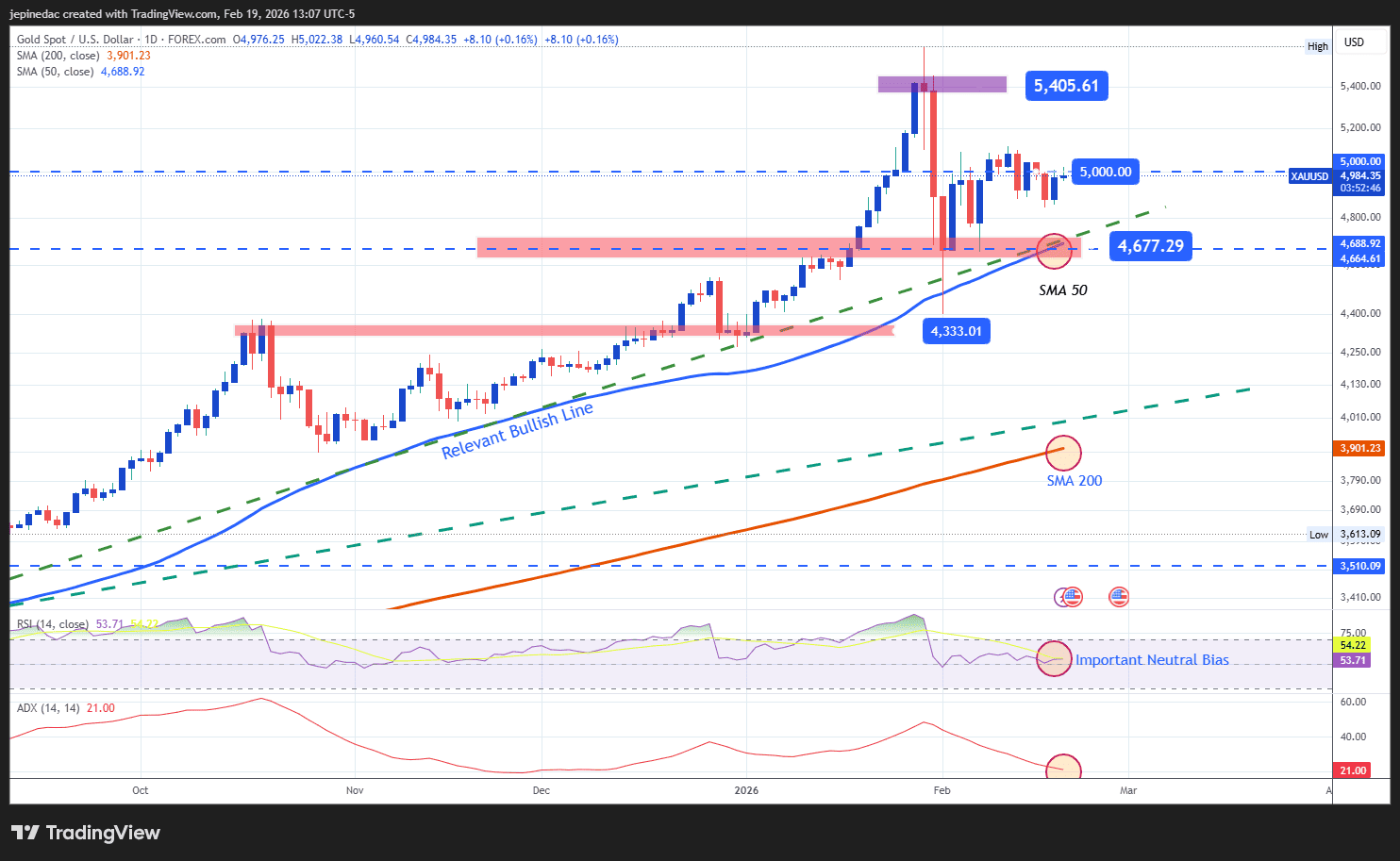
- Uptrend Begins to Show Signs of Pause: Although gold has maintained a solid upward trendline over recent months, recent weeks have highlighted a growing sense of neutrality. Price has entered a consolidation phase that may reduce the momentum of the prior bullish move and, if extended, could even put the prevailing uptrend at risk.
- RSI: The RSI reflects this neutrality, as the indicator is oscillating around the 50 level, signaling balance between buyers and sellers in the short term. If this behavior persists, the phase of indecision could continue in upcoming sessions.
- ADX: The ADX has declined toward the 20-point area, indicating a reduction in trend strength. This behavior suggests lower momentum in recent price movements and opens the possibility for a more defined sideways range in the short term.
Key Levels to Watch:
- $5,400 – Key resistance: A psychological level near historical highs. A sustained move toward this zone could reactivate dominant buying pressure and extend the prevailing bullish structure.
- $5,000 – Near-term barrier: A major psychological level that has recently generated notable neutrality in price action. Unless gold moves decisively away from this zone, a short-term consolidation range may persist.
- $4,677 – Critical support: A zone aligned with recent lows, the primary upward trendline, and the 50-period simple moving average. A sustained break below this level would put the current bullish structure at risk and could enable a more dominant bearish bias in the short term.
Written by Julian Pineda, CFA, CMT – Market Analyst
Follow him on: @julianpineda25