


EUR/USD Forecast: Euro remains under pressure after Fed decision
As the trading week approaches its close, the euro is once again showing consistent short-term weakness. This can be seen in EUR/USD, which has fallen by around -1.10% over the last two sessions, reflecting a renewed selling bias that remains present on the chart for now.
Share this:

As the trading week approaches its close, the euro is once again showing consistent short-term weakness. This can be seen in EUR/USD, which has fallen by around -1.10% over the last two sessions, reflecting a renewed selling bias that remains present on the chart for now.
Selling pressure became more evident after the Federal Reserve decision, which strengthened the US dollar and prevented the euro from recovering in a more consistent way. If this scenario remains relevant, bearish pressure on EUR/USD could continue to shape price action over the coming trading sessions.


Fed signals change the market tone
Yesterday, the Federal Reserve announced its latest policy decision in the United States. The central bank left interest rates unchanged at the 3.75% reference level, but the most important part came after the decision. The comments that followed suggested that inflation in the United States remains a relevant problem and that, for now, there are no clear signs that the 2.00% target can be reached in the short term. This message led markets to interpret that US monetary policy could become more aggressive than expected a few weeks ago.
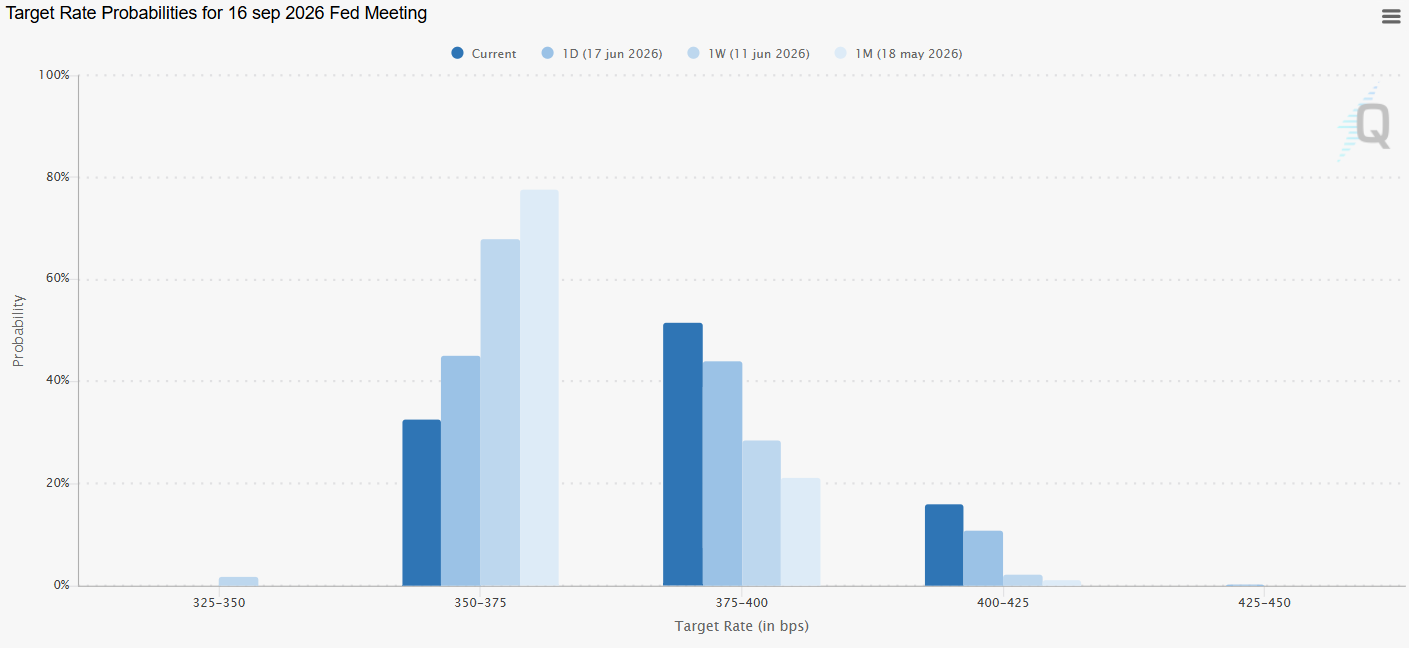
The event triggered an important adjustment in the probability table for upcoming Federal Reserve decisions. At the moment, markets now assign a probability above 51% that, at the September 16 meeting, the Fed will raise interest rates by 0.25%, taking them toward a new level near 4.00%.
This change is important because it not only shows expectations of a rate hike earlier than previously expected, but also because the probability has risen sharply. Just one month ago, this same possibility stood near 21%. This suggests that markets are now pricing in the possibility of a more aggressive Federal Reserve in the short term, rather than closer to the end of the year.
Source: CMEGROUP
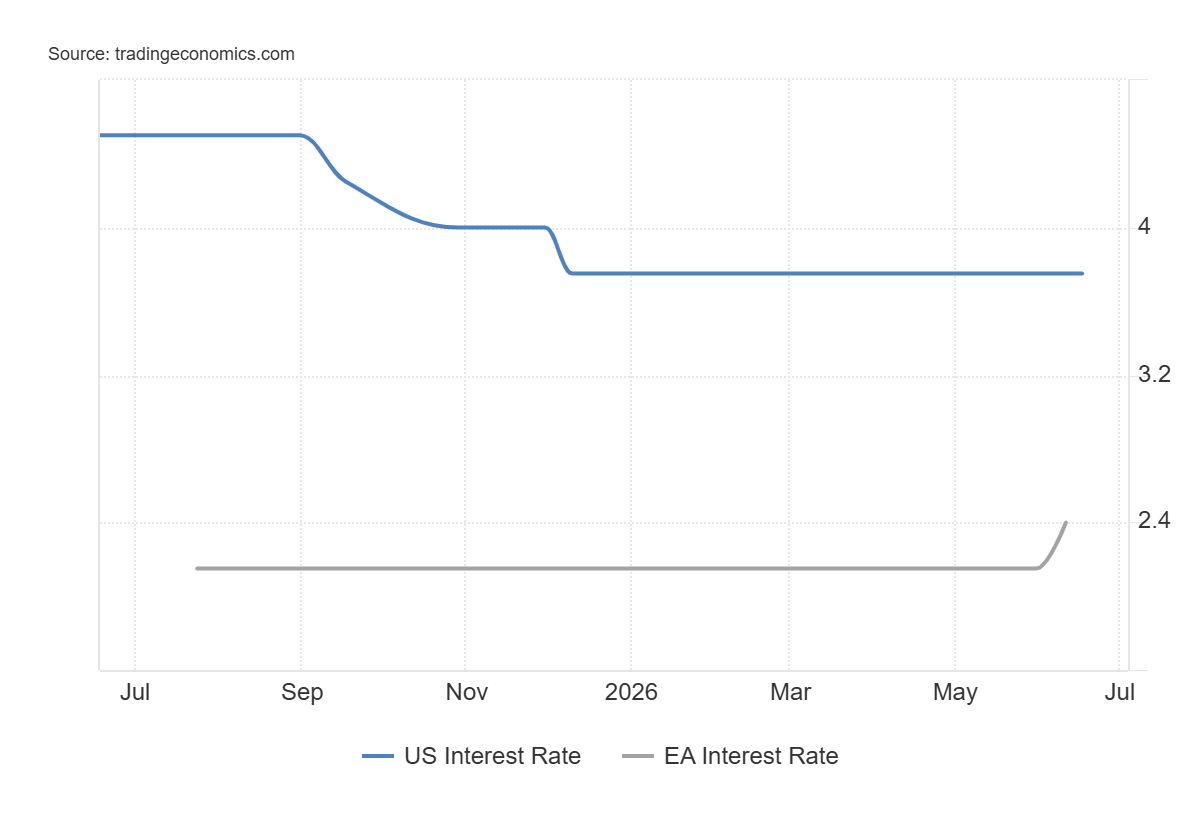
This new outlook is key for both the dollar and the euro. One of the factors that has prevented the euro from gaining consistent ground against the US dollar is the interest rate differential between the United States and Europe. While the US currently maintains a reference rate near 3.75%, with expectations of a possible move toward 4.00%, Europe’s interest rate remains around 2.4%.
This gap matters because, as long as there are no clear signs that it could start to narrow, dollar-denominated investments may continue to look more attractive than euro-denominated ones. This can support stronger demand for the dollar and limit the euro’s recovery in the short term.
Source: TradingEconomics
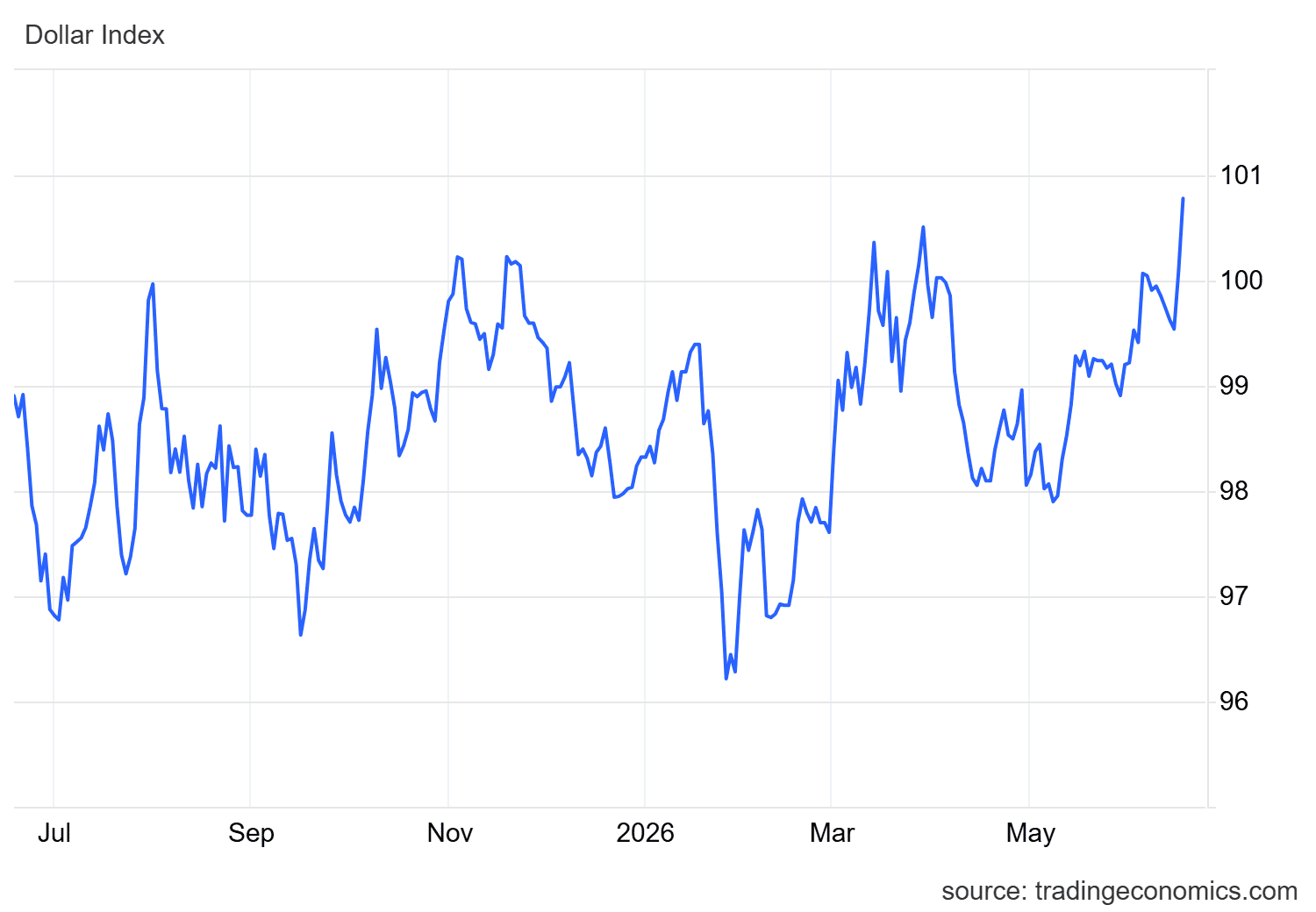
In fact, after the Federal Reserve announcement, this factor has already been reflected in demand for the US dollar. Since the central bank decision, DXY, the index that measures dollar strength against its main rivals, has posted a relevant recovery and is now holding above the 100-point reference area.
This behavior shows that demand for the dollar has regained strength in the short term, supported by the more aggressive outlook that the US central bank could adopt.
Source: TradingEconomics
Overall, the Federal Reserve decision has brought renewed support to the dollar in the short term. While expectations of a more aggressive monetary policy remain in place and the rate differential between both regions stays wide, the euro may struggle to recover consistently. Under this scenario, selling pressure on EUR/USD could remain relevant over the coming trading sessions.
Technical outlook for EUR/USD
Source: StoneX, Tradingview
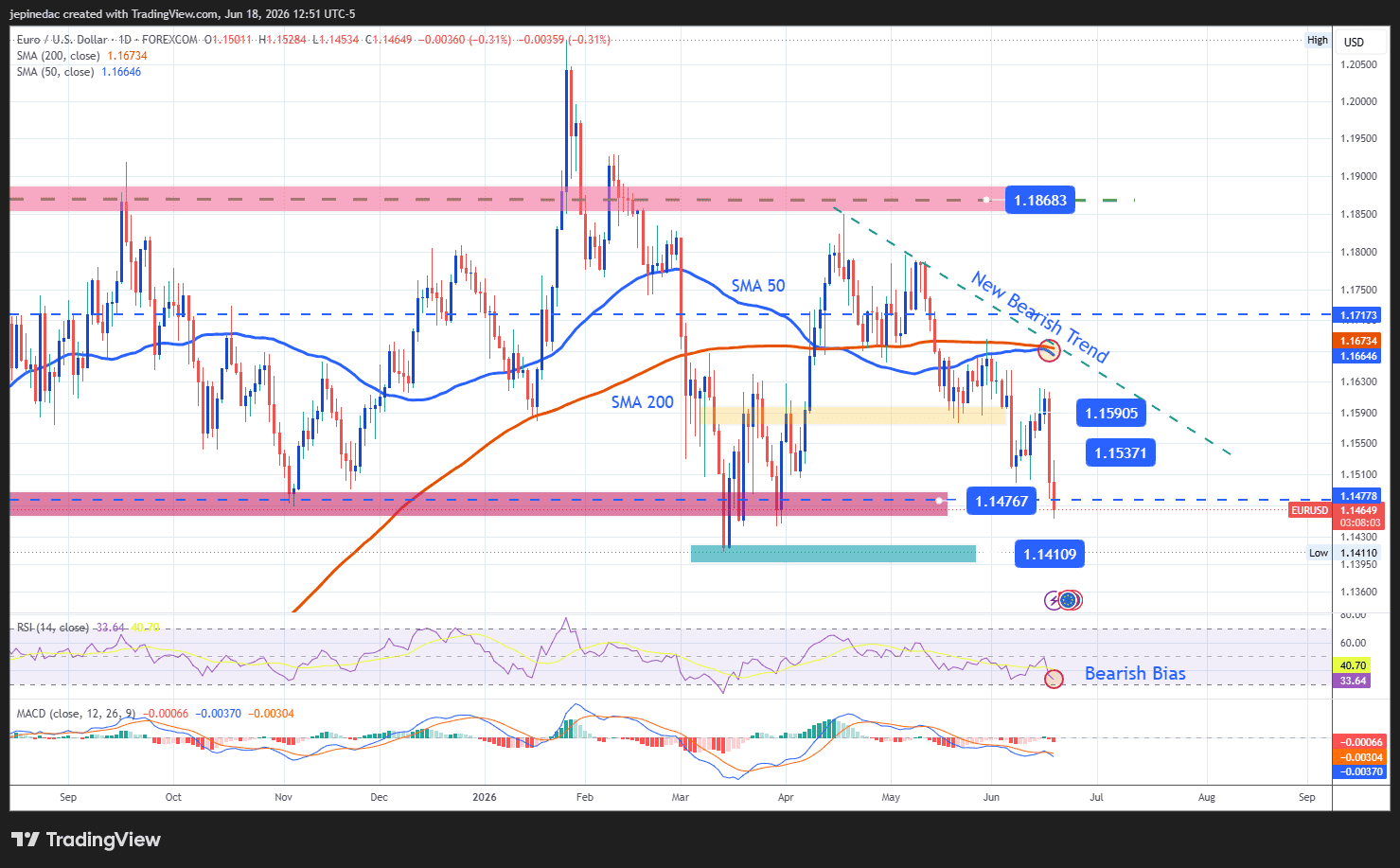
- New bearish trendline begins to dominate: Since April, a bearish trendline has been forming in the average movements of EUR/USD. So far, this structure remains the dominant bearish technical pattern in the short term. Given the lack of relevant bullish corrections, if selling pressure remains stable, this structure could continue to extend over the coming weeks. However, because of the speed of the recent price decline, there may also be room for short-term bullish corrections.
- RSI: Now, the RSI line continues to move consistently below the central 50 level. This suggests that average bearish impulses have gained relevance. If this behavior continues, selling pressure could remain important in the chart’s movements.
- MACD: A similar scenario can be seen in MACD, as the histogram remains below the neutral 0 area. This shows that the average strength of short-term moving averages remains in bearish territory and highlights the importance of a possible bearish bias over the coming sessions.
Key levels:
- 1.15905 – Relevant resistance: Resistance level that corresponds to the most recent price high area and aligns with the bearish trendline. A consistent recovery above this level could begin to put the bearish structure at risk and open the door to a relevant buying bias over the coming sessions.
- 1.15371 – Near-term barrier: Neutral level near recent price action. It could work as a tentative reference if short-term bullish corrections begin to form on the chart.
- 1.14767 – Definitive support: Level that corresponds to the low area of a broad sideways channel observed over the past few months. Now, it remains the most important downside barrier to watch on the chart. Price action that manages to hold consistently below this level could continue to highlight a dominant selling bias and give continuity to the bearish trendline as the main pattern over the coming weeks.
Written by Julian Pineda, CFA, CMT – Market Analyst
Follow him on: @julianpineda25
Latest market news




The complete CFD trading experience
Award-winning platforms, competitive spreads, low commissions and dedicated support.
We live and breathe the markets and are dedicated to helping traders realise their ambitions as we continue to set the industry bar.
Economic calendar
Web Trader platform
Our sophisticated web-based platform is packed with features.
Related articles
Canadian Dollar Short-term Outlook: USD/CAD Plunge Stalls at Pivotal Support—Range Break in Focus 11 5 2026
Friday’s U.S. and Canadian employment reports could trigger a decisive USD/CAD move as bulls and bears battle for control at critical support.

GBP/USD Forecast: BoE Caution Leaves the Pound Searching for Direction
Although GBP/USD has gained close to 0.5% over the last three trading sessions, reflecting a period of relative strength for the British pound, today's session has started to show a more neutral tone and the bullish momentum seen earlier in the week has begun to slow.
NFP Preview: New Government, Same Jobs Market?
Traders are still sifting through the fallout of the US midterm elections, just in time to get hit with another volatility: The monthly Non-Farm Payrolls (NFP) report - what will the jobs report show, and what could it mean for the US dollar?

StoneX Europe Ltd may make third party material available on this website which may contain information included but not limited to the conditions of financial markets. The material is for information purposes only and does not contain, and should not be construed as containing, investment advice and/or investment recommendation and/or an investment research and/or an offer of or solicitation for any transactions in financial instruments; any decision to enter into a specific transaction shall be made by the client following an assessment by him/her of their situation.
StoneX Europe Ltd makes no representation or warranty and assumes no liability as to the accuracy or completeness of the information provided, nor any loss arising from any investment based on a recommendation, forecast or other information supplied. You should always seek independent advice as to your suitability to speculate in any related markets and your ability to assume the associated risks, if you are at all unsure. We are not under any obligation to update any such material. Any opinion made may be personal to the author and may not reflect the opinion of StoneX Europe Ltd.