



How US government bond auctions work and why they’re important to financial markets
Bond markets make the financial world go round, helping to grease the wheels of commerce, allowing the economy activity to expand. But when too much debt is issued, it can overwhelm demand, causing borrowing costs to spike which can be detrimental to the economy.
Share this:

- This guide outlines the key terms and players in US Treasury auctions
- It will help traders decipher whether demand for US debt is strengthening or weakening
- As a risk-free market instrument, Treasury performance is highly influential on asset classes further out the risk spectrum
Bond markets make the financial world go round, helping to grease the wheels of commerce, allowing economic activity to expand. But when too much debt is issued, it can overwhelm demand, causing borrowing costs to spike which can be detrimental to the economy.
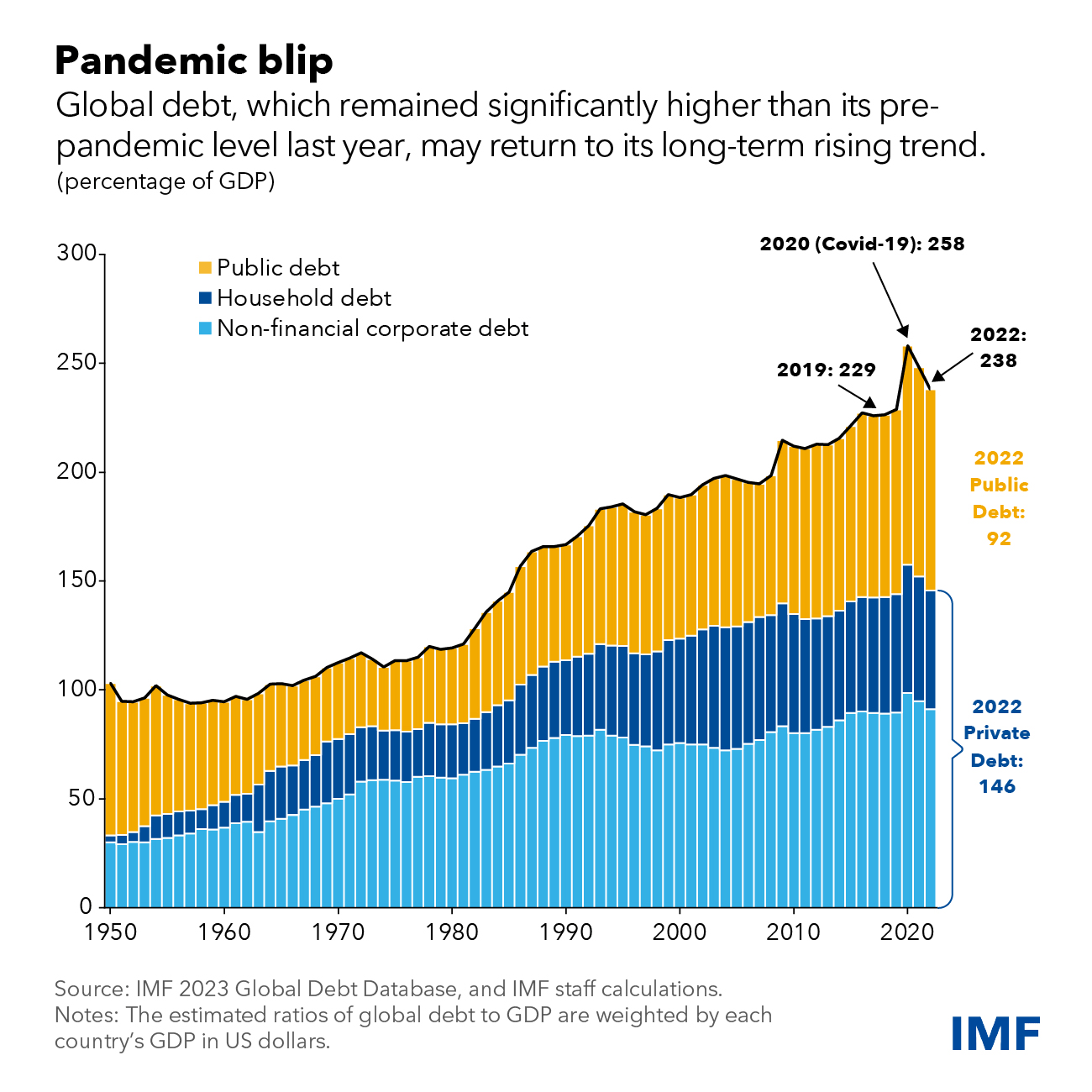
This balancing act is attracting plenty of interest right now, especially when it comes to trends in government bond issuance which continues to increase rapidly in many advanced economies. With so much debt being issued at a time when activity is holding up and inflationary pressures remain firm, it’s leading to higher interest rates not only for governments but borrowers further out the risk spectrum.
Source: IMF
While bond yields tell you where the equilibrium between debt demand and supply intersect, for traders looking for an edge on when demand trends may be about to shift, you may want to keep an eye on debt auctions for clues. Because a sudden strengthening or weakening in demand for new debt can ripple quickly through secondary markets, impacting other asset classes.
To understand the dark arts of debt auctions, we’ve decided to produce a primer explaining the key players and terminology you need to be across. For this note, we’ll focus on US Treasury auctions given the US dollar’s role as the global reserve currency, making these events influential on borrowing costs in other nations.
Bond terminology 101
Before we get into auction specifics, let’s quickly recap the key bond terms every investor should know.
Face value: The amount the bond issuer agrees to repay at maturity
Market price: The market value of a bond
Coupon: Fixed interest rate paid to bondholders per annum, expressed as a percentage of the bond's face value
Yield: The effective interest rate an investor receives based on the bond's market value and coupon
Maturity: The date when the bond is repaid
Duration: A measure of a bond prices sensitivity to changes in interest rates
Primary market: When a bond is first issued at auction
Secondary market: When bonds are traded between market participants other than the issuer
US Treasuries issued
Treasuries are Treasuries, but when it comes to the date they mature, they are classified into different categories.
Bills: Treasuries with less than 12 months to maturity
Notes: Treasuries that mature within one to ten years
Bonds: Treasuries that mature beyond 10 years
Treasury auction terminology
Issuer: US Government
Bidders: Buyers (we’ll get to the different types in a moment)
Bid price: The price buyers are willing to pay
Bid quantity: The amount buyers want to purchase
Competitive bid: A buyer who specifies the price and amount of bonds they wish to purchase. Bids are submitted based on price
Non-competitive bid: A buyer who submits the amount of bonds they wish to purchase. The price is determined by the auction result
Yield: Interest the bond pays each year, expressed as a percentage of its current market price
Bid-to-cover Ratio: The ratio of total bids to total bonds on offer
Clearing price: The highest price the bonds being auctioned can be sold
Tail: Difference between the highest yield accepted and where they were trading prior to the auction
Stop-through: The bond is sold with a yield lower than what was indicated prior to the auction
Treasury auction buyers
Direct bidders: Usually large institutions such as banks, mutual funds, pension funds and insurers. Bids are submitted directly to Treasury. This group buys on behalf for their portfolios or on behalf of clients
Indirect bidders: Mostly foreign central banks, sovereign wealth funds and other foreign institutions. They submit non-competitive bids through a designated primary dealer (see below). Bids are submitted based on a set yield which is determined by the auction result
Primary dealers: Financial firms authorised to participate directly in auctions. They primarily act as intermediaries for indirect bidders and other clients. They are required to participate in auctions by submitting competitive bids via the New York Federal Reserve
Signs of a strong auction result
A high bid-to-cover ratio, a lower-than expected yield (stop-through) with a small or non-existent tail are signs of strong demand. In terms of successful bidders, higher allocations to non-direct and direct buyers excluding primary dealers are signs of healthy demand.
As you would expect, opposite outcomes indicate weak demand. If studying auction results, the outcomes are graded relative to trends seen in prior auctions for debt of similar maturities.
Treasury’s Quarterly Refunding Announcement (QRA)
A statement outlining Treasury's plans for upcoming bond auctions. The announcements are usually released in February, May, August and November ahead of start of the new quarter.
The QRA includes information on auction dates, maturities and expected size of each security to be issued. Treasury may also offer guidance on longer-term borrowing requirements.
-- Written by David Scutt
Follow David on Twitter @scutty
Related tags:
Latest market news




The complete CFD trading experience
Award-winning platforms, competitive spreads, low commissions and dedicated support.
We live and breathe the markets and are dedicated to helping traders realise their ambitions as we continue to set the industry bar.
Economic calendar
Web Trader platform
Our sophisticated web-based platform is packed with features.
Related articles

Gold, silver outlook: Sandwiched between bullish bonds and AI angst
XAU/USD and XAG/USD may be approaching a bullish turning point as Treasury futures threaten a breakout. The problem? Both metals have recently been trading more like tech stocks than havens.

USD/JPY Weekly Outlook: Oil shock offsets mounting AI concerns
USD/JPY has barely moved despite tumbling US Treasury yields and a sharp selloff in AI stocks. Can elevated energy prices continue to offset the pressure?

Nasdaq, Treasury yields and dollar face a major AI sentiment test
From crude to AI, the forces driving US markets have changed dramatically. Thursday's Nasdaq rout triggered an extraordinary Treasury rally, but the dollar barely moved. What happens next could depend on Nasdaq support.
StoneX Europe Ltd may make third party material available on this website which may contain information included but not limited to the conditions of financial markets. The material is for information purposes only and does not contain, and should not be construed as containing, investment advice and/or investment recommendation and/or an investment research and/or an offer of or solicitation for any transactions in financial instruments; any decision to enter into a specific transaction shall be made by the client following an assessment by him/her of their situation.
StoneX Europe Ltd makes no representation or warranty and assumes no liability as to the accuracy or completeness of the information provided, nor any loss arising from any investment based on a recommendation, forecast or other information supplied. You should always seek independent advice as to your suitability to speculate in any related markets and your ability to assume the associated risks, if you are at all unsure. We are not under any obligation to update any such material. Any opinion made may be personal to the author and may not reflect the opinion of StoneX Europe Ltd.