


USD/JPY Weekly Outlook: Hormuz overshadows huge BOJ and Fed week
The Strait of Hormuz remains the market’s main focus, but BOJ and Fed decisions now add another layer of risk for USD/JPY. With the pair hugging multi-decade highs, traders face a loaded week.
Share this:

- Hormuz headlines remain the dominant market driver
- BOJ hold favoured, with June hike odds elevated
- Fed set to hold with focus on Powell’s future
- Treasury yields and spreads continue to drive USD/JPY
- 160 remains tough for bulls to crack
USD/JPY has reverted to a straight rates play
USD/JPY has reverted to a straight rates play between the US and Japan, with developments in the Gulf the key underlying driver of both outlooks. Extended uncertainty surrounding the Iran war now has both the Federal Reserve and Bank of Japan expected to keep policy settings on hold in the near term, a sharp shift from the pre-conflict view that the Fed would cut at least two times this year while the BOJ hiked twice.
That repricing helps explain why USD/JPY continues to hover just beneath multi-decade highs. The conflict is expected to create a largely inflationary problem in the US through higher energy costs, helping keep Treasury yields elevated. In Japan, there is greater concern surrounding weaker activity and the drag higher import costs may impose on demand.
Source: TradingView
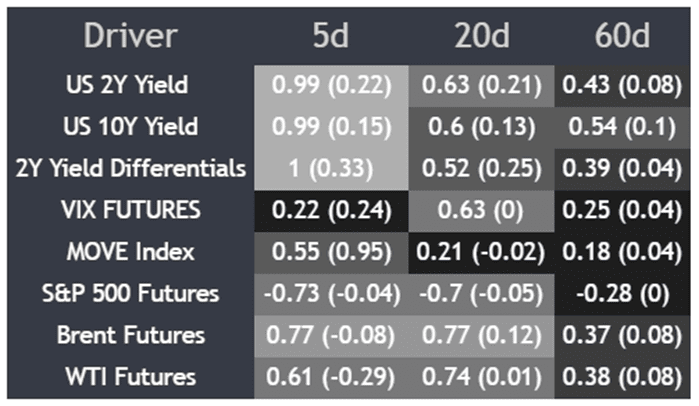
The influence of the expected path for rates is clear in the correlation data above. Over the past five-day period, USD/JPY showed a perfect positive correlation with US-Japan two-year yield differentials, while relationships with outright US Treasury yields were also incredibly tight, especially in the two-year and 10-year tenors. Even over the past month, rate-linked relationships remained dominant, reinforcing that yield spreads have reasserted themselves as the clearest near-term driver of the price action.
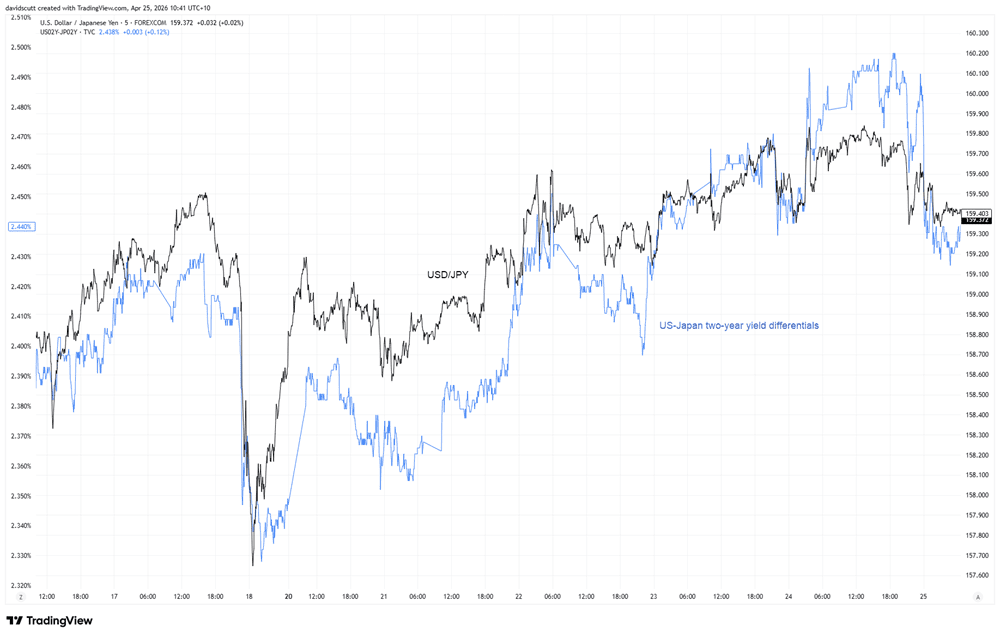
The tick chart below tells the same story, with USD/JPY in black and the US-Japan two-year spread in blue moving closely together throughout the past fortnight.
Source: TradingView
With energy-linked rates developments firmly back in control, this week’s Fed and BOJ meetings carry added significance given any repricing in policy expectations could quickly feed through to USD/JPY.
BOJ may need more than a hawkish hold to lift the yen
Bank of Japan hike odds for this meeting have collapsed over recent weeks, falling from around a 70% chance earlier this month to roughly 10% late last week. That leaves no change at 0.75% the base case, meaning the biggest market reaction would likely come from a surprise hike.
Markets now favour June for the next increase, with pricing implying roughly a three-in-four chance of a 25bp hike by June. Around 35-45bp of tightening remains priced over the rest of the year, showing markets still expect further policy normalisation.
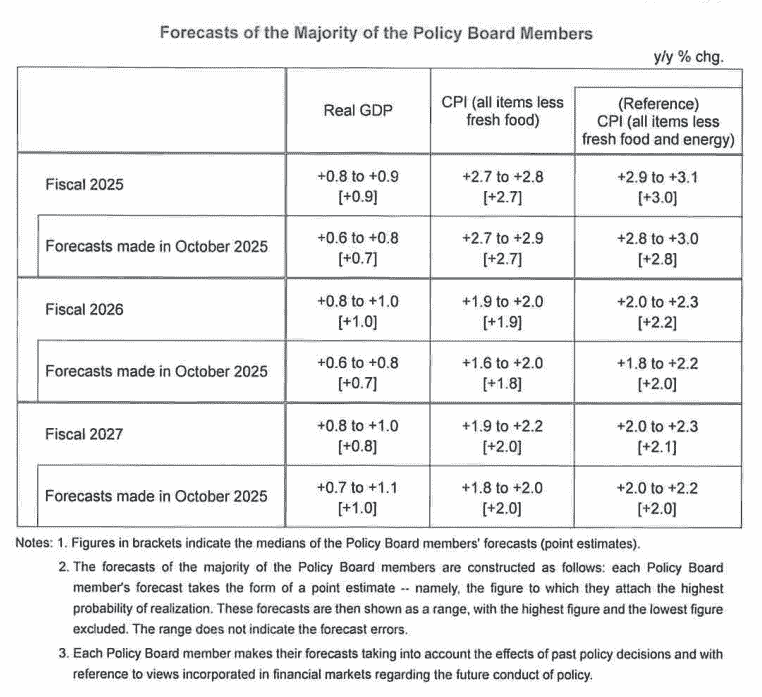
The challenge for yen bulls is that a hawkish hold may not be enough to stop the recent slide. With no move largely priced, markets may need stronger signals through upgraded FY26 core and core-core inflation forecasts, limited GDP downgrades, or both. The BOJ's prior forecasts from January are found below.
Source: BOJ
The vote split on the policy decision will also matter. One dissenter in favour of hiking may struggle to convince markets that the bank will go in June. Two or more would likely reinforce those expectations, especially with many economists expecting the policy rate to hit 1% before the second half of the calendar year.
As a reminder, there is no set time for the BOJ decision, although outcomes reached without a need for extended debate often arrive around the resumption of cash trading in Tokyo at 12:30pm JST.
Ueda’s press conference post the decision may also be important. If the initial reaction is deemed undesirable, he may look to steer markets by manipulating his guidance.
Fed meeting carries more spice than usual
The Federal Reserve is expected to leave policy unchanged this week, making this an otherwise placeholder meeting with no new forecasts and little chance of a shift in rates. Under normal circumstances, that would leave the focus on minor statement tweaks and how Jerome Powell frames the outlook.
However, this time, there is more spice to it. News last Friday that the Department of Justice had dropped its criminal investigation into Powell clears a key hurdle to Kevin Warsh’s nomination as the next Fed chair, raising the prospect this could be Powell’s final meeting in charge.
That puts added focus on his press conference. Powell previously indicated he would wait for the DOJ matter to be resolved before deciding whether to remain at the Fed. He may use this week’s appearance to clarify whether he intends to stay on as governor through to January 2028 or depart earlier.
Powell’s decision matters for the future makeup of the FOMC. Should he leave entirely as most of his predecessors, Warsh could step into the chair while freeing a governor seat that may allow Stephen Miran to be appointed permanently, potentially giving the committee a more dovish tilt over time.
Source: TradingView
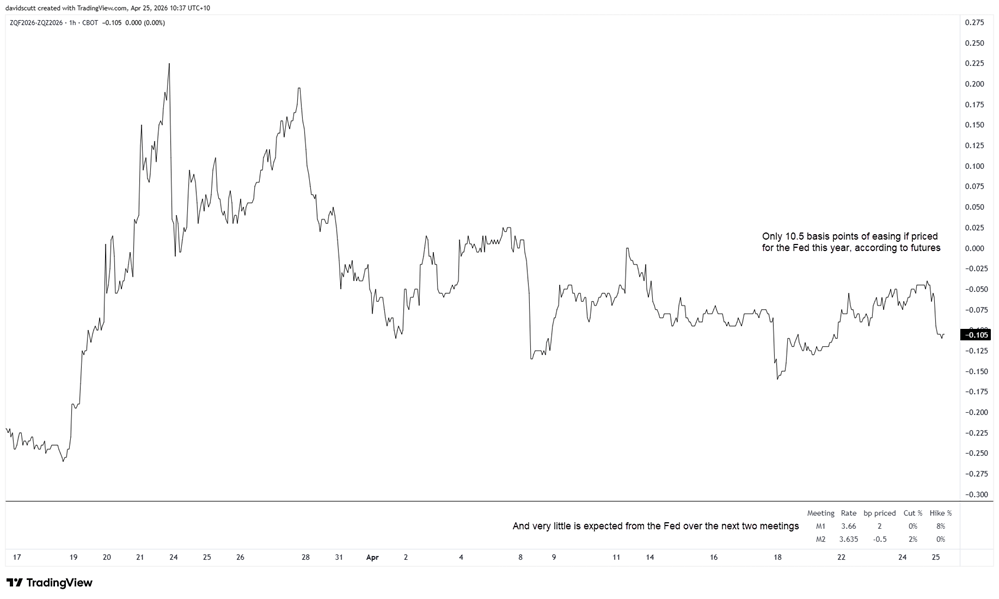
With USD/JPY tracking rates so closely, any reaction in Treasury yields to succession risk, policy tone or Powell’s future intentions could deliver a meaningful impact for USD/JPY. Markets currently price 10.5 basis points of cuts for the remainder of the year, highlighting how far easing expectations have been scaled back since late February.
War first, calendar second
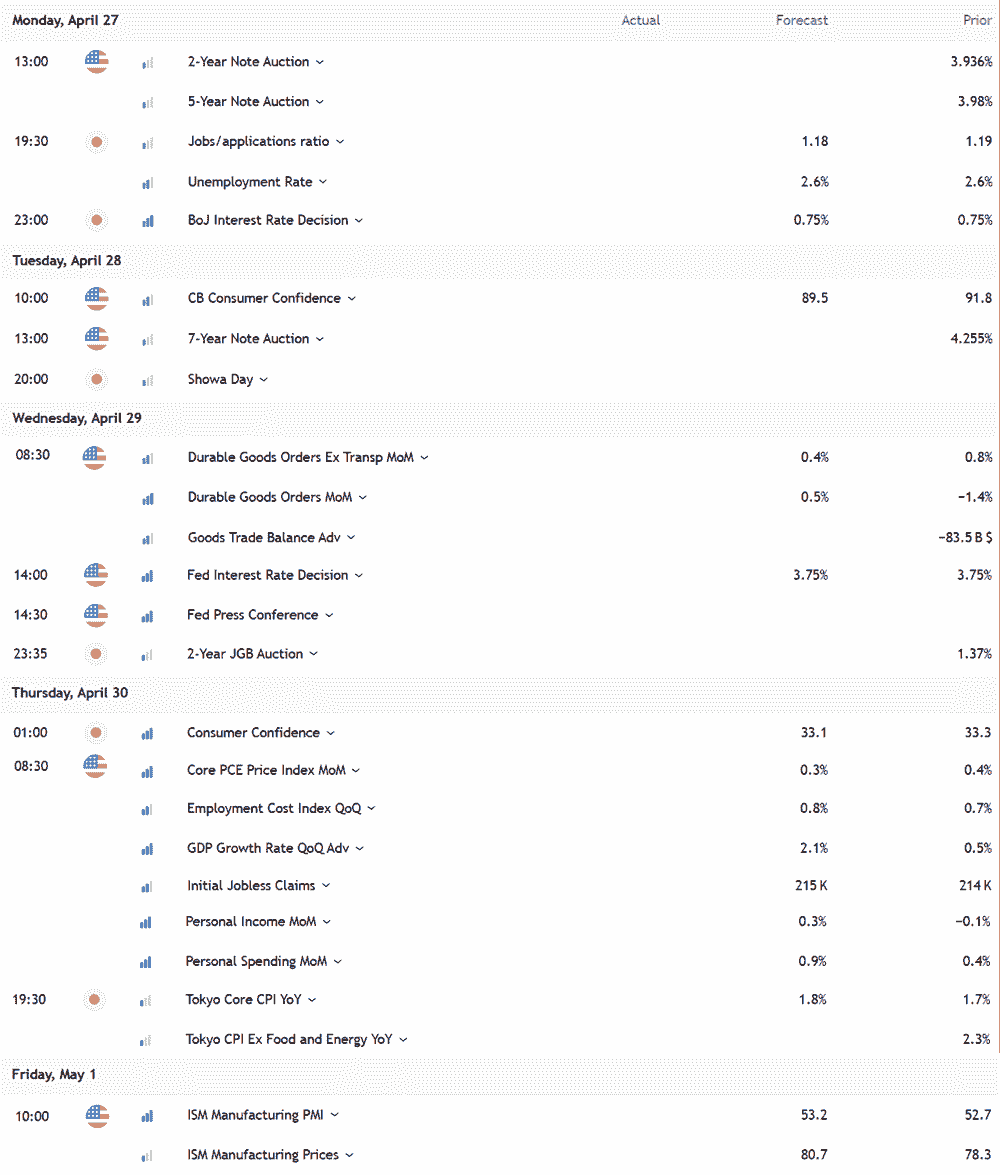
The Iran war remains the dominant market driver, meaning dated economic releases continue to carry less weight than usual. As such, this calendar has been stripped back to include only releases and events that could move markets rather than create noise. All times shown are in US EDT.
Source: TradingView
In the US, Thursday shapes as the key day outside the FOMC decision. While the Fed’s preferred underlying inflation measure for March, the core PCE deflator, is released then, private sector economists have become so effective at mapping the result from earlier CPI and PPI data that it rarely delivers a genuine surprise nowadays.
Should that recent pattern continue, greater emphasis may fall on the income and consumption figures released in the same report, providing a timely read on the health of the US consumer and fuel available for spending in the future.
The biggest event may actually be the advance Q1 GDP report, even if it is built on a sizeable degree of assumptions given final monthly inputs are still unavailable across many areas. The Q1 employment cost index and weekly jobless claims are also worth noting, while Friday’s April ISM manufacturing PMI will provide a sense on the scale of any inflation pulse heading towards consumers from upstream, placing extra emphasis on the prices paid measure.
Treasury supply earlier in the week should not be overlooked either, with auctions of two, five and seven-year notes carrying added interest given the influence yields have had on USD/JPY recently.
For Japan, Friday is the most important day outside the BOJ with the release of Tokyo CPI for April. Arriving around three weeks before the national report, and with a strong track record as a reliable lead indicator, it will be closely watched by markets. With the core measure only excluding fresh food prices, and government subsidies continuing to distort the headline figure, the ex-fresh food and energy reading may provide the cleanest guide to the underlying price pressures flowing through the economy from the Iran war.
Japanese markets will be shuttered Wednesday for a public holiday.
USD/JPY stalls below key ceiling
Source: TradingView
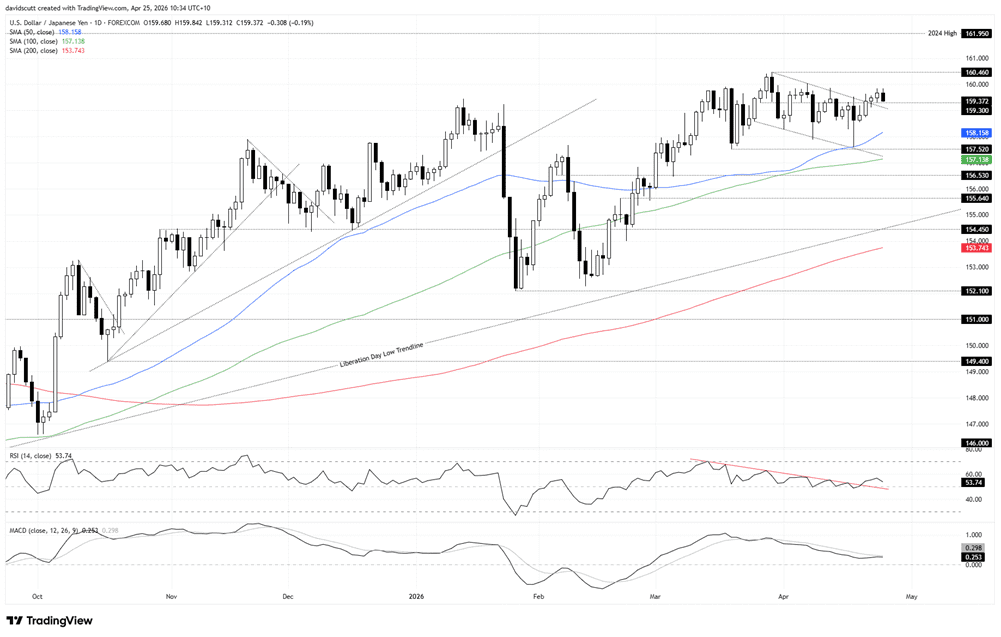
The topside break of the bull flag flagged in last week’s outlook played out as expected, although the ongoing threat of BOJ intervention, along with a late Friday slide in Treasury yields on renewed peace deal hopes and news the DOJ had dropped its probe into the Fed chair, ensured there was no meaningful follow-through buying. As a result, USD/JPY remained capped beneath 160.00 throughout.
That remains the key resistance zone overhead. A sustained push above 160.00 would bring the March high at 160.46 into play, the last visible hurdle before a potential retest of the multi-decade high of 161.95 struck in 2024.
On the downside, 159.30 remains a level of interest having acted as both support and resistance on numerous occasions over the past month. A sustained break beneath the level would bring the 50-day moving average and 157.52 into view as possible short targets or areas for long trade entries.
The message from RSI (14) and MACD is marginally bullish when it comes to directional bias. There is tentative evidence upside strength may be starting to build again with RSI (14) above 50, while MACD is edging back towards the signal line while remaining in positive territory.
That said, in a headline-driven market, greater emphasis should be placed on the price action and fundamental news flow rather than holding a firm directional stance.
Latest market news




The complete CFD trading experience
Award-winning platforms, competitive spreads, low commissions and dedicated support.
We live and breathe the markets and are dedicated to helping traders realise their ambitions as we continue to set the industry bar.
Economic calendar
Web Trader platform
Our sophisticated web-based platform is packed with features.
Related articles
AUD/USD hammered by US yields and fading RBA hike bets
US yields, dollar strength and fading RBA hike bets have combined to drive AUD/USD to fresh multi-month lows. The macro and technical bias remains bearish, although history suggests parts of the move are now reaching unusually stretched levels.
EUR/USD Forecast: Euro Struggles to Find Support Even After U.S. PCE Data
The euro continues to face a challenging environment in the short term. The currency has struggled to regain ground against a U.S. dollar that remains firmly supported, a dynamic reflected in EUR/USD, which has now recorded three consecutive losing sessions and a decline of roughly 0.6%.

Canadian Dollar Forecast: USD/CAD Four-Week Rally Eyes Yearly Highs 9 30 2026
USD/CAD has advanced in 14 of the past 15 sessions, but stretched momentum raises the stakes as major resistance and NFP come into focus.

StoneX Europe Ltd may make third party material available on this website which may contain information included but not limited to the conditions of financial markets. The material is for information purposes only and does not contain, and should not be construed as containing, investment advice and/or investment recommendation and/or an investment research and/or an offer of or solicitation for any transactions in financial instruments; any decision to enter into a specific transaction shall be made by the client following an assessment by him/her of their situation.
StoneX Europe Ltd makes no representation or warranty and assumes no liability as to the accuracy or completeness of the information provided, nor any loss arising from any investment based on a recommendation, forecast or other information supplied. You should always seek independent advice as to your suitability to speculate in any related markets and your ability to assume the associated risks, if you are at all unsure. We are not under any obligation to update any such material. Any opinion made may be personal to the author and may not reflect the opinion of StoneX Europe Ltd.